






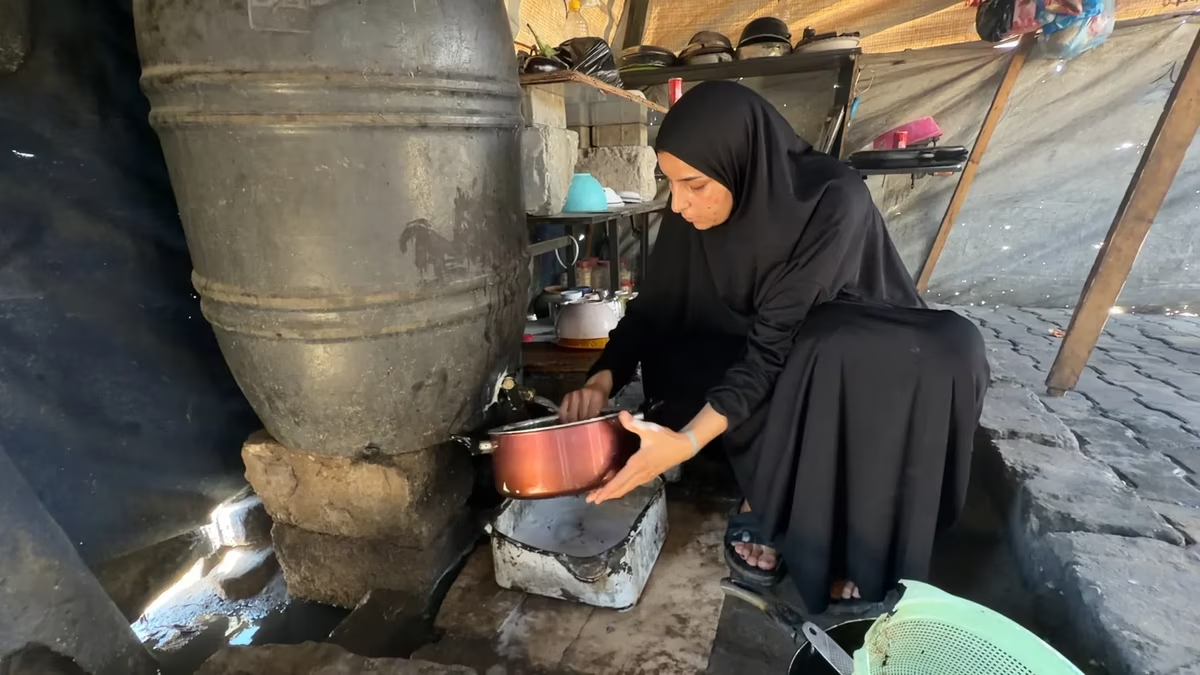
The moment the water truck arrives at the displacement camps in the Gaza Strip, it transforms into a bustling beehive of activity and anticipation, as children and women rush to secure their meager shares. In this exhausted geographical area, the water tanker has become a sacred weekly appointment around which all details of daily life, from cooking and cleaning to bathing, are rescheduled.
As the summer heat intensifies, calculations within a single tent become more complex and precise, as families must manage very limited quantities of water. The displaced carefully monitor the distribution process, for every drop has its price, and any miscalculation could mean deprivation of basic needs until the next truck arrives.
Nine-year-old Kanan represents one face of this suffering, as he jostles with his frail body to get his family's share, consisting of 11 members. Kanan's family was displaced from Beit Hanoun city and relies entirely on this weekly shipment to manage their harsh lives under displacement conditions.
Kanan's tragedy is compounded by his neurological illness and injuries from a previous bombing, making his need for clean water to take medicine a top priority. His mother, Ni'ma, is forced to make difficult trade-offs, cutting from washing and cooking allocations to ensure enough water for her sick son, who lacks specialized treatment.
Inside the tent, black jerry cans and barrels appear as strategic life stores, with each container allocated for a specific, pre-determined purpose. Local sources say that families devise precise plans to divide the eight water containers they receive, covering drinking, cooking, and personal hygiene for seven full days.
In another tent, Alaa Al-Qabaj's family lives a similar experience, where water containers become a timeline for a full week of resilience. His wife, Farah, distributes water with extreme precision, allocating some for drinking and others for cooking, while the little remaining goes to washing children and accumulated dishes.
Upon the tanker's arrival, the place turns into a race against time, as everyone strives to fill their containers before the truck leaves. The displaced describe these minutes as part of the daily battle for survival, where father, mother, and children participate in transporting and carefully storing water within the narrow corners of their tent.
Once the filling process is complete, Farah begins to tackle postponed tasks, lighting the fire to cook food and washing the dishes that have waited for a long time. In these moments, the extent of the burdens imposed by the absence of water becomes clear, as bathing or washing clothes becomes a dream that only comes true once a week.
Near these tents, the suffering of Hajja Fathiya Hamad stands out. She lost her husband, sons, and daughters' husbands during the ongoing war. Fathiya lives with her three daughters and grandchildren in a tent lacking a provider, placing the entire burden of securing water and firewood on the women.
Fathiya's daughters move with great speed when the water truck arrives, carrying heavy jerry cans that press on their exhausted necks and shoulders. The absence of men is most evident in these moments, as women are forced to perform arduous tasks requiring significant physical effort to transport water from the tanker to the tent.
Yasmin, one of Fathiya's daughters, says that life has completely changed after losing their support, as they are now forced to run after water trucks and collect firewood. Yasmin's words express a bitter reality lived by thousands of women in Gaza, who find themselves in direct confrontation with the harsh demands of living.
The suffering is not limited to transporting water but extends to physical pain resulting from carrying heavy loads over long distances between tents. Suha, Yasmin's sister, confirms that back and neck pain has become an integral part of her day, but she is forced to continue working to meet the needs of her sister's children and elderly mother.
Mariam, the third daughter, experiences a double burden as she tries to balance the needs of her four children with the limited water supply. Motherhood enters into complex calculations; every drop of water consumed must be in its right place to ensure the continuation of life inside the tent until the next appointment.
The seventy liters that families receive are not just a quantity of liquid but a daily test of human resilience and resourcefulness. In the displacement tents, water remains the lifeblood of movement and activity, and without it, life stops, and pains accumulate, awaiting a tanker that may come or be delayed.
We reduce water for cooking and washing, and save it for my sick child's medicine above all else.
שתף את דעתך
Life on the Brink of Thirst: How Gaza Families Cope with 70 Liters of Water Per Week?