






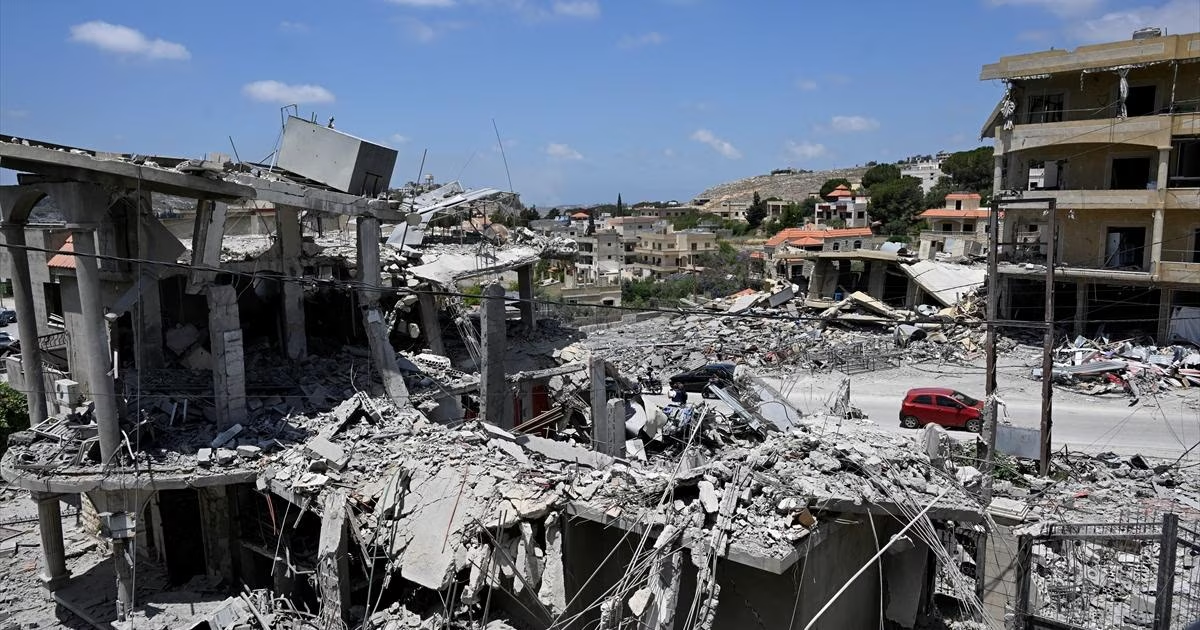
The ceasefire agreement in Lebanon officially came into effect at 4 PM on Friday, amidst deep questions about its ability to endure and achieve sustainable stability. Observers believe the agreement faces early tests related to the extent of the parties' commitment on the ground, especially given the continued presence of Israeli occupation forces in strategic locations within Lebanese territory.
Field data indicates that the occupation army is seeking to impose a new security reality in southern Lebanon through what is known as the 'Yellow Zone' or buffer zone. This Israeli approach clashes with a categorical Lebanese rejection of any foreign military presence, making the current calm vulnerable to disruption if aggressions or provocative military movements continue.
Informed sources reported that the agreement was not a coincidence but rather the result of intensive Qatari and American mediation, which included high-level contacts led by Sheikh Mohammed bin Abdulrahman Al Thani. Doha played a pivotal role in bridging viewpoints and conveying messages between Tehran and Washington to ensure an environment conducive to halting widespread military operations.
For his part, political science professor Hani Al-Bassous believes that the doubts surrounding the agreement are based on field realities that go beyond declared texts and granted political guarantees. He explained that Israel still deals with the issue from a purely security perspective, retaining what it calls the 'right to respond' or resume operations, which threatens the collapse of understandings at any moment.
The success of this agreement is closely linked to the broader understandings between the United States and Iran, as Washington seeks to contain regional escalation and prepare the ground for negotiations. Tehran, in turn, insists on considering the Lebanese arena an integral part of comprehensive regional arrangements, rejecting any attempts to separate fronts without real guarantees.
On the Lebanese political front, the role of Parliament Speaker Nabih Berri emerged as a key negotiator representing Hezbollah, holding intensive meetings to ensure adherence to the terms of the truce. Two approaches stand out within Lebanon; one relies on international guarantees for Israeli withdrawal, and the other sees field pressure as the only means to force the occupation to retreat.
Minutes before the agreement came into effect, the Tallat Ali Al-Taher area witnessed violent clashes that resulted in deaths and injuries among the Israeli army, reflecting significant field tension. These events confirm that the field remains volatile, and the transition from a state of war to permanent calm requires measures that go beyond merely announcing a ceasefire.
In the context of international pressure, statements by former US President Donald Trump emerged, in which he indicated his ability to force the Netanyahu government to completely halt military operations. These statements reflect the extent of the overlap between internal political calculations in the United States and the ongoing conflict in the Middle East.
The real test of the agreement remains contingent on a clear timetable for the withdrawal of Israeli forces from all positions they occupied during the recent escalation. Without achieving this complete withdrawal, the ceasefire agreement will remain merely a temporary truce imposed by international circumstances, awaiting a new round of confrontation that may erupt at the first security breach.
The real test of the agreement will not be in the first hours, but in the extent of Israel's commitment to halting its operations and withdrawing its forces from the south.
שתף את דעתך
Lebanon Ceasefire Agreement Faces Test of Resilience Amid Continued Israeli Military Presence