






A state of frustration and anger prevailed within political and security circles in Israel, following the revelation of details of a memorandum of understanding signed by the United States with Iran. This memorandum aims to de-escalate regional tensions and open a new negotiation path, but it included clauses obliging the parties to maintain calm in several arenas, foremost among them the Lebanese front.
Informed sources reported that the American administration began exerting actual pressure on Tel Aviv to push it towards withdrawing from five strategic points in southern Lebanon. American demands also included the necessity of withdrawing from the parts of the Syrian Mount Hermon that the Israeli army had controlled since early 2024, to ensure that the political process with Tehran is not obstructed.
Reports quoted an Israeli official close to Prime Minister Benjamin Netanyahu describing the ongoing negotiations with Washington as 'difficult and complex.' The official affirmed that Israel still shows reluctance to retreat from its current military positioning in southern Lebanon, despite firm American messages.
Washington is threatening to take practical measures against Israel if it continues to reject withdrawal demands, with these measures potentially including delaying vital arms shipments. Israeli sources indicated that the pressure could escalate to imposing security and military restrictions similar to an undeclared ban on the supply of combat equipment.
Through these pressures, the American administration seeks to extract a formal commitment from Netanyahu to withdraw, to present it as a prominent political achievement for the American president. This comes at a time when Israel believes that the memorandum does not serve its supreme security interests, especially since it ignores the issue of Iranian ballistic missiles.
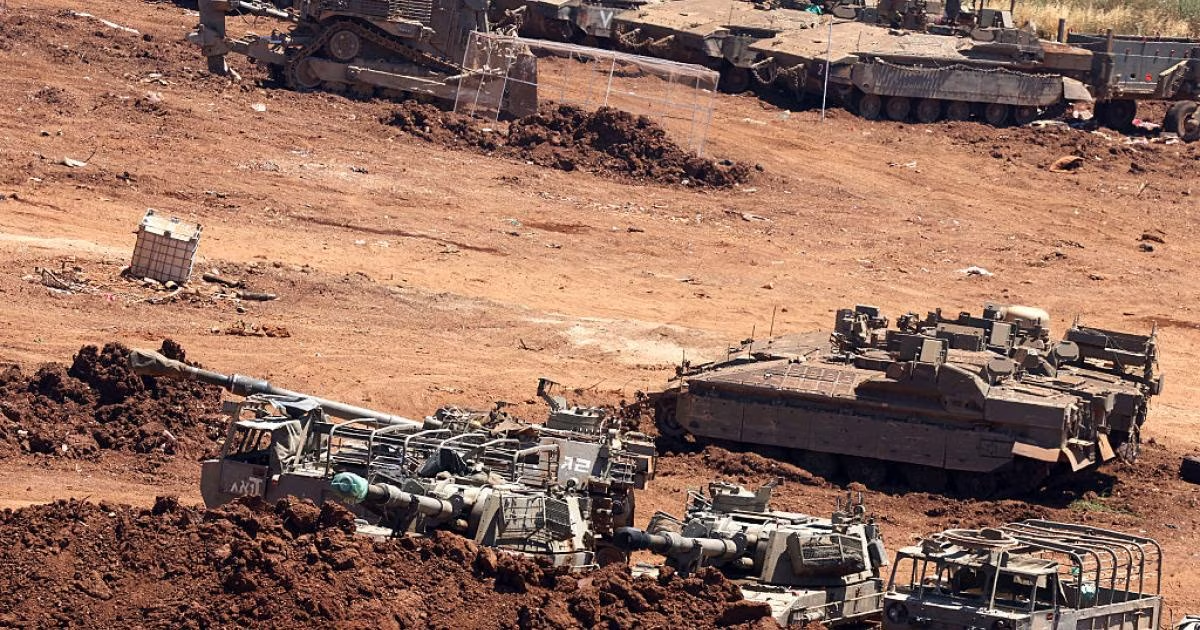
On the ground, military sources revealed a near-complete halt to the advance of Israeli forces towards the depths of Lebanese territory in recent hours. It appears that the Israeli army has begun to reposition itself in line with the charged political atmosphere, despite its public demand to retain freedom of military movement.
Press reports stated that Israeli units that crossed the Litani River are currently stationed in exposed areas, making them vulnerable to targeting risks. Accordingly, strict military instructions were issued to the forces to entrench themselves inside buildings and dig defensive trenches to reduce human losses in the event of sudden confrontations.
Concerns are growing among the Northern Command of the Israeli army about Hezbollah's success in accurately identifying the positions of the stationed forces during the current period of stagnation. Military commanders believe that keeping the forces in a defensive posture without advancing increases the likelihood of them being subjected to missile attacks or precise sniper operations.
For its part, diplomatic sources confirmed that Lebanon was mentioned three times in the text of the American-Iranian memorandum of understanding, which confirms its centrality to the agreement. The spokesperson for the Iranian Foreign Ministry considered that this presence reflects the parties' commitment to de-escalating the northern front of Israel as part of a broader regional deal.
Israeli concerns are not limited to the temporary sixty-day cooling-off period but extend to what the final negotiations will yield. Security circles in Tel Aviv fear the imposition of permanent ground realities that will limit the army's ability to confront Hezbollah's threats in the future.
Political circles in Israel are discussing various scenarios for dealing with the American demand, ranging from withdrawal to a narrow 'security zone' or complete withdrawal. The option of complete withdrawal is one of the most sensitive options, due to its internal political repercussions that could threaten the stability of the ruling coalition.
Amidst this anticipation, the question remains about Netanyahu's ability to maneuver politically to obstruct any agreement that imposes restrictions on Israeli military action. Israeli circles are awaiting the results of upcoming negotiation rounds to determine the path of confrontation or de-escalation on the northern border.
Israel is conducting difficult negotiations with Washington regarding the continued deployment of its forces, and there is no intention to retreat from our positions in southern Lebanon.
שתף את דעתך
Intense American Pressure on Israel to Withdraw from Southern Lebanon and Mount Hermon