





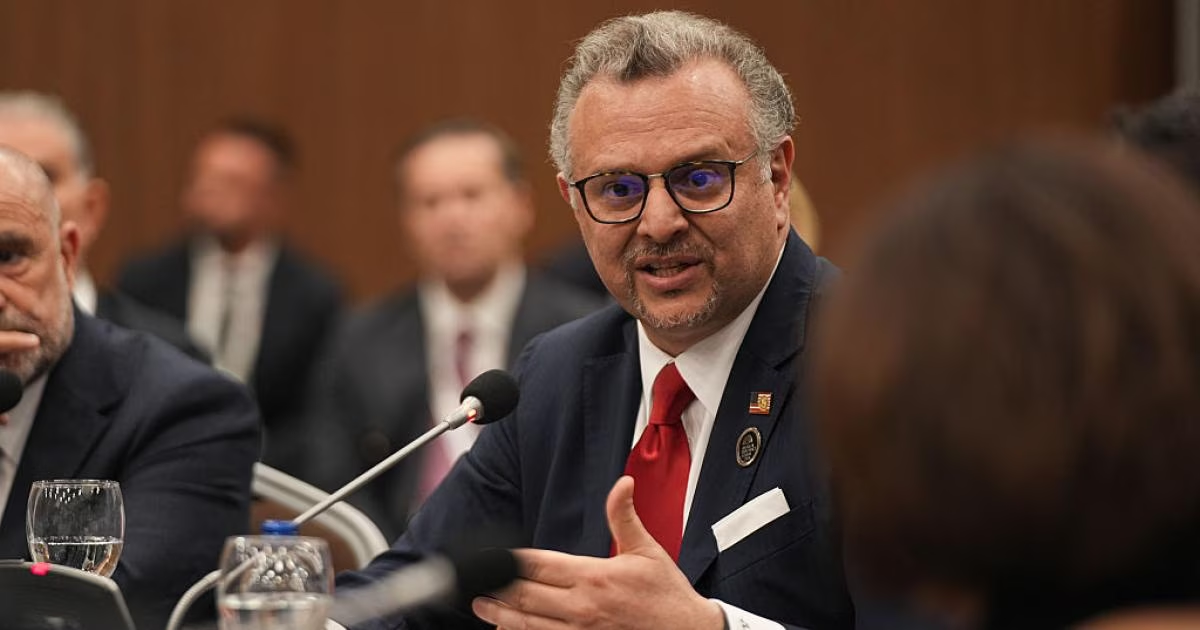
The Libyan crisis has returned to the forefront of international attention with the US administration unveiling a new roadmap aimed at ending the years-long institutional division. Masood Boulos, the US President's advisor for Middle East and African affairs, explained that the American vision seeks to integrate rival institutions under a single authority, while simultaneously opening broad prospects for American oil companies to strengthen their presence in the Libyan energy sector.\n\nAccording to Boulos' statements to the Financial Times, the American plan is based on forming a unified government that represents all parties and national institutions. This step aims to provide a stable environment that supports UN efforts to organize parliamentary and presidential elections, with this arrangement seen as a short transitional period preceding the move to the ballot boxes.\n\nIn controversial details regarding the proposed power structure, reports indicated that the plan includes placing Saddam Haftar, son of the commander of the Libyan National Army, at the head of an executive presidential council. In return, the proposal stipulates that the head of the Government of National Unity, Abdul Hamid Dbeibeh, remains in his position, with a national security portfolio assigned to a close associate, in an attempt to create a balance between the dominant forces on the ground.\n\nThe American advisor considered that there are positive indicators supporting these moves, including the agreement concluded last November to finance development projects across the country. He also pointed to the approval of the first unified national budget last April as a historic step that had not occurred in over a decade, in addition to increasing military cooperation through Libya's participation in the Flintlock exercises under the supervision of the US Africa Command.\n\nEconomically, Washington is throwing its weight behind major energy companies such as ConocoPhillips and Chevron, which have already signed strategic agreements with the Libyan side this year. The American plan aims to double Libyan oil production to three million barrels per day within four years, which would return Libya to the list of major global producers.\n\nDespite American ambitions, diplomats and observers of Libyan affairs expressed skepticism about the ability of these deals to withstand the complexities of the Libyan internal situation. They believe that the current American approach relies heavily on the logic of deals and investments, an approach that may clash with the roots of the crisis related to the distribution of wealth and power among different regions.\n\nThe prospects for comprehensive reconciliation face severe challenges amid the continued division between the eastern and western governments, and the escalating rhetoric of mutual distrust among political rivals. Previous international initiatives have always clashed with the narrow interests of local parties, which has reinforced the political stalemate and weakened the trust of the Libyan street in any proposed external solutions.\n\nIn a new field development, nine municipalities announced the establishment of what they called the "Central Region Province," in a move officially aimed at activating administrative decentralization and achieving economic integration. However, this announcement was met with widespread fears that it could be a prelude to new regional entities that further complicate the political scene and open the door to the possibility of the actual division of the country.\n\nFor his part, Nasser Abu Dheeb, Secretary-General of the Libya Al-Ummah Party, ruled out an imminent breakthrough towards full political unity, suggesting the continuation of the current power-sharing reality. He indicated in media statements that what some propose about economic regions does not have clear constitutional cover, as political regions require legislation that precisely defines their powers.\n\nAbu Dheeb explained that the current Libyan reality is imposed by de facto powers that possess money and weapons in both the East and the West. This military and financial balance has rendered international and regional missions unable to impose a radical solution, especially in light of the deep disagreements within legislative institutions regarding the laws governing the electoral process.\n\nAbu Dheeb questioned the usefulness of the American initiative if it is based solely on arrangements for sharing wealth and power among influential figures. He considered that such deals might provide temporary superficial stability, but they do not represent a real entry point for building a unified and stable state that meets the aspirations of the Libyan people for democratic change.\n\nObservers questioned the guarantees Washington could offer to make this roadmap successful, especially since American policy in the region is often governed by oil and security interests. The question remains about the extent to which active Libyan parties will accept relinquishing their current gains in favor of a shared governance formula that may not guarantee their continued presence on the scene in the future.\n\nAmid official silence from the central government in Tripoli regarding some regional movements, fears of the erosion of state authority in favor of regional alliances are growing. This reality puts the American initiative to a real test: either it succeeds in bridging the gap between rivals, or it turns into just another attempt added to the record of initiatives that have not addressed the core of the conflict.\n\nThe Libyan scene is now awaiting official reactions from the active forces in Benghazi and Tripoli to the leaked American proposals. With continued external interventions and conflicting interests, a comprehensive and sustainable settlement remains an elusive goal, awaiting a real breakthrough to end the state of anticipation and caution that hangs over the country.\n\nThe plan is based on forming a unified government representing all institutions of the country, and may constitute a short-term transitional arrangement preceding the electoral entitlements.

ה 18 יונ 2026 6:58 am - שעון ירושלים
US Roadmap to Unify Libya's Institutions: Oil Deals and New Power Arrangements
שתף את דעתך
US Roadmap to Unify Libya's Institutions: Oil Deals and New Power Arrangements