





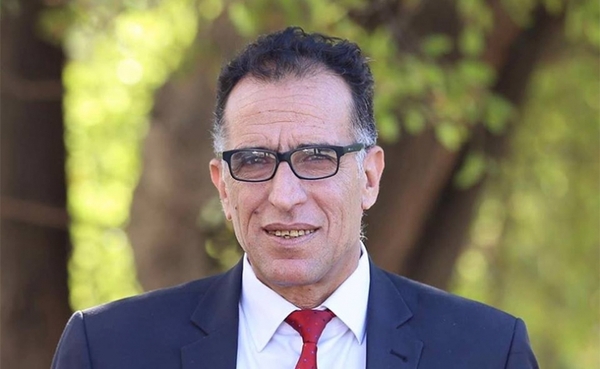

Some Israeli analyses tend to blame Benjamin Netanyahu alone for the continuation of the war and the expansion of confrontations, but this reading ignores a fundamental truth: the Israeli opposition itself was, and still is, one of the most important sources of strength that Netanyahu relies on to survive and endure.According to some Israeli analysts critical of Netanyahu, the opposition, instead of forming a real political alternative or leading a serious accountability process for the government after the failure of October 7, practically contributed to raising Netanyahu's ceiling and provided him with a political and popular safety net. By engaging in the state of Zionist national consensus, it became a protective wall that prevented his downfall at many junctures that could have ended his political future.The opposition could have capitalized on the Israeli anger after October 7 to expose Netanyahu's failure and inability to lead. He is a politician historically known for hesitation and fear of making decisive decisions when their political cost is high. But what happened was the exact opposite, as he succeeded in turning the failure of the army and security agencies into an opportunity to rearrange the balance of power within the occupation state, avoiding personal accountability for the disaster, and even refraining from acknowledging any political responsibility for it.Netanyahu was able to tame the security and military establishment and exploit its failures for his benefit, while the opposition was preoccupied with participating in crisis management more than with holding those responsible accountable. Instead of revealing the extent of political and security failures to public opinion, it preferred to join the general mobilization under the banner of supporting the army and national unity, which gave Netanyahu the time and political cover needed to restore his image.In his relationship with US President Donald Trump, Netanyahu knows well when to retreat and when to advance. He understands the nature of American politics as he understands Trump's personality and calculations. Therefore, even when he faces American pressure, he tries to turn it into domestic political capital.Every confrontation or disagreement with Washington is marketed within Israel as proof of the independence of Israeli decision-making and Netanyahu's ability to say “no” to the American president when it comes to what the Israeli right calls supreme national interests.For this reason, Netanyahu does not treat his disagreements with American administrations as an existential threat. He has engaged in political confrontations with successive American administrations, from Bill Clinton to Barack Obama and Joe Biden, and he realizes that the United States will remain compelled to deal with him as long as he remains prime minister.The real danger for him does not come from Washington, but from losing his position. He knows that leaving the premiership means losing influence and political immunity, and perhaps returning to courtrooms or to the margins of political life. Therefore, he fights all his battles as battles for personal and political survival, not merely disagreements over public policies.For this reason, focusing on Netanyahu's personality becomes essential in any serious political analysis. The decisive factor in Israel is not only the nature of the system or the balance of power, but the person who has the authority to make the final decision. And under Netanyahu, these powers have been concentrated more than ever in the hands of the prime minister.But the responsibility does not fall on Netanyahu alone. The Israeli opposition repeats the same mistake again and again. When the cannons roar, opposing voices recede, and most of their leaders return to align behind the government under the banner of “national unity” or “supporting the army.”With the exception of limited voices such as Yair Golan, genuine criticism disappears, difficult questions are absent, and the political discourse becomes another version of the government's discourse. As for figures like Naftali Bennett, Gadi Eisenkot, Avigdor Lieberman, and others, despite their awareness of the extent of the failure Netanyahu has led Israel into, they hesitate to engage in a real political confrontation with him on issues of war and military escalation, fearing losing voters' support or appearing weak before Israeli public opinion.It seems that the obsession with opinion polls, the number of seats in the Knesset, and the desire to reach power push many opposition leaders to adopt the same security discourse promoted by Netanyahu, instead of offering a different political and strategic alternative. Thus, the competition among them turns into a bidding war over who appears tougher, not a competition over how to extricate Israel from its escalating crises.The result is that Netanyahu succeeds time and again in appearing as the only leader capable of managing crises, while his rivals turn into mere diluted versions of him. Instead of being an alternative to him, they become part of the political environment that allows him to continue and endure.But it is wrong to reduce this outcome to the performance of the Israeli opposition alone. Netanyahu also benefited from the mistakes of Israel's adversaries and enemies. Since October 7, the calculations of the Hamas movement, the performance of Hezbollah, and Iranian policies have contributed, to varying degrees, to providing the environment that allowed him to rebuild his political standing despite his responsibility for the biggest security failure in Israel's history.Instead of the war's outcomes leading to his political downfall, Netanyahu found himself able to exploit the continuation of confrontations and the multiplicity of fronts to convince Israelis that Israel faces continuous existential threats, and that any change in leadership during this phase might carry greater risks.Many forces misjudged how to manage the conflict with Israel, and also misunderstood Netanyahu's ability to exploit wars and crises for his benefit. In many cases, steps that were supposed to weaken him turned into factors that helped him strengthen his political position and reproduce himself as an indispensable leader in the eyes of a large part of Israeli society.Recent years have proven that military strikes alone have not resolved conflicts in Gaza, Lebanon, or with Iran. Despite assassinations, bombings, and continuous escalation, Israel has not achieved the political goals it announced, while security and regional challenges have become more complex. Conversely, the forces confronting Israel have not succeeded in preventing Netanyahu from turning these confrontations into a political lever that reinforces his stay in power.What Israel needs, according to this critical perspective put forward by some voices within it, is not more slogans or new rounds of escalation, but a comprehensive review of the policies that led to this predicament.Wars are not the end of the road, but the beginning of new paths. Success is not measured by the number of targets bombed, but by the state's ability to build a more stable political and security reality.As for the opposition that merely echoes the discourse of power and fears confronting Netanyahu at critical moments, it does not offer a real alternative, but becomes an indirect partner in prolonging his leadership. The irony is that many of his domestic opponents, as well as the Hamas movement, Hezbollah, and Iran abroad, have contributed with their political and military mistakes to strengthening his political position and giving him additional reasons to remain in power, so that the failures that were supposed to accelerate his downfall turned into new opportunities to rebuild his image and strengthen his standing within Israeli society.

שתף את דעתך
The Israeli Opposition… A Partner in Forging Netanyahu's Power