






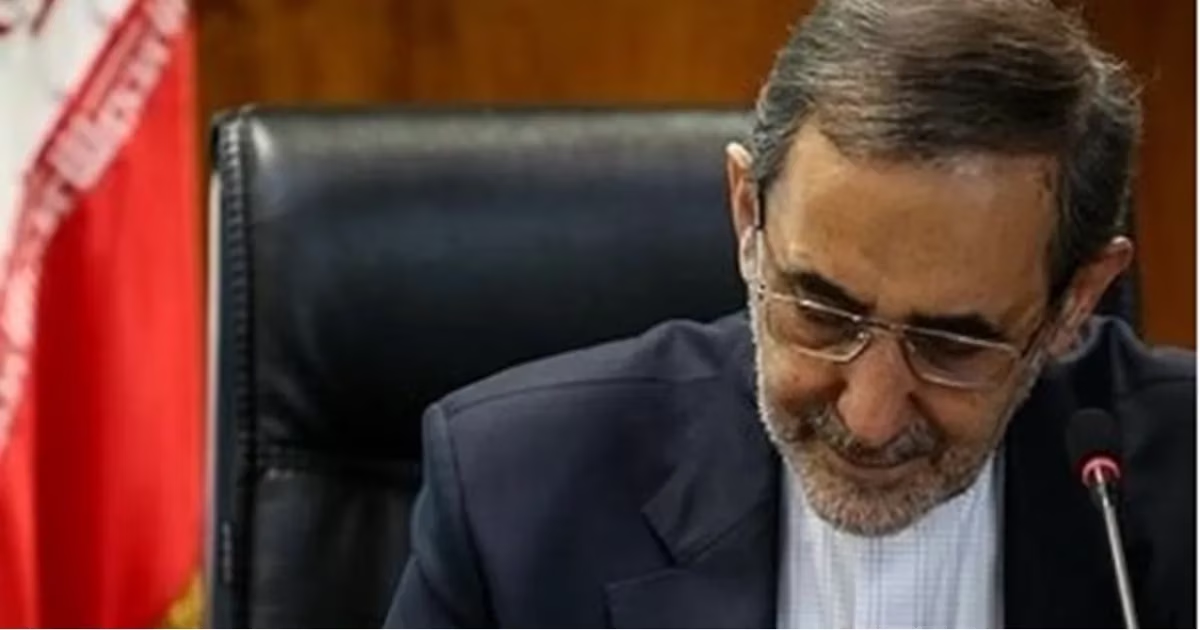
Ali Akbar Velayati, the Iranian Supreme Leader's advisor for international affairs, stressed that lasting stability in the region cannot be achieved through fragile diplomatic promises, but rather through imposing a real balance of power. He explained in press statements that relying on what he described as 'the mirage of unsupported commitments' costs parties dearly, emphasizing that recent shifts in regional power equations have redrawn the political map.
Velayati pointed out that historical Western fears of growing Iranian influence have now materialized as a tangible reality, considering that 'the new architecture of powers' in the Middle East has become an undeniable fact. He added that reports discussing the desire of the US administration led by Donald Trump to reach understandings to ensure freedom of navigation in the Strait of Hormuz are evidence of the declining effectiveness of the policy of threats directed against Tehran.
In the context of his criticism of the diplomatic moves of some regional parties, the Supreme Leader's advisor described engaging in settlement paths as a 'major strategic mistake'. He concluded his statements by emphasizing that any new security or political structure in the region will not succeed if it is based on an attempt to weaken the resistance front, stressing that power is the only guarantee against repeating past mistakes.
The old nightmare and historical fear that haunted Western theorists about Iran's rise to power has become a reality, and a new architecture of powers has been formed.
שתף את דעתך
Khamenei's Advisor: Iran's Rise to Power is Now a Reality and the Balance of Power is the Guarantor of Peace