






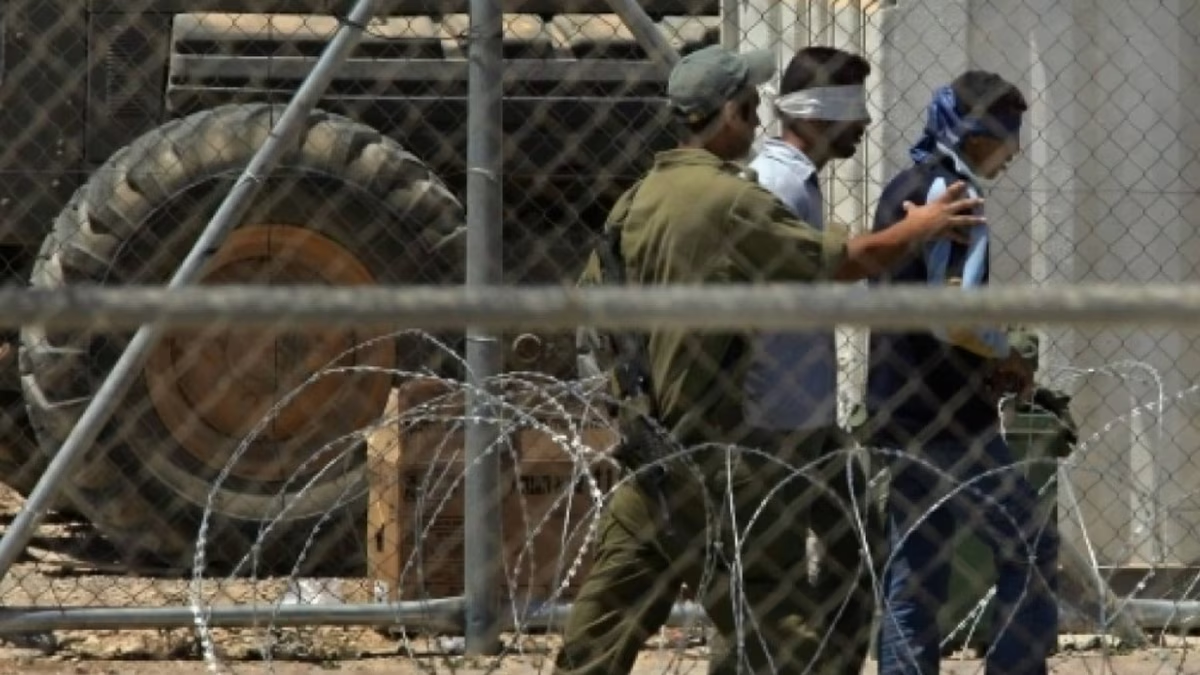
The management of the American newspaper 'The New York Times' announced its adherence to the accuracy of what was stated in the opinion piece by writer Nicholas Kristof, titled 'The Silence on Rape Against Palestinians'. The article included direct accusations against the Israeli occupation authorities of systematic sexual assaults against Palestinian prisoners in detention centers, including the use of trained dogs in acts of abuse and assault, which sparked widespread controversy in media and political circles.
Kathleen Kingsbury, editor of the opinion section, along with the writer, affirmed that the published material underwent intensive scrutiny and comprehensive fact-checking before its release to the public. Sources clarified that subsequent examination did not prove any fundamental errors, noting that reports from international human rights organizations, and even some Hebrew media outlets, are providing an increasing database documenting sexual violence and physical humiliation suffered by detainees at the hands of security forces and settlers.
In contrast, this publication caused a state of escalating tension and sharp division within the venerable newspaper's corridors, as the news section clashed with the opinion section over editorial standards. A number of journalists within the institution expressed their dissatisfaction, considering that publishing such sensitive investigations in the opinion section might weaken the newspaper's global credibility and open the door to questioning the accuracy of news reports that adhere to different professional protocols.
On the political level, occupation Prime Minister Benjamin Netanyahu launched a scathing attack on the newspaper, describing what was stated in the article as a 'blood libel' aimed at distorting Israel's image. Officials in the occupation government threatened to take legal action and prosecute the newspaper on charges of defamation, but 'The New York Times' management responded clearly, considering these threats a blatant attempt to exert political pressure and undermine the independent journalistic coverage pursued by the institution.
The repercussions of the article did not stop at the political aspect but extended to the readership, as the publisher acknowledged the cancellation of a number of subscriptions by opponents of the article's content. While some accused the writer of promoting political propaganda, other readers expressed their appreciation for the newspaper's courage in shedding light on unspoken issues, which reopened the debate in the United States about the boundaries between opinion and investigative reporting on thorny international issues.
The article underwent strict scrutiny and careful fact-checking, and there is increasing evidence from human rights organizations documenting the ill-treatment of detainees and sexual violence.
שתף את דעתך
Division in 'The New York Times' After Investigation into Sexual Abuse Against Palestinian Prisoners