






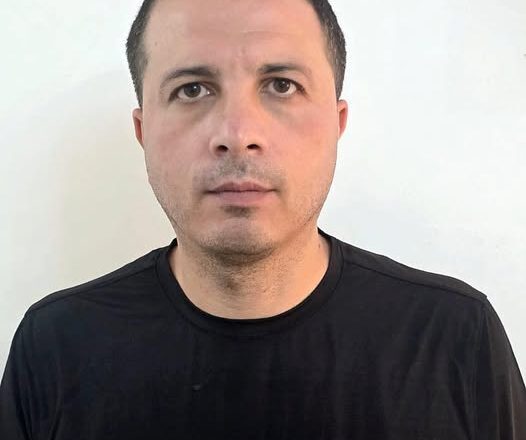

The meeting I had via Zoom with a group of our community members and supporters in the American city of Seattle was not just a fleeting solidarity event; rather, it was a manifestation of the great confrontation between the "narrative of truth" and the ideology of monstrous brutality. For me, as a Palestinian who experienced imprisonment with all its brutal details, this meeting was the moment I realized that no matter how high prison walls may be, they cannot conceal the cry and testimony of the victim if it finds its way to human conscience.
The Prison as a Mirror of Fascism and the New Nazism
That day, I spoke about the radical transformation that occurred in Israeli prisons after October 7th—a transformation that was not merely a random retaliatory reaction, but a systematic policy led by Itamar Ben Gvir, the heir of Wilhelm Wagner, the Nazi. In my testimony, I recalled how the practices of Nazi concentration camps, from "Auschwitz" to the horrors of the Inquisition, were revived and mixed with a vengeful mentality aimed at crushing the human spirit. What is happening today in the depths of prisons is a stain of shame that humanity's memory will record, where the jailer surpasses history in inventing methods of torture saturated with ideology, hatred, and extremism.
The Moral Shock When the Historical Victim Apologizes
The biggest surprise came during the discussion session, when Melissa Choudhury, a Democratic congressional candidate of Jewish descent, spoke. Her intervention was not only political but also a moral shock, as she began with an explicit apology for the crimes committed in the name of her former religion, as she had converted to Islam, affirming that my testimony about the prisons brought back to her mind what her grandfather, who was imprisoned in Auschwitz, had told her about the horrors of Nazism.
When she asked me: How can I help you? I found no more eloquent answer than my saying: "Be human, and Palestine will be your compass." This phrase encapsulates the vision of leader Marwan Barghouti, who taught us that the "Holocaust" as a crime against humanity concerns us, as victims of injustice, more than its perpetrators, for the principle is one: killing a human being because of their race or religion is the greatest sin. And the crime committed against Palestinians today is no less painful; in fact, it is more severe because it is a continuous tragedy for a century, under the world's gaze.
The Diaspora: The Parallel Front of the Struggle
The scene in Seattle, where the hall was packed with young people, many of whom had never seen Palestine or mastered its language, carries deep political significance. I felt then that the years of sorrow had not been in vain, and that "cross-border awareness" is the weapon that the occupation fears.
We are facing a national imperative that requires us to re-read the role of communities abroad. The influence these individuals create in American decision-making centers is not a luxury, but a parallel struggle no less important than steadfastness at home. The support Israel enjoys has been built through decades of organized institutional work, and today we must learn the lesson:
1. Investing in people: We must pay extreme attention to diaspora members and international supporters.
2. Division: Palestine is greater than factions and ideologies; therefore, communities must remain immune to internal conflicts.
3. Unified identity: The only definition should be "Palestinian," the only belonging "Palestine," and the compass "justice."
Finally
The Seattle meeting proved that the Palestinian cause is not just a "legacy of memory," but a "cause for the future" led by a young generation crossing cultures and languages. Our success in transforming Palestine into a "standard for global ethics" is the shortest path to breaking chains, whether they are the chains of prison cells or the chains of international political bias.
שתף את דעתך
From Ben Gvir's Cell to Seattle's Halls: Palestine as a Compass for Global Conscience