






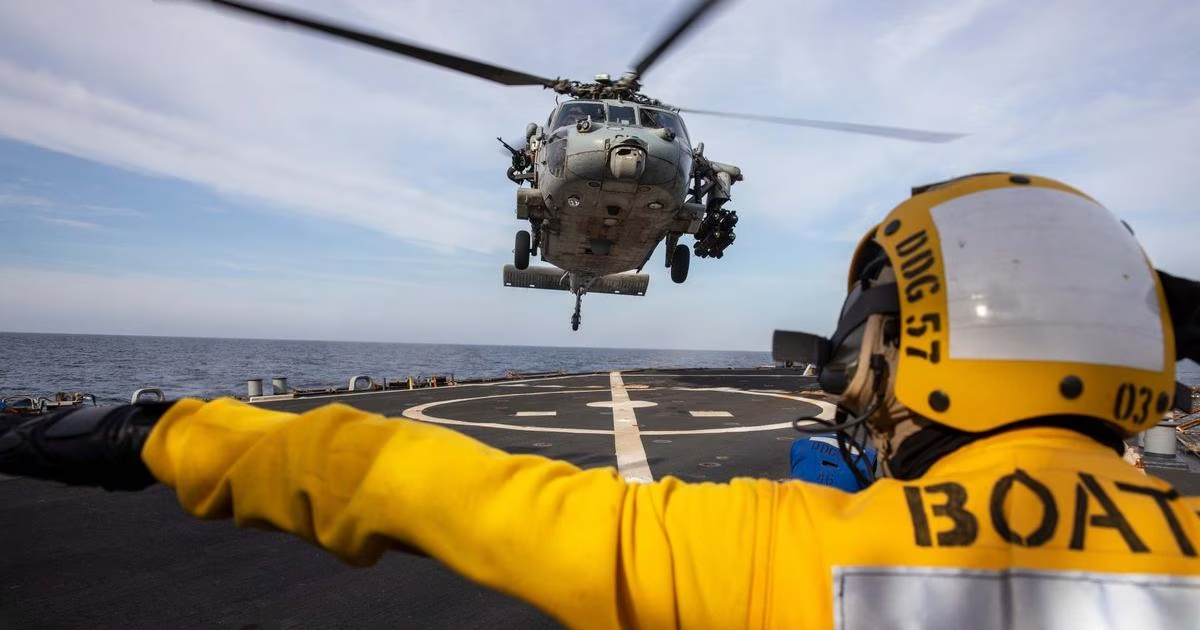
The tone of military threats between the United States and Iran has rapidly returned to the forefront, amidst reports indicating the possibility of a return to hostilities due to the faltering diplomatic path. Informed sources revealed that the US military command is preparing to present new field options to President Donald Trump, aimed at addressing the increasing challenges in the region.
In contrast, Iranian military spokesman Amir Akrami Nia affirmed that Tehran is dealing with the situation with extreme caution and does not trust American promises, emphasizing that his country does not consider the confrontation to have ended. These statements come at a time when the region is witnessing mutual mobilization, reflecting the extent of the gap between the two parties after the failure of the recent rounds of negotiations.
Military experts believe that Washington possesses a massive arsenal under the command of the Central Region, including three aircraft carriers and a wide range of destroyers and advanced naval vessels. However, this striking force faces complex logistical and geographical challenges, given the nature of the Iranian coast, which adopts an asymmetric warfare strategy against traditional powers.
The Chabahar port area stands out as one of the most difficult geographical points, where it is believed to contain hidden platforms for launching anti-ship missiles with a range exceeding 300 kilometers. Hundreds of Iranian fast boats and drones also pose a direct threat to any American naval movement, which may push Washington to carry out focused preemptive strikes to reduce Tehran's ability to respond quickly.
Despite American technological superiority, controlling vital waterways such as the Strait of Hormuz requires decisive military operations to silence Iranian fire sources spread across nearby islands. Qeshm, Kharg, and Hormuz islands are considered Iranian defensive strongholds capable of targeting amphibious forces and US rapid intervention units if they attempt a landing.
Analyzes indicate that the period of calm, which lasted about 23 days, was merely a tactical opportunity for both parties to reposition forces and enhance defensive and offensive capabilities. It appears that the option of a comprehensive confrontation remains unlikely due to its exorbitant human and material costs, which favors a scenario of limited operations or surgical strikes against specific strategic targets.
Any large-scale military movement to control the Iranian coast would require an unprecedented military buildup, which puts the decision-maker in the White House before difficult choices. The coming days will determine whether these leaks are intended for political pressure or are an actual prelude to military action that changes the balance of power in the Middle East.
Iran does not trust America and does not consider the state of war to have ended, and the Iranian army is ready for all scenarios.
שתף את דעתך
Washington's Military Options Against Tehran: Confrontation Scenarios and Challenges of Complex Geography