






The intensity of criticism directed at the head of the occupation government, Benjamin Netanyahu, is escalating following the announcement of a temporary ceasefire in southern Lebanon. These accusations focused on the complete delegation of the security of northern settlers to the United States, which transformed Israeli decision-making into a state of absolute dependence on Washington, which now controls the course of military operations.
Hebrew media sources reported that the price Israel is paying for this support is granting Washington veto power over the movements of the occupation army in Lebanon. This political entanglement has led, according to observers, to restricting the forces' ability to deliver decisive blows, and made field movements hostage to a phone call from the White House.
With the truce in effect, television screens captured scenes of Hezbollah elements returning to the border areas in southern Lebanon, where they waved yellow flags over bridges previously targeted by Israeli aircraft. These scenes broadcast a state of complete silence and disappointment within Israeli circles that were expecting different results from the military operation.
Analysts in the Hebrew press described the truce as 'hasty,' asserting that the image that emerged at dawn on Friday was an unofficial declaration of the failure of the war's objectives. While Hezbollah elements were firing in celebration, settlers in the Galilee were leaving public shelters with mixed feelings of fear and uncertainty.
Reports indicate that thousands of residents in northern settlements spent two full months underground in harsh conditions, only to return to their homes without real guarantees of their protection. The state, according to media confessions, failed to fulfill its promises to provide sustainable security for these settlers who now feel abandoned.
In a related context, what is described as the 'Fourth War in Lebanon' ended without achieving any clear military decisive outcome on the ground, which puts the political and military leadership in the dock. Experts believe that mutual blame between the political and military levels will not absolve anyone of responsibility for the failure to break Hezbollah's military power.
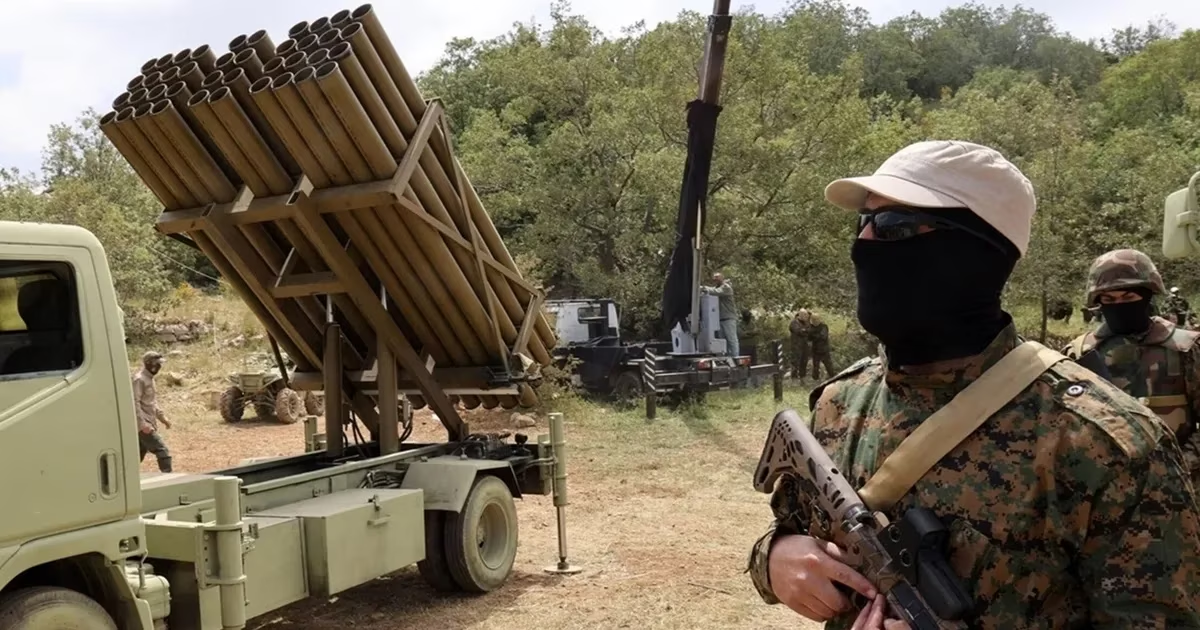
Sources quoted soldiers in the occupation army who returned from the northern front with disturbing testimonies about the combat capabilities of Hezbollah fighters. The soldiers confirmed that the party exploited previous periods of calm to rehabilitate itself militarily in a way that exceeded expectations, making the recent confrontations more fierce than previous wars.
Field testimonies clarified that Hezbollah fighters showed combat ferocity and high organization in the field, which surprised the invading forces who faced fierce resistance. It appears that the party succeeded in overcoming air strikes and building a defensive and offensive system capable of rapid recovery away from bureaucracy.
Analyzes confirm that Israel has lost its strategic independence since the events of October 7th, as major decisions are now being cooked up in the corridors of Washington. This shift has made American army officers, in coordination with their Israeli counterparts, the ones leading operations behind the scenes in Gaza and Lebanon alike.
Despite attempts by Netanyahu and the American administration to portray the results as achievements against regional influence, the reality on the ground indicates the opposite. Statements about 'expelling Hezbollah' away from the borders clash with the reality of its elements' rapid return and their public presence immediately after the cessation of air raids.
It appears that there are attempts to cover up the absence of a decisive decision through media noise and talk of tactical victories that do not change the strategic reality. In the midst of this political conflict, the issue of northern residents stands out as one of the biggest failures, as they were left without clear plans for reconstruction or compensation for their losses.
Half of the residents of the northern areas suffer from insufficient protection, as their future plans have collapsed due to ongoing security threats despite the truce. This situation has created a sense of bitterness among settlers who believe that their government sacrificed their security for international political calculations that do not serve their direct interests.
Complete dependence on Washington prevented the army from delivering 'real blows' that would have been capable of changing the balance of power, according to the right-wing perspective in Israel. The question remains about Israel's ability to regain the initiative in the presence of an American 'veto' that takes into account Washington's broader regional interests.
In conclusion, these developments show that the current round of conflict has not ended the threat, but perhaps postponed it while giving Hezbollah a new opportunity to restore its capabilities. The northern front remains open to all possibilities in the absence of a radical solution that guarantees the safe return of settlers to their homes permanently.
Israel effectively lost its independence since October 7th, as its political leadership entrusted the security of northern settlers to the United States.
שתף את דעתך
Disappointment in Occupation Circles: Hezbollah Not Defeated, Dependence on Washington Restricted the Army