






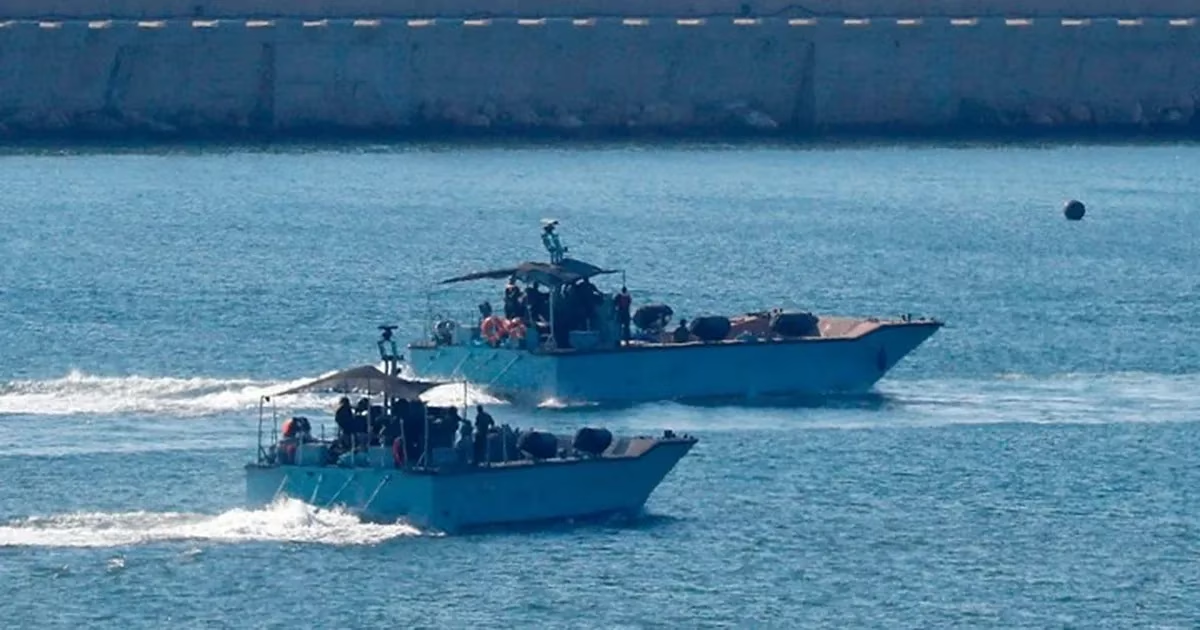
Hebrew reports have revealed escalating challenges facing the occupation army's navy, indicating that this military branch has not adequately utilized its capabilities during the current confrontations in the Gaza Strip and Lebanon. Sources clarified that recent weaknesses have prevented the navy from playing an effective role in offensive operations, raising questions about its readiness to lead missions in geographical sectors far from the occupied coasts.
Media sources reported that the occupation's concept of naval force operation is based on considering the sea as the main lifeline, as the Hebrew state relies on maritime routes to secure more than 90% of its vital supplies. This complete reliance makes Israel a strategic 'island' surrounded by a hostile environment, placing freedom of navigation at the forefront of national security priorities, which have experienced real tremors amid recent tensions with Iran.
The report highlighted the severe damage to shipping lanes in the Arabian Gulf and the Bab al-Mandab Strait, where Houthi attacks have almost completely paralyzed shipping traffic at Eilat Port. Sources confirmed that these developments have proven the danger of Israel's absolute reliance on the sea, especially with the emergence of new threats affecting strategic depth and directly impacting the global economy linked to these passages.
Military leadership faces challenges in protecting energy infrastructure and gas platforms, which requires advanced intelligence and operational capabilities to thwart long-range attacks. Experts warned that the future may bring more complex threats, including suicide explosive boats and unmanned submarines, necessitating preparedness that exceeds traditional measures currently employed in securing coasts.
Despite the navy possessing unique advantages similar to the air force in terms of long-term field presence and information gathering, its use in the current war has remained limited. Sources indicate a gap between available capabilities and actual implementation, as naval units could have made a much greater contribution to ongoing military operations, which puts the new commander of the force to a real test.
Concerns are prominent within the General Staff regarding the unpreparedness to bear military risks, especially concerning the potential damage to warships in direct confrontations. The report touched upon the necessity of enhancing operational cooperation with regional countries and the US Fifth Fleet to counter Turkey's escalating naval influence in the Eastern Mediterranean, where Ankara has a clear numerical superiority with 50 warships compared to only 15 for the occupation.
In conclusion, the report stressed the necessity of drawing lessons from the events of October 7 to develop a system for protecting maritime borders against infiltration and commando operations. The current situation requires a combination of offensive initiative and technological innovation to close security gaps and ensure that the failure to protect vital shipping lanes, which represent a cornerstone of the occupation's economic and military existence, is not repeated.
Strategically, Israel is an island surrounded by enemies, and ensuring freedom of navigation is a fundamental condition for its national security.
שתף את דעתך
Hebrew Report Reveals Naval Failures and Escalating Strategic Threats Against the Occupation