






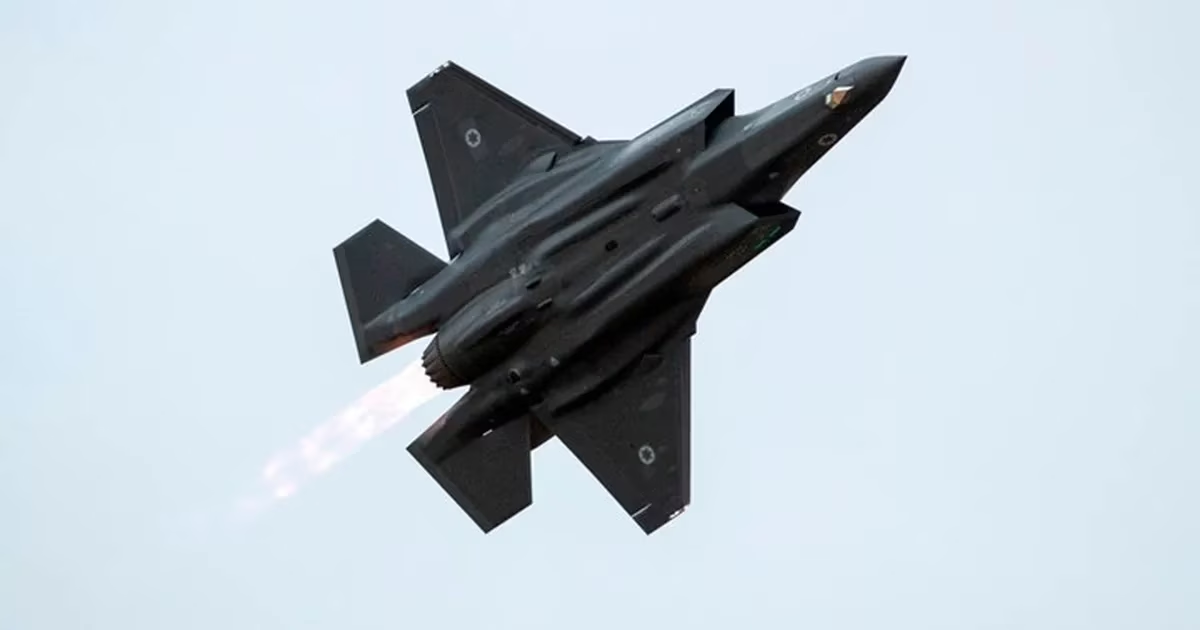
Security and political assessments in Tel Aviv indicate the necessity of preparing for a new round of fighting with Iran, following what was described as the relative failure of the Pakistan negotiations. Despite the destruction of vital Iranian facilities over the past forty days, internal Israeli readings suggest that these strikes did not eliminate the core strategic power of the regime, but rather, in some aspects, led to greater rapprochement among Tehran's proxies in the region.
Retired Israeli Ambassador Bahij Mansour considered the current state of calm to be merely a 'warning sign' and not a strategic gain. Mansour explained in an analysis published by the Hebrew press that Israel and the United States achieved clear military superiority in the field, but failed to translate this superiority into tangible political gains, noting that this gap will define the features of the future conflict and its final outcomes.
Despite the intensity of the attacks that targeted the Iranian interior, leading to the assassination of prominent leaders and the disruption of Revolutionary Guard activities, reports confirm that the Iranian nuclear project remains far from collapse. Enriched uranium, which represents the cornerstone of Tehran's nuclear ambitions, remains fully under the regime's control, meaning that the main source of the threat has not been definitively neutralized despite the fierce fighting.
Sharp criticisms are escalating in Washington's political circles regarding the Israeli strategy, with American officials believing that Tel Aviv has dragged the United States into a large-scale conflict without a clear exit plan. Some described this confrontation as a 'war of deception' based on exaggerations in assessing the Iranian regime's capabilities, in the absence of real international support from NATO and with European powers remaining on the sidelines.
Regionally, sources reported that Israel and the United States found themselves in near-total isolation, as Gulf states preferred not to intervene for fear of Iranian retaliation. In contrast, the roles of Pakistan, Turkey, and Egypt emerged as powers capable of influencing Tehran to reach a temporary ceasefire, but the ambiguity of the terms of this agreement gives Iran valuable time to reorganize its ranks and repair its damaged military capabilities.
Regarding supporting fronts, analysts believe that the Israeli and American armies demonstrated significant intelligence and air superiority by penetrating the Iranian interior and striking missile arrays. However, the erosion of Hezbollah's and the Houthis' capabilities did not prevent them from continuing to operate, which compels Israel to combine continuous military pressure with international diplomatic action to avert risks from its borders in the next round.
The ceasefire with Iran is not an achievement but a warning sign, and the gap between military power and political weakness raises concerns for the future.
שתף את דעתך
Israeli assessments: The next round with Iran is a matter of time and a failure to translate military achievement politically