






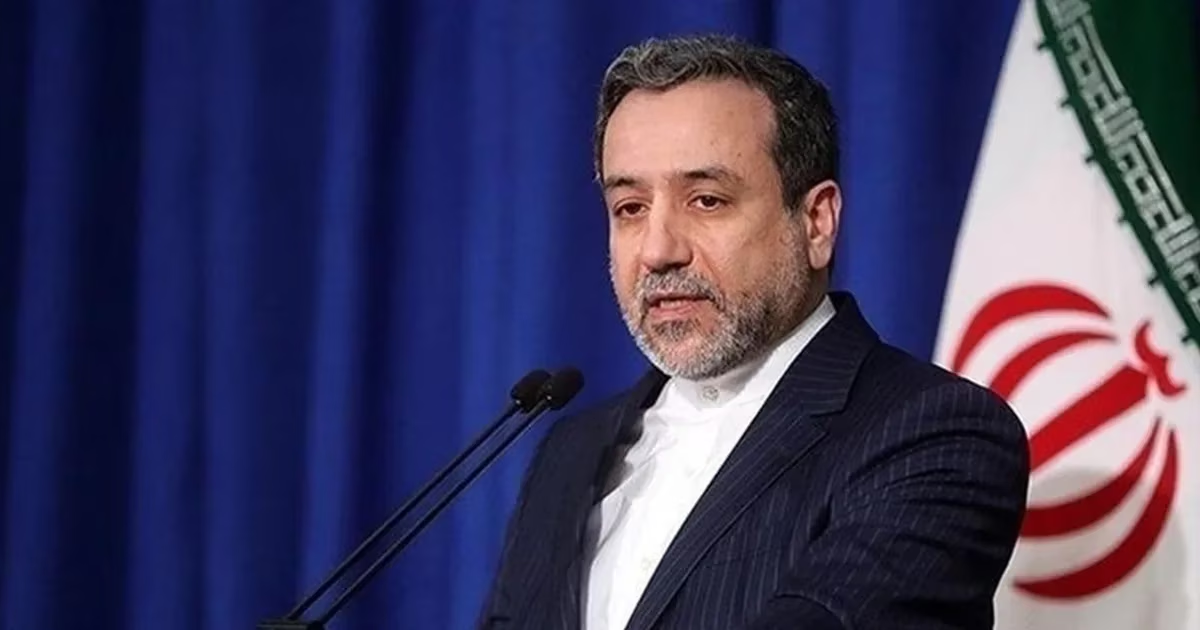
Iranian Foreign Minister Abbas Araghchi announced the existence of direct communication channels with US Special Envoy Steve Witkoff, noting that these communications have not yet reached the level of official negotiations. Araghchi explained that the exchanged messages sometimes contain threatening language or an exchange of political views, some of which are conveyed through intermediaries he described as friends, stressing that Tehran deals with these correspondences cautiously and within the usual diplomatic frameworks.
The head of Iranian diplomacy stressed that his country has not given any official response to the list of 15 American proposals, nor has Tehran put forward any counter-conditions or alternative proposals at present. He indicated that no decision regarding the start of serious negotiations has been made yet, as all Iranian observations are subject to study and scrutiny, while emphasizing that the Islamic Republic's conditions for ending the conflict in the region are clear and indivisible.
Regarding the internal mechanism for managing these communications, Araghchi denied the existence of any negotiations conducted by unofficial or parallel parties within Iran, stressing that the exchange of messages takes place exclusively through the Ministry of Foreign Affairs and in full coordination with the security agencies. He added that all these movements take place under the direct supervision of the National Security Council, to ensure the unity of the official Iranian position in the face of international pressures and external proposals.
Regarding the regional de-escalation file, the Iranian minister affirmed that Tehran will not accept any formula for a temporary ceasefire, but rather stipulates a comprehensive and complete cessation of the war that includes the entire region, not just the Iranian arena. He sent a message to the US administration that the Iranian people cannot be intimidated by threats, calling on the US president to address Tehran in a language based on mutual respect and recognition of national rights.
Regarding the security of international navigation, Araghchi affirmed that the Strait of Hormuz remains an open waterway for global trade, but it will only be closed to powers that wage war against Iran. He explained that Tehran has taken all necessary measures to ensure the safe passage of ships of friendly countries, considering that the strait can turn into a passage for peace if other countries respect the interests of the littoral states and avoid military escalation.
In conclusion of his statements, Araghchi touched upon the file of relations with neighboring Arab countries, acknowledging the existence of challenges and difficulties that may face the process of rebuilding trust in the next stage. However, he expressed optimism about his country's ability to restore these relations and overcome historical obstacles, while at the same time warning against any miscalculation that adversaries might make, and affirming the readiness of Iranian forces to confront any potential ground confrontation.
The Strait of Hormuz is fully open and closed only to those who fight Iran, and we have taken all measures to ensure the safe passage of friendly ships.
שתף את דעתך
Araghchi reveals the scenes of direct American messages and determines Tehran's position on the war