






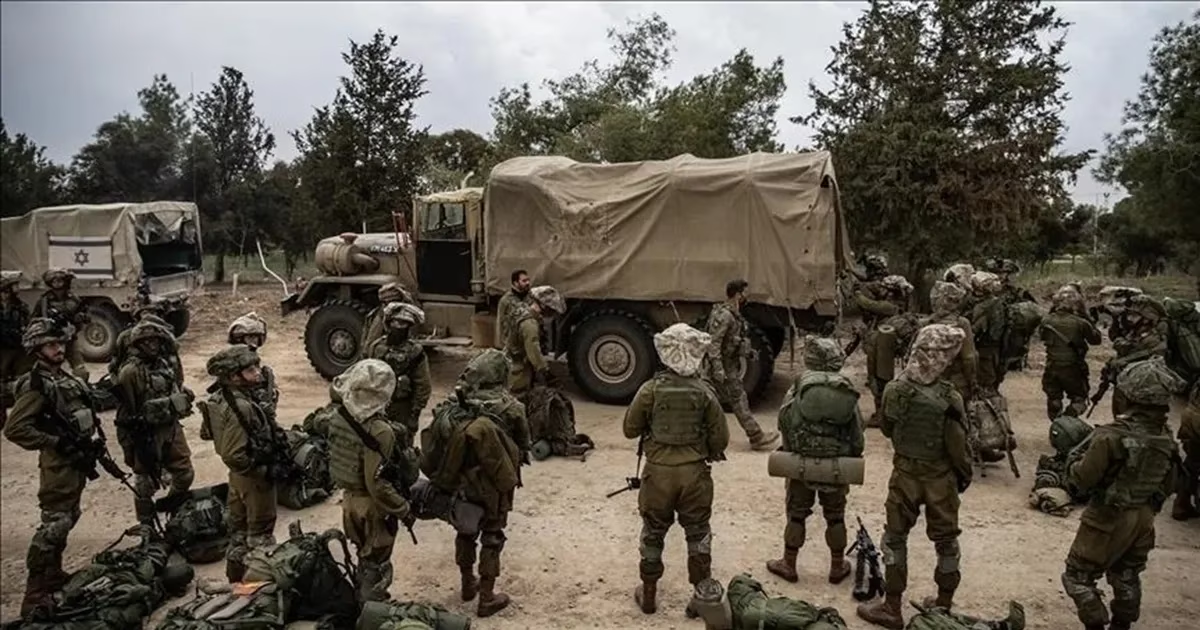
Security and political circles in the occupation state face a complex reality with the continued attrition of forces on multiple fronts, despite previous attempts to neutralize some arenas to focus on the Iranian file. Hebrew media sources reported that the arrival of US Marine reinforcements to the Gulf raises questions about the possibility of targeting Iranian oil facilities, especially Kharg Island, which represents the coronary artery of Tehran's economy with exports reaching 90% of its oil production.
Analysts believe that crippling Iranian export traffic may not necessarily require a costly ground invasion, but can be achieved through a tight naval blockade preventing tankers from departing, or by the US Fifth Fleet planting naval mines in vital passages. However, fears remain of an Iranian reaction targeting US forces stationed in the region with drones and missiles, without regard for the safety of oil facilities given the current state of alert.
In the context of strategic alternatives, proposals emerge to control strategic islands such as Abu Musa and Greater and Lesser Tunb near the Strait of Hormuz, as political and military leverage instead of getting involved in widespread ground confrontations. These moves come at a time when anxiety prevails in Tel Aviv over the new US administration's orientations, especially with the appointment of J.D. Vance as coordinator for negotiations, who is known for his reserved stances on foreign military interventions.
On the Lebanese front, the Israeli army continues its field attempts to create military 'pockets' aimed at isolating Hezbollah units in strategic areas such as Wadi Hujeir, Wadi Salouqi, and the town of Bint Jbeil. These moves seek to reduce the party's maneuverability, despite Hebrew sources acknowledging that the force currently used may not be sufficient to achieve a decisive outcome given the geographical and field complexities.
Israeli voices are escalating, demanding the expansion of pressure to include the political and social incubator in Lebanon, with calls emerging to place Parliament Speaker Nabih Berri within the direct targeting circle due to his continuous support for Hezbollah. These threats loom over new areas in southern Lebanon, such as the city of Tyre, to be included in evacuation and forced displacement lists, in an attempt to disengage the Amal movement from Hezbollah and deepen the internal Lebanese crisis.
Moving to the Yemeni arena, assessments indicate that the air attacks targeting Hodeidah port and Houthi infrastructure facilities have begun to bear economic fruit. Sources confirm that the extent of the damage to the regime in Sana'a has caused a shake-up in tribal alliances based on profit and benefit sharing, putting the group's leadership before difficult choices between continuing military escalation or maintaining internal stability.
In conclusion, it appears that the 'multi-front' strategy necessitates a comprehensive re-evaluation of the occupation's military capabilities and political objectives, given the intertwining regional and international files. While Tel Aviv relies on excessive military and economic pressure, the possibilities of sliding into a comprehensive confrontation remain, especially with armed factions in Yemen and Lebanon continuing to send missile messages confirming their unwavering involvement in the battle.
Israeli interests, in J.D. Vance's view, are entirely secondary, and his appointment as coordinator for negotiations with Iran does not guarantee the achievement of Tel Aviv's objectives.
שתף את דעתך
Israeli Assessments: Escalating Challenges on Iranian, Lebanese, and Yemeni Fronts, and Alternative Military Options