






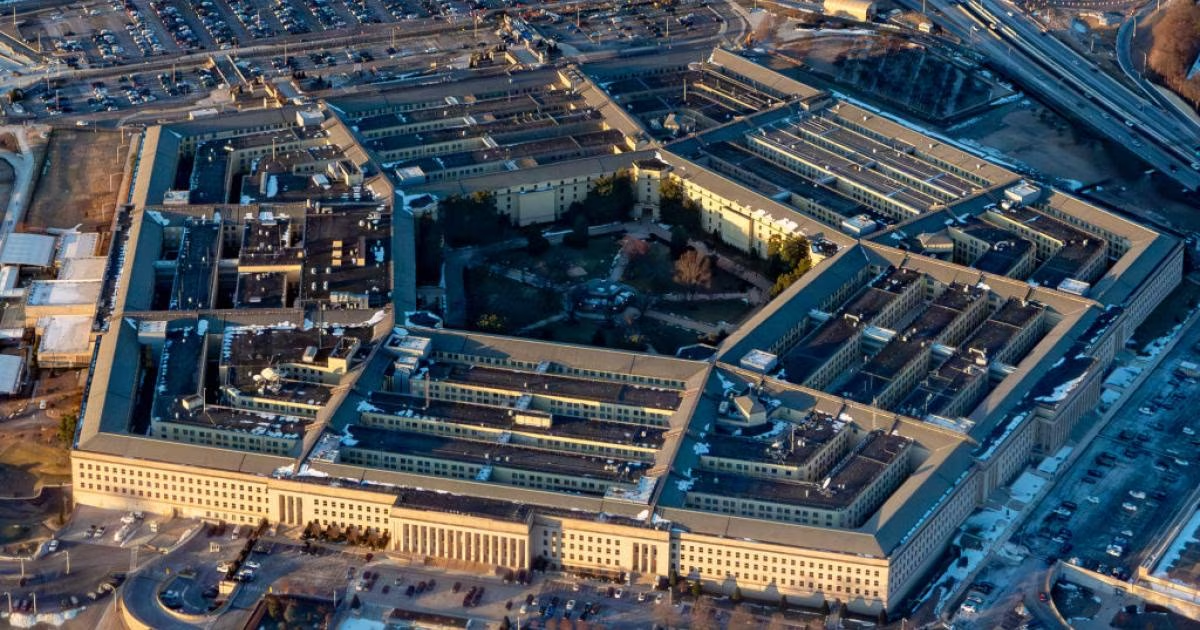
The U.S. Department of Defense is considering a strategic option to redirect shipments of weapons and ammunition, originally intended to support Ukrainian forces, towards the Middle East. These moves come amid reports indicating a severe depletion in U.S. stockpiles of vital ammunition due to the ongoing military escalation with Iran. Informed sources stated that this shift reflects increasing pressure on the American supply chain to balance needs across multiple battlefronts.
The list of weapons slated for transfer includes advanced interceptor missiles designated for air defense systems, which were previously purchased as part of an initiative launched by NATO to support Kyiv. According to press reports, these missiles were part of a program funded by partner nations to enhance Ukraine's defensive capabilities, but the urgent need in the Middle East has prompted military planners in Washington to reconsider distribution priorities.
In a related context, Admiral Brad Cooper, commander of U.S. Central Command, revealed the scale of military operations carried out against Iranian targets, confirming that over 10,000 sites within Iranian territory have been targeted. Cooper explained that these intensive strikes fall within a clear strategy aimed at undermining Tehran's ability to expand its military influence beyond its regional borders. These extensive operations have consumed massive quantities of interceptor missiles and precision munitions.
For his part, a Pentagon spokesperson emphasized the department's commitment to providing all combat requirements for U.S. forces and their allies to ensure superiority in the field and achieve desired victories. Despite these new directions, NATO officials affirmed that the flow of military equipment to Ukraine continues through existing funding programs. Officials noted that Kyiv's 'Priority Requirements List' program has attracted billions of dollars in investments to ensure continued support.
These developments raise questions about the ability of American defense industries to meet the increasing demand on two active fronts simultaneously. While Washington tries to maintain the pace of military support for Ukraine in its confrontation with Russia, it finds itself compelled to bolster its arsenal in the Middle East to counter escalating Iranian threats. The coming period is expected to witness further international contributions to compensate for shortages in strategic stockpiles and ensure the stability of military supply chains.
We will ensure that U.S. forces and the forces of our allies and partners are provided with what they need to fight and achieve victory.
שתף את דעתך
Pentagon Considers Diverting Military Supplies from Ukraine to Middle East to Counter Ammunition Depletion