






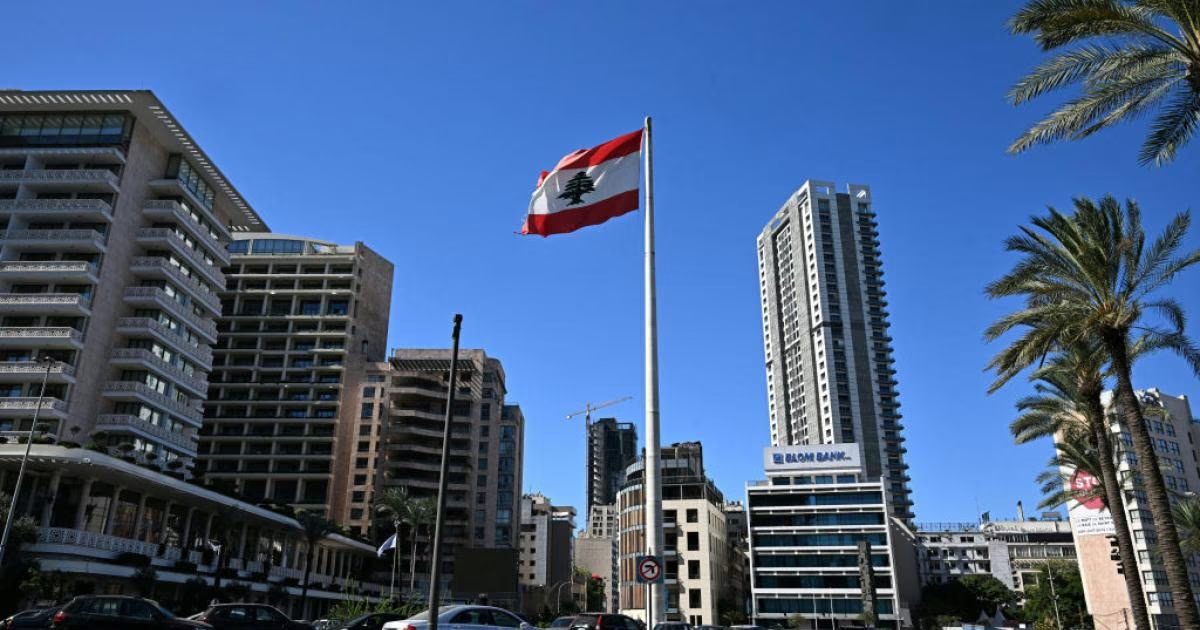
The Lebanese Ministry of Foreign Affairs and Emigrants took an escalating diplomatic step by summoning the Iranian Chargé d'Affaires in Beirut, Toufiq Samadi Khoshkhou, to inform him of an official decision to withdraw approval for the accreditation of the designated Iranian Ambassador, Mohammad Reza Shibani. The decision included declaring Shibani persona non grata, with a deadline set for next Sunday, the twenty-ninth of this month, for him to permanently leave Lebanese territory.
These rapid developments come amidst accusations by Lebanese officials that the Iranian Revolutionary Guard is directly involved in managing the military operations Hezbollah is waging against Israel. Beirut considered these actions a crossing of red lines and an interference in the sovereign affairs of the state, especially given the current circumstances the country is experiencing.
In parallel with the expulsion decision, Lebanese authorities recalled their ambassador in Tehran, Ahmed Suwaidan, for consultations and to assess the repercussions of the current diplomatic crisis. The Lebanese Foreign Ministry justified these measures by the existence of clear violations by Tehran of diplomatic norms and established international principles governing relations between states, emphasizing the necessity of respecting national sovereignty.
Informed sources reported that the Lebanese government had taken a firm decision since the outbreak of military confrontations, prohibiting any potential security or military activity by the Iranian Revolutionary Guard on its territory. It appears that the latest measure came as a result of monitoring activities that Beirut considered a violation of this explicit government decision, necessitating a decisive diplomatic response.
Sources indicated that the Lebanese Foreign Ministry had previously requested written clarifications from the Iranian side regarding a number of objections, but the responses were not sufficient or convincing. These objections focused on official Iranian statements hinting at direct operational coordination and joint operations rooms between the Revolutionary Guard and Hezbollah, especially after the synchronized missile launches.
The points of contention also included statements made by the Iranian Ambassador to the United Nations following the targeting of a hotel apartment in the Raouche area of Beirut, where he claimed that the targets were Iranian diplomats present with the knowledge of Lebanese authorities. The Lebanese Foreign Ministry quickly denied these claims outright, asserting that it had no records proving the diplomatic status of these individuals or knowledge of their missions.
This crisis reflects the depth of the current rift between Beirut and Tehran, as official Lebanon insists on distancing itself from any external interference that affects its sovereign decision or puts it in confrontation with the international community. This step is expected to provoke widespread reactions regionally and internationally, given the sensitivity of the timing and the nature of the historical relations between the two parties.
The Lebanese state considers what happened a violation by Tehran of diplomatic conduct norms and established principles between the two countries.
שתף את דעתך
Lebanon Expels Iranian Ambassador, Revokes Credentials Amid Accusations of Sovereignty Violation