






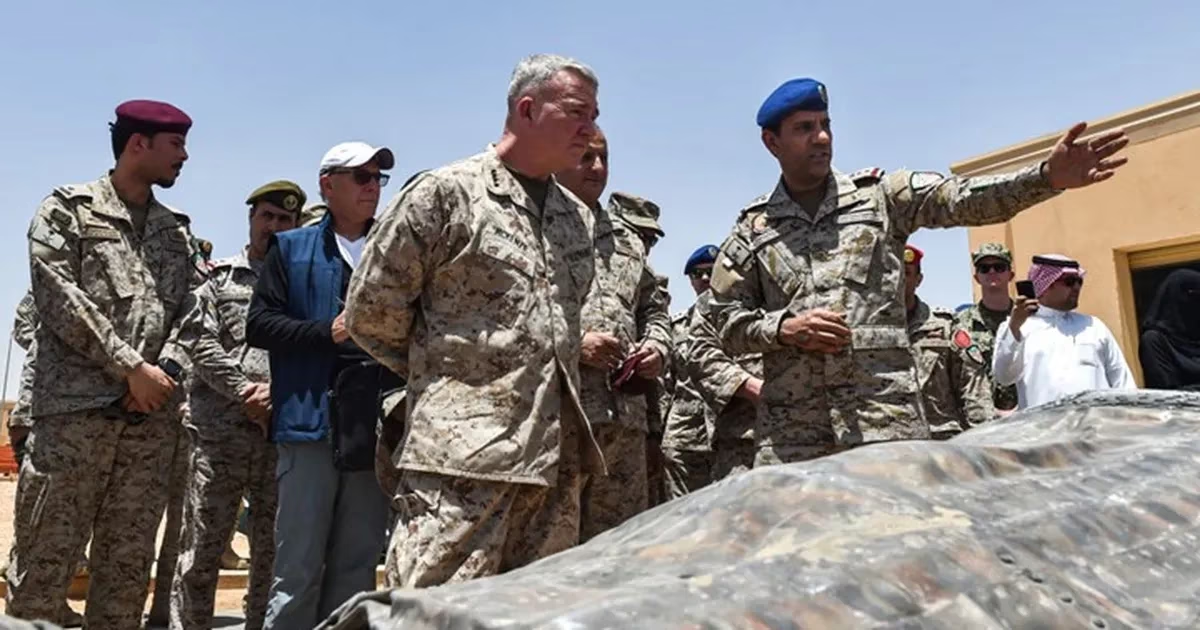
Western diplomatic and military sources have revealed a striking development in the regional conflict, as the Kingdom of Saudi Arabia has agreed to open King Fahd Air Base in Taif to American forces. This move aims to enhance Washington's operational capabilities amid the open military confrontation with Tehran, indicating a shift in Saudi strategy towards direct military involvement.
Reports clarified that the selection of King Fahd Air Base was due to its excellent strategic location, which places it beyond the range of Iranian drones compared to other bases such as Prince Sultan Air Base. The base also gains additional importance due to its proximity to Jeddah, which has become a vital alternative logistical hub amid the disruptions affecting maritime navigation through the Strait of Hormuz.
In a related context, American sources revealed that the United Arab Emirates has shown remarkable readiness to deal with a long-term war scenario that could last up to nine months. The sources indicated that Abu Dhabi is no longer pressuring for a swift end to the conflict but is currently focusing on strengthening its defense systems to counter continuous missile and aerial threats.
Military data indicates the extent of damage suffered by the region's countries since the outbreak of operations on February 28, with Emirati defenses successfully intercepting hundreds of ballistic missiles and thousands of drones. This escalation has prompted Gulf states to re-evaluate their previous stances, which stipulated that their territories should not be used as launching points for direct attacks against Iranian territory.
Qatar was not far from the repercussions of this conflict, as its energy facilities were subjected to what were described as the most violent attacks, directly targeting the vital Ras Laffan refinery. Qatari Energy Minister Saad Al-Kaabi stated that the resulting damage could take years to repair, noting that about 17% of Qatar's natural gas production was affected by this targeting.
For its part, the Sultanate of Oman adopts a different stance, calling for de-escalation and withdrawal from the conflict, with its Foreign Minister Badr Al-Busaidi warning against falling into the 'trap' of eternal war. Al-Busaidi considered that the United States is sinking into a conflict that does not achieve real gains for its allies, calling for the necessity of clarifying the catastrophic risks of continuing this confrontation on regional stability.
In contrast, Saudi Foreign Minister Prince Faisal bin Farhan's statements affirmed the seriousness of Riyadh's position, describing the Iranian attacks as 'atrocious' and directly threatening regional security. Bin Farhan stressed that the Kingdom reserves its full right to respond to these threats, including resorting to military options to protect its sovereignty and interests.
Observers believe that Gulf states today find themselves facing a complex dilemma, balancing the necessity of deterring the Iranian regime with avoiding a comprehensive war that could destroy everything. Political experts indicate that Riyadh and Abu Dhabi have realized the difficulty of coexisting with continuous threats aimed at closing vital waterways and disrupting global energy supplies.
The Strait of Hormuz remains at the heart of this difficult equation, with five global oil supplies passing through it, making it a strategic leverage point for all parties. US President Donald Trump's administration seeks to rally broad international support to secure this waterway, relying heavily on the pivotal role that Gulf states can play in this regard.
Despite the military facilities granted, Riyadh is trying to maintain a delicate thread of diplomacy, based on previous agreements mediated by China in 2023. This policy, described as 'walking a tightrope,' aims to enhance military deterrence without definitively closing the doors to dialogue with its Iranian neighbor.
Military analysts warn that any direct and widespread involvement in combat operations could open fronts whose end cannot be predicted, especially given the disparity in conventional and unconventional military capabilities. However, the continued targeting of oil infrastructure in the Gulf could push these countries to make tougher decisions that go beyond merely providing logistical support.
As the war enters its fourth week with no clear horizon for a solution, global capitals await the outcome of upcoming field and political movements. The air base in Taif and the shifts in Gulf positions remain a strong indicator that the region is heading towards a reshaping of security alliances to confront current challenges.
Riyadh's stance has shifted towards supporting American action as a means to deter Iran from its repeated attacks on regional security.
שתף את דעתך
Strategic Shift: Saudi Arabia Opens King Fahd Air Base to US Forces in Confrontation with Iran