






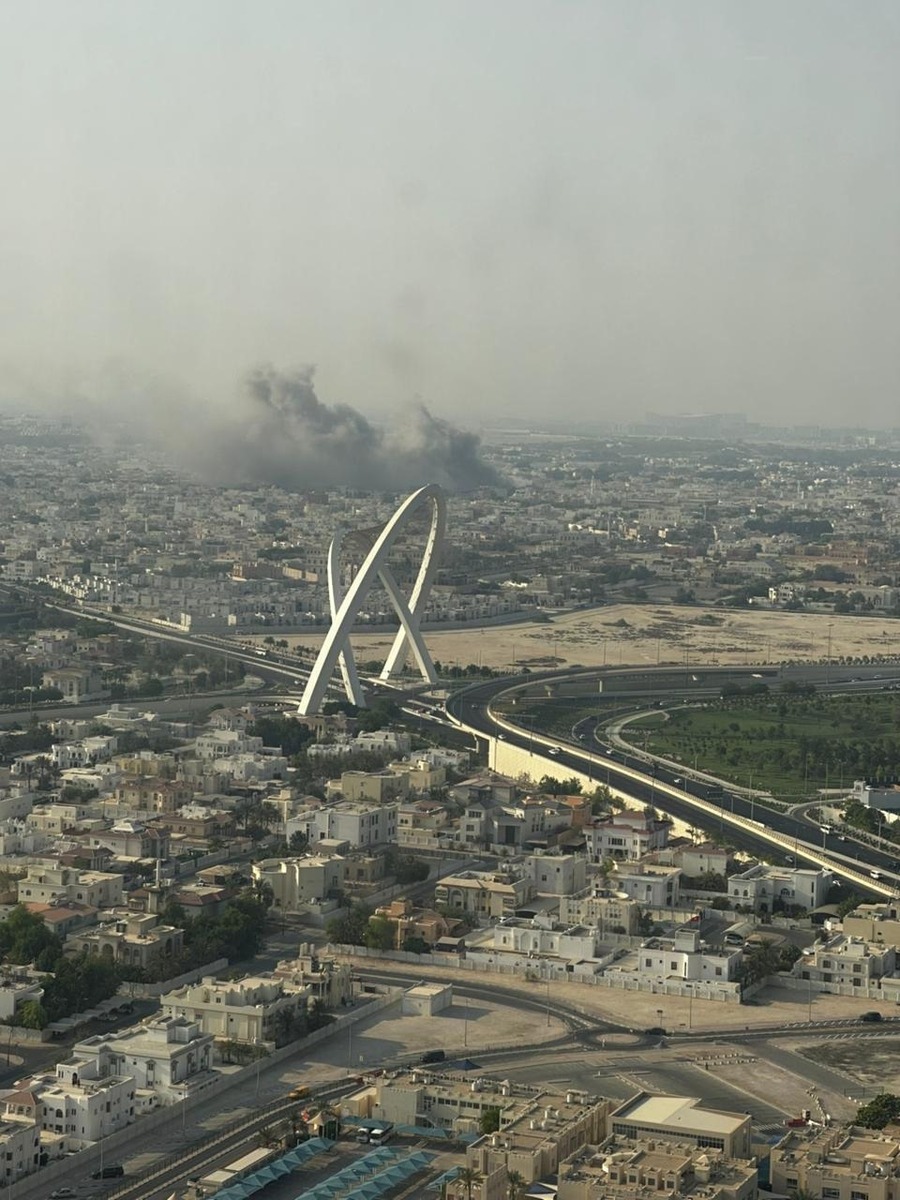
On Tuesday afternoon, Israeli aircraft launched a targeted airstrike on the headquarters of the Hamas negotiating delegation in the Qatari capital, Doha. Statements released immediately from the office of Israeli Prime Minister Benjamin Netanyahu, who is wanted by the International Criminal Court for war crimes, and from Security Minister Israel Katz, indicated that the target was the Hamas leadership, specifically those Israel described as opponents of the deal: Khalil al-Hayya, Zahir Jabareen, Nizar Awadallah, Muhammad Darwish, Ghazi Hamad, Khaled Mashal, and Izzat al-Rishq, names mentioned in a report by the Hebrew newspaper "Yedioth Ahronoth."
The aggression against Qatar has caused a sharp diplomatic shock regarding the Israeli genocide in Gaza. The most important question is whether Israel's move closes the door on ceasefire talks or opens opportunities to change the current dynamics with the aim of ending Israel's horrific war. The Israeli attack came while Hamas negotiators were deliberating on U.S. President Donald Trump's 100-word proposal, under which the movement would release all hostages (alive and dead) in exchange for a large number of Palestinian prisoners, a temporary ceasefire for sixty days, and the continuation of negotiations to reach a permanent agreement to end the war.
Reports vary regarding the extent of U.S. involvement in planning the strike, or at least its knowledge of it from the very first moment, given that U.S. warplanes and radars control the skies of the region. However, the diplomatic repercussions escalated quickly. In Washington, the Trump administration sought to contain the damage immediately by communicating with Qatari leaders, publicly questioning the "wisdom of the Israeli operation," and reaffirming the importance of America's relationship with the Gulf state. The potential reaction from "America's Arab allies," noting that the United States has no allies in the region, only followers (including Israel, which is considered the most valuable follower), also reinforces the international impression that Israel is a rogue state, violating all international laws with American protection.
It is worth mentioning that although Washington and Doha are still living in the aftermath of President Trump's visit to Qatar last May, which resulted in bilateral agreements valued at approximately $1.2 trillion (and Qatar's precious gift to Trump; a Boeing 747 worth $400 million), the reality indicates that Qatar has faced two military attacks since then, primarily due to American actions. On June 23, Iran responded to U.S. military strikes against its nuclear program (on June 21) by launching missiles at Al Udeid Air Base in Qatar, the largest U.S. military facility in the Middle East and the main center for U.S. air operations in the region. Although the Iranian attack dispelled Doha's worst fears regarding its partnership with the United States, the successful defensive cooperation that was evident in intercepting missiles and avoiding casualties alleviated Qatari concerns.
However, it is almost certain that the Israeli strike will undermine Doha's confidence in its relationship with America, especially since it occurred amid U.S.-backed ceasefire negotiations, of which Washington was informed in advance, and targeted residential buildings located next to a school and a gas station. Theoretically, Qatar, which financed the construction of Al Udeid base with $11 billion, could ask Washington to close its base and remove its 10,000 soldiers from there, which could serve as a catalyst for closing U.S. military bases in Saudi Arabia, Kuwait, the UAE, Bahrain, Iraq, Jordan, Syria, etc. But the reality suggests that this possibility is slim, as long as the United States uses the Iranian bogeyman to extort these countries.
Qatar's relations with other Gulf Cooperation Council member states have long been characterized by tension, especially after Saudi Arabia, the UAE, and Bahrain severed diplomatic and trade relations with Doha between 2017 and 2021. However, the Israeli strike on Doha prompted most Gulf capitals to express their shared anger through seemingly synchronized public statements, especially since the attack appears to have been carried out with prior knowledge from the United States, Qatar's closest supporter. (It is noted that in recent years, Qatar has continued to allow Hamas to maintain a local political presence at Washington's request to facilitate communication with the movement, and the Doha strike may lead Gulf officials to question the usefulness of these understandings with Washington).
The military cooperation of Gulf Cooperation Council states with the United States may also be affected, especially if the Gulf states conclude that U.S. assets at Al Udeid Air Base (which the U.S. used in its aggression against Iraq and Syria) facilitated the attack or deliberately overlooked it, while the U.S. Central Command has used the joint command center at the base decisively to defend Israel
שתף את דעתך
A Reading on the Israeli Aggression Against Qatar and the Lessons to Be Learned