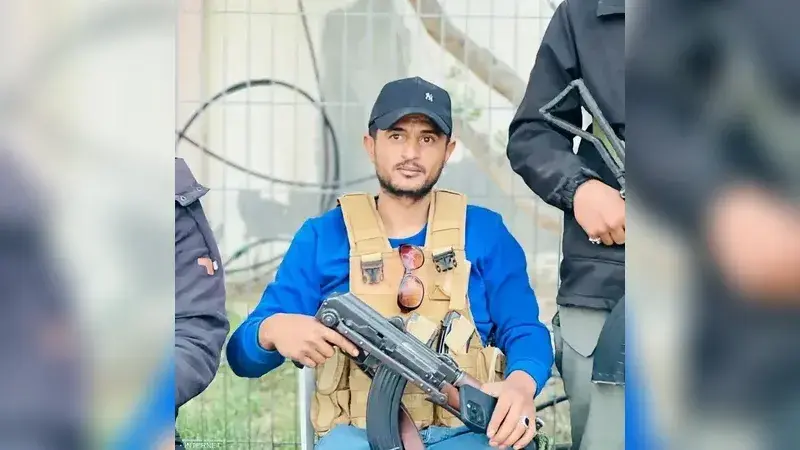







Recently, a clear shift has begun to emerge in the internal landscape of the Gaza Strip. Among the most notable of these changes is the emergence of local armed groups such as the Abu Shabab group, which has begun to assume roles previously reserved for the Hamas government, particularly in the civilian sphere related to organizing society, protecting aid, and monitoring the security situation. These groups do not only operate in the shadows; their presence has become felt on the streets, in aid distribution centers, at checkpoints, and even in direct interactions with the population.
This emerging role raises many questions: Has Hamas's civilian influence truly begun to decline? Are we witnessing the beginning of a split within Gaza between those who maintain security on the ground and those who manage the resistance? It is well known that Hamas has always combined military power with the management of civilian affairs, but now, under the pressure of the blockade, strikes, and losses, it may find itself forced to focus on the military aspect, leaving space for other forces to manage some of the day-to-day details.
The Abu Shabab group, which until recently was not a major player in the public eye, is now making steady progress. Through its role in protecting aid convoys and preventing chaos and theft, it presents itself as an organized force aiming to impose a sense of order, especially in light of the vacuum people feel as a result of the pressure on Hamas institutions. But who stands behind this group? And who supports its actions? These are questions that have yet to be resolved, and the street lacks clear answers.
On the public side, there is a wide divergence of opinion. Part of the population views these actions as necessary, especially in light of the collapse in services and the lack of effective oversight of some civil institutions. This group believes that any entity capable of maintaining security and distributing aid in an orderly manner deserves a chance. Meanwhile, another group is concerned, believing that the entry of unelected groups into the civil administration arena could lead to further chaos, raising questions about the legitimacy of these actors and their agendas, especially in an environment saturated with regional interference.
The question remains open: Is Gaza moving toward a new model that separates military and political action? Is this transition occurring by Hamas's own decision, or is it the result of pressures imposed on it? And what will be the fate of the new groups if the movement's circumstances improve or regional calculations change? This phase is unlike anything that came before, and what is happening today is more than just field arrangements; it is a test of Gaza's ability to adapt to a new political and security reality, shaped by war, interventions, and intertwined interests.
In this climate, Gaza appears to be on the verge of a real transformation. No one knows whether it will lead to stability or further division. What is certain, however, is that roles are changing, new players are asserting themselves, and people are caught between anticipation and experimentation, hoping only that the cost won't be in their daily lives and the security they have left.
Powered by Froala Editor
שתף את דעתך
Is Hamas's civilian influence really beginning to decline in Gaza?