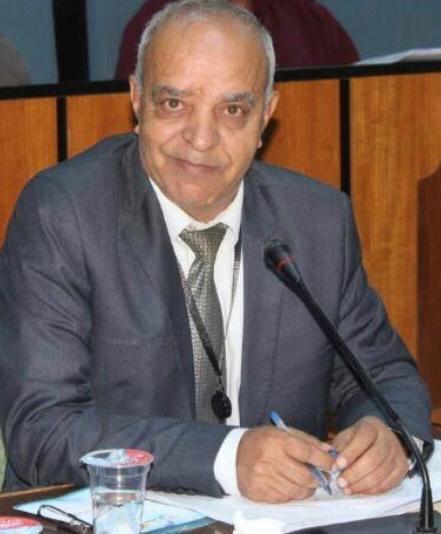







Dr. Walid Al-Arid
The book "Sesame Presses: Past and Present" by Dr. Sara Mohammed Al-Shammas has a simple title, but it resembles a stone door leading to an ancient oil press that still turns with love and nostalgia. It is not just the title of an academic study, but the key to a complete memory that purifies the oil of time and pours it over the nation's wounds.
The dedication, however, was not traditional; rather, it carried a deep-seated longing for the land and the people whose seeds were crushed, just as the occupation crushed them. The scent of wet soil wafts from the lines of the dedication, as if the author had dug her hands into the mud to extract an image of her mother or grandmother simultaneously squeezing sesame seeds and singing about the homeland.
Introduction to the book
From the very first sentence, we are faced with an emotional anthem, not just an academic introduction. The researcher says, "It's no wonder that the Palestinian people enjoy a rich cultural heritage of customs, arts, and professions, most notably the sesame-pressing profession."
In another sentence, she reveals her intentions with the sincerity of a lover: “Products such as sesame seeds, tahini paste, and halva are components deeply embedded in Palestinian culture and daily customs.”
Here we read not only about food, but about a love rooted in the earth, in the hands, in the rituals of daily life.
The structure of scientific research in the book's chapters
The book is only 156 pages long, but it is dense with content, meticulously crafted like a stone mill.
1. The rigorous scientific methodology:
- Accurate documentation: from Arab and foreign sources, international reports, and ancient heritage texts.
-Scientific comparisons between sesame cultivation in Palestine and other regions of the world.
-Using economic and cultural analysis tools simultaneously.
Evoking the stages of history from the Canaanite era through the Islamic era, then the Ottoman era, until the occupation.
2. Agriculture as resistance:
In the first chapter, we read:
“Oil extracted from sesame seeds was stored in rock-hewn wells in Jerusalem, as a strategic emergency stockpile.” (p. 10)
Here, the seed becomes a storehouse of resilience, not just food.
3. Sesame in Earth's civilizations:
In the second chapter, the researcher takes us to the Sumerian and Assyrian texts:
“The story of the gods drinking sesame wine after the great battle... is testimony to the fact that oil was a symbol of life, not just for cooking.” (p. 17)
It is as if history itself swears by oil that Palestine was here, and that sesame lived before the occupation was born.
4. Agro-environmental chapter
5. “Sesame is planted in the land where nothing else thrives... just as the Palestinian is born in the camp that grows nothing but dignity.” (p. 27)
5. Identity vs. Erasing:
The researcher says:
"Sesame cultivation and its products have been targeted... as part of Israeli plans to erase Palestinian cultural identity."
In this context, the press turns into a barricade and the oil into a document of resistance that does not dry up.
Conclusion: Oil that illuminates, not just consumes.
As the introduction began with a hymn, the conclusion came with an invitation:
“It is time to document this heritage, not just out of nostalgia, but as part of a project to protect the Palestinian self.”
“Sesame presses should be transformed into living heritage sites, where traditional agriculture is taught and showcased as part of the unarmed Palestinian struggle.”
In this proposal, the spirit of the researcher is revealed as a fighter who not only writes but also calls for life from the heart of clay and fire.
Between the lines:
What cannot be said directly, the writer said in the language of the eyes, between the lines:
It was as if she was talking to her mother when she wrote about the press.
It was as if she was writing a letter to her unborn child when she talked about establishing identity.
As if she were putting her hand on the wall and whispering: “I am not writing about sesame, but about a people who are squeezed every day and do not break.”
List of sources and references:
Rich and comprehensive, it included:
-Archaeological, agricultural and economic studies.
-Historical texts (Sumerian, Assyrian, Islamic, Ottoman).
-International reports on food security.
-Oral heritage testimonies.
-Scientific notes for the second edition:
1. Adding photos and field testimonies: - Interviews with remaining mill owners in Nablus, Gaza, and Rafah. - Photographing and documenting ancient stone mills.
2. Enrich the conclusion with practical recommendations: - Provide a detailed plan for transforming contemporary artefacts into living museums or educational sites. - Propose partnerships with cultural and agricultural institutions to document and pass on the profession.
3. Documentary appendices: - Comparative tables of historical sesame production. - Historical agricultural maps of Palestine and the locations of presses.
In conclusion, this is not a book about sesame... but about the inexhaustible Palestinian nerve.
It is a scientific and poetic testimony that every grain of oil pressed is a piece of land restored.
In this book, Dr. Sarah Mohammed Al-Shammas not only wrote, but also bled with longing and lit a lamp of oil that shines and never goes out.
Anyone who wants to know how agriculture can become resilient and how a small seed can become a whole nation should read this book and keep it in their library as a document of love and knowledge at the same time.
* Professor of Ottoman Documents, Modern Ottoman and Arab History, and Islamic Civilization
שתף את דעתך
When memory is squeezed... between knowledge and nostalgia, between the mill and the dust