





The Monetary Authority: The shekel accumulation crisis has reached levels that threaten the continued financing of trade with Israel through banking channels.
Dr. Mu'ayyad Afana: The shekel surplus threatens a black market for foreign currencies in Palestine, and promoting digital financial transactions is an important part of resolving the crisis.
Ayham Abu Ghosh: The absence of a Palestinian national currency is the biggest obstacle, and the Bank of Israel refuses to increase the ceiling, creating a gap between supply and demand.
Dr. Thabet Abu Al-Rus: The continuation of this crisis may push the Palestinian economy back to manual cash transactions, which will increase tax evasion and the black market.
Talat Alawi: Successive governments have failed to formulate a clear economic policy that reduces dependence on the shekel and the Israeli economy.
Dr. Sameh Al-Atout: Resolving the crisis cannot be solely technical or technological, but rather requires decisive political intervention, and Israel is obligated to accept the shekel as its currency.
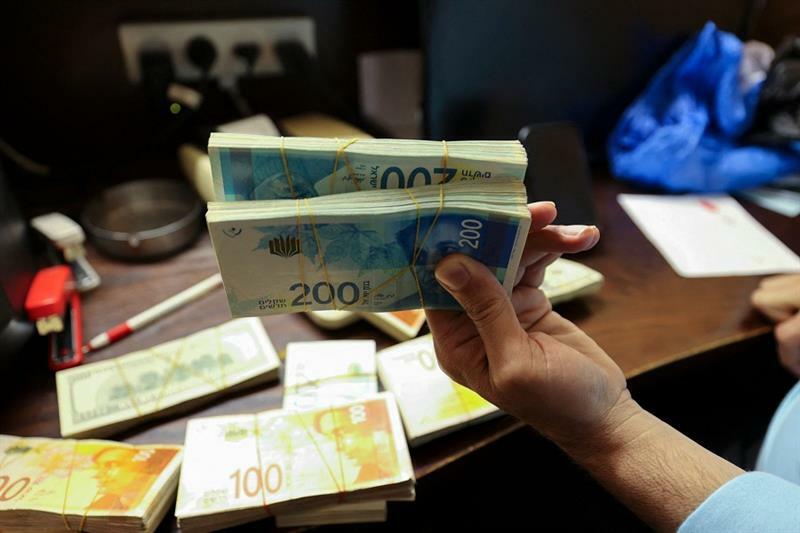
The shekel hoarding crisis in the Palestinian market is rapidly escalating, transforming from a monetary challenge into a comprehensive economic threat that threatens the stability of the banking system and undermines commercial activity. Warnings of the crisis' repercussions are emerging, with no strategic solutions yet in place.
In separate interviews with Al-Quds, experts, specialists, economic analysts, and university professors confirmed that the continued refusal of Israeli banks to accept surplus shekels, in addition to the disruption of transfer mechanisms agreed upon under the Paris Protocol, is pushing the Palestinian national economy toward worrying trends, most notably the growth of the black market for currencies and the expansion of the informal economy.
Under these circumstances, experts and university professors highlight the absence of a national currency and the slowdown in digital transformation as factors exacerbating the crisis. This necessitates urgent action and a reconsideration of existing economic policies to mitigate the repercussions of the crisis before it fully explodes.
Fears of a further decline in economic performance and activity
The Palestine Monetary Authority announced last Thursday that the shekel accumulation crisis in Palestinian banks has reached levels that threaten the continued financing of trade with Israel through banking channels.
The Palestine Monetary Authority explained in a press release that Palestinian banks are no longer able to accept additional shekels due to their inability to transfer excess shekels to Israeli banks.
The PMA stated: "The shekel has accumulated in the Palestinian market over the past years, and the loading ceilings set by the Israeli side have not responded to the natural increase in the size of the Palestinian economy during these years. The current ceilings prevent Palestinian banks from loading surplus shekels and feeding their accounts, which would contribute to financing trade operations and settling obligations between the two sides."
The Palestine Monetary Authority confirmed that Palestinian banks have incurred and continue to incur significant financial burdens due to their inability to replenish surplus shekels. Citizens are also bearing additional burdens due to their inability to conduct financial transactions through banks using shekels, and some customers have resorted to selling shekels and buying dinars and dollars, creating a black market for currency trading.
The Palestine Monetary Authority warned that the continuation of the crisis would negatively impact the liquidity needed to finance trade, both domestically and internationally, foreshadowing a further decline in economic performance and activity in the State of Palestine.
The PMA confirmed that it has contacted all relevant parties to request assistance in replenishing the surplus shekels accumulated in the Palestinian market, without achieving any positive results to date.
The PMA stressed that the situation calls for urgent international action to find a radical solution to the accumulation of shekels in the Palestinian market, urging Israel to fulfill its obligations toward its currency and allow the transfer of surplus shekels to Israeli banks.
A direct threat to the national economy
Economic expert Dr. Mu'ayyad Afana says that the shekel surplus crisis in the Palestinian economy is no longer merely a technical glitch or a temporary monetary problem. Rather, it has become a direct threat to the national economy and an additional source of risk to the stability of the banking system, given the disruption of regulatory mechanisms stipulated in economic agreements with Israel, most notably the Paris Protocol.
Afana explains that the recent statement by the Palestine Monetary Authority (PMA) provided a clear warning regarding the shekel surplus reaching unprecedented levels, threatening the continued financing of trade with Israel. This is due to Palestinian banks' inability to receive additional Israeli currency, as Israeli banks have stopped accepting Palestinian shekel surpluses. This has led to a real overcrowding crisis within the banking sector.
Afana points out that Article 27 of the Paris Economic Protocol grants the Palestinian Monetary Authority the right to transfer surplus shekels from local banks to the Bank of Israel for exchange into foreign currencies. However, this mechanism has been disrupted by the suspension of the joint economic committee between the two sides, which has gradually exacerbated the crisis until it reached its current level.
Afana points out that the roots of the crisis lie in the significant growth of the Palestinian economy since the signing of the Oslo Accords more than three decades ago, without a corresponding, effective, and proportionate increase in the amount of surplus shekels Israel receives.
The crisis deepened after October 7, 2023.
Afana adds: "Despite partially raising the ceiling in previous stages, it remained below the required level, especially with the doubling of the amount of shekels flowing into the Palestinian market from several sources, including informal trade, purchases by Palestinians inside Israel, wages of workers in Israel and the settlements, price differences, and the lack of Palestinian control over borders and crossings.
Afana explains that the crisis deepened particularly after October 7, 2023, in light of the Israeli escalation and attempts at "economic strangulation" against the Palestinian Authority. This made the surplus shekel a direct threat to commercial operations and threatened banks with several risks, such as storage, insurance, and cash freezes.
Afana warns of the most dangerous outcome of the ongoing crisis: the emergence of a black market for foreign currencies within Palestine.
Afana explains that the existence of a parallel market with exchange rates higher than the official rate will exploit citizens' and merchants' need for dinars and dollars, which will double their financial burdens, especially since salaries of public and private sector employees are often paid in shekels, while many other economic obligations are settled in foreign currencies, such as trade financing, real estate purchases, dowries, and university fees.
The need to turn to international financial institutions
Afana calls for urgent action to develop practical solutions to the crisis, beginning with unifying the efforts of the PMA with other relevant stakeholders and engaging international financial institutions to pressure Israel to fulfill its obligations under the agreements.
Afana recommends conducting a specialized study to monitor the sources of shekel flow and regulate them within a legislative framework, in a manner that serves the Palestinian economic interest.
Afana stresses the importance of digital transformation in financial transactions as a means of reducing the use of cash shekels, noting that the recent Cabinet decision to promote electronic payments in both the public and private sectors is a step in the right direction.
Afana emphasizes the need to provide a digital infrastructure and supportive legislation, along with incentives to encourage citizens to use electronic payment methods more widely.
Afana believes that if the shekel surplus crisis is not addressed with a strategic vision, it will become a permanent burden that will restrict economic growth and destabilize the Palestinian banking sector.
The ceiling needs to be raised from 16 to 22 billion shekels.
For his part, economic journalist Ayham Abu Ghosh says that the problem of the surplus of the Israeli currency (the shekel) in the Palestinian market is not new, but it has recently reached unprecedented levels, threatening serious shifts in the Palestinian economy, from undermining the banking sector to expanding the informal economy and declining tax revenues.
Abu Ghosh stresses that the lack of a Palestinian national currency is the biggest obstacle, as most transactions are conducted in shekels, a currency controlled by the Bank of Israel, which controls its flow into the Palestinian market.
Abu Ghosh points out that Israel refuses to review the Paris Economic Protocol, despite the passage of 31 years since its signing. The Protocol sets a ceiling on cash transfers to Palestine at 16 billion shekels annually, despite the subsequent growth of the Palestinian economy and its increased needs to at least 22 billion shekels.
"The Bank of Israel refuses to increase the ceiling, creating a gap between supply and demand," Abu Ghosh says. "While the shekel surplus is being pumped into the Palestinian market through unofficial channels, including the black market, fuel and tobacco smuggling, and the purchase of land and real estate with shekels."
Paralysis of trade dealings with Israel
Abu Ghosh warns that the accumulation of shekels in Palestinian banks without the possibility of transferring them to the Israeli Central Bank creates multiple risks, including paralysis in commercial transactions with Israel. The inability of banks to replenish their Israeli accounts with shekels hinders merchant transfers, potentially forcing them to resort to fraudulent money transfers through unofficial means, thus exiting the formal economy.
Among the risks, according to Abu Ghosh, is the collapse of confidence in the banking sector, as the potential withdrawal of deposits due to banks' inability to manage surplus cash could create a liquidity crisis that threatens the stability of the entire sector.
Abu Ghosh points out that another risk is the development of a black market for currency exchange, creating alternatives to disposing of the shekel and obtaining foreign currencies (such as the dollar) so they can complete their commercial transactions abroad.
Another danger, according to Abu Ghosh, is the spread of the informal economy, where companies resort to "under-the-table" transactions with certain Israeli parties, which will reduce the Palestinian Authority's tax and customs revenues.
Interim and long-term solutions
Abu Ghosh points out that the passage of laws in Israel that limit the use of cash beyond a certain ceiling has prompted groups to dispose of cash in the Palestinian market indirectly by pumping surplus shekels into the Palestinian market, either by converting shekels into dollars or purchasing assets such as land, real estate, and gold.
Abu Ghosh proposes both interim and long-term solutions, including strengthening the digital economy by accelerating the transition to electronic payments and reducing reliance on cash. He also proposes strict legislation to keep pace with developments, such as imposing limits on large cash transactions and combating money laundering. He also proposes reviewing the Paris Protocol by pressuring Israel to raise the annual cash transfer ceiling. In the long term, he proposes establishing a national currency, despite the current difficulty of achieving this due to political complexities, or at least gradually reducing the use of the shekel in certain sectors.
Abu Ghosh warns that the continuation of the crisis without a solution will deepen the Palestinian economy's dependency and threaten the Authority's ability to provide the necessary liquidity in hard currency. He calls for intensified efforts between banks and official institutions to contain the repercussions before they escalate. This is despite the fact that Palestinian banks are facing increasing pressure due to the accumulation of billions of non-convertible shekels, at a time when the public treasury is experiencing a growing deficit due to declining revenues and rising tax evasion.
A cumulative crisis emerged after the Israeli aggression on Gaza.
For his part, economic expert and analyst Dr. Thabet Abu Al-Rus asserts that the shekel hoarding crisis in Palestinian banks is not a recent development, but rather a cumulative crisis that became more pronounced following the Israeli aggression on the Gaza Strip, when the occupation authorities refused to accept surplus Israeli currency from the Palestinian market.
Abu Al-Rus explains that there have been attempts by the Israeli side over the past two years to withdraw some shekels, but these attempts were insufficient to absorb the accumulated flow. He points out that the Palestinian Monetary Authority's absorption capacity does not exceed 3.8 to 4 billion shekels, and once this amount is exceeded, the Authority is no longer able to receive any more, leading to the crisis being transferred to commercial banks.
Abu Al-Rus points out that the most prominent direct causes of the shekel's inflation in the Palestinian market are the entry of huge amounts of the currency through Palestinian workers who receive their wages from the Israeli side, in addition to informal trade operations, or what is known as the "black market," where Israeli merchants pay for their goods in cash in shekels in the Palestinian market, which prompts Palestinian merchants to deposit these sums in banks, thus exacerbating the crisis.
Areas of economic and commercial contact with the occupation
Abu Al-Rus points out that areas of economic and commercial contact with the occupation, such as Kafr Aqab, Anata, Shuafat, and Tarqumiya, are witnessing significant commercial activity, contributing to the injection of additional shekels into the local market without a channel for disbursing them to the Israeli side, especially given Israel's refusal to accept any surplus.
Abu Al-Russ believes there is another legal problem, namely the occupation's prohibition on holding or transferring more than 10,500 shekels in cash. This forces merchants to resort to the black market and avoid official banking procedures, exacerbating the crisis and complicating cash circulation.
Abu Al-Rus warns that the crisis has had a direct impact on citizens and merchants, as banks have begun refusing to accept cash amounts exceeding 5,000 shekels and have banned the issuance of checkbooks, paralyzing the economy.
Abu Al-Rus points out that banks, which are profit-making institutions by nature, have begun acting unilaterally after the PMA was held responsible and left the decision to accept or reject shekel deposits.
The role of the European Union in facilitating the transfer of cash
Abu Al-Rus asserts that the continuation of this crisis could push the Palestinian economy back to manual cash transactions, away from banking channels. This could lead to an increase in tax evasion and a strengthening of the black market. He emphasizes that the situation has become critical and requires immediate intervention.
Regarding solutions, Abu Al-Rus calls on the Palestinian Authority to implement the provisions of the Paris Economic Agreement, which stipulates that Israel is obligated to receive the surplus shekels in exchange for a specific commission. He also calls on the European Union to resume its role in facilitating the transfer of currency between the Palestinian and Israeli sides.
At the international level, Abu Al-Rus stresses the importance of raising this crisis with relevant international institutions, given that Israeli restrictions directly harm the Palestinian economy.
Abu Al-Rus recommends that Palestinian banks review their financial policies, explore new payment mechanisms, and encourage citizens to use the shekel instead of foreign currencies such as the dollar and dinar. He emphasizes that the shekel is a non-convertible currency in global markets, making it difficult to dispose of surplus cash, both domestically and internationally.
The Paris Protocol Economic Dilemma
For his part, journalist and economic commentator Talat Alawi explained that the shekel hoarding crisis in Palestinian banks is neither new nor recent, but rather dates back many years. The crisis stems from the lack of long-term strategic economic plans to mitigate its repercussions, and the absence of any real precautionary measures. This has led the country to what he describes as a "dormant shekel," while relevant authorities have consistently cited storage and transportation costs as a pretext for not actively using or addressing the shekel.
Alawi points out that the Paris Economic Protocol, signed between the Palestinian Authority and Israel, is one of the reasons for this dilemma, as it imposes restrictions on Palestinians that limit the flexibility of the national economy, particularly with regard to dealing in the shekel.
Alawi points out that the lack of a strategic vision and increasing reliance on the Israeli economy, contrary to the disengagement plans announced by successive governments, has exacerbated the crisis.
Alawi asserts that the annual volume of shekel movement in the Palestinian market amounts to approximately 22 billion shekels, of which approximately 18 billion shekels are spent through inter-trade with Israel, and for the purchase of electricity, water, and other necessities. Meanwhile, approximately 4 to 5 billion shekels remain stagnant within the banking system, a massive amount that exceeds the monetary capacity permitted in Palestinian banks.
Alawi discusses what he calls the "dormant shekel," the surplus Israeli currency stuck in bank vaults with no possibility of being cashed out or returned to its source. He asserts that this crisis is hampering bank liquidity and posing a threat to the financial system, particularly given the lack of clear control mechanisms by the Monetary Authority and the weak response of banks, which are now unable to handle this massive cash flow.
Restrictions and ceilings on deposit operations
Alawi points out that the banking sector, despite its resilience in the face of challenges and wars, cannot continue to operate properly amid this crisis. He asserts that banks have begun imposing restrictions and ceilings on deposits and have refused to accept large amounts of shekels, negatively impacting both citizens and merchants.
Alawi explains that some banks are not complying with the PMA's instructions, as there is no clear horizon for disbursing these funds, resulting from payments related to trade and workers' pensions, despite the current decline in their numbers to less than 20,000 workers.
Alawi stresses the importance of not overlooking the role played by purchases from the occupied territories and from Jerusalem, where the shekel is the only currency accepted in those areas. Payments in West Bank markets are often made in cash rather than by bank cards, exacerbating the crisis and weakening the effectiveness of solutions such as electronic payment, even though they have provided some support in the Gaza Strip.
Alawi believes that successive governments have failed to formulate a clear economic policy that reduces reliance on the shekel and the Israeli economy. He calls for strengthening financial inclusion, expanding the use of other currencies such as the Jordanian dinar and the US dollar, and supporting domestic industry as a means to gradually overcome this impasse.
Alawi asserts that the problem may not be completely resolved, but it would have been less severe and more treatable had sound policies been adopted from the outset.
A heavy burden on the Palestinian banking system
Dr. Sameh Al-Atout, a financial and economic expert and professor of accounting at An-Najah National University, confirms that the shekel hoarding crisis in Palestinian banks has reached a critical level and has become a heavy burden on the Palestinian banking system. This is due to a number of factors, most notably the failure of Israeli banks to accept surplus shekels, as stipulated in the Paris Economic Agreement.
Al-Atout points out that the volume of shekel cash in the Palestinian market has increased significantly due to several factors, including active trade between the Palestinian and Israeli sides, in addition to the entry of large quantities of shekels into the West Bank by Palestinians arriving from within Israel, as well as Palestinian workers working within the Green Line, despite their recent decline in numbers.
According to Al-Atout, these inflows contribute to the remarketing of the shekel within the Palestinian economy, doubling the size of the money supply in circulation.
Al-Atout asserts that the continuation of this situation has forced Palestinian banks to impose ceilings on the shekel they accept from individuals and companies, as they have become unable to absorb any more cash in this currency, given the high costs associated with storing and securing it.
Al-Atout asserts that resolving the crisis cannot be solely technical, but rather requires decisive political intervention. Israel, given the shekel's status as its currency, is obligated to receive it. Therefore, the only radical solution to this problem must be through a political process that enforces adherence to signed agreements and ensures the stability of the Palestinian financial system.

א 01 יונ 2025 8:52 am - שעון ירושלים
The accumulation of the shekel... a harbinger of a "cash clot" in the arteries of the national economy, and the solution is political.
שתף את דעתך
The accumulation of the shekel... a harbinger of a "cash clot" in the arteries of the national economy, and the solution is political.