PALESTINE

Mon 02 Feb 2026 1:20 am - Jerusalem Time

Occupation extends military closure and siege of Nur Shams camp until the end of March

The commander of the occupation army in the West Bank, Major General Avi Bolot, signed a military order to extend the restriction of movement and declare Nur Shams camp a closed military zone, in a move indicating a possible security escalation in the region during the next two months.

This decision, which is the 8th extension for 2026, clearly indicates the occupation's intention to extend its military operation in the camp located in Tulkarm city until the end of next March, amidst the continuation of systematic restrictive policies.

The document issued by the occupation army command specified a set of strict restrictions that will be applied on the ground, directly targeting Nur Shams camp. The decision is effective from its signing date on January 30, 2026, until March 31, 2026, at 23:59.

The imposed restrictions include preventing anyone from entering or exiting the cordoned-off area except with a special permit, with the exception of the occupation's army and police forces, thereby completely isolating the camp from its surroundings.

This military order confirms the continuation of the siege and restriction policy on the residents of Nur Shams camp, as the occupation forces continue their field operations and destruction of infrastructure, exacerbating the humanitarian conditions for Palestinian citizens inside the besieged camp.

PALESTINE

Mon 02 Feb 2026 12:10 am - Jerusalem Time

A year of aggression: Displacement of 25,000 Palestinians and destruction of thousands of homes in Tulkarm and Nur Shams camps

With a full year having passed since the continuous Israeli aggression in the Tulkarm refugee camp in the northern occupied West Bank, unprecedented humanitarian, economic, and human rights dimensions are unfolding. The military operation, which began on January 27, 2025, has resulted in one of the largest waves of forced displacement within the West Bank in years, turning the camps into disaster-stricken areas.

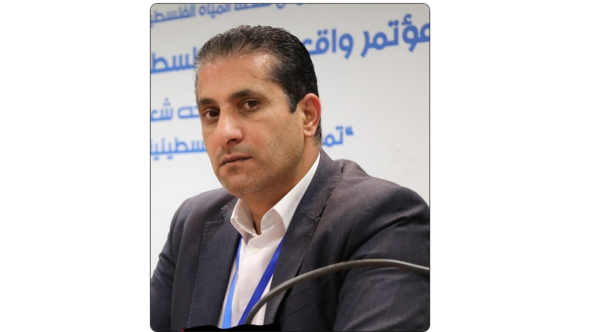
Faisal Salameh, Deputy Governor of Tulkarm, reported that the aggression led to the displacement of about 25,000 refugees from the Tulkarm and Nur Shams camps, who were forced to leave their homes under the weight of incursions and infrastructure destruction. Salameh explained that families initially sought refuge in schools and mosques, before many were forced to rent housing in the city's suburbs amidst suffocating financial burdens and a lack of income sources.

Tulkarm camp is considered the second most densely populated refugee camp, with about 25,000 refugees residing there and in the adjacent Nur Shams camp. Since January 21, 2025, Israeli operations have transformed these areas into what resembles "ghost towns," with more than 50,000 Palestinians displaced across the West Bank and 2,300 others arrested during this period.

Salameh indicated that the occupation completely destroyed 2,000 housing units, meaning the displacement of 2,000 families, as buildings in the camp include several floors inhabited by extended families. About 4,000 other housing units were partially damaged, including wall vandalism, destruction of electrical appliances, and destruction of internal water and electricity networks, rendering them uninhabitable without comprehensive maintenance.

Economically, military operations caused the destruction and damage of about a thousand commercial shops, which constituted the economic backbone of the two camps. Local committees also documented the destruction of about 800 vehicles belonging to residents, which were used as essential work tools, leading to a complete paralysis in the lives of families and their livelihoods.

Regarding infrastructure, sources confirmed that water, sewage, electricity, and communication networks were completely destroyed, with sewage water now flowing inside the remaining homes. Salameh held the international community and UNRWA legally responsible for aiding the refugees, emphasizing that the scale of destruction exceeds the capabilities of the Palestinian Authority and local entities.

Salameh considered the targeting of the camps a political scheme to erase the symbolism of the Nakba and liquidate the refugee issue by changing the demographic reality and reducing population density under security pretexts. He concluded by emphasizing the refugees' adherence to the right of return according to UN Resolution 194, calling for urgent international intervention to stop forced displacement and ensure reconstruction.

PALESTINE

Sun 01 Feb 2026 10:43 pm - Jerusalem Time

Occupation notifies of demolition of 14 homes in Silwan to pass the Biblical Gardens project

On Sunday, the Israeli occupation authorities issued demolition notices for fourteen homes in the 'Al-Bustan' neighborhood of Silwan in occupied Jerusalem, demanding immediate implementation of the decision under the pretext of building without a license. This new wave of notices comes in the context of forced displacement efforts pursued by the occupation municipality against Jerusalemites in areas adjacent to the blessed Al-Aqsa Mosque.

The Jerusalem Governorate clarified in a press statement that the targeted homes house about one hundred and twenty Jerusalemites, most of whom are children and women, who now face the risk of displacement after decades of stability in their properties.

The Governorate stressed that the pretext of 'lack of licensing' is merely a cover for a larger settlement plan, aiming to erase the Palestinian presence in the Al-Bustan neighborhood and transform its lands into what is called 'Biblical Gardens' to change the historical character of the city.

Intense tension prevails throughout Silwan with increasing fears that bulldozers will storm the neighborhood at any moment, while human rights activists view these measures as part of systematic 'ethnic cleansing'.

The residents of the neighborhood affirmed their attachment to their homes despite the threats, appealing to international and UN institutions to intervene urgently to stop this real estate massacre that violates human rights conventions and international humanitarian law.

PALESTINE

Sun 01 Feb 2026 10:43 pm - Jerusalem Time

Occupation Army Adopts 'Regavim' Corridor for Security Screening of Those Crossing into Gaza via Rafah Crossing

The occupation army announced on Sunday the successful completion of the construction and equipping of a new security screening corridor designated for individuals entering the Gaza Strip via the Rafah land crossing, named 'Regavim'. This step comes as part of the limited trial operation of the crossing, which began today, to enhance security measures at the borders.

This inspection corridor is located within the area under the military control of the occupation forces, specifically about 300 meters from the main crossing complex, to serve as an additional checkpoint aimed at ensuring 'maximum control' over the identities of those entering from the Egyptian side, according to the occupation army's statement.

The operational mechanism of the 'Regavim' corridor relies on a pre-arranged security coordination system, where Egyptian authorities send lists of names one day before crossing to be screened by the General Security Service 'Shin Bet' and the occupation army. After travelers undergo initial inspection by the European Union mission and accredited local personnel, they proceed to the 'Regavim' corridor for advanced technological screenings, including facial recognition systems and remote electronic scanning, eliminating the need for direct physical presence of soldiers inside the main crossing buildings.

This step comes as part of the limited trial operation of the crossing, which began on Sunday, allowing partial movement of individuals in both directions, with an average of about 150 departures and 50 returns daily as a first phase. The opening of the crossing represents a significant advancement in implementing the second phase of the ceasefire agreement, which followed the recovery of the body of security officer 'Ran Gvili'.

PALESTINE

Sun 01 Feb 2026 8:20 pm - Jerusalem Time

Hebrew Broadcasting Authority: The trial day for managing the Rafah crossing was very successful and it will open on Monday for travelers

The trial day dedicated to testing the new management mechanisms for the Rafah land crossing was crowned with complete success.

Sources reported, on Sunday evening, that the "trial day" dedicated to testing the new management mechanisms for the Rafah land crossing was crowned with complete success.

Sources clarified that all technical and security measures imposed have proven their effectiveness, paving the way for the official opening of the crossing for traveler movement starting from Monday morning, after a long period of closure and political tensions.

This coincides with what sources reported about the opening of the crossing for the first time as part of a "trial operation" plan aimed at testing control systems, with official operation for travelers to begin on the morning of Monday, February 2, as confirmed by the head of the National Committee for Gaza Management, Ali Shaath.

The occupation authorities seek to gradually increase the pace of work to reach a capacity of 150 departures per day, prioritizing patients, humanitarian cases, and foreign nationals, while only 50 people return to the Strip.

PALESTINE

Sun 01 Feb 2026 7:08 pm - Jerusalem Time

"Land of the Nativity" Cries for Help.. "Church Affairs" Calls on the World to Stop "Settler Terrorism"

The Presidential Higher Committee for Church Affairs in Palestine, on Sunday, issued an urgent global appeal to all churches around the world, calling on them to break their silence and take a public and explicit stance to stop what it described as the escalating "settler terrorism" against Palestinian civilians, especially Christians among them, warning that these attacks threaten their "historical presence" in their land.

In its message, signed by its head, Dr. Ramzi Khoury, a member of the PLO Executive Committee, the committee revealed a map of recent attacks that targeted the areas of Birzeit, Al-Makhrour, Taybeh, Ain Arik, and Ush al-Ghurab. The message clarified that these attacks were not limited to physical assaults and arrests, but evolved into land confiscation and the expansion of settlement outposts, as part of a systematic policy aimed at changing the demographic and geographical character of the region, and imposing forced displacement on the indigenous population.

The committee refuted the narrative that portrays these crimes as isolated incidents, asserting that they are "an organized campaign of violence and terrorism carried out under the protection of the occupation army." The message relied on statistics from the Wall and Settlement Resistance Commission, which documented during 2025: 4723 attacks carried out by settlers. 720 joint attacks with the participation of occupation forces. The United Nations confirmed that settlement expansion has reached its highest levels since 2017.

The committee linked settler terrorism in the West Bank to what is happening in occupied Jerusalem and the Gaza Strip, including the war of extermination, siege, and demolition of homes, considering that the entire scene reflects "collective punishment" and a blatant violation of international humanitarian law.

The message concluded by calling on the churches of the world to exercise their spiritual, moral, and diplomatic role to pressure for: providing effective international protection for Palestinian civilians, including Christians. Holding the occupying state accountable for its crimes in accordance with international law. Rejecting all policies that lead to displacement and undermine historical existence.

The committee concluded its message with poignant words, stating: "The land that witnessed the birth of the Lord Christ, glory be to Him, must not be emptied of its children.. And true faith is not limited to prayer, but is manifested in an explicit stance in the face of injustice and bias towards justice and human dignity."

PALESTINE

Sun 01 Feb 2026 7:07 pm - Jerusalem Time

A plea from under siege.. 20,000 patients in Gaza face the risk of death awaiting evacuation

Health authorities in the Gaza Strip have issued a final cry for help regarding the catastrophic situation faced by thousands of wounded and sick, confirming that delays in opening safe corridors for medical evacuation have turned waiting lists into "death registries."

In press statements, the Director-General of the Palestinian Ministry of Health in Gaza revealed alarming figures reflecting the depth of the humanitarian tragedy experienced by the besieged Strip.

The Director-General of the Ministry explained that there are approximately 20,000 patients facing a real risk of losing their lives if they continue to be prevented from leaving the Strip to receive necessary treatment. While the situation becomes more complex with the collapse of the local medical system, the Palestinian official pointed out that there are 5,000 very critical cases among these patients, requiring immediate surgical and medical intervention that is not available in Gaza's exhausted hospitals due to targeting and lack of supplies.

In a painful description of the reality, the Director of Health indicated that the sector loses about 10 patients daily whose lives could have been saved if they had the opportunity for treatment abroad. This continuous human bleeding comes amid diplomatic deadlock and the cessation of medical coordination operations, which has turned simple medical cases into hopeless injuries due to lack of medicine and the absence of complex medical devices.

These statements place the international community and human rights organizations before their moral responsibilities, as appeals are increasing for the necessity of pressure to open crossings and facilitate the exit of humanitarian cases. The issue is no longer merely a shortage of fuel or supplies, but has become a matter of "life or death" for thousands of families who watch their children dying before their eyes, awaiting an exit visa that may never come.

PALESTINE

Sun 01 Feb 2026 7:07 pm - Jerusalem Time

Occupation forces raid Balata refugee camp in Nablus, and settler terror besieges Qalqilya and the Jordan Valley

A large number of military patrols stormed the eastern area of Nablus city. The occupied West Bank governorates witnessed, since the dawn hours of Sunday, a dangerous wave of field escalation, with roles divided between the Israeli occupation army forces and settler gangs, represented by a series of military incursions, arrests, armed attacks on homes, and even besieging educational institutions.

In a remarkable military development, sources reported that a large number of military patrols stormed the eastern area of Nablus city, before establishing their positions at the main entrance to and around "Balata refugee camp."

The sources indicated that the operation was accompanied by an intensive and dangerous deployment of infantry teams between the alleys, amidst an atmosphere charged with tension. In a related context, another force raided the village of "Duma" south of the city, and arrested the young man Muhammad Mustafa Dawabsheh after destroying the contents of his home.

To the north, Jenin was not spared from the occupation's brutality, as vehicles stormed the "Jabal Abu Dhahir" neighborhood, raided a residential building and searched several homes, before spreading around the "Cinema Roundabout" and the main market, where soldiers deliberately smashed street vendors' carts in a retaliatory act targeting citizens' livelihoods.

In another chapter of settler terror, the family of citizen Hijazi Yamin in the village of "Fara'ata" east of Qalqilya experienced moments of horror, after settlers from the "Havat Gilad" settlement attacked their home with stones.

Yamin confirmed that the settlers unleashed a wild dog towards the family members, causing panic among the children, noting that this attack is the second within a week, and aims to force them to leave their home adjacent to the settlement.

As for the northern Jordan Valley, violations reached the sanctity of educational institutions, where settlers obstructed the access of educational staff to the "Al-Maleh School," attempting to prevent the start of the school day, according to the director of Tubas education. This coincided with the erection of a new settlement tent in "Khirbet Samra," in a step aimed at seizing more pastoral lands.

In the context of collective punishment, occupation forces continue for the second day to close the main entrance to the town of "Turmus Ayya" north of Ramallah, exacerbating the suffering of citizens, as part of the checkpoint policy, which has reached 916 checkpoints in the West Bank, including 243 gates established after October 7th.

PALESTINE

Sun 01 Feb 2026 7:06 pm - Jerusalem Time

Civilians injured in occupation attack in Tarqumiyah, south of Hebron

The Palestinian Red Crescent reported on Sunday that its crews dealt with four injuries among citizens in the town of "Tarqumiyah" southwest of Hebron, following an attack carried out by the occupation forces.

Sources explained that the injuries resulted from direct beating and abuse during the forces' raid on the area, where first aid was provided to the injured on site.

The town of Tarqumiyah is experiencing increasing pressure as a result of restrictive policies and land confiscation for the benefit of settlement expansion.

Observers link this escalation to the occupation's desire to impose a tight security grip on vital contact points, leading to continuous skirmishes that hinder the daily lives of citizens and increase the state of tension throughout the Hebron Governorate.

PALESTINE

Sun 01 Feb 2026 7:05 pm - Jerusalem Time

Occupation targets Palestinians in southern Gaza despite ceasefire agreement

The Israeli occupation army announced on Sunday evening that its field forces opened fire on a group of armed men in the southern part of the Gaza Strip.

The military statement claimed that movements of several individuals were detected in the vicinity of what is known as the "Yellow Line," where they approached military positions, which the army considered an "imminent threat" requiring immediate response.

The shooting operation, according to the Israeli occupation's account, resulted in the martyrdom of one of these armed men, after the forces initiated procedures to "neutralize the field threat."

This incident comes amid a state of intense anticipation surrounding the fragile ceasefire agreement, where any field movement in contact areas appears to be subject to direct targeting.

For its part, the Southern Command of the occupation army affirmed that its forces remain deployed according to existing understandings, emphasizing that they will continue to act to confront any movements it deems a threat to the safety of its soldiers.

These field developments raise fears of a return to escalation, at a time when international parties are trying to establish a lasting calm that ensures the situation does not slide into a new confrontation.

ARAB AND WORLD

Sun 01 Feb 2026 3:15 pm - Jerusalem Time

Zero Hour for the American Attack on Iran.. What Did Israel Reveal?

Israeli Chief of Staff Eyal Zamir predicted that the United States would launch a military attack on Iran within two weeks to two months, according to what was reported by Israeli Army Radio.

 In turn, Israeli Channel 13 reported that Zamir made a secret visit to the United States over the weekend, where he held "intensive discussions" with American officials, against the backdrop of American assessments regarding a possible attack on Iran.

 Haaretz newspaper stated that the visit aims to "coordinate positions for defensive reasons."

 Netanyahu's visit to Washington

 In this context, Al-Araby TV correspondent in Jerusalem, Ahmed Darawsheh, indicated that Zamir revealed that the American attack on Iran would not occur within days, but within two weeks to two months; that is, between mid-February and early April, according to Israeli Army Radio.

 Our correspondent explained that the first deadline (mid-February) begins concurrently with the visit of Israeli Prime Minister Benjamin Netanyahu to the United States and his meeting with US President Donald Trump.

   Trump had spoken yesterday about giving Iran a deadline to reach an agreement, and it seems that the date mentioned by the Chief of Staff coincides with this deadline, although Trump stated that only Iran knows when it ends.

 American-Israeli contacts

 Intensive American-Israeli contacts continue at the military level; this was reflected in the visit of the head of the Israeli Military Intelligence Directorate "Aman" to the United States, where he met with American officials, following another meeting he held last week with the commander of the US Central Command.

 The head of the Intelligence Directorate and its units, including Unit 8200, are the primary officials responsible for monitoring Iranian military capabilities, including missile capabilities, command and control systems, and the capabilities of the army and Revolutionary Guard to launch missiles towards American countries and bases in the region.

   According to Israeli media, the Israeli intelligence's briefing of sensitive information to the American administration makes Israel a partner in planning any potential attack; Yedioth Ahronoth newspaper described the head of the Intelligence Directorate as the most important person in the framework of planning for the next war.

 Absence of the element of surprise

 However, Israel acknowledges that there are challenges facing the region if Washington decides to launch the attack, most notably the decline of the "element of surprise."

 While Israel previously relied on field surprises to destroy air defenses or carry out assassinations of nuclear scientists and Revolutionary Guard commanders, Yedioth Ahronoth, citing sources, indicates that the element of surprise that characterized the first minutes of the previous aggression has significantly declined this time.

 Israeli estimates also indicate that Iran has learned lessons from previous confrontations regarding missile attacks, while the most prominent American challenge remains imposing complete control over Iranian airspace.

 Cost of a potential war with Iran

 In addition, the Israeli economic website "Calcalist" said on Sunday that the cost of a potential war against Iran would reach about 10 billion dollars, explaining that the cost of the last war against Iran amounted to about 20 billion shekels (6.37 billion dollars).

 The website confirmed that "senior officials in the Israeli security establishment warn that another round could reach tens of billions, depending on the length and nature of the battle."

   The website quoted Ram Aminach, the former economic advisor to the Israeli Chief of Staff, as saying: "The relatively least expensive scenario is for Israel not to launch any attack at all." Aminach added: "Even if Israel does not launch an attack, this does not mean there are no costs, as air defense costs billions of shekels, and in such a scenario, the military cost alone could reach between 7 and 10 billion shekels (2.23 to 3.18 billion dollars).

   But in the event of a war like the one that took place last June, Shachon Haddad, the former advisor to the Israeli Chief of Staff, says that estimates will range between 15 and 25 billion shekels (4.78 and 8 billion dollars), according to the same source.

 Calcalist pointed out that "the cost could reach 30 billion shekels (about 9.8 billion dollars), and these are only military costs, without civilian ones."

PALESTINE

Sun 01 Feb 2026 1:44 pm - Jerusalem Time

British Britannica Encyclopedia Redraws Maps, Adopts "Palestine" Name, Angering "Tel Aviv"

According to supporters of Israel, the venerable encyclopedia replaced the name "Israel" with "Palestine." The British Encyclopedia (Britannica) faced a storm of controversy and accusations after making significant amendments to its educational materials for children, which included adopting the name "Palestine" on maps and educational content. This action was considered by critics and supporters of Israel as "erasing Israel's existence" from school history lessons provided through the "Britannica Kids" version.

According to supporters of Israel, the venerable encyclopedia replaced the name "Israel" with "Palestine" on a map of the region published within children's educational materials. This change prompted the group "UK Lawyers for Israel" (UKLFI) to take official action and address the encyclopedia's publishers in the United States, demanding an urgent review of what they described as "historically inaccurate and politically charged contemporary content."

The main objections of the (UKLFI) group focused on a map that appeared in "Britannica Kids" materials, showing a landmass identified as "Palestine," covering the area that represents Israel's internationally recognized borders. The caption accompanying the map, in the present tense, stated: "The name Palestine refers to a region in the Middle East located between the Jordan River and the Mediterranean Sea." The legal group saw this definition as a direct promotion of the concept associated with the political slogan "from the river to the sea."

"UK Lawyers for Israel" accused the encyclopedia of adopting a controversial geographical and political definition, considering that the formulations used reflect the content of pro-Palestinian slogans. The official letter addressed to the encyclopedia stated: "These descriptions effectively erase the existence of Israel, which is in fact located between the Jordan River and the Mediterranean Sea." The group added that defining Palestine as extending uninterrupted from the river to the sea "closely reflects the language and framework of contemporary political slogans such as: From the river to the sea, Palestine will be free."

Following contact between the British newspaper "The Telegraph" and the encyclopedia's management last Wednesday, it was noted that the controversial map had been removed from the site. The definition of Palestine was also amended to include a phrase stating that "the State of Israel, the West Bank, and the Gaza Strip are currently located within this region."

For its part, Britannica confirmed that it would carefully consider the criticisms directed at its materials. Theodore Pappas, the encyclopedia's executive editor, said that Britannica has been known for more than 250 years for providing unbiased, accurate, and rigorously fact-checked content, supported by a team of specialized experts. Pappas added that the encyclopedia would review the claims made and make necessary adjustments if they are found to be required, as part of its commitment to editorial standards.

In contrast, observers believe that the objections raised about the use of the name "Palestine" in educational materials ignore a fundamental historical and political reality related to the rights of the Palestinian people in their land. This designation is not merely a transient geographical term, but is linked to a long historical context and continuous human presence, and it also reflects an internationally recognized political reality for a people deprived of their right to self-determination. From this perspective, the inclusion of the name Palestine in educational materials is seen as a "correction of a historical reduction" that has long marginalized the Palestinian narrative in Western curricula. Specialists also believe that attempts to confine the discussion to the legal dimension or the limits of official state designations overlook the core of the issue, which is the historical and human rights to land and identity. Education - according to this perception - should not be content with presenting static maps, but should present to the nascent generations the reality of a people living under occupation and displacement. Therefore, mentioning Palestine is a step to break the singular narrative that has long prevailed in Western educational discourse.

PALESTINE

Sun 01 Feb 2026 1:20 pm - Jerusalem Time

Pressures on the Palestinian Authority, instigated by Israel at this time, to push the Trump administration to punish the PA and prevent it from participating in the governance of the Gaza Strip

The Washington Free Beacon exclusively reports:

The U.S. State Department informed Congress that the Palestinian Authority gave prisoners more than $200 million in "pay-to-slay" payments after "canceling" the program.

Palestinian President Mahmoud Abbas said his government would no longer pay money to prisoners and their families, as part of an agreement with the Biden administration.

The U.S. State Department officially announced this month that the Palestinian Authority paid more than $200 million to prisoners and their families in 2025, the same year PA President Mahmoud Abbas claimed to have ended the "pay-to-slay" program, according to a non-public notice submitted to Congress and exclusively obtained by the Washington Free Beacon.

Instead of ending these payments, the Palestinian Authority resorted to a new system that it hoped to conceal from international donors, at a time when the Ramallah government seeks to play a role in post-war Gaza, as revealed for the first time by the U.S. State Department. Israeli intelligence estimated that the Palestinian Authority transferred $144 million to prisoners and their families in 2024, and committed to providing at least $214 million until 2025, while the State Department concluded that payments continued from March to August 2025 under a social welfare system allegedly reformist.

The U.S. State Department concluded that "the old Palestinian system of compensating Palestinian terrorists and their families who were killed while committing terrorist acts gradually transferred the responsibility for compensation to the Palestinian National Economic Empowerment Institution (PNEEI) under the guise of social welfare. Despite the change in mechanism, the Palestinian Authority continued to disburse payments to Palestinian terrorists and their families during the reporting period."

These findings are likely to further erode the Palestinian Authority's standing with the Trump administration, at a time when the latter is seeking to implement the second phase of the Gaza peace plan, which prevents Abbas's government from participating in post-war programs until it undergoes a series of reforms, including ending the pay-to-slay policy. Although the Palestinian Authority has no official role on paper, the head of the newly established National Committee for Gaza Administration, civil engineer Ali Shaath, has held senior positions in the Palestinian Authority, indicating the potential for Abbas's government to wield hidden influence.

The Trump administration gathered evidence that the Palestinian Authority used post offices, social media platforms, and encrypted messaging services like Telegram to alert aid recipients that cash was available under the newly named "pay-to-slay" program, "clearly indicating the continued provision of compensation to support terrorism," according to the State Department notice.

Abbas made international headlines in February 2025 when he ordered an end to the "pay-to-slay" program, stating that social assistance would be provided to Palestinians based solely on their needs, not on the number of years their relatives were imprisoned in Israel for terrorism. But Abbas questioned this decision a few weeks later, when he promised the Fatah Revolutionary Council, saying: "Even if we have only one cent left, it will be for the prisoners and martyrs."

While the new system implemented by a government agency controlled by Abbas was portrayed as a major social welfare reform project, the State Department concluded that it essentially operates in the same way as the old system by rewarding terrorists and their families for violence.

The U.S. State Department wrote: "The shift to a potential social welfare system without ending specific payments and benefits to Palestinian terrorists and their families is inconsistent with the provisions of the Taylor Force Act," referring to a 2018 law that froze U.S. aid to the Palestinian Authority until it stopped pay-to-slay payments. It added: "The Palestinian Authority continues to provide a compensation system to support terrorism through a new mechanism under a different name."

The U.S. State Department also confirmed that the Palestinian Authority continues to issue laws obligating monthly compensation to terrorists and their families. One such law, known as Law No. 14, states that the Palestinian Authority "is obligated to support terrorists while they are held in Israeli prisons by paying the equivalent of their last monthly salaries before their imprisonment," according to the notice.

Palestinian Media Watch (PMW), an Israeli non-profit organization, reported on Monday that the Palestinian Authority disbursed a new payment of "terror allowances" to beneficiaries residing in Jordan. The organization collected direct testimonies and bank notices showing that "the transferred amounts were identical to those previously received, indicating that the payment schedule had not changed."

The Palestinian Authority has historically paid compensation to imprisoned terrorists according to a tiered schedule, with those serving long sentences receiving over $3,000 per month. The Free Beacon reported in October that nearly $70 million was distributed to 250 Palestinian prisoners released that month under a ceasefire agreement with Israel.

The policy monitoring organization wrote: "Payments now appear to be continuing in areas believed to be outside the direct control of donors, including Jordan and Lebanon. While the Palestinian Authority has not yet determined how to do this in its territories without attracting international attention, an official from Fatah, the ruling party in the Palestinian Authority, revealed earlier this month that PA President Mahmoud Abbas had indicated his intention to continue disbursing payments to all beneficiaries."

Abbas's pledge to end the program in 2025 was the result of intensive diplomatic efforts by Hady Amr, the representative for Palestinian affairs in the Biden-Harris administration, according to Axios, which reported that the two sides negotiated the agreement for two years before it was announced in February of last year.

Evidence of continued pay-to-slay payments under a new name is likely to serve as a wake-up call for the Trump administration, as it pressures the Palestinian Authority to eradicate extremism before taking on a role in post-war Gaza.

A Republican congressional staffer working on Gaza issues told the Free Beacon: "Abbas and the Palestinians are more committed to terrorism than to fulfilling their promises to President Trump, even as the administration asks them for help in rebuilding and managing Gaza. They are still paying terrorists, inciting violence, and refusing to disarm Hamas."


PALESTINE

Sun 01 Feb 2026 12:02 pm - Jerusalem Time

"The Palestinian traditional dress: A Story of Identity, a Fabric of a Nation".. The Memory of a People Still Present

Palestinian heritage represents one of the most deeply rooted and enduring elements of national identity. It is not viewed as remnants of a bygone era, but rather as a living cultural practice that renews itself through the details of daily life. Traditional attire, especially women's folk clothing, holds a special place within this heritage, serving as a witness to the social and cultural history of the Palestinian people, and carrying meanings that transcend material function to express belonging, distinctiveness, and identity.
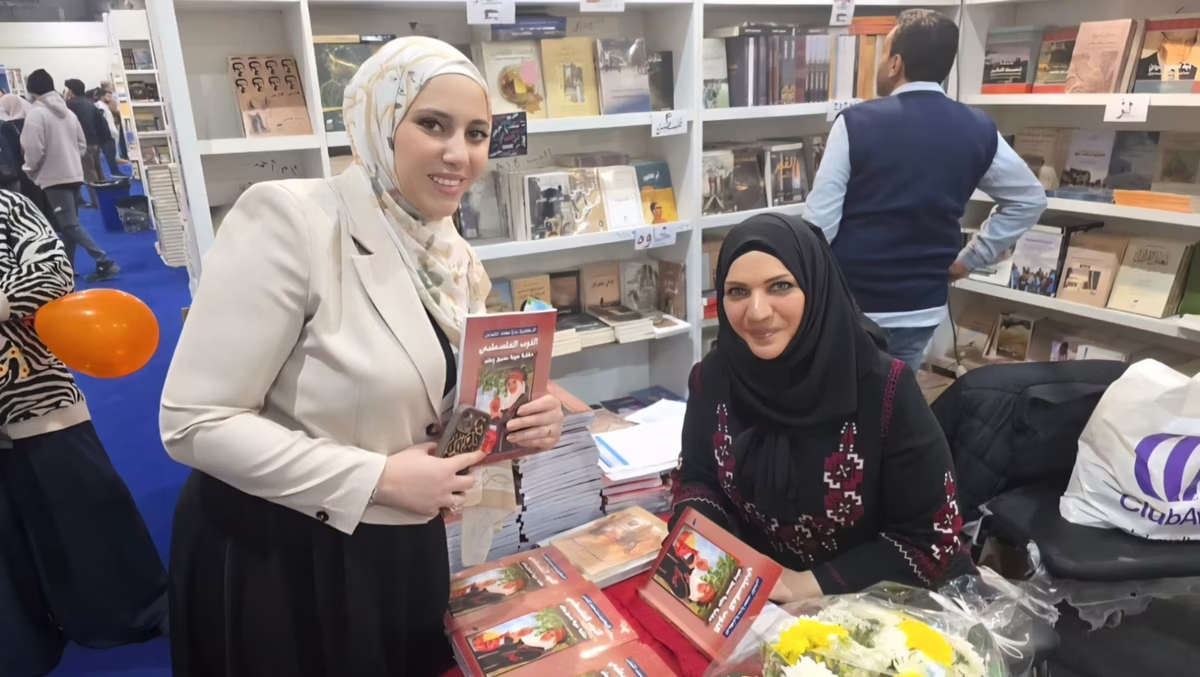
In this context, the book "The Palestinian Thobe: A Story of Identity, a Fabric of a Nation" by researcher and writer Dr. Sara Mohammed Al-Shammas was published to present a specialized academic study documenting Palestinian clothing heritage and exploring its relationship with national identity. The book, spanning 171 pages, was released by Al-Shamel Publishing and Distribution House and officially launched at the Cairo International Book Fair, its first appearance at an Arab exhibition. It garnered significant attention from cultural and research circles concerned with heritage and identity issues. The Al-Shamel booth also hosted a book signing attended by a selection of intellectuals and writers from across the Arab world, who praised its scientific value and cultural importance.
The book adopts a scientific approach that views folk clothing as a social and cultural product formed over a long historical trajectory, not merely as traditional attire or an aesthetic element. National identity, as the book demonstrates, is not confined to theoretical concepts or general slogans, but rather is embodied in daily practices, and folk attire was one of the most important of these practices that expressed the Palestinian's connection to their land, society, and values.
In its initial chapters, the book addresses the fundamental concepts related to folk clothing, identity, and national identity, clarifying the relationship between traditional attire and national belonging. This analysis highlights how clothing played a clear social role, carrying connotations related to age, social status, occasion, and position within society, making it an indirect means of communication understood within the general cultural context.
   The book discusses the origins and historical development of Palestinian women's folk clothing, noting the similarities between it and the clothing of some neighboring regions, while emphasizing its Palestinian distinctiveness. In this context, the clear diversity in the nature of folk clothing among different Palestinian regions is evident, a diversity influenced by environmental and climatic factors and the nature of economic and social life, despite Palestine's limited geographical area. This diversity was reflected in the shape of the thobe, the quality of the fabric, the weaving techniques, and the presence of embellishments that gave each region its unique character within a general cultural framework.
The book clarifies that the embellishments accompanying women's folk clothing formed part of the expressive structure of the thobe, contributing to highlighting its distinctiveness and differentiation, without being a formal element separate from its social and cultural context. The presence of these embellishments was linked to the function of the thobe and its social significance, and to the occasion on which it was worn, reflecting an accumulated cultural awareness within Palestinian society.
The book sheds light on the social functions of women's folk clothing, highlighting its role in organizing social relations and regulating behaviors within an unwritten cultural system. The difference in attire between various social occasions, or between daily life and special events, constituted an implicitly understood element within Palestinian society, indicating the depth of collective consciousness that governed the features of traditional social life.
The book dedicates space to studying the types of Palestinian women's folk clothing according to social, religious, and daily occasions, showing that each occasion has its specific attire and social significance. This classification reflects a cohesive cultural system in which Palestinian women were a fundamental element in its construction and continuity across generations.
The book discusses the challenges facing the preservation of Palestinian clothing heritage in the modern era. Foremost among these challenges is the theft and falsification of heritage by the Israeli occupation, and attempts to attribute it to fabricated narratives within a systematic policy aimed at obliterating Palestinian identity. The book also addresses the effects of identity dispersion among Palestinians in the interior, and the impacts of globalization that have contributed to weakening the connection to heritage and transforming some of its elements into consumer products detached from their cultural context. This argument emphasizes that scientific documentation has become a national necessity to protect collective memory from falsification and extinction.
The book's cover carries a special significance, as the cover painting depicts the author wearing the Palestinian thobe, in a visual expression consistent with the book's subject without self-referentiality, but rather as a symbolic representation of the researcher's relationship with her subject of study. The painting was executed by the brush of Dr. Jamal Badwan, the ambassador of Palestinian art in the world, to form a calm visual introduction that reflects the presence of the Palestinian thobe as a living element of national identity.
The book's release was accompanied by a number of cultural events, most notably participation in the cultural day organized by the Embassy of the State of Palestine in the Republic of Egypt, where the book was signed at the embassy library and a copy was included in its cultural collection, in the presence of His Excellency Cultural Counselor Naji Al-Naji, along with a selection of creative intellectuals, writers, and those interested in cultural affairs. Dr. Sara Mohammed Al-Shammas also participated in a cultural event organized by the General Union of Palestinian Women - Egypt Branch, dedicated to celebrating the book and highlighting its importance in documenting Palestinian women's heritage and its role in preserving cultural memory, in the presence of the Director of the Cultural Committee Sonia Abbas, and the Director of the Heritage Committee Nadia Al-Agha, and with the participation of a selection of creative intellectuals and writers, and a distinguished cultural presence that reflected appreciation for the value of the research effort and the publication's standing in the Palestinian cultural scene.
The book "The Palestinian Thobe: A Story of Identity, a Fabric of a Nation" constitutes a qualitative addition to the Palestinian and Arab library, for the academic documentary study it provides, which contributes to filling a clear research gap in the field of studying Palestinian clothing heritage.
The book as a whole affirms that Palestinian folk attire is not merely an inheritance from the past, but an authentic part of national identity and the memory of a people that is still present, and deserves preservation and documentation as a witness to the social and cultural history of Palestine.

OPINIONS

Sun 01 Feb 2026 11:06 am - Jerusalem Time

Peace Council: A Lame Duck for Managing the Gaza Tragedy

Dr. Ibrahim Nairat

Opinion Writer

The "Peace Council" proposed by Trump for the reconstruction of the Gaza Strip and achieving stability was announced amidst significant political and media buzz. However, in reality, it is closer to a fragile and deceptive political experiment that does not seek to address the roots of the conflict, but rather to temporarily contain it according to the interests of the American administration, the Israelis, and some Arab regimes. The momentum gained by the Council did not stem from international legitimacy or Palestinian-Arab-international consensus, but rather from Trump's personality and his media outbursts, and from the desire of Arab and international parties to absorb his impulsiveness to achieve immediate interests, most notably stopping the Israeli aggression and saving civilians from the crushing humanitarian catastrophe in Gaza, with discussions about Palestinian rights and sovereignty postponed to the future. This reliance on a postponed solution carries significant danger, as it leaves Gaza vulnerable to Israeli hegemony and undermines the Palestinian people's ability to exercise their right to self-determination, while the Council is used as a facade to manage the crisis instead of solving it.

The Council suffers from astonishing structural fragility from the moment of its definition, as it transformed from a transitional administrative body for the reconstruction of Gaza into a loose international entity for conflict resolution, without any clear link to the Palestinian issue, and without any international guarantees or Palestinian legitimacy. This transformation reinforced the impression that the Council is merely a flexible political tool in Trump's hands, where everything is subject to his mood and individual powers, and he can amend memberships and decisions as he wishes, as if he were a sole ruler, not the head of a respected international administration. At the same time, the Israeli occupation appears as an active partner in "peace-making," while the Palestinian people are excluded from any decision-making position, and their right to freedom and sovereignty is reduced to a security and economic file whose details are managed from above, as if justice is merely a secondary matter to be addressed later.

And if we look at the Council from a more dangerous and malicious angle, it turns into a tool to divert attention from the catastrophe that befell Gaza, by flooding the scene with an endless series of committees, deliberations, projects, plans, and conferences on the management and reconstruction of the Strip. In this context, time itself becomes a political tool, where international and local energy is drained in managing the form instead of addressing the essence, and the Palestinian people are left to live in a painful state of waiting, while the idea of a real solution gradually fades, and the interest of world powers in the issue diminishes until Gaza becomes merely an area where the daily struggle for survival is managed, not a political future.

Arab countries and the Palestinian Authority, despite their keenness to stop the war and save people, find themselves forced to accept a temporary reality that is completely different from their national aspirations. Europeans will not provide real support, and international donors have not yet imposed their conditions, but in the course of work, they will be observers, and they will seek to ensure the inclusion of the rights and sovereignty of the Palestinian people in any reconstruction plan. If these rights are ignored, the Council will collapse in its current form or in its vision that relies on investment and reconstruction independently of the Palestinian people and their aspirations.

Even on the ground, humanitarian and relief projects may succeed in improving some living conditions or limited rehabilitation of infrastructure, but they are completely incapable of imposing a complete Israeli withdrawal or disarming the resistance, because these issues are not resolved by transitional administrations or economic projects, but through a real political solution that recognizes the sovereign rights of the Palestinian people.

The most dangerous thing is the reduction of the Palestinian issue to the management of the economic and security crisis, and the transformation of the people's tragedy into investment projects without a political horizon. Palestine has not yet achieved its full independence, but the Palestinian people always possess sovereignty and rights that cannot be ignored or confiscated, and their issue cannot be addressed by merely reconstructing the form, without addressing the origin of the occupation and control. Turning the humanitarian tragedy into a technical file for managing Gaza and postponing justice in the name of realism does not create peace, but rather postpones the explosion, and makes the Council, at best, merely a "lame duck," possessing an official image and formal tasks, but lacking the ability, and even the will, to open the way for a real solution that recognizes the rights and sovereignty of Palestinians.

Through the "Peace Council," America is trying to extricate Israel from the predicament it fell into after the war, and to try to stop the moral bleeding it is experiencing internationally and even domestically in the United States. The Council presents an image of international efforts for reconstruction and stability, but in reality, it is a tool for managing impressions and alleviating pressure on Israel, while postponing the addressing of Palestinian rights and sovereignty, which allows the American administration to appear in a humanitarian and political position, without challenging the interests of its strategic ally.

In my estimation, after all this, the Council will fail, and I do not see any real ingredients for its success on the ground, although it may achieve hidden goals for those who established it, especially those related to controlling the international administration of reconstruction and directing it according to their interests.

Ultimately, the "Peace Council" appears as a temporary tool, aimed at managing international impressions and alleviating popular anger, more than a means to achieve a just peace. It is a council based on power and interest, not on justice and right, and over time it may turn into a facade to hide the catastrophe that befell Gaza, while the Palestinian people continue to face occupation and marginalization policies. Any formal or interim achievement will not change the essence of reality, and will not prevent the crisis from exploding again, because peoples possess sovereignty that cannot be negotiated, even in the absence of an independent state, and recognizing this right is the only step towards any real and sustainable solution.

OPINIONS

Sun 01 Feb 2026 10:53 am - Jerusalem Time

The Empire at a Moment of Exposure: The American Condition


In recent years, international politics has witnessed remarkable shifts in leadership patterns, sources of legitimacy, and the limits of power, necessitating a rethinking of the United States' position and global role, not as a fixed given, but as a dynamic historical phenomenon subject, like others, to the logic of transformation, ascent, and decline. American behavior globally today can be understood as an expression of a profound transformation in the nature of the American role, rather than merely a fleeting disturbance in policies or a leadership whim. The United States appears to be transitioning from a position of power that led an international system based on rules, institutions, and legitimacy, to a power acting with a harsher logic, seeking to maximize gains and minimize costs, even if it comes at the expense of the stability of the international system itself. This transformation brings to the forefront an old question in the literature of empire history: after nearly a quarter of a millennium since the United States emerged from the ruins of indigenous peoples, are we seeing signs of imperial fatigue preceding decline? This question intensifies when the transformation is accompanied by a highly personalized leadership style, characterized by showmanship and simplistic certainties, where the leader presents himself as an embodiment of timeless and placeless power, a source of exceptional inspiration, claiming to possess the keys to salvation and prosperity, not only for America but for the world as well, through the privatization of everything, including international relations, and through the reduction of politics to the logic of wealth and money, as the sole path to correcting the course of history, in a narrative that excludes the moral dimension and prioritizes naked profit over the centrality of rights and blood.

In my opinion, Ibn Khaldun offers an important interpretive entry point here, as he believes that states do not collapse suddenly, but rather go through successive historical cycles: from ascent based on 'asabiyyah (group solidarity) and a unifying meaning, to expansion, then luxury, then the stage of calcification, where internal legitimacy erodes, the cost of governance increases, and consensus is replaced by coercion, and meaning by force. If this logic is applied to the American case, one can observe a decline in internal 'asabiyyah amidst the fracturing of what was historically known as the melting pot, which long contributed to producing broad internal consensus around the global role of the United States, and the rise of sharp internal division over the meaning, nature, and utility of international leadership. With this erosion of unifying meaning, the state tends to adopt faster and harsher tools in managing its international position, such as imposing harsh tariffs, withdrawing from international institutions, and exerting direct pressure on allies and adversaries alike.

However, this transformation, I believe, does not necessarily mean that the United States has lost its ability to act, as it still possesses immense tools of power, through the dollar, control over markets, technology, alliances, and the ability to weaponize the global economy. But what has changed is what the United States wants and how it seeks it. Today, it wants to re-shore strategic industries, force allies to bear the cost of protection and the relationship, manage major conflicts, such as Ukraine, with a logic of deals rather than long-term commitments, and reduce its involvement in institutions it now sees as a burden on its freedom of decision. It also seeks to engineer regional arrangements with the lowest possible cost, especially in the region called the Middle East, based on security, management, and deterrence, rather than radical political solutions.

In contrast, the world is not a passive observer. Major and emerging powers are not moving towards a break with the United States, but rather adopting calculated hedging policies, based on negotiation where possible, confrontation where necessary, and building gradual alternatives that reduce reliance on American decisions. China seeks to manage competition with Washington, not to break it directly, while quietly and systematically working to dismantle the technological and financial restrictions and setbacks imposed by the current international environment. While Russia invests in every available opportunity to consolidate its gains and redefine its position as a disruptive international power capable of unsettling the existing order, Europe, India, and other powers tend to diversify their economic and political partnerships and reduce risk levels in their dealings with the international system, in a world that has become less predictable, more fragile, and volatile.

This American logic is clearly manifested in a series of positions and policies that, at first glance, seemed shocking or unprecedented, but in essence, they are consistent with the same logic, the logic of naked power and crude deals. The American military raid on Venezuela and the forceful abduction of its president cannot be understood solely in the context of rivalry with a regime hostile to Washington, but rather as a broader message that national sovereignty has become conditional on alignment with American interests. Here, the language of classical empires is revived, meaning that those who do not comply are punished, and those who possess strategic resources, like oil in the case of Venezuela (and the Arab region), become legitimate targets for political re-engineering by coercion.

The same applies to Trump's repeated insistence on acquiring Greenland. This idea, which provoked widespread disapproval and rejection in Europe, is not merely a rhetorical whim, but rather a concentrated expression of a profound shift in Washington's perception of the world. In this logic, geography becomes purchasable, sovereignty a subject of bartering, and alliances relationships managed by market logic, not by principles, values, or legal rules. Greenland, with its strategic location and potential resources in the Arctic, reveals how the United States views the future as an open race for resources and new passages, outside any established moral or legal consideration.

These approaches have had a significant impact on American-European relations. Europe, which used to view the United States as a leader of the liberal "free world" system and a protector of its rules, now finds itself facing a partner who acts as a supra-legal power, not hesitating to threaten its allies or blackmail them politically and economically. This tension does not mean a transatlantic rupture, but it deepens European doubts about absolute reliance on the American umbrella, and pushes, albeit slowly and hesitantly, towards strategic independence.

This international scene becomes more turbulent with the repeated escalation of military tension between the United States and Iran, a tension that cannot be read in isolation from the broader shift in overall American behavior. America today tends to brandish coercion before opening negotiation channels, and manages crises with a logic of rapid deterrence and potential deals, not with a logic of stable and long-term settlements. In this context, sending fleets does not carry a purely military dimension, but rather performs simultaneous functions: sending a clear deterrent message, preparing the ground for limited military options when necessary, and exerting intense negotiating pressure aimed at pushing Tehran to the negotiating table on terms less balanced than before.

Even if the United States does not militarily attack Iran, current indicators suggest that the regional and international scene is moving on the brink of a wide spectrum of open scenarios, ranging from tense containment governed by mutual deterrence calculations, to limited and calculated strikes aimed at restoring disrupted balances, leading, in the worst estimates, to an explosion that could result from miscalculation or an unforeseen incident in an international system that has lost a great deal of institutional control mechanisms and effective mediation. If matters slide towards a military confrontation, its repercussions are likely to be complex and intertwined, including disruption in the global economy, widespread security escalation in our region, along with increasing political pressures on regional countries, pushing them towards forced alignment instead of maintaining margins for maneuver and balance. As for the option of an agreement, despite remaining present in principle, it seems closer to a conditional and fragile deal, reflecting the depth of mistrust between the parties involved, rather than a stable or sustainable long-term settlement.

It is self-evident that this American approach of imposing facts by force in the region will directly reflect on Israeli ambitions. The atmosphere of escalation strengthens the position of the occupying state within American calculations and grants it a wider margin to advance its security priorities and impose new realities. In contrast, Israel fears an American-Iranian deal that would leave Tehran considerable influence, even if controlled, due to the long-term threat it poses. Thus, Israel transforms into an actor benefiting from the tension, but remains concerned about its negotiated outcomes.

As for the Arab region, with the Palestinian issue at its heart, it has paid, and continues to pay, and is likely to continue paying the heaviest cost of this global transformation. The more international politics slides towards the logic of deterrence and deals, the greater the risk of reducing Palestine to a security or humanitarian file, managed within temporary regional arrangements based on imbalanced equations: actual surrender in exchange for conditional reconstruction, technical management in exchange for fragile stability, and transitional control arrangements in exchange for soft and eroding political promises. This path is entirely consistent with the prevailing American pattern of managing crises instead of resolving them, and of squandering fundamental rights in favor of promises of "stability," which, each time, quickly proves to be false stability that does not address the roots of the conflict but rather reproduces it in a more fragile form.

In this sense, what we are witnessing today cannot be reduced to the policies of a specific American president, but rather should be understood as an expression of a deep moment of disintegration in the moral and political structure of the American experience itself, a moment whose effects are not confined within its borders, but whose contagion extends to the entire international system. In this moment, power, its components, and its tools are being redefined, geography is becoming a subject of bargaining, and crises are managed by the logic of fleets and deals, not by the logic of law and justice. This is a transformation that not only presents the world with political and strategic questions, but also with an increasing degree of existential anxiety about the civility of relations between states, about the future of the international system, and indeed about the fate of humanity as a whole in a world where moral controls are eroding in favor of the logic of naked power.

PALESTINE

Sun 01 Feb 2026 10:44 am - Jerusalem Time

"By remote control".. Rafah crossing returns to work "experimentally" under the eye of the "Israeli" censor, and this is what we know

For the first time since the occupation army took control of it in May 2024, the Rafah land crossing opened its doors this Sunday morning, as part of a "limited experimental operation" plan, with actual passenger movement scheduled to begin on Monday, amidst strict Israeli security measures that have turned the only gateway for Gazans into a "security screening platform".

Border sources reported that Sunday was dedicated to logistical procedures and receiving a delegation from the Palestinian Authority, in addition to transferring a very limited number of wounded "on an experimental basis". The actual start will be tomorrow, as security sources revealed that Egypt handed over the lists of the first travelers to the Israeli side for examination, and only 150 people are scheduled to leave the Strip, while 50 people will enter daily.

According to what sources revealed, Netanyahu insisted on imposing complex conditions that turned the crossing into a digital barracks:

Departing (leaving Gaza): No direct physical inspection by Israelis. Inspection is carried out by members of the European Union mission and Palestinian Authority employees. Israeli surveillance: Carried out "remotely" via advanced cameras and facial recognition technology. Israeli security has a "control button" to open and close gates electronically to prevent anyone unauthorized from leaving. Arriving (entering Gaza): Procedures are stricter; returnees will pass through an occupation army checkpoint. They undergo a thorough examination with metal detectors and biometric fingerprinting before being allowed to cross beyond the "Yellow Line" (Hamas-controlled areas).

These meager numbers (150 travelers) clash with a catastrophic humanitarian reality; Gaza's Ministry of Health data indicates that there are 20,000 sick and wounded patients awaiting travel, including:

440 critical cases whose lives are at stake.

4000 cancer patients.

4500 children on emergency lists.

Reports indicated that this step, including allowing members of the "technocrat committee" to manage the affairs of the Strip, comes as a "gesture of goodwill" towards US President Donald Trump, who recently announced the start of the second phase of the ceasefire agreement. This comes at a time when humanitarian aid and goods still face significant obstacles, amidst international demands for a comprehensive opening of the crossing to save what remains of the destroyed infrastructure.

OPINIONS

Sun 01 Feb 2026 10:01 am - Jerusalem Time

Trump in the Middle East Scene: War-Monger or Peacemaker?

US President Donald Trump appears to be one of the most controversial and contradictory presidents in the history of American foreign policy, especially in his dealings with Middle Eastern issues. The man who sometimes speaks of a “peace council” and invites world leaders to join it is the same one who does not hesitate to issue crude threats to European and Latin American countries, and even to traditional allies, in language that leaves no room for friendliness and diplomacy.
This stark contradiction has led to a sharp division among analysts regarding Trump's personality and policies. Some see him as a pragmatic politician who uses shock and threats as negotiation tools, while others consider him an unstable personality, driven by a showmanship impulse, whose foreign policies are managed according to the agenda of Israeli Prime Minister Benjamin Netanyahu and the pressures of the extremist Zionist lobby within the United States.
In recent weeks, there has been a significant escalation in talk about the possibility of an American military strike against Iran, placing the entire region on the brink of unprecedented tension. Fleets are moving, statements are threatening, and political and media mobilizations warn that the Middle East is on a strategic hotplate. The fundamental question here is: Are we facing the beginning of a major confrontation, or is it merely a game of “finger-biting” that has not yet reached its decisive moment?
Iran, for its part, practiced a policy of self-restraint during the first round of escalation, and did not respond militarily to the American strikes that targeted its nuclear facilities, in a clear attempt to contain the confrontation and prevent it from sliding into an open war. However, the change in the tone of American discourse, and the increasing talk about “regime change” in Tehran, places the Iranian leadership before a completely different equation: defending the state and sovereignty whatever the cost.
No one has certainty about the nature, scale, or timing of a potential Iranian response. But what is certain is that Iran, while not relying on traditional military superiority, adopts a different combat doctrine based on exhausting the adversary, undermining its prestige, and threatening its vital interests in the region. In the event of a comprehensive confrontation, the United States will not emerge without political and military losses, and perhaps an erosion of its image as an untouchable dominant power.
In contrast, political regimes in the Arab and Islamic world are experiencing a state of weakness and helplessness, making them unable to bear the cost of any new imbalance of power. However, this official weakness does not necessarily reflect the mood of the peoples, who see American policies, biased towards Israel, as a direct partner in wars and destruction, especially in Gaza. This fuels feelings of anger and a desire for revenge, and portends long-term transformations in the relationship of the region's peoples with the United States and its allies.
Internationally, Tehran undoubtedly relies on supportive or understanding stances from major powers such as Russia and China, amidst escalating international competition and Washington's declining ability to impose its will unilaterally. Moreover, reading the political map within the United States itself reveals that Iran, in reality, does not pose a direct threat to American national security, or even to Israel, unless the latter initiates a large-scale military action that draws American interests into the heart of the confrontation.
From this perspective, the chances of Trump obtaining authorization from Congress to launch a major military strike against Iran appear very slim. Any تجاوز of the American constitution in this context could open the door to serious legal and political accountability, and bring back to the forefront issues of impeachment and removal, in addition to the moral and political corruption cases that have plagued Trump for years.
The summary of the scene is that the region today stands at a very dangerous moment, where calculations of power, political arrogance, and electoral exploitation intertwine with a fragile regional reality burdened with wounds. If a confrontation occurs, it will not be without repercussions and consequences that transcend geographical and political boundaries. Only the coming days, with their surprises, will reveal whether Trump is a war-monger or a peacemaker who loves to play on the edge of the abyss.

OPINIONS

Sun 01 Feb 2026 10:00 am - Jerusalem Time

The Post-War Has Not Yet Come: Blood Under the Auspices of the Peace Council


In Gaza, the truce is no longer a separator between war and peace, but rather another form of war and killing. What has been happening since what was called a ceasefire last October cannot be read as accidental breaches or field chaos, but rather as an organized pattern of killing, taking place under international cover. The bloodshed has not stopped, but has been redistributed over time. A single massacre has been replaced by daily attrition, which does not necessitate declaring a new war, nor does it embarrass anyone.
Away from the details of the truce provisions, it has become clear that the occupation is systematically seeking to empty what is called the second phase of its essence, preventing a deeper de-escalation, but rather maintaining a political vacuum that allows it to continue killing and besieging without new or serious commitments. This behavior is directly linked to the internal context: a fragile government, a fractured coalition, and upcoming elections that make Gaza an internal card. Therefore, the second phase is being transformed into a title without any content.
To justify this course, the occupation uses alleged Palestinian breaches, real or imagined, to redefine the truce as a privilege conditional on Palestinian behavior, or as the occupation alone sees it, despite more than thirteen hundred Israeli breaches and more than five hundred martyrs during this period, which the world did not witness or witness breaches in. Thus, the truce transforms from a mutual commitment into a tool of punishment. The shelling targeting residential neighborhoods and displaced persons' tents confirms this, as there is no engagement or imminent danger, but rather a message that the decision of life and death remains in the hands of the occupation, even in times of de-escalation.
In the face of this scene, the Peace Council, and before it the Security Council, appear as a system of political painkillers. They are no longer tools of obligation or deterrence, but rather media facades for managing international impotence: statements, sessions, and calls for the victim to exercise self-restraint, without any actual effect on the ground. It is as if their function is no longer to stop the massacre, but to reproduce the illusion of international oversight while the killing continues.
Within this vacuum, the concept of a so-called stability force is put forward, which is supposed to separate two parties, protect and monitor the agreement. However, the occupation clearly seeks to turn this role upside down. What is required is a force that operates according to its concept of stability, i.e., controlling Gaza, not protecting its people, and preventing any political or administrative action outside its conditions. If this force does not conform to this measure, then preventing its formation is the solution, because a force without real mandate and deterrent capability will not be a stability force, but an additional cover for the continuation of the war.
Here also emerges the role of the Gaza administration committee, which builds its discourse on the promises of the Peace Council. Reliance on it is great, but the risks are greater. Palestinian experience shows that any administrative entity operating under the ceiling of the occupation gradually turns into an authority of statements, not action. The continuous shelling can be read as a tool to draw margins for the committee, and disable it before it actually begins its tasks. The message is clear: administration is allowed as long as it does not exceed the ceiling of managing destruction.
The health sector, the prevention of transferring thousands of patients, the shortage of medicines, the crossings, and the file of displaced persons constitute the real test for the committee, because the death of children from cold is not natural disasters, just as the disruption of daily life is another form of killing. Nevertheless, all of this is re-described as a humanitarian crisis, not a war crime.
What is happening in Gaza today is a transition from noisy war to organized war, and from rapid extermination to slow attrition. The truce, the second phase, the Gaza administration committee, and the stability force are all exposed to becoming tools within this system. The real question is no longer about the details of the agreement, but about its purpose: protecting civilians or protecting the occupation. Without a clear answer, Gaza will continue to die in installments, and "peace" will remain a pseudonym for continuous terror.

OPINIONS

Sun 01 Feb 2026 9:46 am - Jerusalem Time

The Kushner-Witkoff Doctrine and the Palestinian Cause


 The recent announcement by the so-called “Board of Peace” of the first batch of founding member states, via its official page on the X platform (@BoardOfPeace), reopened a deep political discussion about the nature of ongoing transformations in some international approaches to the Palestinian issue. This batch included countries from diverse regions and political orientations, including: Egypt, Jordan, Kuwait, Morocco, Qatar, Saudi Arabia, the United Arab Emirates, Bahrain, Turkey, Belarus, Paraguay, Albania, Argentina, Armenia, Azerbaijan, Bulgaria, Cambodia, El Salvador, Hungary, Indonesia, Pakistan, Kazakhstan, Kosovo, Mongolia, Uzbekistan, and Vietnam. This composition reflects a striking geographical and political diversity, suggesting the Board's ambition to build a cross-regional international platform under the banner of "peace and cooperation."
However, this proposal, in its political context, raises fundamental questions about the content of this peace, who defines it, and on what legal and political foundations it is based. The formal diversity in membership does not necessarily mean diversity in references or objectives, especially when this announcement is read in the context of broader shifts in the American approach to the Palestinian issue, particularly what I call the Kushner-Witkoff political doctrine. The momentum of Arab and Islamic representation raises a question mark about the Abraham Accords in a new Trumpian form!
This doctrine is not content with merely bypassing the traditional concept of "economic peace"; rather, it is an extension of the Deal of the Century in a renewed form, moving towards a conscious attempt to re-engineer the entire Palestinian reality, with Arab and Islamic participation, far from national political legitimacy, popular Palestinian representation, and international law references. Since Jared Kushner's public statements, especially during his participation in the Middle East dialogues at Harvard University, it has become clear that the issue is not about injecting investments or improving living conditions, but about redefining the essence of the Palestinian issue, transforming it from a national liberation cause into a purely economic investment management file.
Kushner is the theorist, and Witkoff is Kushner's executive face today, and Trump is the reference. This path becomes even more dangerous with the White House's announcement of the formation of the Executive Council for the Gaza Peace Board, an international body that will oversee the work of the new technocratic management committee in the Gaza Strip, in addition to overseeing the reconstruction and disarmament process. According to the announcement, this council includes the United States, the United Nations, Israel, the United Kingdom, the UAE, Qatar, Turkey, and Egypt, and is chaired by US President Donald Trump, while the so-called "International Stabilization Force" is led by American General Jasper Jeffers, with Nikolay Mladenov appointed as the High Representative of the Council in Gaza.
This structure clearly reveals the nature of the proposed approach: managing Gaza as a security-economic file subject to direct international supervision, not as an integral part of the occupied Palestinian territory. General Jeffers will oversee all security matters related to disarming the Strip, securing aid, and reconstruction, while Mladenov will serve as a link between the Gaza management committee and the international executive council, which includes influential political and economic figures, led by Steve Witkoff, Jared Kushner, US Secretary of State Marco Rubio, former British Prime Minister Tony Blair, American businessman Marc Rowan, former World Bank President Ajay Banga, along with American political advisors.
As for the Executive Council for Gaza, it includes a mix of American, regional, and international officials, in addition to businessmen, and even Israeli representatives, in stark contrast to the absence of any Palestinian representation. Palestinians, the owners of the land and the cause, are absent from the decision-making position, while they are later asked to adapt to the "fait accompli." Kushner was explicit in his direct targeting of the Palestinian Authority, as he did not deal with it as a political partner, but as a "functional obstacle" that must be overcome. This discourse cannot be understood as mere political criticism or a call for reform, but as part of an integrated doctrine that seeks to exclude legitimate Palestinian leadership and open the way for artificial alternatives, whether in the form of local councils, technocratic committees, or new frameworks presented under the name of "peace," while in essence emptying politics of its content. In contrast, the Palestinian leadership welcomed all these formulas and councils and welcomed Security Council Resolution 2803, on which all these solutions are based, imposing facts on the Palestinian ground without a national Palestinian decision.
In this context, the criticisms directed by Kushner at President Mahmoud Abbas and what he called the "old guard" cannot be separated from a systematic attempt to demonize the Palestinian leadership and undermine its moral and political legitimacy. Kushner selectively employed the discourse of "elite corruption" and linked it to the expansion of settlements and what Kushner described as the "luxury of the Palestinian leadership," in an attempt to justify circumventing official representation through direct communication with the private sector or technocratic figures associated with the proposed investment plan.
The danger here lies not only in the discourse but in its profound political consequences. The Palestinian issue is being reduced to growth indicators, number of projects, and volume of investments, instead of being measured by standards of rights, sovereignty, and self-determination. Thus, the Palestinian transforms from a holder of political and legal rights to a "beneficiary" conditioned on accepting the rules of the new game, which is managed outside any sovereign framework in exchange for enjoying some privileges and positions that have reduced the Palestinian issue.
More dangerous is what can be called "de facto separation with Palestinian consent." The proposal of what is known as "New Gaza" comes at a moment of unprecedented exhaustion experienced by Palestinians, in the midst of a war of extermination, a suffocating siege, starvation, and a near-complete collapse of the components of life. In such a context, the risk of accepting any formula presented as a humanitarian solution becomes real, even if it comes at the expense of Palestinian geographical and political unity. At the level of governance and property rights, the proposal ignores both humanity and law. There is no serious talk about the rights of hundreds of thousands of owners of destroyed lands and homes, nor about protecting the civil registry, nor about mechanisms that guarantee citizens' rights in the face of foreign investors, in the absence of genuine rule of law. The land is treated as an empty investment space, not as a legal and human space with owners and established rights.
The real fear is the administrative and political separation of the Gaza Strip from the West Bank, under the guise of technocratic committees or transitional arrangements promoted as temporary. However, Palestinian historical experience, along with the experiences of peoples under occupation, has proven that temporary solutions often turn into permanent realities, imposed by force and normalized over time to serve the colonial Zionist project.
The danger lies not only in Trump's peace plan or in new frameworks such as the "Board of Peace," but in the Palestinian tendency to accept any formula, towards solutions that divide geography and end unified political representation, in exchange for promises of prosperity without legal or political guarantees under the pressure of war and destruction, especially what the seventh of October left behind as a catastrophe that allowed players to transform the issue from its human rights and legal framework to a humanitarian framework. True peace is not built on bypassing the Palestinian people, but on recognizing their inalienable rights, ending the occupation, and enabling them to determine their destiny freely and with dignity.

OPINIONS

Sun 01 Feb 2026 9:45 am - Jerusalem Time

Black Flags in Tel Aviv When Protest Becomes a Belated Acknowledgment.. and a Moral Test

The black flag demonstration that took place yesterday in Tel Aviv was not just a fleeting protest event, but an intense moment that encapsulated years of silent accumulation: accumulation of violence, accumulation of crime, and accumulation of the feeling that an entire life is left to its fate outside the ladder of priorities.

The demonstrators did not come out because they were surprised by reality, but because they were drained by it. Protest is not born from shock, but from habit that becomes unbearable, when blood turns into news, killing into a number, and survival into a coincidence.


Black: A symbol of helplessness as much as it is a symbol of rejection


The black flags were not raised only in mourning for the victims, but as a declaration of a state of deadlock. Black here is not only the color of sadness, but the color of delegitimizing a long official discourse that promoted the idea that crime is an internal matter, and that blood can be contained by neglect or partial security management.

The choice of black - a single color without party slogans - was a conscious attempt to strip the protest of superficial politicization, but at the same time, it put it to a harsh test: can a moral symbol turn into an effective tool for change, or does it merely produce a powerful image without a lasting impact?


What did the demonstration actually achieve?


The demonstration achieved three undeniable points.

First: It broke geopolitical boundaries. Moving the protest from marginalized towns to the city center is not a formal detail, but a direct confrontation with the heart of the Israeli public sphere, and with an official narrative that used to keep this pain out of the central scene.

Second: It revealed the deep gap between the state and its Arab citizens. When victims' families lead the scene, the language of "phenomenon" and "exception" falls away, and it becomes clear that what is happening is a systematic political and moral failure.

Third: It redefined crime as a public issue, not a local matter or a crisis of a specific community, but a direct result of long-term marginalization policies, institutional complicity, and the absence of a genuine will to dismantle the economy of violence.

But protest is not enough; this is precisely where the limits of the demonstration begin to appear.

For protest, when not accompanied by a project, turns into an outlet. And when not built upon accumulated organization and pressure, it is re-consumed in a familiar cycle of anger then oblivion.

What has not yet crystallized - clearly enough - is the next path; it is not enough to demand that the state act without dismantling the structure that produced this reality: selective security policies, flooding society with weapons, and dealing with crime as a tool of social control, not as an existential threat.

Crime here is not an emergency malfunction, but a direct political consequence, and its continuation is not a fleeting failure, but a choice.


To whom was the protest directed?


There is an illusion that accompanies many protests, which is the belief that the problem lies in the authority not listening. But the authority has been listening for a long time, and chose not to act.

Hence, the deeper meaning of today's demonstration may not be in what it said to the government, but in what it said to the protesting society itself: that mere moral condemnation is no longer enough, and that anger - however sincere - does not make policy.

True protest begins when the street turns into an organized pressure tool, when demands are formulated in accountable language, and when a path is built that does not end with the end of the day.


Between Emotion and Responsibility


The power of the black flag demonstration was undoubtedly emotional. But emotion, if not tempered by analysis, turns into exhaustion. What is required now is not to repeat the scene, but to deepen it: shifting the discussion from the number of victims to the causes of killing, and from general condemnation to structural confrontation with the policies that allowed crime to flourish.


Conclusion: An Open Test


Yesterday's demonstration did not fail, but it has not yet succeeded. It is a moment of awareness, not a moment of achievement. Its true value will be measured by what is built upon it, not by the flags raised in it.

The black that covered the streets of Tel Aviv today will either remain a color of periodic mourning, or it will turn into a color of radical political accountability. Between the two possibilities, society stands before a decisive moral test: either to transform its pain into a project, or to get used to the bleeding... and raise the flags again.


OPINIONS

Sun 01 Feb 2026 9:44 am - Jerusalem Time

From Occupation Management to Creeping Annexation: Israel Re-engineers the West Bank

What has been happening in the West Bank since October 7, 2023, can no longer be understood within the logic of temporary security measures or military reactions related to the war on the Gaza Strip. Instead, it has become an integrated political trajectory reflecting a deep structural transformation in the nature, tools, and objectives of the Israeli occupation. This is the conclusion reached by a wide range of Israeli human rights organizations in a recently issued joint statement, which provided an unprecedented description of what they called a long-term structural change in the Israeli control system over the West Bank.
The statement, titled "Report on the State of the Occupation 2025: The Fifty-Eighth Year of Occupation and the Two-Year War on Gaza," derives its importance not from documenting additional violations, but from providing an analytical framework for what is happening. It reveals that Israel is not managing the West Bank today with the mindset of a temporary occupation, but with the mindset of political and legal re-engineering in preparation for an undeclared de facto annexation, which is being implemented gradually and quietly, away from media attention.
The statement included the signatures of a wide spectrum of Israeli human rights organizations, including entities that have long represented legal and human rights authorities within Israel itself. This gives the report double weight, not because it comes from opponents of the occupation outside the system, but because it reflects a growing internal realization that what is happening transcends everything the West Bank has known in previous decades, both in terms of the scale of control and the nature of the entities exercising it.
The report clearly indicates that the central turning point began with the formation of the 37th Israeli government, the most extreme government in Israel's history. From its very first moments, there was a push to transfer essential powers from the Israeli army, which had managed Palestinian civil affairs through what is called the Civil Administration, to civilian entities directly under the control of the government and its ministers, primarily representatives of the national religious settler movement.
This administrative shift is not a technical or organizational matter; rather, it carries deep political implications. It means dismantling what remains of the formal separation between military occupation and the Israeli state, and transforming control over land and people into a civilian administration managed with a sovereignty mindset, not an occupation mindset. This allows for accelerating settlement expansion, legitimizing illegal outposts, changing planning and construction policies, confiscating land, and demolishing homes, without even going through the formal restrictions previously imposed by the military system or traditional security considerations.
The report notes that the war on Gaza provided a historic opportunity to accelerate this process. The general atmosphere of the war, the mobilizing security discourse, and the international community's preoccupation with the massacres in the Strip were used as political cover to impose new realities in the West Bank. These included tightening checkpoints, expanding closure areas, imposing unprecedented restrictions on Palestinian movement, and transforming villages and cities into isolated islands, thereby disrupting the social and economic fabric and pushing the population into a permanent state of exhaustion and instability.
In parallel with the administrative transformations, the report observes a sharp escalation in settler violence, not as an uncontrolled phenomenon or individual behavior, but as part of a systematic policy practiced under the protection of the army and police, and sometimes with their direct participation. This transforms settlers into an unofficial executive arm of the state's project, creating a reality of organized daily terror against Palestinians, based on arson, vandalism, assault, and murder, without accountability or prosecution.
The most dangerous aspect of what the report presents is its emphasis that this trajectory aims not only to tighten control but to redefine the conflict itself, from a solvable political conflict to a permanent reality of domination and separation, where the lives of Palestinians are managed as residents without political rights, without a national horizon, and without any effective legal or international tool to defend their existence on their land.
In this sense, what is happening in the West Bank today cannot be separated from the war on Gaza, nor from the project of dismantling the Palestinian cause into isolated arenas, each managed by different policies, but within a single goal: to end any possibility of a unified Palestinian entity, and to transform the Palestinian Authority into a de-sovereignized administrative apparatus, while leaving large Palestinian population blocs besieged and emptied of their political content.
The importance of this report lies not only in its origin from Israeli organizations but in its revelation that Israel has practically moved from the stage of managing the occupation to the stage of entrenching and perpetuating it, from the stage of temporary control to the stage of creeping annexation, and from the logic of settlement to the logic of decisive action, benefiting from imbalanced international power dynamics, international silence, Palestinian division, and an incapacitated or complicit Arab reality.
What these organizations warn against, explicitly or implicitly, is that the continuation of this path will lead to a fully-fledged apartheid reality, where the lives of millions of Palestinians are managed under a permanent discriminatory system, without rights, without representation, and without a political horizon. This reality will not be stable or sustainable, no matter how protected by force it may seem today.
Ultimately, this report does not merely provide a human rights diagnosis; it places a historical warning sign, indicating that the West Bank stands before the most dangerous transformation since 1967, and that what is being imposed today quietly and bureaucratically will be paid for politically, security-wise, and humanely in the near future, not only by Palestinians but by the entire region, and by Israel itself, which is steadily moving towards a system of domination that cannot be justified or defended.

OPINIONS

Sun 01 Feb 2026 9:44 am - Jerusalem Time

The Saudi Role in Supporting the Palestinian Cause


An exceptional relationship that began early, was solidified by institutional action, and continued with political steadfastness. The relationship of the Custodian of the Two Holy Mosques, King Salman bin Abdulaziz Al Saud, with the Palestinian cause was not a circumstantial or emotional relationship. Rather, it was a relationship established early, embodied in organized institutional work, and continued with steadfastness since after the June 1967 setback until he assumed the reins of power as King of the Kingdom of Saudi Arabia. This relationship embodies a rare model of unity of vision between the Saudi leadership and the Palestinian cause, combining historical awareness, institutional action, and a firm political stance.

From the 1967 Setback to Building the Institutional Framework

In the aftermath of the June 1967 setback and the severe humanitarian and political consequences it left on the Palestinian people, the Kingdom of Saudi Arabia took the initiative to establish the Popular Committee for Assisting the Palestinian People, as a national framework that translates the steadfast Saudi stance towards Palestine into organized and sustainable action.
Since the establishment of the committee, King Salman bin Abdulaziz – when he was the Governor of the Riyadh region – assumed its presidency, and continued in this position without interruption until he ascended to the throne, in a rare experience in terms of leadership continuity in Arab humanitarian work.
This presidency was not merely formal or symbolic, but was characterized by direct supervision, meticulous follow-up, and a keenness to ensure that Saudi support was effective, disciplined, and reached its true beneficiaries.

A National Network Covering the Kingdom's Cities

Under the presidency of King Salman, the Popular Committee witnessed a remarkable development in its organizational structure, with the establishment of a network of offices spread across major cities in various regions of the Kingdom, which undertook the tasks of collecting donations and implementing humanitarian support programs for the Palestinian people.
This system was managed by a central general administration that supervised the work of the committee and its offices, and ensured national coordination and adherence to regulatory frameworks, financial and administrative transparency, which contributed to consolidating popular and official trust in the committee's work, making it a pioneering experience in organized support for the Palestinian cause.

A Long Experience Shaping a Steadfast Political Stance

This decades-long experience contributed to solidifying a clear vision for King Salman regarding the Palestinian cause. When he assumed power, his stance on Palestine was not the product of a new phase, but a natural extension of a path that began in his youth, and was dedicated to action, not just rhetoric.
From this perspective, the Saudi stance during his reign remained based on:
Supporting the right of the Palestinian people to self-determination.
Establishing an independent, fully sovereign Palestinian state on the June 4, 1967 borders.
Considering East Jerusalem as the capital of the Palestinian state.
Rejecting any partial solutions or attempts to circumvent these constants.

Prince Mohammed bin Salman: Continuity of Stance and Unity of Decision

In this context, the role of His Royal Highness Prince Mohammed bin Salman bin Abdulaziz, Crown Prince and Prime Minister, stands out, embodying the continuity of the Saudi stance on the Palestinian cause, and implementing the directives of the Custodian of the Two Holy Mosques, based on the same constants that have been formed over decades.
This stance was formed in the Crown Prince as a firm political conviction, meaning that there can be no peace or stability in the region without justice for the Palestinian people.
Hence came the clear and decisive Saudi stance, expressed by the Crown Prince on more than one occasion, that there can be no peace or stability in the region without the establishment of an independent, fully sovereign Palestinian state on the June 4, 1967 borders, with East Jerusalem as its capital.
This stance translates into firm policies and clear and decisive positions, reflecting the unity of vision within the Saudi leadership and its integration between the King and his Crown Prince.

Active Saudi Diplomacy Towards State Implementation

With the recent developments in the Palestinian cause, the Saudi role has become more prominent on the international stage, as the Kingdom leads active diplomatic efforts aimed at expanding the base of international recognition of the State of Palestine, and transforming this recognition into a practical and binding path on the ground.
In this context, Saudi Arabia has emerged as a leader of a growing international bloc, including influential countries from various continents, working to:
Consolidate recognition of the State of Palestine as a legal right that cannot be postponed.

Provide an international political umbrella for implementing the two-state solution

Linking any real peace process to ending the occupation and enabling the Palestinian state to exercise its full sovereignty. These efforts reflect a firm Saudi conviction that recognition of the State of Palestine is no longer a symbolic matter, but a fundamental step to restore balance to the international system and prepare the ground for real stability in the region.

Conclusion: Palestine is a State Approach
The relationship between King Salman bin Abdulaziz Al Saud and the Palestinian cause represents a rare model of a leader's relationship with a cause; a relationship that began early, continued through action, and transformed into a continuous state approach that combines institutional work, political steadfastness, and effective diplomatic action.
This relationship confirms that Palestine, in Saudi policy, is not just a seasonal file or a negotiating card, but a central issue, an inherent right, and a key to regional stability, managed with steadfastness, protected by decision, and translated on the ground with clear and unequivocal positions.

PALESTINE

Sun 01 Feb 2026 9:44 am - Jerusalem Time

Occupation army carries out demolition operations of residential buildings in the eastern areas of Gaza City

On Sunday morning, Israeli occupation forces carried out extensive demolition operations of residential buildings in the eastern areas of Gaza City, accompanied by intense gunfire from occupation vehicles stationed east of Al-Bureij refugee camp in the central Strip.

These field developments deepen the tragedy of civilian residents amidst a new wave of escalating pursuit targeting residential areas and service centers, far from direct engagement axes.

These demolition and bombing operations come after a bloody day witnessed by the Strip since dawn on Saturday, where the death toll rose to 29 martyrs and dozens wounded.

Occupation aircraft launched concentrated raids targeting inhabited residential apartments at "Al-Abbas Intersection" in the city center, and the "Jabalia Bus Stop" area to the east, in addition to a horrific massacre at "Sheikh Radwan" police station, which alone resulted in the martyrdom of 14 people, while direct shelling targeted a group of citizens on "Al-Nasr Street" west of the city.

The bleeding did not stop at the borders of Gaza City, but extended to the southern Strip; where the occupation committed a massacre in the "Mawasi Khan Yunis" area, classified as "safe areas," after bombing a tent belonging to the "Abu Hadaid" family, which led to the martyrdom of 7 people, most of whom were children and women. The shelling also targeted sites east of Al-Bureij and Al-Maghazi camps, amidst intensive overflights by reconnaissance planes and combat helicopters.

Under these catastrophic humanitarian conditions, civil defense teams continue search and rescue operations to retrieve victims from under the rubble of demolished and targeted buildings, while human rights organizations warn of the consequences of this concentrated shelling on densely populated areas, considering it a blatant violation of all international conventions and a persistent pursuit of civilians in their shelters and homes.

OPINIONS

Sun 01 Feb 2026 9:43 am - Jerusalem Time

Jerusalem After Oslo: When Final Status Issues Were Closed and the Occupation Focused on Deciding the City's Fate


What are the final status issues?
Defining the concept of (final status issues) as stated in the Oslo Accords shows that they were not deferred negotiating details, but rather the core of the political and legal conflict. They explicitly include (Jerusalem, refugees, settlements, borders, security arrangements, water, and relations with neighbors, in addition to any issues of mutual concern). Oslo assumed that these issues would be resolved through subsequent negotiations, suggesting the possibility of producing a balanced historical settlement. However, the practical course, especially in Jerusalem, proved that field and legal realities preceded negotiations, indeed emptying them of their content and transforming them into a formal path separate from reality.

From the logic of negotiation to the logic of consolidation

Describing the central transformation in conflict management shows the occupation's shift from the logic of managing negotiations to the logic of consolidating outcomes. Instead of waiting for a comprehensive political settlement, permanent facts were imposed on the ground, then managed legally and administratively as an (existing status quo) that is not open to discussion. In Jerusalem, this transformation took the form of comprehensive control over land, planning, resources, and institutions, in exchange for managing Palestinian society as a demographic body subject to conditions of residency, service, and control. In this sense, final status issues were not closed through an announced agreement, but rather by replacing politics with administration, and rights with permit and regulation systems.

Targeting UNRWA: Dismantling the Refugee File from Within

An analysis of the refugee situation in Jerusalem shows that the liquidation of this file did not occur through a direct political declaration, but rather by dismantling the structure that legally and politically embodies the refugee status. UNRWA stands out as the international organization that embodies this right, through daily services in the fields of education, health, and relief.
Dismantling the targeting mechanisms reveals a gradual and deliberate path based on closure, prohibition, and criminalization. The shift occurred from indirect financial tightening to direct measures that included preventing the agency's work within East Jerusalem, closing schools and health centers, issuing eviction orders for its headquarters, and demolishing some of its headquarters and confiscating some of its properties under the pretext of sovereignty. This was accompanied by a legislative path aimed at delegitimizing UNRWA's presence, and a rhetorical path that redefines it as a security or political problem.
The danger of this path lies not only in reducing services, but in re-engineering the refugee file within Jerusalem, as the refugee status is being emptied of its political content and transformed into a temporary social condition, managed through municipal or civil alternatives subject to the conditions of the occupation. In this sense, UNRWA is targeted because it keeps the refugee file open, and because its existence contradicts the idea of a (united Jerusalem) devoid of any legal recognition of the Nakba and its repercussions.

Harsh and Soft Policies
Distinguishing the nature of the policies applied to Jerusalem clarifies the existence of two integrated levels working in parallel. The first is harsh, relying on tools of force, law, and police to immediately control the place and population, through demolition, closure, and withdrawal of IDs. The second is soft, implemented through urban plans, budgets, and (development and gap reduction) programs. This latter level is the most dangerous, because it operates in a technical language that appears neutral, while actually reshaping geography, demography, and local governance, and producing a model of forced integration without political rights.

Dismantling Colonial Plans
Dismantling the concept of (Greater Jerusalem) shows that it is not urban expansion, but rather an extended local governance vision aimed at increasing the demographic weight of settlements, and redefining the city's borders politically and administratively, thereby moving Jerusalem from being a disputed city to a unilaterally redrawn sovereign space. An analysis of the Jerusalem management phase following October 7, 2023, reveals a shift to a framework where policies are measured by results, by redirecting investment and planning and linking Palestinian neighborhoods to colonial conditions, accompanied by tightening security restrictions and expanding closure and prohibition as daily management tools. The E1 area also stands out as a geographical lock isolating East Jerusalem from its Palestinian surroundings. As for the two versions of the five-year plan, they practically deepen the model of (conditional integration) and transform rights into services subject to control and compliance.
What does this path mean?
Forecasting the risks arising from this path reveals four central outcomes: (dismantling of space by isolating Palestinian neighborhoods and turning them into separate islands, dismantling of institutions as a result of systematic pressure on schools, clinics, and associations, transforming rights into privileges managed by permission and prohibition, and closing politics within technology so that the engineering of sovereignty is marketed as a neutral urban development project).

The Impact on the Daily Lives of Jerusalemites

Measuring the real impact appears in the details of daily life: housing turns into a long legal and financial drain, schools into crowded spaces under constant psychological pressure, and health services into a longer and more fragile journey, especially in areas historically dependent on UNRWA services. These are not side or temporary effects, but direct results of the logic of managing Jerusalem as a security-service file, measured by control, not justice.

Towards a Multi-Level Resilience Program
Deepening the proposed solution requires moving from circumstantial reactions to an integrated resilience program. Legally, the necessity of unifying efforts and building support networks that reduce litigation costs and accumulate legal precedents in cases of closure, demolition, and residency stands out. Institutionally, reality dictates the establishment of permanent coordination mechanisms between institutions to identify critical services and ensure their continuity when targeted. In terms of media and knowledge, dismantling plans in precise language becomes a necessity to counter their marketing as neutral development. Socially and in terms of services, priorities include stabilizing housing, addressing educational loss, and supporting the basic operation of threatened institutions, because the battle for Jerusalem is won by continuity, not just by condemnation.

The City as an Open File for Resilience
Rereading the Jerusalem scene shows that the occupation has practically closed the final status issues with the logic of facts, then focused on deciding the fate of Jerusalem through a deliberate mix of harsh control and soft policies. The targeting of UNRWA comes as a direct step to weaken the refugee file within the city. In the face of this path, statements or circumstantial reactions are not enough; reality dictates building a resilience program that protects the daily lives of Jerusalemites and keeps Jerusalem a living political file, not just an administrative issue.

PALESTINE

Sun 01 Feb 2026 9:41 am - Jerusalem Time

Funding Crisis: Warnings of Paralyzing UN Operations and Undermining its Role


Dr. Osama Abdullah: The United Nations is undergoing a gradual erosion rather than a sudden collapse, as the financial crisis threatens its ability to continue implementing its programs.
Akram Atallah: Trump's "erosion" of international policies and institutions raises concerns about the future of the United Nations, with its budget relying on American funding.
Dr. Hussein Al-Deek: The United Nations suffers from a flaw in not carrying over financial surpluses to the following year, as unspent contributions return to donor countries at the end of each fiscal year.
Jihad Harb: America and Israel are working to "demonize" UN institutions to evade financial obligations and international legitimacy resolutions.
Dr. Reham Odeh: What the United Nations is exposed to is due to the American financial blockade to change its positions and Israeli blackmail aimed at ending UNRWA's role.
Oreib Rantawi: The deliberate drying up of the United Nations' financial resources cannot be understood in isolation from a path aimed at weakening and demonizing the international organization.


Ramallah - Exclusive to "Al-Quds"-
The United Nations is facing one of the most serious crises in its history, with escalating warnings from its Secretary-General, António Guterres, of an imminent financial collapse that threatens its ability to continue performing its essential tasks.
Writers and political analysts, in separate interviews with "Al-Quds", believe that the accumulated deficit in the organization's budget, resulting from unpaid debts and a sharp decline in contributions from major countries, most notably the United States of America, is no longer a transient technical crisis, but has turned into a dangerous indicator of structural erosion affecting one of the pillars of the international system established after World War II.
They explain that the data indicate that the current financial crisis intersects with deliberate political pressures, in which funding tools are used as a means of pressure to redirect or reduce the role of the international organization.
They point out that this financial collapse cannot be separated from a broader context that witnesses intensive attempts to marginalize the role of the United Nations, demonize its institutions, and create alternative frameworks outside its system, thereby threatening its status as an international legal reference.
With warnings of potential liquidity depletion in the coming period, writers and political analysts believe that the organization stands at a crucial crossroads, between its continuation as a weak formal framework, or its submission to radical reforms that restore a minimum level of effectiveness and financial independence in a rapidly changing international system.

Transformation of the nature of the international system

Political researcher and academic Dr. Osama Abdullah believes that the warning issued by UN Secretary-General António Guterres regarding an imminent financial crisis cannot be understood as a transient technical or accounting crisis, but must be read in the context of a deeper transformation in the nature of the international system, and in the form of the relationship between major powers and multilateral institutions, especially the United Nations.
Abdullah emphasizes that the accumulated financial data clearly indicate that the current crisis is not an emergency, but rather the result of long-term accumulation, as the United Nations faces a severe liquidity shortage due to unpaid debts from member states, which have amounted to about $1.6 billion in recent years, and this deficit has directly affected the organization's ability to implement its basic programs in humanitarian, developmental, and peacekeeping fields.

Decline in voluntary funding

Abdullah explains that the crisis is not limited to the financial aspect, but also intertwines with an influential political factor represented by the decline in voluntary funding, especially from the United States, which is the largest contributor to the United Nations budget.
Abdullah points out that Washington has reduced funding for a number of UN agencies and sometimes refrained from fulfilling its obligations, which made the organization's financial situation more fragile and opened the door for using funding as a tool for political pressure.

Reducing the role of traditional international organizations

Abdullah believes that a deeper reading of the crisis reveals three main trends; the first is the tendency of some major powers to reshape the international system by reducing the role of traditional international organizations, in favor of bilateral arrangements or regional alliances and alternative frameworks less committed to international law.
The second trend, according to Abdullah, is the struggle over the legitimacy of the international narrative, where some UN institutions are targeted and demonized, especially in human rights and conflict issues, as part of a political battle over who defines "international legitimacy."
Abdullah points out that the third trend is the use of financial pressure as a political tool to redirect the organization's agenda or restrict its ability to act on sensitive issues.

Phase of gradual erosion

Regarding the future of the United Nations, Abdullah emphasizes that the organization is undergoing a phase of gradual erosion rather than being on the verge of a sudden collapse. The current financial crisis, resulting from debts exceeding $1.6 billion and a decline in contributions from major countries, threatens its ability to continue implementing its programs, with warnings of potential liquidity depletion by 2026. According to Abdullah, this politically coincides with an international trend, led by the United States, to manage crises through alliances outside the UN framework, which means reducing its actual role while maintaining it as a symbolic legal framework.
Regarding Palestine, Abdullah warns that the weakness of the United Nations will negatively affect the level of humanitarian support and international legal coverage, especially in light of funding crises for humanitarian agencies related to refugees and aid.
Abdullah proposes three possible future scenarios, the most likely of which is the "slow erosion" scenario, where the United Nations remains formally in place with weak executive capacity, which harms small and medium-sized countries, including Palestine.
The second scenario, according to Abdullah, is "forced reform" through financial and administrative restructuring, which is possible but requires difficult international consensus.
Abdullah points out that the third scenario is the "partial disintegration of the international system" with the escalation of reliance on alliances outside the United Nations and the decline of international law in favor of the balance of power.
Abdullah believes that the United Nations will not disappear in the short term, but it is likely to transform into a less influential institution, a development whose highest cost will be on issues that rely on international legitimacy more than on balances of power.

Undermining the UN's position in the international system

Writer and political analyst Akram Atallah explains that the warnings issued by the UN Secretary-General regarding the future of the international organization are entirely appropriate, given the existence of a "strong duo" that systematically works to end the UN's role and undermine its position in the international system, referring to the United States and Israel.
Atallah explains that talk of alternatives to the United Nations, as happened when former US President Donald Trump proposed the idea of forming a Security Council or a Peace Council as an alternative, reflects a clear political trend to marginalize the international organization and empty it of its content.
Atallah points out that what the United Nations is exposed to today is not limited to drying up financial resources, but also includes destroying its headquarters, preventing its employees from performing their duties, tarnishing its reputation, and systematically restricting its work in various regions, especially Jerusalem in particular and Palestine in general.
Atallah indicates that Israel has demolished UN offices in Jerusalem, launched continuous campaigns against the organization, repeatedly described it as "anti-Semitic" and "full of hatred for Israel," and even personally attacked the UN Secretary-General.
Atallah believes that this Israeli stance stems from Tel Aviv's realization that the Security Council provides it with a protective umbrella due to the American veto, while the UN General Assembly, where the overwhelming majority of countries are, mostly votes against Israeli policies, which Israel considers a direct targeting of itself.
Atallah emphasizes that one of the most prominent motives for this targeting is the issue of Palestinian refugees, and the role of the United Nations, especially UNRWA, in preserving the refugee issue and managing camp affairs, which Israel sees as a long-term strategic threat.
Atallah believes that this factor has been and continues to be a major reason for Israel, supported by American arms, to work to undermine the role of the international organization.

"Erosion" of international policies and institutions

Atallah warns that the presence of an American president like Trump, who works to "erode" international policies and institutions, raises real concern about the future of the United Nations, especially given its budget's heavy reliance on American funding, which constitutes more than 22% of the organization's budget.
Atallah believes that this reality creates a state of international anxiety, in light of a clear integration between American performance at the global level and Israeli performance at the Palestinian level, which threatens the future of the existing international system.

Political and institutional failure of the United Nations

Dr. Hussein Al-Deek, Professor of Political Science and specialist in American affairs, warns that the warning issued by UN Secretary-General António Guterres regarding the imminent financial collapse of the international organization cannot be isolated from a deeper context of political and institutional failure that the United Nations has suffered from for many years.
Al-Deek explains that the international system established after World War II to serve the interests of the victorious nations at the time has, in the last two decades, become unable to meet the aspirations of even these very nations, making it a system incapable of managing major international crises.
Al-Deek considers that this inability was clearly manifested in a series of failures, starting from Syria, passing through Ukraine and a number of African countries, reaching the issues of Taiwan and Greenland, in addition to the US-British invasion of Iraq in 2003, which took place without authorization from the Security Council despite French-Chinese-Russian opposition.
Al-Deek points out that the biggest and most obvious failure of the United Nations was the genocidal war on the Gaza Strip, where the United States used its veto six times to overturn draft resolutions calling for a ceasefire, revealing the extent of the Security Council's paralysis and its subservience to the will of the permanent member states.
Regarding the financial crisis, Al-Deek emphasizes that the financial collapse warned of by Guterres was preceded by a political and institutional collapse, noting that the organization no longer serves the interests of active powers, especially the United States and Russia.

American funding as a tool of political pressure

Al-Deek states that official UN reports indicate that the total amounts due from member states by the end of 2025 amount to approximately $1.8 billion, of which nearly $1.5 billion are debts owed by the United States alone, meaning that three-quarters of the financial deficit is borne by Washington.
Al-Deek believes that withholding American funding is not purely a financial measure, but a tool of political pressure aimed at paralyzing the organization's work and causing its failure.
Al-Deek points to a structural flaw in the UN's financial system, which is the non-carryover of financial surpluses to the following year, so that unspent contributions return to donor countries at the end of each fiscal year, depriving the organization of stable resources.
Al-Deek believes that the organization today faces three simultaneous challenges: political failure, financial crisis, and attempts to create alternative frameworks, such as the so-called "Peace Council" proposed by former US President Donald Trump.
Al-Deek stresses that this council is a failed attempt, lacking international legitimacy, not including influential global powers, and linked to Trump's person rather than a sustainable legal framework.

Reforming the United Nations, not dismantling it

Al-Deek emphasizes that the real solution lies in reforming the United Nations, not dismantling it, as it needs internal financial and administrative reforms, and an expansion of the Security Council to include rising international powers such as India, Brazil, Turkey, Japan, and South Africa, making the organization more representative, fair, and balanced in dealing with international issues.

Accumulated financial deficit in the UN budget

Writer and political analyst Jihad Harb warns that the increasing pressures on the United Nations at the current stage, especially those resulting from the United States' refusal to pay its financial obligations, pose a real threat to the international organization's ability to continue and play its role, emphasizing that this crisis cannot be separated from deep transformations in American policy and its international orientations.
Harb explains that the financial deficit in the UN budget is not new, as the organization and its various institutions have suffered from it for years, but what is happening now comes in two clear political contexts. The first is the traditional tendencies of the Republican Party, which views international institutions as a financial burden on the American treasury and calls for isolationist policies that reduce American involvement and funding in multilateral frameworks.
The second context, according to Harb, is directly related to the vision of US President Donald Trump, which is based on the United States' refusal to bear any financial burdens outside its borders, whether it concerns funding NATO, providing foreign aid, or supporting international organizations, especially the United Nations.
Harb points out that these trends were clearly manifested during Trump's first term, and at the beginning of his second term, through the practical reduction or closure of the United States Agency for International Development (USAID), considering that its activity falls under spending outside the United States.

The United Nations faces a fateful test

Harb believes that these policies place the United Nations today before a fateful test, as it constitutes the main framework for producing international law, and the guarantor of the balances that emerged after World War II, in addition to its pivotal role in regulating international relations and preventing a slide towards conflicts and wars that threaten international peace and security.
Harb believes that the American administration, along with Israel, is working to "demonize" UN institutions, in an attempt to escape from the financial obligations imposed on them, as well as from adhering to international legitimacy resolutions.
Harb points out that efforts to reshape the role of the Security Council or expand its resolutions outside its framework, as in deviating from Resolution 2803 concerning the Gaza Strip, fall within a policy aimed at marginalizing the United Nations and canceling its role in maintaining global security.
Harb emphasizes that the majority of major international powers are still committed to the survival of the United Nations, which portends a period of conflict and tug-of-war between international poles, especially the United States, China, Russia, and the European Union, in addition to emerging blocs such as "BRICS" which seek to reduce American hegemony, especially in the financial field, by searching for alternatives to the "SWIFT" system.
Harb believes that the continuation of the current American approach may lead to the disintegration of the United Nations, similar to what happened with the League of Nations, a scenario that carries serious risks that could open the door to more destructive world wars, given the major powers' unprecedented military arsenals.

Systematic policy to weaken the United Nations

Writer and political analyst Dr. Reham Odeh warns of an unprecedented financial crisis facing the United Nations, which explains the warnings issued by UN Secretary-General António Guterres of an imminent financial collapse that could affect the work of the international organization and its various institutions.
Odeh explains that the core of this crisis is primarily due to the American withdrawal from a number of UN institutions and the cessation of their funding, in addition to systematic political steps aimed at weakening the role of the United Nations, especially in issues related to human rights and the Palestinian cause.
Odeh states that the United States has withdrawn in recent years from prominent UN institutions, including the World Health Organization, the UN Human Rights Council, and the United Nations Educational, Scientific and Cultural Organization (UNESCO), which has directly harmed the financial structure of the international organization.
Odeh points out that the crisis worsened further after US President Donald Trump signed a presidential memorandum in January 2026, to stop participation and funding for 31 UN entities, which negatively and directly affected the UN budget and its ability to implement its humanitarian and development programs.
Odeh indicates that the United Nations Relief and Works Agency for Palestine Refugees (UNRWA) has been subjected to a fierce and organized Israeli attack, including targeting its office in Jerusalem, which weakened its ability to mobilize the necessary funding for its programs in Palestine and refugee camps in the diaspora.
According to Odeh, as a result, the agency was forced to terminate the contracts of a large number of its employees, especially those who left the Gaza Strip during the war, which severely affected its basic services provided to Palestinian refugees.

Pressure on the United Nations to change its positions

Odeh believes that what UN institutions are exposed to can be read within the framework of an American financial siege aimed at pressuring them to change their positions, especially those related to human rights, the war of extermination in Gaza, and the Palestinian issue in general, in addition to direct Israeli blackmail aimed at ending UNRWA's role, based on an Israeli belief that the collapse of the agency will lead to the cancellation of the Palestinian refugee file.
Regarding the future of the United Nations, Odeh emphasizes that the international organization, despite attempts to "undermine it" to weaken it or replace it with alternative frameworks, still enjoys wide trust from the majority of the international community, especially the European Union, and major Asian countries such as China and Japan.

Despite this... it cannot collapse easily

Odeh stresses that the United Nations is an established part of the international political and humanitarian system, and cannot easily collapse or be replaced by emerging bodies such as the "Peace Council" established by Trump, whose membership lacks the European Union and African countries, and does not possess humanitarian arms or agencies capable of implementing large-scale relief and development programs.
Odeh rules out the collapse of the United Nations, but she suggests that the next phase will see a reduction in some of its programs in a number of countries until the funding crisis is overcome, and with a change in the American administration in the future that will alleviate the political and financial pressures imposed on the international organization.

Weakening and demonizing the international organization

Areeb Rantawi, Director of the Jerusalem Center for Political Studies, explains that the deliberate drying up of the United Nations' financial resources today cannot be understood in isolation from an integrated political path that began with the first administration of US President Donald Trump, and is currently continuing and intensifying with the aim of weakening the international organization, demonizing it, and removing it from the equations of international relations as a symbol of the global system that was formed after World War II.
Rantawi explains that the United States has led an organized campaign in recent years to diminish the standing of the United Nations and question its role, reaching the point of accusing some of its institutions of supporting "terrorism," which was practically translated into a series of widespread American withdrawals from UN international organizations.
Rantawi points out that Washington withdrew, by a single presidential decree, from 39 out of 66 UN organizations, in addition to withdrawals from other international frameworks not affiliated with the UN, in a move that reflects a clear American trend to empty the organization of its content.
Rantawi considers that the fierce campaign against the United Nations Relief and Works Agency for Palestine Refugees (UNRWA) represents additional evidence of the American desire to destroy any UN role in addressing the Palestinian issue.
Rantawi notes that the accusations leveled against UNRWA, placing it in the ranks of "terrorist organizations," came without any evidence, and contrary to the results of independent and impartial international investigations that denied Israeli and American claims regarding the agency's involvement in supporting the Hamas movement.

Attempt to create a parallel world order

Rantawi points out that Trump attempted, through Resolution 2803, to infiltrate and establish a so-called "Global Peace Council" specializing in Gaza and the Middle East, with the aim of giving it international dimensions and powers beyond this framework, in an attempt to create a parallel world order to the United Nations, and perhaps as a prelude to becoming an alternative to the international community and international legitimacy.
Rantawi emphasizes that Washington's performance within the United Nations has historically been negative, as it is one of the countries that most frequently uses the veto, especially against humanitarian and just causes, and absolutely to support Israel.
Rantawi explains that the United States is feeling increasingly isolated within the international community, finding only Israel and some extremist right-wing regimes by its side, in contrast to the expanding circle of countries supporting Palestinian rights, especially after "Al-Aqsa Flood," including Western countries traditionally allied with Washington.
Rantawi points out that these policies do not express American strength as much as they reflect a desperate attempt to delay the emergence of a new world order based on multipolarity, and to prevent rising powers such as China, Russia, BRICS countries, and emerging economies in India, Brazil, and South Africa from playing an influential role in shaping the international system.
Rantawi believes that what we are witnessing today may be the "last shot" in the path of American hegemony, whose repercussions will continue for years, but it does not constitute evidence of the recovery or rise of American imperialism as much as it reflects its deep predicament.


OPINIONS

Sun 01 Feb 2026 9:40 am - Jerusalem Time

Displacement Raids!

Dr. Ibrahim Melhem

Editor-in-Chief

The Least Said

On the eve of the announcement of the opening of the Rafah crossing and the return of the technocrat committee to administer the Strip, along with thousands dreaming of returning to the ruins of their homes, the bloody raids came as a barrier of fire and destruction. The raids targeting tents and educational centers were nothing but sharp, bloody messages, forcing the displaced to pack their bags in a one-way, irreversible direction and warning returnees of the consequences of returning to the scorched earth.
The displaced, who had arranged the remnants of their dreams in bundles awaiting zero hour, found that this grim moment was nothing but a new death toll.
This is the "black scenario" that Egyptian President Abdel Fattah El-Sisi warned against; the Egyptian stance, which insisted on opening the crossing as a two-way lifeline, clashes with an Israeli desire to turn it into a "one-way exit gate."
The absence of the usual "target list" of faction leaders in these raids exposes the true purpose; the target is the Gazan human being himself, and the goal is to "Lebanonize" the Strip and turn it into an uninhabitable area, to block any civilian administration (technocrats) from trying to mend the wounds, and to keep Netanyahu brandishing his sword over the muzzle of the "Merkava," to ensure his ascent in the upcoming elections over the bodies of Gaza's children and women.
The raids are not random, but rather "demographic engineering by fire"; to operate centrifugal machines to empty specific areas of the slaughtered Strip to ensure the instability of the "technocrat committee" in an inhabited environment.

It is a battle of wills on the edge of the crossing open to all painful scenarios; while our afflicted people cling to the keys of their destroyed homes, the occupation tries to turn these keys into a memory in a travel bag, and a one-way exit gate.


ARAB AND WORLD

Sun 01 Feb 2026 9:39 am - Jerusalem Time

The Iranian Nuclear Program: Between Trump's Contradictory Rhetoric and the Crisis of American Credibility

Said Erikat

Opinion Writer


US President Donald Trump said on Saturday that he hoped Iran would reach an agreement with the United States to abandon nuclear weapons, asserting that Tehran was "holding serious talks" with Washington, while keeping the threat of military force on the table. Trump's statements, made aboard Air Force One, once again reflect the American approach of combining conditional diplomacy with military escalation, in an attempt to impose a new negotiating equation with Iran.
However, this talk about Iran needing to abandon its nuclear program to avoid war highlights a stark political paradox, indeed a fundamental contradiction in American rhetoric. President Trump had explicitly declared on June 22, 2025, following the American bombing of the Fordow, Natanz, and Abadan facilities, that the Iranian nuclear program was "completely destroyed." If the program was indeed eliminated, as Trump claimed then, the current return to demanding its dismantling through negotiation raises serious questions about the credibility of the official narrative, and whether the Trump administration is treating the nuclear file as a security reality or as a flexible political tool to be rephrased according to the requirements of pressure and negotiation.
When Trump was asked (on Saturday) about the latest developments in his stance on Iran, he initially appeared reserved, before indicating that the United States had sent "significant military reinforcements" to the region. He added: "I hope they negotiate something acceptable," an expression reflecting a desire to achieve a political gain without sliding into an all-out war, while keeping the military option present as both a deterrent and a blackmail tool.
In response to statements by Saudi Defense Minister Khalid bin Salman, who said that not striking Iran militarily might encourage it to continue its regional policies, Trump merely said: "Some people think that, and some people don't." According to experts, this brief response does not hide the extent of disagreement within the American-regional camp regarding the utility of escalation, and at the same time reflects American hesitation between appeasing allies and pushing Iran to the negotiating table.
Trump affirmed that reaching a "satisfactory" negotiated agreement without nuclear weapons is still possible, adding: "They should do it, but I don't know if they will." Despite the tone of doubt, he stressed that the Iranians "are talking to us, and they are talking seriously," referring to existing communication channels, whether directly or through regional and international mediators.
In contrast, a high-ranking Iranian security official said that progress had been made in the negotiation process with the United States, alongside a warning issued by the Iranian army commander, cautioning Washington against the consequences of any new military strike. This divergence in Iranian rhetoric reflects an internal struggle between a pragmatic current that sees negotiation as a means to alleviate economic pressures, and another ideological current that views American escalation as an opportunity to reinforce confrontational rhetoric and fortify the domestic front.
On the ground, Washington continued to display its military might, deploying warships led by the aircraft carrier "USS Abraham Lincoln" off the Iranian coast. This move came in the context of threats made by Trump of military intervention, against the backdrop of Tehran's crackdown on anti-government protests, which added an additional human rights dimension to the crisis, albeit selectively in American discourse.
Analysts believe that the Trump administration seeks to leverage military and economic pressure to redefine the rules of political engagement with Iran, not only on the nuclear file but also regarding its ballistic missile program and Tehran's regional role. However, the contradiction between previously declaring the "destruction of the nuclear program" and now using it as a negotiating chip weakens the American position and gives Tehran room to question the credibility of American intentions.
While the door to negotiation remains theoretically open, the continued military buildup and fluctuating political rhetoric leave the situation open to dangerous possibilities. The relationship between Washington and Tehran does not move along a clear diplomatic line, but rather oscillates between contradictory narratives, where war is sometimes used as a threat, and sometimes as an already accomplished achievement, while the entire region remains hostage to this American strategic confusion.
The fundamental problem in the Iranian file is no longer about proven nuclear capabilities, but rather about a contradictory political narrative. Trump's declaration of destroying the program and then returning to demanding its negotiated dismantling weakens the American position and transforms the "nuclear threat" into a rhetorical tool. This fluctuation gives Iran an opportunity to question American intentions and undermines any serious negotiation process.
The Trump administration relies on a mix of military pressure and opening the door to negotiation, but this approach carries high risks. Coercive diplomacy may bring an adversary to the table, but it rarely produces stable agreements. In the Iranian case, excessive threats may strengthen hardline factions within the regime instead of weakening them.
The region pays the price for the absence of a coherent American strategy. The contradiction in rhetoric, alongside military buildup, raises the level of concern among both Washington's allies and adversaries. Any miscalculation could ignite a confrontation that extends beyond the nuclear file, affecting regional security and the stability of global energy markets.

PALESTINE

Sun 01 Feb 2026 2:29 am - Jerusalem Time

Hamas: No commitment to agreement without obliging "Israel" to stop its crimes

The movement concluded its statement by emphasizing that the ball is now in the court of mediators and international powers to ensure the curbing of the occupation's military extremism. In a move reflecting the extent of tension prevailing in the fragile "ceasefire" scene, the leadership of the Hamas movement, on Saturday, conducted a series of intensive and cross-border diplomatic contacts, including international mediators and prominent regional parties.

This move came to clarify the "behavior of the occupation," which the movement described as characterized by treachery and continued aggression, based on flimsy pretexts and false lies aimed at undermining any opportunity for permanent stability in the Gaza Strip.

Warnings of dwindling patience: Resistance's commitment is not free

Khalil al-Hayya, the head of the movement in Gaza, sent strong messages to all, stressing that the resistance's respect for the terms of the existing agreement is not a blank check, but rather conditional on the international community's ability to oblige the occupation to the requirements of de-escalation.

Al-Hayya explained that the daily massacres and blatant violations committed by the occupation forces in various areas of the Strip are a deliberate undermining of understandings, which would free the resistance from any restrictions if these violations, which directly affect the lives of civilians, continue.

Rafah crisis: The occupation bears responsibility for the obstruction

In another thorny issue, the movement held the occupation fully responsible for the failure to reach a radical solution to the issue of the resistance fighters in the city of Rafah, specifically in areas that are still under the military control of the occupation.

Hamas considered that the procrastination in this file reflects a premeditated intention to keep the fuse of escalation burning, and to use these resistance fighters as a political bargaining chip, which the movement rejects entirely, demanding that mediators intervene immediately to resolve this legal and field entanglement.

Messages to mediators: The necessity of intervention before explosion

The movement concluded its statement by emphasizing that the ball is now in the court of mediators and international powers to ensure the curbing of the occupation's military extremism.

It stressed that the repercussions of the ongoing crimes will not be limited to the Palestinian interior, but may extend to overthrow all diplomatic efforts made to achieve stability.

PALESTINE

Sun 01 Feb 2026 2:29 am - Jerusalem Time

Rafah Crossing opens today.. gradual operation and questions about final mechanisms

The Israeli Broadcasting Corporation confirmed that Israel will allow members of the technocrat committee to enter Gaza in the coming days, through the Rafah crossing, in a move it described as 'a gesture of goodwill towards US President Donald Trump'.

The Rafah crossing is scheduled to open for the first time today, Sunday, as part of a limited trial operation, according to sources, who in turn quoted a security official as saying that Egypt had transferred lists of the names of the first travelers to the Israeli side, to implement security screening procedures.

A source at the border stated that Sunday will be mainly dedicated to preparations and logistical aspects, especially the arrival of a delegation from the Palestinian Authority, and 'experimentally' allowing the transfer of wounded, according to three other sources at the crossing.

These sources said that 'no agreement has yet been concluded regarding the number of Palestinians allowed to enter and exit', explaining that Egypt intends to allow the entry of 'all Palestinians whom Israel will allow to leave'.

Actual passenger movement at the crossing is expected to begin on Monday, allowing 150 people to leave Gaza and 50 to return daily, according to sources.

Sources reported that 'the Israeli side hopes that the number of those leaving will be higher than the number of those wishing to return to Gaza'.

For its part, Egypt called on all parties in Gaza to adopt 'the utmost restraint' on the eve of the anticipated opening of the Rafah crossing, and appealed in a statement to 'all parties to fully adhere to their responsibilities in this delicate stage, in a way that contributes to maintaining and sustaining the ceasefire'.

It is worth noting that the Rafah crossing is considered the only land crossing connecting Gaza to the outside world without passing through Israel, and is located in the territories still controlled by Israeli occupation forces since May 2024, and was previously reopened for a brief period in early 2025.