ISRAELI AFFAIRS

Thu 26 Feb 2026 12:35 pm - Jerusalem Time

Israeli Fears of an Imminent US-Iranian Settlement in Geneva

Discussions within the US administration are intensifying regarding how to deal with the Iranian file, as military analysts have cast doubt on the success of any potential military action against Tehran. All eyes are now on the Swiss capital, Geneva, which will host a crucial meeting on Thursday between American and Iranian representatives, in a meeting described as a 'last chance summit' to save the diplomatic path and avoid a comprehensive confrontation.

According to Hebrew press estimates, US President Donald Trump is not enthusiastic about engaging in an open war in the Middle East, preferring instead to exhaust all diplomatic tools to impose a new agreement. However, military force remains an option on the table if the White House perceives the pressures to be ineffective in changing the behavior of Iran's Supreme Leader Ali Khamenei.

The current crisis with Tehran differs from the swift operations Trump prefers, such as those seen in Venezuela about two months ago, as a confrontation with Iran requires a long breath and exorbitant cost. Joint Chiefs of Staff Chairman General Dan Kin expressed deep doubts about the chances of success of a long military campaign, despite Trump's continuous assurances of his country's ability to achieve a quick victory if the decision is made.

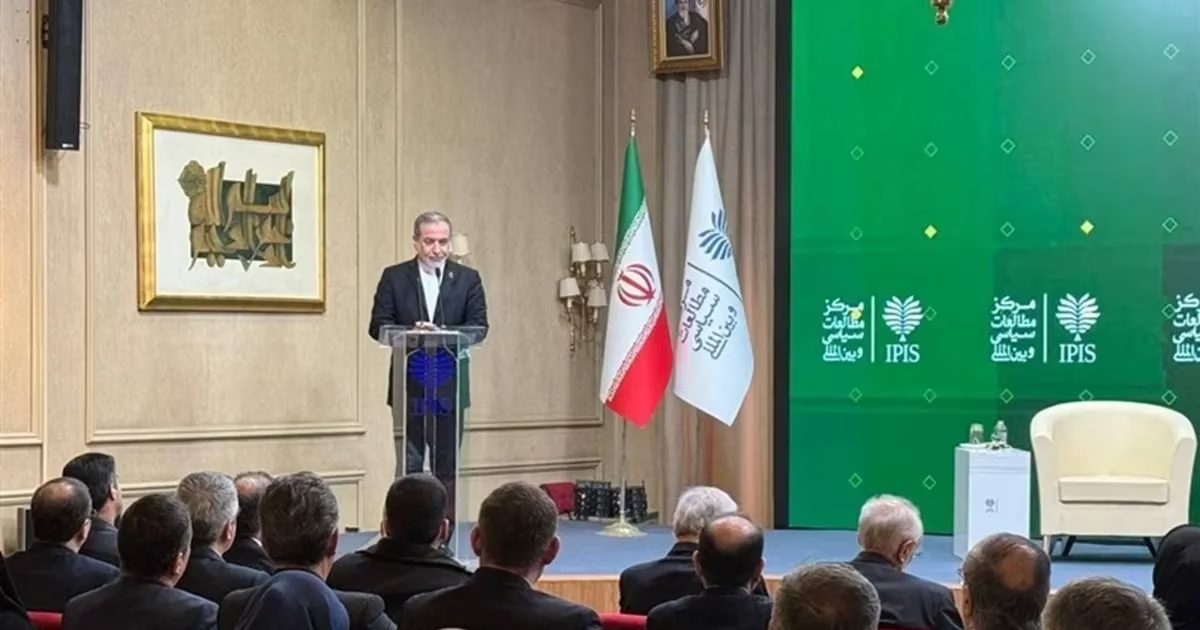
In contrast, the Iranian regime shows remarkable resilience, with Khamenei viewing the conflict with Washington as an existential battle for survival that does not accept easy compromises. Iranian Foreign Minister Abbas Araqchi is leading diplomatic tactics aimed at gaining time and postponing a decisive resolution, seeking to force the US administration to make substantial concessions and accept compromises that ensure the regime's continuity.

Reports indicate that Trump expressed surprise at Tehran's lack of response to maximum economic pressure, despite Washington's hints of willingness to concede some demands, including allowing limited levels of uranium enrichment. Iran's nuclear capabilities remain under close surveillance, especially with high-enriched reserves hidden in fortified underground facilities.

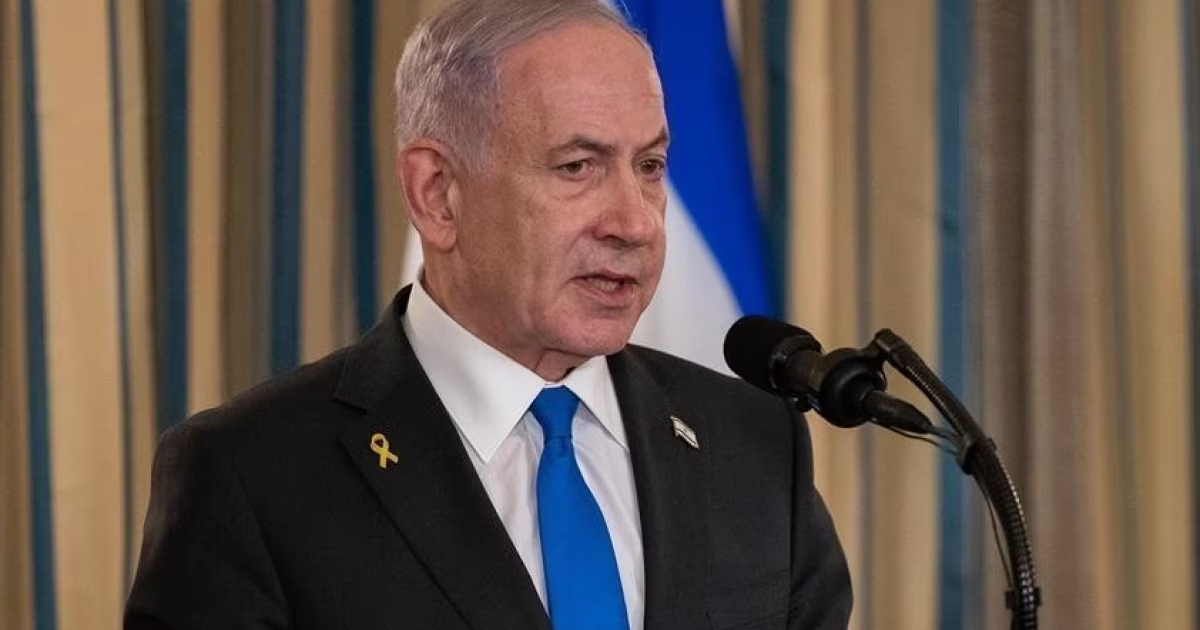
For its part, the Israeli government is in a state of anticipation and concern about the possibility of concluding a partial agreement that leaves Iran's nuclear infrastructure intact. Prime Minister Benjamin Netanyahu is closely monitoring US moves in Geneva, warning that any retreat from the policy of full pressure will necessarily undermine regional security and legitimize the Iranian missile threat.

On the internal Iranian front, strict international sanctions have led to a severe economic recession, sparking waves of popular protests that authorities met with severe repression. At the same time, the deployment of US forces in the region and around the Arabian Gulf continues, placing field commanders and soldiers under constant operational and psychological pressure, awaiting the outcome of political moves.

Washington is currently considering the option of a limited airstrike aimed at weakening Iran's military capabilities before returning to the negotiating table. However, this strategy clashes with the firmness of the Iranian position, which may make the 'Geneva Summit' merely a stop in a long conflict that could take months of complex political and military tug-of-war in the region.

The Israeli government fears any partial agreement that might leave Iran's nuclear threat intact, and Netanyahu is closely monitoring the situation, warning against weakening regional security.
OPINIONS

Thu 26 Feb 2026 12:35 pm - Jerusalem Time

US-Iranian Negotiations

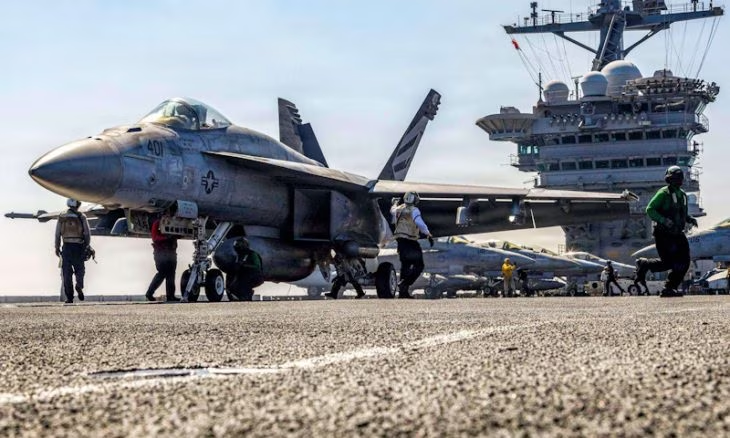
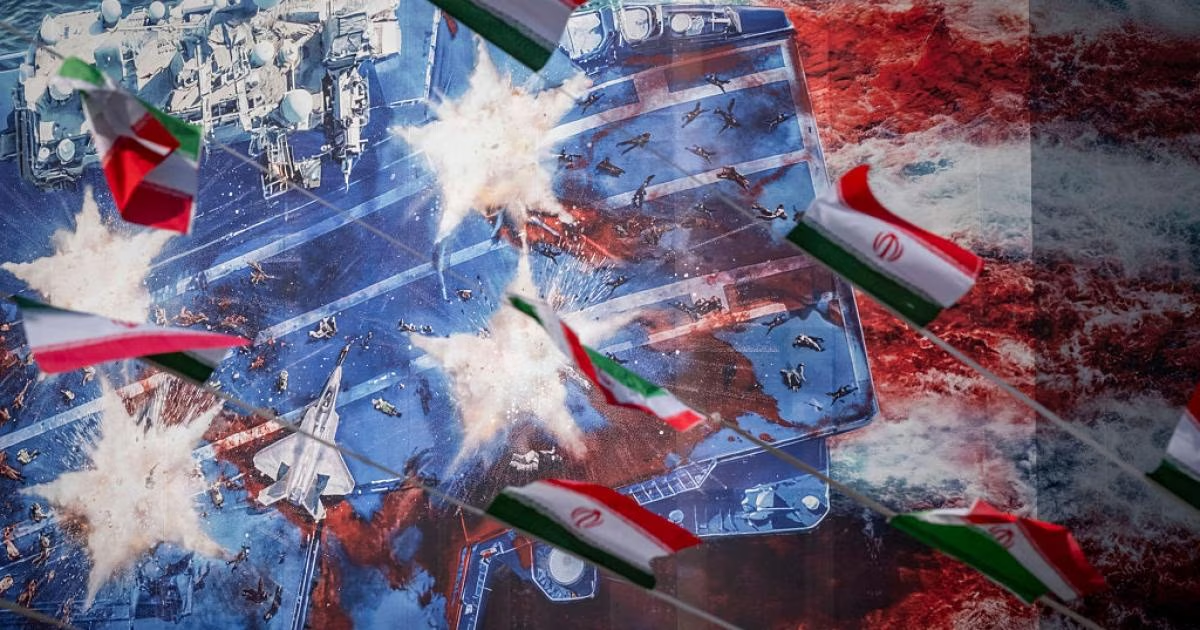
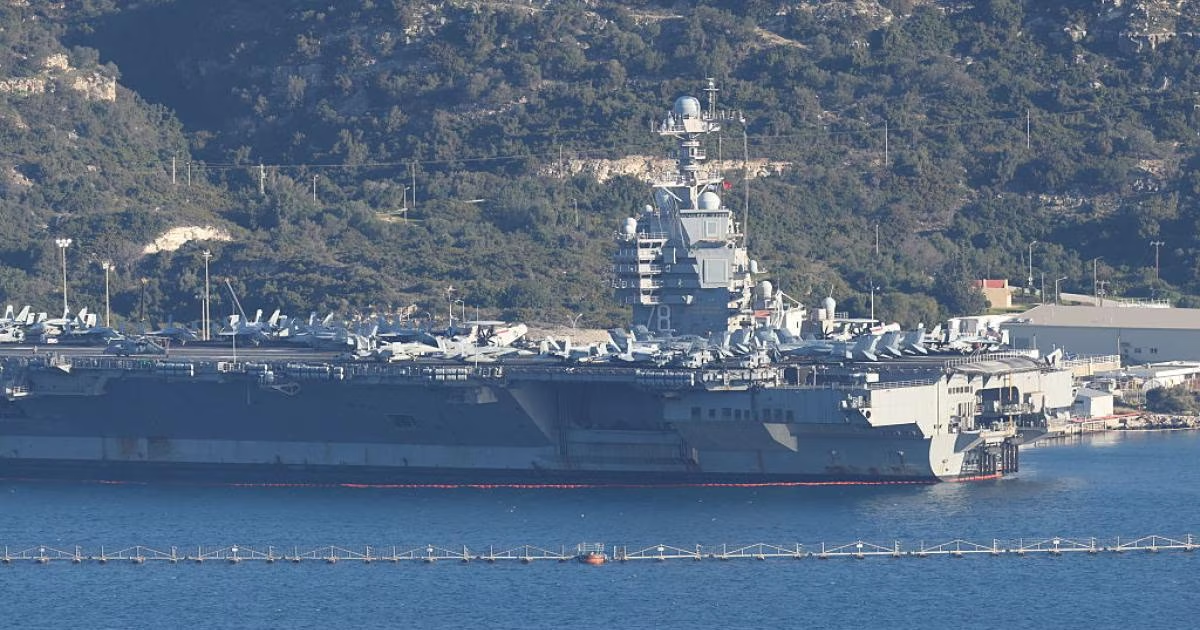
Today marks the third round of US-Iranian negotiations, following two rounds of indirect talks. The first took place in the Omani capital, Muscat, on February 6th, and the second in Geneva, Switzerland, on February 17th, at the Omani Embassy, with the mediation, presence, and participation of the Omani Foreign Minister, Al Busaidi. Today's third round takes place amidst a charged atmosphere of tension, escalation, and an unprecedented American military buildup in terms of its strength and details, including a large fleet comprising a nuclear submarine, warships, 13 destroyers, two aircraft carriers (Lincoln and Ford), electronic warfare equipment, and ready mobile forces of no less than thirty thousand soldiers. This buildup surpasses what Washington did in its war on Iraq to overthrow Saddam Hussein's regime on March 19, 2003. In contrast, Iran has made prior preparations to receive the first blow and is ready to retaliate, as stated in the Iranian message to the UN Secretary-General and members of the Security Council: "In the event of an attack against us, all bases, facilities, and assets of the hostile power in the region will be legitimate targets as part of an Iranian defensive response, and the United States will bear full and direct responsibility for the unforeseen consequences and the potential for them to become uncontrollable." The American saber-rattling is a scenario that carries many threats, suggesting that an American strike is inevitable, despite the slow but gradual progress of negotiations. The issues that ignited the confrontation between Washington and Tehran have been resolved one way or another. As President Trump himself stated at the "Peace Council" meeting in Washington on February 19th: "I have destroyed Iran's nuclear capability," and his emphasis on the option of "Iran not possessing nuclear weapons," threatening: "If an agreement is not reached, bad things will happen." Furthermore, Iran's allies have suffered severe attacks; the Syrian regime has been overthrown, political, security, and military leaders of Lebanese Hezbollah have been killed, and the Hamas movement has lost its offensive capabilities, suggesting, at least, that these parties lack the ability to harm or direct damage to the Israeli colony. Ballistic missiles, however, could still be a subject of negotiation. The factors of divergence or disagreement between Iran and the United States can be controlled, reduced, and negotiated, because Iran, for its part, has no interest in waging war, and therefore is willing to compromise. Iran has shown willingness to suspend uranium enrichment for 3 to 5 years in exchange for the lifting of US sanctions imposed on it. Iran seeks, and has an interest in, lifting financial and banking sanctions and stopping the ban on exporting its oil products, as its economic situation is difficult and has led to popular protests, which are the result of the siege, embargo, and sanctions imposed on it. The main problem is not the details, topics, and issues of the ongoing negotiations, but rather these are means, tools, or provocative pretexts used by the Israeli colony and its influence within American decision-making institutions, with a specific central goal of overthrowing the Iranian regime. Just as the goal was to incite against Iraq, which led to the fall and change of the regime, as also happened in Syria, the colony, along with a team from President Trump's administration, is working to overthrow the Iranian regime, which Tehran realizes and is working to undermine, and disarm its tools through negotiation and compromise. The possibilities will remain open, war or no war, as long as the extremist Israeli right and the hardline Jewish religious, along with the Trump administration team, are the decision-makers in steering the course towards prioritizing war on Iran, no matter how much flexibility and negotiating compromises it shows.

PALESTINE

Thu 26 Feb 2026 12:35 pm - Jerusalem Time

Head of German Mission in Palestine Visits "Al-Quds"

Anke Schlimm, Head of the German Representative Office in Palestine, visited "Al-Quds" yesterday, and listened to an explanation from the editor-in-chief about the newspaper's establishment and its digital platforms. Schlimm expressed her pleasure with the visit, noting the importance of the role played by the newspaper and its digital platforms in monitoring events and providing professional coverage. Schlimm emphasized the importance of foreign press entering the Gaza Strip to monitor what the residents there are exposed to, affirming that Berlin continues its diligent efforts to enable international press to enter the Strip. Schlimm indicated the continuation of German developmental and political support for the Palestinian people, describing the attacks carried out by settlers in the West Bank as terrorism, and affirming the continuation of German efforts to stop these attacks, and Berlin's adherence to the two-state solution.

PALESTINE

Thu 26 Feb 2026 3:55 am - Jerusalem Time

In a diplomatic precedent.. US Embassy begins providing consular services within West Bank settlements

The US Embassy to the occupation entity revealed on Tuesday a new approach involving the provision of consular services to US citizens residing within settlements established on the occupied West Bank territories. This move is the first of its kind in the history of American diplomacy, as previous administrations avoided any official activity that would suggest recognition of the legitimacy of the settlement presence in the territories occupied in 1967.

The embassy clarified in an official announcement that this initiative, named 'Freedom 250,' aims to facilitate consular procedures for Americans in their places of residence. Consular staff are scheduled to begin providing passport issuance and renewal services within the 'Efrat' settlement on Friday, February 27th, a clear تجاوز of previous diplomatic red lines.

Sources indicated that embassy teams will not be limited to one settlement, but have set a timeline extending for the coming months that includes visits to various locations. The plan includes presence in the 'Beitar Illit' settlement, occupied Jerusalem, and Haifa, in addition to the city of Ramallah, reflecting a desire to integrate settlements within the geographical scope of US government services without discrimination.

The 'Efrat' settlement, targeted by the first activity, is located within the 'Gush Etzion' settlement bloc south of Bethlehem, and has a high density of settlers holding American citizenship. The United Nations and the international community consider this settlement, like other settlements, illegal and in violation of the Fourth Geneva Convention and relevant UN Security Council resolutions.

These field movements come amid a diplomatic crisis sparked by statements from the US Ambassador to the occupation entity, Mike Huckabee, who adopted extreme positions regarding Palestinian rights. Huckabee had explicitly spoken about 'Israel's right' to expand and control Arab lands, based on biblical interpretations that refuse to recognize the term 'West Bank'.

According to press reports, President Donald Trump's administration quickly moved to try to contain the Arab anger resulting from the ambassador's statements, with high-ranking officials making contacts with Arab capitals. The administration tried to disavow the implications of the statements by describing them as expressing Huckabee's 'personal opinions,' even though the new consular procedures on the ground reinforce his views.

For its part, Hamas strongly condemned this American announcement, considering that providing consular services within settlements represents actual participation in the aggression against the Palestinian people and their land. The movement said that these steps aim to impose new realities on the ground and liquidate the Palestinian issue by legitimizing settlement in violation of international laws.

Observers believe that this shift represents a break with traditional American policy that considered settlement an obstacle to the peace process, as settlers are now treated as a 'natural' part of the administrative fabric sponsored by Washington. More than half a million settlers currently reside in the West Bank, including tens of thousands of American citizens who constitute a political pressure base.

These developments coincide with the recent approval by the Israeli cabinet of a series of measures aimed at tightening administrative and security control over areas of the West Bank. These measures facilitate the seizure of Palestinian lands and the expansion of settlement infrastructure, thereby reducing the chances of establishing a geographically contiguous Palestinian state.

The inclusion of settlements in the 'consular access' plan sends a political message that Washington no longer recognizes the dividing lines between the occupied territories and the occupied interior. Human rights activists warn that this step could open the door to other international recognitions of the settlement reality, undermining the international legal system that criminalizes the seizure of land by force.

This step treats settlements as a natural part of the occupation entity, rather than as occupied territories under international law.

OPINIONS

Thu 26 Feb 2026 3:51 am - Jerusalem Time

Between Bluster and Restraint: Is Trump Edging Away from War with Iran?

News Analysis


Washington, DC- By any historical measure, presidential rhetoric on Iran has often served as a prelude to escalation. Yet President Donald Trump’s State of the Union address on Tuesday contained something more ambiguous—perhaps even unexpected. While he reiterated that Iran must never acquire a nuclear weapon, the tone and omissions in his remarks suggest he may be inching away from direct military confrontation. That conclusion cannot be stated with certainty. Still, the signals embedded in his speech point less toward imminent attack and more toward a reluctant search for diplomatic space.


Trump framed his central demand in starkly personal terms. Iran, he said, has yet to utter the “secret words”: “we will never have a nuclear weapon.” It was a theatrical formulation, reducing a complex dispute to a single pledge. Yet Iran’s foreign minister, Abbas Aragchi, had just before Trump’s address delivered precisely that assurance: “Our fundamental convictions are crystal clear: Iran will under no circumstances ever develop nuclear weapons.” If Trump’s condition is to hear such a commitment, it has already been articulated.


The gap, therefore, is not rhetorical but political. The question is whether Trump is prepared to accept that declaration as sufficient—or whether the demand for “secret words” is a shifting benchmark designed to preserve leverage. In diplomacy, language matters, but so does acknowledgment. If Washington dismisses Tehran’s explicit renunciation as inadequate, it risks revealing that the issue extends beyond weaponization to influence, deterrence, and regional power.


Equally significant is what Trump did not demand. He did not call for dismantling Iran’s enrichment capability. He did not insist on ending its ballistic missile program. Nor did he explicitly require Tehran to sever ties with regional actors such as Hamas, Hezbollah, or the Houthis. These omissions are consequential. Previous U.S. administrations—and certainly Israel—have often framed those elements as essential to any comprehensive agreement.


By narrowing his public demand to the nuclear weapon question alone, Trump has implicitly lowered the visible bar for a deal. Whether intentionally or not, this creates maneuvering room. It shifts what might have been an all-or-nothing confrontation into a potentially negotiable framework. If the objective is preventing weaponization rather than restructuring Iran’s entire regional posture, compromise becomes more plausible.


The broader context reinforces restraint. Internationally, nearly every major actor—save one—has reportedly urged Washington not to strike Iran. Even America’s Gulf allies appear wary of another war, fearing they would absorb the immediate geographic and economic shock. Oil markets, infrastructure, and internal stability would all be vulnerable.


Within the United States, military leaders are signaling caution. The Chairman of the Joint Chiefs of Staff, General Dan Caine, has reportedly indicated there is no clean or decisive military option. A strike on Iran’s nuclear infrastructure could trigger retaliation across multiple theaters, drawing U.S. forces into prolonged conflict with no clear endpoint. The memory of open-ended Middle East wars still shapes Washington’s strategic thinking.


Domestic politics further complicate matters. Trump’s polling remains fragile. His advisors know that a major war—especially one that falters—could accelerate electoral losses. With midterms looming and Democrats eyeing congressional control, the margin for error is thin. Wars do not guarantee political salvation. A failed or inconclusive campaign against Iran could deepen perceptions of instability rather than strength.


Against this backdrop, two forces appear most inclined toward confrontation: Israel and its influential lobby in the United States. For Israel, Iran represents an existential threat. From Jerusalem’s perspective, delay heightens danger. For Washington, however, the calculus is broader. American interests are global; Israeli interests are regional. The alignment is strong but not identical.


If Trump ultimately opts for military action, critics will argue he is fighting a war aligned primarily with Israeli strategic priorities. That framing would be politically explosive at home and costly abroad, reviving debates over whether U.S. Middle East policy reflects national interest or allied imperatives.


Caution, however, should not be mistaken for resolution. Trump’s rhetoric remains volatile, often oscillating between maximalist threats and sudden overtures. The ambiguity in his latest address may signal strategic recalibration—or merely tactical positioning. Trump might ultimately find himself compelled to strike Iran after this vast deployment of American strike forces, as the logic of escalation can create its own momentum, narrowing diplomatic flexibility and making restraint appear as weakness rather than prudence at a politically decisive moment.


Yet the structural incentives for restraint are clear. The international community urges de-escalation. Military advisors warn of entanglement. Political strategists counsel prudence. Iran has publicly declared it will not pursue nuclear weapons. And Trump, notably, has limited his demands to hearing that declaration.


Whether this convergence leads to negotiation or confrontation depends on choices made in the coming weeks. For now, the speech reads less like a drumbeat to war and more like a tentative, politically constrained opening to avoid one. In the Middle East, wars often begin with rhetoric that leaves no room for retreat. Trump’s latest address, for all its bluster, may have left just enough space to step back.

PALESTINE

Thu 26 Feb 2026 2:39 am - Jerusalem Time

Horrific Testimonies from Ofer Prison: Physical Abuse and Medical Neglect Threaten the Lives of Hundreds of Prisoners

Human rights sources reported that the Israeli "Ofer" prison, located west of Ramallah, is in a critical stage due to the increasing number of prisoners suffering from chronic diseases and severe injuries. The sources attributed this deterioration to the harsh detention conditions imposed by the prison administration, in addition to the escalating pace of direct physical assaults and the deliberate deprivation of necessary medical care for the sick and injured.

The human rights briefing, based on visits conducted in early 2026, documented harsh testimonies from prisoners who were subjected to abuse; among them, a prisoner suffering from fractures in his back and nose and severe weight loss due to the starvation policy. The reports also recorded the case of a prisoner with diabetes and serious blood clots in his liver and intestines, who lost his teeth due to severe beating upon entering prison, without the occupation authorities allowing him to receive medical alternatives or follow-up on his complex health condition.

In a related context, a number of injured detainees suffer from serious complications that threaten their lives, as one prisoner, injured by occupation bullets in the pelvis and abdomen, faces severe difficulty walking and loss of bladder function. Despite his urgent need for specialized surgical and therapeutic intervention, the prison administration officially informed the prisoners that no medical solutions were available for their cases at present, leaving them prey to continuous pain and permanent disability.

The Prisoner's Club affirmed that these practices are not isolated incidents, but rather part of a systematic policy aimed at draining the bodies of prisoners and breaking their morale. These violations come at a time when more than 9,300 Palestinians are behind bars, including dozens of women and hundreds of children, who live in an environment lacking the most basic human necessities and where repressive measures are escalating unprecedentedly.

This deterioration within prisons is linked to the widespread field escalation witnessed in the West Bank since the start of the genocide war on the Gaza Strip in October 2023. Official data indicates that more than 1,117 Palestinians have been martyred in the West Bank, and about 22,000 arrests have been recorded, placing the prisoner movement before existential challenges in light of the continuation of retaliatory occupation policies and the absence of international oversight.

The documented cases reflect an extremely dangerous health situation faced by prisoners, which is the result of a continuous and systematic medical neglect policy followed by the prison administration.

ARAB AND WORLD

Thu 26 Feb 2026 2:38 am - Jerusalem Time

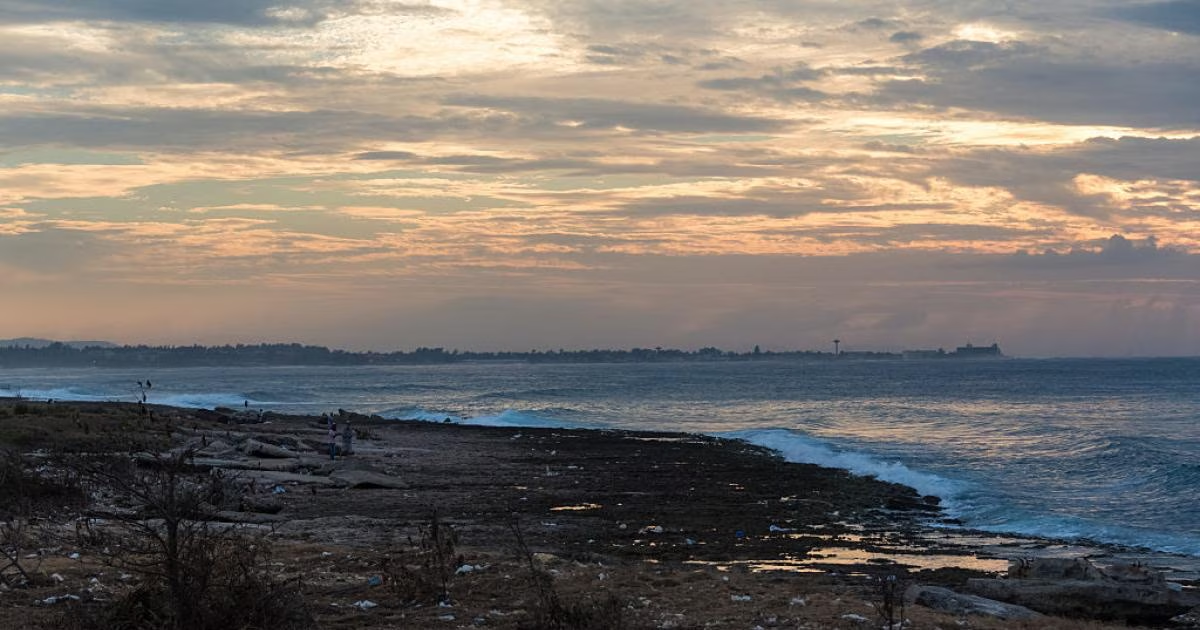
Bloody Confrontation at Sea: 4 Killed by Cuban Coast Guard on American Boat

Cuban territorial waters witnessed a serious security incident that resulted in the death of four people and the injury of six others who were on board a speedboat registered in the US state of Florida. Official sources in Havana reported that a violent exchange of fire occurred between the boat's crew and elements of the Cuban Coast Guard during a routine inspection mission.

The Cuban Ministry of Interior clarified in a statement that the clash erupted when a naval patrol approached to verify the identity of the passengers, but shots were fired from the American boat towards the Cuban vessel. This initial attack led to injuries to the captain of the Cuban vessel, prompting forces to return fire.

After gaining control of the situation, Cuban authorities confirmed the death of four foreign passengers and the injury of six others with varying degrees of severity. The injured were promptly transported to receive necessary medical care in nearby hospitals, with extensive investigations beginning into the circumstances of the incident and the motives for the boat's presence in that area.

This bloody confrontation comes amidst complex political conditions and escalating tensions between Havana and Washington, despite their geographical proximity, with only 160 kilometers separating them. Political circles are monitoring the repercussions of this incident on bilateral relations, which have been in a state of constant push and pull for decades.

On the economic front, Washington had recently announced a partial easing of the oil embargo imposed on the Caribbean island since the beginning of this year. This step came after a severe fuel supply crisis faced by Cuba following the cessation of shipments from Venezuela due to US pressure on the Nicolás Maduro regime.

Cuba historically relied on Venezuelan oil to cover about half of its domestic energy needs, which made it vulnerable to fluctuations in US foreign policy. Caribbean leaders had previously warned of an imminent economic collapse on the island if the shortage of vital supplies continued, prompting Washington to issue exceptional licenses.

Despite allowing some shipments for commercial and humanitarian purposes, political tensions continue to cast a shadow over the general scene in the region. The Cuban authorities, for their part, emphasize that they will not tolerate any illegal incursions or security threats to their maritime borders and national sovereignty.

The Ministry of Interior affirmed its full commitment to protecting Cuba's territorial waters and maintaining maritime security within its borders.

ARAB AND WORLD

Thu 26 Feb 2026 2:38 am - Jerusalem Time

Financial Times warns Trump: Iran is not Venezuela, and the lessons of Iraq and Afghanistan are present

The "Financial Times" affirmed in its latest editorial that the threats made by US President Donald Trump to launch military strikes against Iran lack clear objectives and well-defined plans. The newspaper indicated that exerting maximum pressure on the Iranian regime to agree to a new deal requires sufficient military resources and international coordination, which appears to be absent in the current approach of the US administration.

The newspaper considered that Trump's ultimate goals remain shrouded in mystery, especially as they coincide with the widest wave of popular protests Iran has witnessed since the 1979 revolution. The editorial questioned whether the US President genuinely seeks a new nuclear agreement that curbs Tehran's ambitions, or if the goal is merely to push the economically exhausted regime towards complete surrender to American demands.

Sources observed a clear contradiction in the messages emanating from the White House regarding the Iranian file, with demands oscillating between the complete abandonment of the nuclear program and the imposition of strict restrictions on ballistic missiles. This confusion is evident in Trump giving a short deadline of no more than 15 days to reach an agreement, threatening that "bad things" will happen if the period expires without tangible results.

In the context of diplomatic preparations, the newspaper noted that Trump entrusted the negotiation task to his envoy Steve Witkoff and his son-in-law Jared Kushner, both of whom lack deep experience in dealing with the complex Iranian issue. This team also lacks the necessary technical knowledge to manage highly complex nuclear negotiations that require an understanding of precise scientific and political details.

On the military front, reports revealed that senior Pentagon generals issued direct warnings to President Trump regarding the risks of any large-scale military operation. These warnings centered on the lack of vital ammunition needed for a prolonged conflict, in addition to the absence of support from traditional allies who fear the repercussions of war on regional stability.

According to the analytical reading, Israeli Prime Minister Benjamin Netanyahu appears to be the only leader enthusiastic about launching a military strike on Iranian facilities. The newspaper recalled that Netanyahu had previously tried to drag the United States into direct confrontations, which raises concern among international powers that prefer diplomatic paths to avoid an escalation of the situation in the Middle East.

The article described the Iranian regime as "its own enemy" due to its brutal repressive practices against protesters, which led to the killing of thousands and provoked widespread international condemnation. This internal repression, along with the intransigence in previous negotiations with the Biden administration, led to the regime losing its legitimacy in the eyes of its people and the alienation of European powers that had supported the nuclear deal.

The newspaper explained that the Iranian people, numbering about 90 million, live in a state of anticipation and anxiety between the desire for change and the fear of the ravages of war. Despite widespread popular discontent with the regime's policies and international sanctions, there is a real fear that reckless American statements could destroy the country's capabilities and the future of its generations.

The editorial warned that limited air strikes might not achieve the desired results and would not guarantee Tehran's immediate response to American demands. It also ruled out that air power alone would succeed in changing the existing regime, even if assassination operations targeted senior political and military leaders in the Iranian power structure.

Sources warned against underestimating Iran's ability to retaliate and take revenge if it feels an existential threat to the regime's entity. Iranian response options are likely to include targeting American bases in the region, striking Washington's allies, and threatening the security of international navigation in vital waterways.

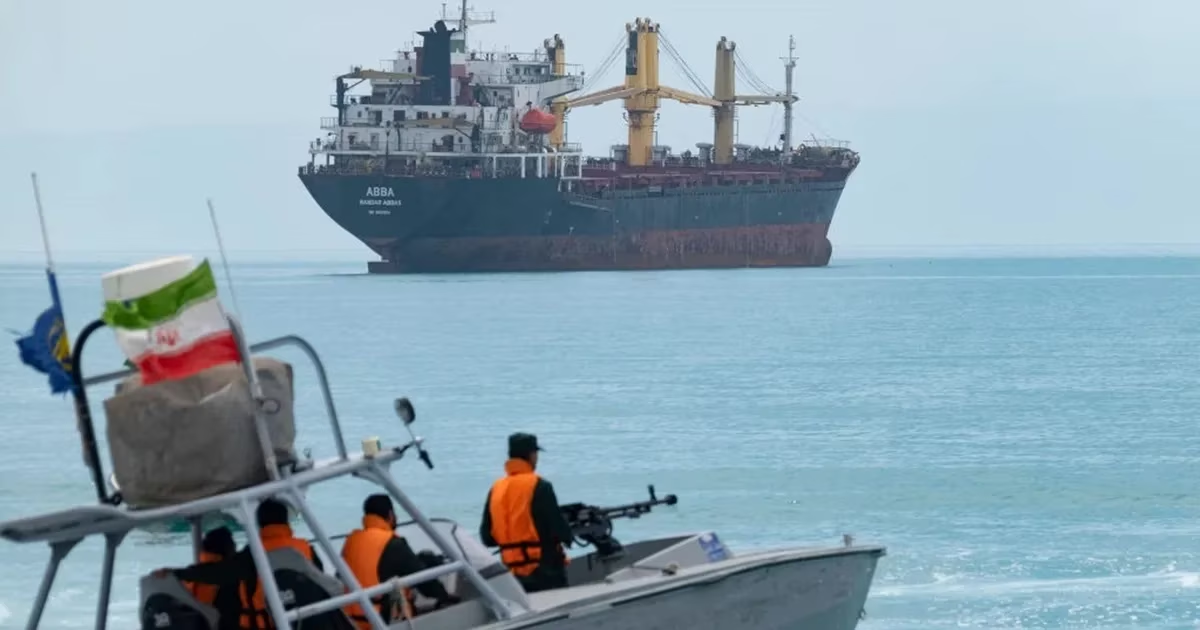
The Strait of Hormuz stands out as Iran's most dangerous bargaining chip, as about a third of the world's seaborne crude oil supplies pass through it. Any attempt to close this strait or disrupt movement in it would lead to insane jumps in energy prices, which could cause a global economic crisis that the US administration cannot bear the consequences of.

Attention turns to the third round of indirect talks in Geneva, which the newspaper considered the last and slim chance to avoid a military confrontation scenario. If these diplomatic efforts fail, Trump will face a fateful choice that could change the face of the region and the world for many years to come.

The newspaper indicated that Trump may be driven by the success of the military operation that targeted Venezuelan President Nicolas Maduro, considering it proof of absolute American superiority. However, the article stresses that the comparison between the two cases is completely wrong, as Iran possesses strategic depth and military and organizational capabilities far exceeding what Washington faced in Caracas.

The "Financial Times" concluded its advice to the US President by emphasizing the need to recall the harsh lessons the United States learned in Iraq and Afghanistan decades ago. Getting involved in a conflict with a country the size and complexity of Iran could turn into a new quagmire that drains American resources and leaves destruction whose end or strategic results cannot be predicted.

Iran is not Venezuela, and it is better for Trump to learn from the catastrophic lessons he learned from Iraq and Afghanistan before taking any military step.

ISRAELI AFFAIRS

Thu 26 Feb 2026 2:38 am - Jerusalem Time

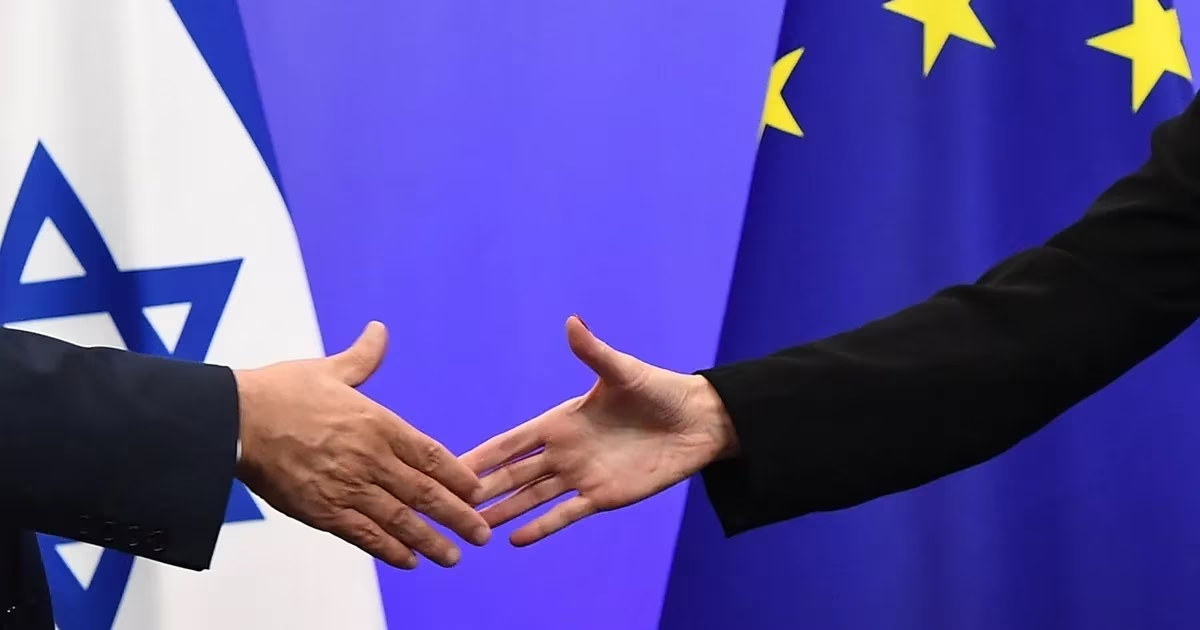
Israeli Calls to Fortify Partnership with Europe to Counter Trump's Policy Volatility

Voices within the political and strategic circles in the occupying state have escalated, emphasizing the necessity of preserving and developing the partnership with the European Union, warning against the repercussions of losing this vital ally. These calls come at a time when international relations are witnessing increasing complexities, with Brussels viewed as an indispensable regulatory and economic pillar amidst the changing global landscape.

Shai Gal, an expert in international politics and crisis management, affirmed that recent aggressive statements by Israeli officials against the European Union do not serve national interests. He clarified that these stances, including statements by Justice Minister Yariv Levin, are often directed at internal electoral consumption and do not reflect a long-term strategic vision for the state.

Gal described the European Union as the occupation's primary and essential trading partner, emphasizing that it is not merely a political bloc or a leftist ideology, as some promote. He pointed out that this bloc represents the largest integrated economy in the world, making it a crucial element in the stability of the Israeli economy and its future growth.

Economic figures demonstrate the extent of mutual dependence, with over a third of Israeli imports coming from EU countries, while a third of Israeli exports go to European markets. Hundreds of Israeli companies directly rely on access to these markets to ensure their continuity and expansion in various vital sectors.

Cooperation extends beyond trade aspects to vital infrastructure, including aviation, technical standards, and financial regulations. The partnership with Europe also plays a pivotal role in scientific research, infrastructure security, civilian cybersecurity, in addition to sensitive energy files.

The analysis indicated a perception gap between the two sides, where political noise sometimes overshadows the essence of common interests. While Europe views Israel as a unique case separate from its regional context, the occupation sometimes tries to pretend it has no absolute need for European support, which the author described as an illusion.

In contrast, Europe finds in Israel an important source of operational and technological assets, especially in intelligence, security, and defense. The author believes that portraying Israel as a perpetually problematic party contributes to marginalizing genuine European interests and weakens effective communication channels between the two sides.

Gal addressed the issue of European criticism of the occupation's policies, urging Tel Aviv to distinguish between political opposition and antisemitism. He considered that conflating concepts harms Israel's credibility and weakens genuine efforts to combat hatred, emphasizing that most European countries seek meaningful dialogue, not a war of slogans.

The author stressed that the stances of countries like Spain, Ireland, and Belgium do not necessarily mean that the European Union as a whole adopts a hostile position. The Union operates according to complex mechanisms and balances between the Commission, Council, and Parliament, which requires more intelligent Israeli engagement and understanding of voting rules and coalitions.

Brussels' importance is doubly highlighted in light of what the author described as the 'volatile American reality' under Donald Trump. Analysts believe that American policy, based on immediate deals and interests, makes strong and stable strategic alternatives like the European Union necessary.

The analysis cited Trump's handling of the Greenland island and Denmark issue as an example of Washington's potential abandonment of its allies if interests conflict. This behavior created a conviction among some Israeli circles that the alliance with Washington could become a bargaining chip at any moment, necessitating caution.

The Israeli expert called for quiet coordination with European capitals that share Tel Aviv's concern about unexpected scenarios in American policy. The goal is not to stand against the United States, but to protect common interests from fluctuations and red lines that the American president might cross.

The article concluded that coordination with Brussels is less personal and more institutional and mechanistic compared to dealing with Washington, making it more predictable. Given these facts, the relationship with Europe becomes a strategic 'insurance policy' that protects Israel from major political shocks.

This reading confirms that the professional and political elite in Tel Aviv fully realize the extent of the risks resulting from isolation from the European sphere. Therefore, the call to strengthen ties with the European Union represents a security and economic necessity that transcends fleeting political disagreements or sharp media statements.

The European Union is not an ideological camp; it is the world's largest integrated economy and an insurance policy against American volatility.

ARAB AND WORLD

Thu 26 Feb 2026 2:38 am - Jerusalem Time

Drums of War Beat in Geneva: Washington Tightens the Noose on Tehran and Military Buildup in the Region

The relationship between Washington and Tehran has entered a highly sensitive phase with the launch of a round of negotiations described as crucial in the Swiss city of Geneva. The American administration preceded this round by imposing a new package of sanctions targeting entities linked to Iran, a step that reflects Washington's desire to exert maximum pressure before sitting down at the dialogue table.

For his part, US President Donald Trump adopted a dual discourse combining direct military threats with an expression of readiness to negotiate. Trump warned that Tehran continues to develop a missile arsenal capable of reaching American and European depths, considering that the current confrontation concerns national security and is not merely a fleeting political option.

In response, Tehran countered with a discourse that completely denied the American accusations, accusing Washington of systematic misinformation against its peaceful program. Iranian President Masoud Pezeshkian affirmed that his country is open to dialogue to find diplomatic solutions, but at the same time stressed his refusal to make any fundamental concessions that affect Iranian sovereignty.

On the ground, media sources revealed intensive American military movements to enhance defensive and offensive capabilities in the region. The US Army intends to deploy 6 additional advanced 'F-22' fighter jets in Israel, raising the total number of this type of aircraft in the region to 18 fighters.

Political circles in Israel view the Geneva negotiations as the last chance before moving to more stringent options. Israeli officials believe that the diplomatic path may not lead to tangible results, emphasizing the need to prepare for all scenarios, including direct military action against nuclear facilities.

In a related context, Steve Witkoff explained that the Trump administration insists that any new nuclear agreement must be comprehensive and not time-bound. Witkoff pointed out that Washington seeks to include the ballistic missile file in any future understandings to ensure long-term stability in the Middle East.

Conflict management experts believe that recent American statements aim to prepare public opinion for the possibility of diplomatic failure. Analysts considered that raising the long-range missile issue at this time reduces the maneuvering space for the Iranian negotiator, who was betting on partial interim agreements.

Analytical readings indicate that the current American equation is based on the principle of 'peace through strength.' This approach frames negotiations as a strategic pressure tool, where military buildup and economic sanctions are used as coercive factors to push Tehran towards making tangible concessions in its nuclear file.

On the other hand, the Israeli position stands out as an additional pressure factor on the Trump administration, as Tel Aviv seeks to convince Washington of the futility of previous agreements. The Israeli narrative is based on the premise that Tehran exploited previous periods of calm to increase uranium enrichment rates and strengthen the influence of its military arms in the region.

Researchers in Israeli affairs believe that there is a near consensus within the security and political establishment in Tel Aviv on the necessity of launching a military strike. They believe that current circumstances represent an unprecedented opportunity to weaken Iranian capabilities, which could give the Israeli leadership a strong political card in facing internal crises.

Despite this escalation, informed sources indicate that Washington is still resisting some pressure to expand the negotiation agenda in a way that could lead to its immediate collapse. The current American approach focuses on dismantling the nuclear program as a top priority, before moving on to discussing regional roles and other thorny security files.

In the absence of clear indications of the success of the Geneva talks, tension remains the master of the situation in the corridors of international diplomacy. Mutual threats and increasing military buildup indicate that the region stands on the brink of a major strategic transformation, either through a historic agreement or an open confrontation.

The director of the 'New Lines' Institute for Strategy confirms that the American administration's discourse reflects a firm determination to prevent Iran from acquiring nuclear weapons. She explained that the absence of explicit and documented Iranian commitments in this regard makes the option of military escalation strongly present on the table of decision-makers in the White House.

In conclusion, the eyes of the world remain fixed on Geneva, awaiting the outcome of the direct and indirect meetings between the parties. The path that the Geneva meeting will take will determine the features of the conflict in the Middle East for the coming years, amidst the intertwining of international interests and increasing field complexities.

Iran is ready to negotiate to find a solution without making fundamental concessions, and it is managing the process as an entry point for a strategic transformation to address concerns.

PALESTINE

Thu 26 Feb 2026 2:38 am - Jerusalem Time

Gaza as a Human Laboratory.. Human Rights Activist Attacks 'Blood Festival' at Israeli Defense Exhibition 2026

The past few days witnessed the launch of the Defense Technology Exhibition (Israel 2026), which is considered the largest of its kind since the outbreak of the genocide war in the Gaza Strip. Writer and human rights activist Sapir Sluzker-Amran described this event as a 'blood festival,' considering it the peak of investment in human suffering to achieve commercial gains.

Amran revealed in an article published by Haaretz that the organizers promoted the exhibition through economic platforms, emphasizing that the displayed technologies are 'combat-proven' in the recent conflict. This description reflects, according to the writer, a mindset that considers killing and destruction a professional achievement that can be marketed like any other consumer product without any regard for ethical context.

The legal activist explained that terms like 'innovative under fire' actually mean that these deadly systems have been tested on the bodies of hundreds of victims who fell in one day. She added that manufacturing companies openly boast about turning the Gaza Strip into an open human laboratory, primarily aimed at raising the market value of their shares and reaping huge profits from the blood of civilians.

The exhibition included the display of video clips, some of which were taken from 'TikTok,' showing acts of extermination of civilians and entire families using these modern technologies. The writer criticized the absence of any discussion about the failures of these systems or the ethical standards for using artificial intelligence in making killing decisions, which reduces the human role and turns war into a cold, automated process.

Economically, reports indicated a massive jump in Israeli arms sales, which increased by more than 18% over the past two years, according to Stockholm International Peace Research Institute (SIPRI) data. These figures reflect the extent to which economic growth in the defense sector is linked to the continuation of intensive military operations in the Palestinian territories.

The value of purchase orders in the Israeli defense industries reached approximately $68.4 billion by the end of 2024, marking a 38% increase compared to the previous year. This steady growth indicates Israel's transformation into a major supplier of military technologies that are tested and developed under real war conditions.

For its part, the Israeli Ministry of Defense confirmed that defense exports broke records for the fourth consecutive year, exceeding $14.7 billion in 2024. This 13% increase over the previous year confirms that the 'blood economy' has become a fundamental pillar of the financial policy of the Hebrew state.

The writer expressed her disgust at the deep gap between the reality of ongoing violence in Gaza and the language of innovation and growth that prevailed in the exhibition halls. She considered that the attempt to frame bloodshed as an investment opportunity reflects an unprecedented moral decline in Israeli society and the institutions participating in this event.

In an attempt to break this consensus, a group of activists, including Amran, stormed the exhibition and raised banners accusing visitors of participating in war crimes. Protesters carried pictures of children killed by the technologies that participants came to examine, which caused a state of astonishment and denial among attendees who considered the event merely a routine professional activity.

Amran stressed that the goal of the protest was not to convince the beneficiaries of the system, but to break the silence that grants public legitimacy to such conferences. She pointed out that the participation of academics and experts in these events contributes to normalizing killing and portraying it as a neutral technical act stripped of its criminal context.

The writer concluded her article by emphasizing social responsibility in confronting the 'normalization of genocide,' calling for speaking the truth as it is without embellishment. She stressed the need not to allow war profiteers to enjoy a prestigious public status, and to work to expose the true face of military innovations that feed on the lives of innocent people in Gaza.

The advertisement openly and shamelessly boasts that Gaza is the laboratory that enables manufacturers to reap more profits, and that the only numbers that matter to them are the market value of their companies.

ARAB AND WORLD

Thu 26 Feb 2026 2:38 am - Jerusalem Time

Warnings of Washington's Miscalculation: Attack on Iran Could Ignite Unprecedented Regional Escalation

Recent analytical reports have issued serious warnings against the United States launching a military attack on Iran, considering that such a step could lead to a widespread security explosion in the region. Sources indicated that the prevailing assessments in the White House regarding the possibility of Tehran's rapid surrender under the weight of military pressure reflect a misunderstanding of the nature of internal Iranian calculations.

Observers believe that US President Donald Trump tends to think that the economic and political weakness currently suffered by Iran will force it to make major concessions. However, the reality indicates that tightening the noose on the Iranian leadership may push it towards suicidal options to defend its survival and political prestige in front of its public and allies.

Confidence in circles close to Trump is based on past experiences, where decisive decisions such as moving the US embassy to Jerusalem in 2018 did not lead to the catastrophes predicted by foreign policy experts. This past success reinforces the current administration's conviction in its ability to contain any potential Iranian reaction to specific military strikes.

Despite this confidence, analyses indicate that the current Iranian situation is complex, as the current fragility leaves no room for maneuver or compromise. Instead of military pressure being a means of de-escalation, it turns, from the Iranian perspective, into a motive for deterrence through harsh escalation to demonstrate strength.

It appears that American options regarding the Iranian file have been limited to two paths, with no third: either imposing a comprehensive agreement that ends Tehran's nuclear ambitions and missile program, or resorting directly to force. This division puts the region on the brink of an abyss, especially with Washington's insistence on achieving a symbolic victory that transcends complex technical details.

Historically, the Iranian leadership has proven that it does not back down in the face of external pressures except in cases where it feels a direct existential threat to the regime's continuity. Analysts recall Tehran's acceptance of a ceasefire in its war with Iraq in 1988 as a unique example of forced retreat after a long attrition.

At present, Supreme Leader Ali Khamenei appears less willing to make fundamental concessions, especially in light of the internal challenges facing the country. Maintaining an appearance of strength and steadfastness is a fundamental pillar of Tehran's survival strategy in the face of regional and international adversaries.

Iran fully realizes its inability to win a comprehensive conventional war against the United States or face a large-scale ground invasion. However, this realization does not mean silence, but may push it to launch preemptive or retaliatory strikes to avoid appearing helpless in the face of repeated blows.

Estimates indicate that the Iranian response may directly target the concentrated American military presence in the region, where about 40,000 soldiers are deployed in 13 military bases. These bases are within the effective range of Iranian missiles and drones, making them potential targets in any confrontation.

In addition, the interests of the Israeli occupation emerge as a primary target in the Iranian target bank, as Tehran seeks to link any American attack to regional complicity. This linkage aims to raise the cost of any military adventure against it by directly threatening the security of Washington's allies in the region.

Iranian threats extend to vital waterways, most notably the Strait of Hormuz and the Red Sea, which could lead to a paralysis of global trade. Any disruption in these passages will inevitably lead to huge jumps in energy prices, putting economic pressure on the entire international community.

Tehran also has the ability to activate its network of regional allies, foremost among them the Houthi group in Yemen, to target commercial ships and oil tankers. This type of proxy warfare gives Iran the ability to harm American and Western interests without entering into a direct and open confrontation.

In conclusion, sources confirm that Washington's continued approach of maximum pressure without opening real diplomatic channels may close all doors to peaceful solutions. Iran, despite its relative weakness, still possesses disruptive tools capable of inflicting severe harm on American strategic interests in the Middle East.

Iran's current fragility does not open the door to concessions, but rather narrows the margin for compromise, making any military pressure a catalyst for escalation.

PALESTINE

Thu 26 Feb 2026 2:37 am - Jerusalem Time

The West Bank and Jerusalem Face the Bloodiest Chapter: Organized Settler Terrorism and Forced Displacement

The occupied West Bank and Jerusalem are facing the most dangerous and bloody phase in decades, as Israeli settler attacks have escalated into organized terrorism targeting Palestinian villages and towns daily. These violations range from burning homes, mosques, and vehicles, to direct physical violence, uprooting trees, and preventing farmers from accessing their lands, all within an environment of impunity provided by the current Israeli government.\n\nIn the latest field developments, groups of masked settlers set fire to vehicles and tents in the village of Susiya, near Hebron, causing extensive material damage and panic among residents. Local sources reported that the attack was carried out under indirect protection from occupation forces, as these practices have become a consistent approach to tighten the noose on the Palestinian presence in areas classified as (C).\n\nThe attacks did not stop at destroying property but extended to livestock, which is the sole source of livelihood for many families, as settlers attacked the home of detainee Khalil Al-Manasra in Masafer Bani Na'im. The attackers stole about thirty sheep and killed several of them in cold blood, in a move aimed at forcing residents to voluntarily leave their lands under the weight of economic and security intimidation.\n\nIn a related context, citizen Wedad Makhamra was assaulted and beaten by a settler who stormed Khirbet Al-Markaz in Masafer Yatta, and provocatively searched homes and livestock pens. Eyewitnesses confirmed that these repeated incursions have caused severe panic among women and children, especially with the increasing pace of physical violence perpetrated by armed settlers against unarmed civilians.\n\nIslamic holy sites were also not spared from the wave of incitement and vandalism, as settlers set fire to parts of the Abu Bakr Al-Siddiq Mosque in the village of Tell, north of the West Bank, and spray-painted racist slogans calling for the killing of Arabs on its walls. The Palestinian Ministry of Endowments condemned this attack, describing it as a heinous crime that comes within the series of targeting the religious and national identity of the Palestinian people in their land.\n\nRegarding forced displacement, 11 Palestinian families began dismantling their homes in the Al-Khalayel Bedouin community east of Ramallah, fleeing continuous settler attacks that made life in the area impossible. These families include 55 individuals, who were previously displaced two years ago from the Ain Samiya community, revealing a systematic Israeli policy to pursue Bedouin communities and empty the land for settlement expansion.\n\nIn Jerusalem, a report issued by the International Jerusalem Foundation revealed a dangerous leap in the number of intruders into Al-Aqsa Mosque, with the number exceeding 65,000 settlers during 2025, an increase of 22% over last year. The report indicated that these incursions are carried out under official patronage, with ministers and Knesset members participating, in an attempt to impose new Judaization facts and change the existing historical status quo.\n\nIsraeli measures inside Al-Aqsa included extending the hours of incursions and increasing the number of intruders in a single group to 200 settlers, while reducing the time intervals between groups. Observers believe that these steps aim to entrench the temporal and spatial division of the mosque, amid international silence and complicity from the occupation authorities who provide full protection to the intruders and assault Palestinian worshipers.\n\nFor its part, the United Nations Office for Human Rights warned that settler violence is increasing unchecked, pointing to the killing of Palestinian Nasrallah Abu Siam in the suburbs of Mikhmas without any legal action being taken against the killers. The UN office called for an immediate end to the occupation and settlement expansion, stressing that the policy of impunity is the primary driver for the continuation of these crimes against humanity.\n\nInternational reports also warned of "ethnic cleansing" operations in the West Bank and Gaza, where Israeli policies aim to uproot Palestinian communities through the systematic use of force and demolition of homes. The United Nations documented an unprecedented increase in attacks since October 2023, indicating the occupation's exploitation of current circumstances to implement annexation and permanent displacement plans.\n\nThe Palestinian Wall and Settlement Resistance Commission recorded 468 attacks carried out by settlers during January alone, including burning fields and preventing farmers from accessing their lands. These attacks coincide with daily raids carried out by occupation forces in various cities and towns of the West Bank, resulting in the martyrdom and injury of thousands since the outbreak of the war on the Gaza Strip.\n\nOfficial statistics indicate that at least 1,117 Palestinians have been martyred in the West Bank since October 7th, while the number of arrests has reached about 22,000 cases, in an unprecedented targeting campaign. This military and security escalation aims to shatter the social and political structure of Palestinians, paving the way for the official annexation of the West Bank to Israeli sovereignty.\n\nIn a related context of systematic targeting of truth, 2025 was recorded as the deadliest year for journalists in three decades, with 129 journalists killed worldwide, and Israel was responsible for two-thirds of these cases. Reports confirm that the occupation army carried out the largest deliberate killings of journalists, especially those who documented famine crises and field crimes in the occupied territories.\n\nToday, about 770,000 settlers reside in hundreds of settlements and outposts in the West Bank and East Jerusalem, carrying out daily attacks aimed at undermining the possibility of establishing a Palestinian state. Palestinians warn that the continuation of this international silence will lead to a comprehensive explosion, given the extremist Israeli government's insistence on proceeding with settlement, Judaization, and killing policies.\n\nSettler violence is increasing relentlessly and unchecked amid complete impunity provided by the most extremist Israeli government.

PALESTINE

Thu 26 Feb 2026 2:37 am - Jerusalem Time

Israeli assessments of Hezbollah's scenarios for dealing with a potential attack against Iran

Israeli occupation forces continue to escalate their military operations deep inside Lebanese territory, targeting elements they describe as armed and wanted individuals in various areas. These moves come despite approximately eighteen months having passed since the ceasefire agreement came into effect, sending sharp field messages to various Lebanese parties.

Military analysts in the Hebrew media considered that the recent intensification of Israeli attacks, especially in the Sidon and Bekaa Valley regions, represents an abandonment of the previous policy of restraint. Sources indicated that these operations targeted prominent field commanders belonging to both Hezbollah and Hamas movements.

Israeli assessments link this wave of assassinations to potential American preparations for a military strike against Iran. Observers believe that through these operations, the occupation seeks to neutralize immediate threats before any widespread regional conflagration in which Washington might participate.

A state of anxiety prevails within political circles in Beirut regarding the possibility of the occupation carrying out a comprehensive preemptive strike against Hezbollah's military capabilities. These fears are reinforced by indications that any such Israeli move might receive direct support and endorsement from the American administration.

Israeli security agencies are closely monitoring movements within Lebanon to understand the nature of Hezbollah's expected response should a confrontation with Tehran erupt. The lingering question remains about the extent of decision-making independence within the current leadership of the party and its ability to engage in an all-out war.

Hebrew reports indicated that the first option available to Hezbollah is to suffice with media and political support for Iran without engaging in a field confrontation. This scenario is based on previous experiences in which the party chose not to be drawn into a direct clash despite escalating regional tensions.

The second scenario assumes the party's involvement in a limited round of fighting aimed at demonstrating loyalty to the Iranian axis and alleviating pressure on Tehran. However, analysts warn that this option might provoke a violent Israeli response that could develop into a military campaign aimed at destroying the party's infrastructure.

The third and most dangerous option is for Hezbollah to enter into an open and large-scale war against the occupation using its arsenal of missiles and drones. This possibility raises terror within Lebanon, especially with the occupation's threats to directly and destructively target the capital Beirut.

The Lebanese government condemned the repeated Israeli attacks, considering them a violation of national sovereignty and a transgression of existing agreements. At the same time, internal challenges arise concerning the Lebanese army's ability to assert control given the party's continued possession of long-range strategic weapons.

Military analyst Amir Bar Shalom believes that the leadership vacuum left by Hassan Nasrallah's absence continues to affect the decision-making process within the party. He explained that the current leadership, headed by Naim Qassem, may not possess the same margin of maneuver that was previously available for making fateful decisions.

In conclusion, the Lebanese scene remains hostage to rapid developments in the Iranian file, where local calculations intertwine with major regional interests. All parties are preparing for open scenarios that may redraw the map of balances in the region based on the nature of forthcoming military responses.

The Lebanese state will remain vulnerable to any scenario of regional escalation as long as Hezbollah continues to possess long-range missile systems.

ARAB AND WORLD

Thu 26 Feb 2026 2:37 am - Jerusalem Time

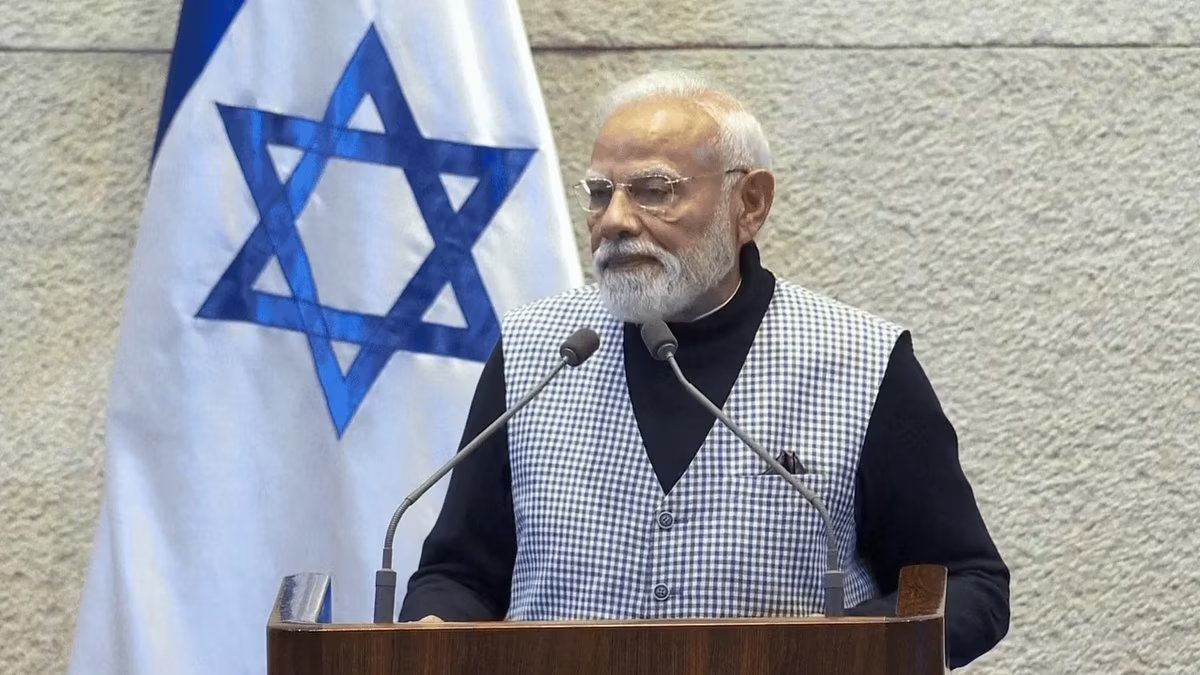
Modi before the Knesset: India stands with Israel with full conviction, and the Talmud documented our historical ties

Indian Prime Minister Narendra Modi, in a historic speech before the Israeli Knesset today, Wednesday, announced that his country officially and with full conviction stands by Israel. Modi expressed India's deep admiration for what he described as 'Israel's determination and courage,' emphasizing that New Delhi supports all measures aimed at enhancing stability in the region.

In his speech, Modi touched upon historical and religious aspects, noting that the 'Talmud' included explicit references to India and the sea lanes connecting the Mediterranean Sea to the Indian Ocean. He considered these ancient ties to form a solid foundation for the contemporary relationship, describing Israel as the 'land of the fathers' while India represents the 'motherland' for their peoples.

Regarding the political path, the Indian Prime Minister affirmed his full support for the peace initiative known as the 'Trump Plan,' which was signed in Egypt and received the support of the UN Security Council. Modi believed that this initiative represents the optimal path to achieving a just and sustainable peace for all peoples of the region, including addressing the Palestinian issue.

Concerning regional agreements, Modi noted that the 'Abraham Accords,' launched years ago, carried great hopes for achieving stability, but are currently facing serious challenges. Despite these challenges, he affirmed his country's commitment to supporting any path that leads to ending conflicts and enhancing joint regional cooperation.

Modi recalled his pride in being the first Indian Prime Minister to visit Israel nearly nine years ago, and the first high-ranking Indian official to deliver a speech from the Knesset platform. He explained that his current visit falls within the context of deepening the partnership he built with Benjamin Netanyahu, which elevated bilateral relations to the level of a strategic alliance.

On the economic front, Modi praised Israeli technological capabilities, especially in the field of agricultural development in desert areas, describing Israel as a global innovation hub. He affirmed that India, which is close to becoming one of the top three economies in the world, looks forward to a forward-looking partnership based on advanced technology.

The Indian Prime Minister revealed the signing of a joint investment agreement aimed at boosting business confidence in both countries and expanding the scope of trade exchange. He also stressed the importance of major infrastructure projects that the two countries plan to implement jointly, serving mutual economic interests in the long term.

In the area of defense cooperation, Modi noted that military partnerships between New Delhi and Tel Aviv have witnessed significant development in recent years. He pointed to the success of the 'business incubator' he launched with Netanyahu in 2018, which has so far contributed to supporting and growing more than 900 startups in vital fields.

This speech represents a radical shift in Indian foreign policy, which for decades was characterized by its traditional support for the Palestinian cause and the two-state solution. Since the establishment of diplomatic relations in 1992, the pace of rapprochement has accelerated unprecedentedly under the rule of the Bharatiya Janata Party led by Modi, leading to this close alliance.

Modi concluded his speech by conveying a message of appreciation from 1.4 billion Indian citizens to the Israeli people, affirming that the ties between the two sides are 'written in blood and sacrifices.' He pledged to continue working with the Israeli government to develop this strategic relationship in a way that serves the aspirations of both countries in the fields of security, innovation, and economy.

Israel is the land of the fathers, and India is the motherland, and the ties that bind us are written in blood and sacrifices.

PALESTINE

Wed 25 Feb 2026 9:14 pm - Jerusalem Time

International Report: 2025 the Deadliest Year for Journalism, Israel Responsible for Two-Thirds of Victims

The Committee to Protect Journalists, from its New York headquarters, issued a shocking report documenting the killing of 129 journalists and media workers worldwide during 2025. The report confirmed that this number represents the highest annual toll recorded since the Committee began systematic documentation of press freedom violations in 1992.

The international organization held the Israeli occupation army directly responsible for the killing of two-thirds of the total victims recorded globally last year. Sources explained that Israeli forces carried out an unprecedented number of targeted killings of journalists, which exceeds the crimes of any other government military force historically monitored.

Most of the documented crimes were concentrated in the Gaza Strip, where most of the victims were Palestinian journalists targeted while performing their professional duties. The report stressed that these targeting incidents come in the context of attempts to obscure the truth and prevent the transmission of an accurate picture of the deteriorating humanitarian and field conditions within the besieged Strip.

In an international comparison, the report indicated that the number of victims in other conflict zones appeared very small compared to what Israel committed. Sudan recorded the killing of 9 journalists, while 4 others were killed in Ukraine, figures described by the report as very low when compared to the death toll in Palestine.

The report revealed a dangerous development in targeting methods, with drones emerging as a primary tool in assassination operations. The Committee monitored 39 drone-related killings, 28 of which were carried out by the Israeli army in Gaza, while the other cases were distributed among Sudan, Ukraine, and Iraq.

For her part, Jodie Ginsberg, the CEO of the Committee, warned that the absence of international accountability encourages the continuation of these crimes. She stated that targeting media personnel is a dangerous indicator of broader attacks on public freedoms, emphasizing that impunity endangers the entire international community.

The Committee strongly criticized the culture of impunity dominating the international scene, where transparent investigations have been conducted only in very rare cases. Among the 47 cases of deliberate killing and direct assassination documented by the Committee in 2025, no legal accountability or prosecution of perpetrators has been recorded so far.

Violations were not limited to armed conflict zones but also extended to countries suffering from rampant organized crime and corruption. Mexico recorded the killing of at least 6 journalists, amid a dismal failure of federal mechanisms to provide the necessary protection for media professionals who have faced continuous threats for years.

In the Philippines, the report monitored the killing of 3 journalists by shooting last year, with most of these cases remaining unresolved against unknown perpetrators. These figures reflect a sharp decline in professional safety levels in Asian and Latin American countries, especially for journalists working on political corruption issues.

The Committee to Protect Journalists, founded in 1981, concluded that governments' failure to protect journalists opens the door to further violations. The organization called on the international community to take firm measures to ensure the safety of media teams and hold accountable military forces that systematically target them.

Journalists are being killed in record numbers at a time when access to information is more critical than ever, and attacks on the press are an indicator of the collapse of freedoms.

PALESTINE

Wed 25 Feb 2026 9:13 pm - Jerusalem Time

With Emirati funding.. a Palestinian company begins implementing a huge residential complex for displaced people in Rafah

Palestinian and Israeli sources revealed that a major contracting company based in the Gaza Strip has contracted to implement a large-scale residential complex project in the city of Rafah, funded by the United Arab Emirates. This move comes amid the continued military control of the Israeli occupation over large parts of the Strip, as the project primarily aims to provide shelter for tens of thousands of displaced people who lost their homes during the war.

Data indicates that 'Masoud and Ali Contracting Company' (MACC), which relies on Palestinian technical and engineering cadres from within the Strip, is the entity implementing the project in cooperation with two companies from the Arab Republic of Egypt. This step is a remarkable development in the reconstruction file, as construction operations begin without waiting for a complete Israeli withdrawal or reaching a final and comprehensive political agreement.

The planned residential complex is located in the southern region of the Gaza Strip near the city of Rafah, an area that has witnessed massive destruction of infrastructure and residential buildings. According to informed businessmen, the project will be built on an area of up to 74 acres, and will rely on pre-construction techniques using multi-story 'trailer' residential units to ensure speed of implementation and accommodation.

While the implementing company preferred not to comment on these reports, an Emirati official affirmed his country's continued commitment to supporting relief and recovery efforts in the Gaza Strip. The official explained that the UAE is working with international partners to ensure that humanitarian aid and basic services reach those in need effectively and quickly, in line with the urgent needs of the displaced population.

These reports intersect with previous documents that revealed a project called 'New Rafah', which is supposed to be supervised by the American Peace Council. The broader vision for this project includes the construction of about 100,000 permanent housing units, in addition to dozens of medical and educational facilities, to be a model for alternative residential communities subject to special administration and security procedures.

The proposed plan includes measures aimed at reducing the influence of Palestinian factions within these communities, including the adoption of an electronic wallet system with the Israeli currency (shekel) to control financial flows. The proposals also include providing independent educational curricula in the schools affiliated with the complex, away from the official directives that were prevalent before the war, to ensure a different educational environment.

On the security front, reports indicate that the residents of this city will undergo accurate examination processes and collection of biometric data as a condition for obtaining basic services such as water, electricity, and healthcare. These measures, according to American officials, aim to prevent the entry of weapons or armed elements into the complex, while maintaining the freedom of movement of civilians under surveillance.

Observers believe that this project represents a cornerstone in the 'day after' arrangements for the war, as reconstruction is linked to a path of disarmament and changing the administrative and security structure in the Strip. This step is unprecedented in terms of overcoming current political obstacles, and an attempt to impose a new reality on the ground that provides relief in exchange for strict security and administrative conditions.

The project represents a trend to begin reconstruction without waiting for the supposed Israeli withdrawal from Gaza, which is linked to the disarmament of the factions.

LATEST NEWS

Wed 25 Feb 2026 9:13 pm - Jerusalem Time

Washington deploys 'Angry Kittens' to the Middle East: Qualitative air reinforcements to counter Iranian threats

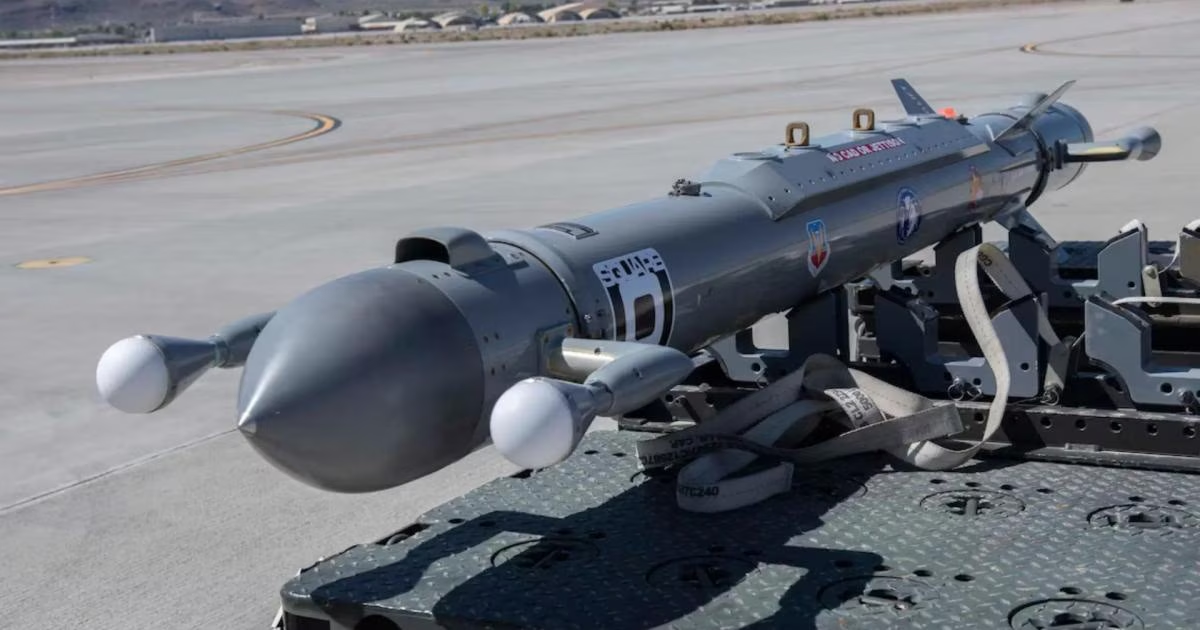
US military movements in the Middle East have seen a notable escalation with Washington deploying qualitative air reinforcements, represented by the deployment of a squadron of advanced 'F-16 Fighting Falcon' fighter jets. These aircraft belong to the 169th Fighter Wing of the South Carolina Air National Guard and have been observed en route to the region to bolster military presence near Iran.

What distinguished this deployment was the equipping of the fighter jets with advanced electronic warfare pods known as 'Angry Kitten'. Air traffic observers documented the passage of 12 'F-16CJ Block 52' fighter jets through Lajes Airport in the Portuguese Azores, where the pods were clearly visible mounted under the aircraft's fuselage.

This field movement comes in the context of increasing diplomatic and military rhetoric between Washington and Tehran, with repeated American hints of resorting to force. This step reflects American readiness for direct confrontation scenarios should negotiations regarding regional and nuclear issues reach a dead end.

Technically, the 'Angry Kitten' system is known as an advanced development of the 'AN/ALQ-167' electronic warfare pod, primarily aimed at protecting aircraft in complex combat environments. This system was specifically designed to counter surface-to-air missile systems that rely on advanced radars to track and target their objectives.

Unlike traditional jamming systems that merely broadcast wide electronic noise, the 'Angry Kitten' system features intelligent adaptive capabilities that allow it to deal with threats with high flexibility. It works by detecting hostile radar signals and classifying them with extreme accuracy before digitally processing them to neutralize their effect.

At its core, the system relies on 'Digital Radio Frequency Memory' (DRFM) technology, which allows it to capture hostile radar pulses and re-transmit them after modification. This action creates phantom targets and misleading trajectories on hostile radar screens, making the process of tracking the American fighter jet almost impossible.

The true strength of this system lies in its ability to update rapidly during a combat mission, without the need for complex programming operations at ground bases. This approach reflects the Pentagon's desire to possess electronic warfare tools capable of immediate response to sudden shifts in the aerial battlefield.

Although the system has undergone extensive development and testing since 2017, its use has been limited to training and military exercises. Previous tests included various platforms such as 'A-10' attack aircraft and 'MQ-9 Reaper' drones, in addition to naval fighter jets.

The appearance of this technology now in actual operational missions in the Middle East represents a strategic shift indicating the system's full combat readiness. Observers believe that Washington has decided to move this technology from development laboratories to the front lines as a clear deterrent message to the Iranian side.

'F-16CJ' aircraft participating in this deployment specialize in 'suppression and destruction of enemy air defenses' missions, which are exceptionally dangerous operations. These missions, historically known as 'Wild Weasel', require a high ability to lure hostile radars and then destroy them using anti-radiation missiles.

Should a military confrontation erupt, these fighter jets will be in direct confrontation with the Iranian air defense network, which includes Russian 'S-300' systems and domestically produced systems. Hence, the importance of 'Angry Kittens' in providing an electronic protection umbrella that enables pilots to penetrate fortified airspace and carry out precise strikes.

Despite the Pentagon's silence regarding the precise combat details of this deployment, the field message appears clear and firm. The United States is enhancing its defensive and offensive options with the latest electronic warfare technology to ensure air superiority in any potential conflict in the region.

The appearance of the 'Angry Kitten' system on board aircraft designated for actual operational missions represents an important indicator of its transition from the development phase to full combat readiness.

ARAB AND WORLD

Wed 25 Feb 2026 9:13 pm - Jerusalem Time

Geneva Negotiations Under the Shadow of Cannons: Unprecedented American Military Buildup Accompanies Diplomatic Track with Iran

The Iranian negotiating delegation, led by Foreign Minister Abbas Araqchi, departed from the capital Tehran heading to the Swiss city of Geneva, to participate in the third round of talks related to the nuclear file. This step comes at a sensitive time when the region is witnessing sharp political and military tensions between Tehran and Washington.

Before his departure, the Iranian Foreign Minister affirmed that his country still believes in the possibility of reaching common understandings with the American side, emphasizing the necessity of prioritizing the diplomatic path over the language of escalation. Araqchi indicated that the success of the Geneva round primarily depends on the seriousness of the other parties in prioritizing political solutions.

On the ground, converging reports stated that the United States has deployed a massive naval force near the Iranian coasts, in a move observers considered a direct deterrent message. These movements coincide with intensive military preparations indicating the possibility of resorting to alternative options if the negotiation track falters.

US President Donald Trump had set a time limit for the negotiations, giving Tehran a deadline of ten to fifteen days to conclude a final agreement. Trump warned that failure to reach a consensual formula within this period would open the door to more stringent measures, the nature of which he did not specify.

The official talks are scheduled to begin on Thursday in Geneva, with the participation of a high-level American delegation including envoys Steve Witkoff and Jared Kushner. The international community awaits the outcome of these meetings, amid fears that the current tension could turn into an open military confrontation if the political horizon is blocked.

Military experts believe that the current scale of the American military buildup in the Middle East is the largest of its kind since the invasion of Iraq in 2003. This buildup includes the deployment of advanced F-22 fighter jets to strategic airbases located south of the occupied territories, enhancing air offensive capabilities.

Informed sources explained that the deployment of this type of aircraft, designed for air superiority, cannot be considered merely a symbolic deterrent measure, but rather part of an integrated operational plan. More than 100 refueling aircraft have also been observed in the region, a technical indicator of readiness to carry out long-range air raids.

In a related context, the geopolitical reading of the scene indicates that American moves go beyond merely pressuring the nuclear file to reshaping alliances in the region. Reports speak of efforts to form a new regional axis aimed at isolating Iranian influence and radically reducing the capabilities of its allies in the Middle East.

For its part, Israeli circles are awaiting the results of the Geneva talks with great caution, considering that the American military reinforcements provide strategic cover for any future move. The occupation government is pushing for increased pressure on Tehran, exploiting the high coordination with the current American administration to achieve security and political gains.

Media sources observed a state of maximum alert within the Israeli Air Force, where the Chief of Staff conducted inspection tours of major airbases. These tours included meetings with pilots who had carried out previous offensive missions against Iranian targets, a clear indication of readiness to repeat such operations if necessary.

The question remains whether diplomacy in Geneva will succeed in defusing the explosion, or whether military buildup will be the decisive word in this confrontation. While Tehran speaks of opportunities for understanding, the facts on the ground indicate that the region stands on the brink of a major strategic shift that could change the balance of power for years to come.

Reaching an understanding with the United States remains possible, provided that diplomacy takes precedence during the upcoming Geneva talks.

ISRAELI AFFAIRS

Wed 25 Feb 2026 9:12 pm - Jerusalem Time

Former Israeli Diplomat: Far-Right Policies Increase Tel Aviv's International Isolation

Media sources reported that Israeli diplomatic circles have increasingly begun to promote the idea that current foreign policies, dominated by the far-right, are the main reason behind increasing international isolation. Nadav Tamir, former Consul General in Boston, pointed out that this trend negatively reflects on Israel's performance within UN institutions, putting it in direct confrontation with the international will that demands clear political paths.

Tamir, who currently serves as the CEO of J Street Israel, mentioned that he recently gained multilateral experience after being invited to brief the UN Security Council. This participation came at the invitation of British Foreign Secretary Yvette Cooper, where Tamir perceived a significant gap between diplomatic reality and what the Israeli government promotes about an absolute and unjustified hostility from the world towards it.

The former diplomat explained that representatives of member states in the Security Council, including Arab and Islamic parties, expressed positions that support Israel's existence but stipulate moving towards an agreement that guarantees the establishment of a Palestinian state. He affirmed that these countries clearly spoke about the necessity of disarming the Hamas movement in exchange for providing a safe and stable future for all parties, which contradicts the right-wing narrative that claims the entire world stands against Israeli existence.

In the context of his criticism of official performance, Tamir referred to Foreign Minister Gideon Sa'ar's speech before the Security Council, describing it as a repetitive speech detached from international reality. Sa'ar expressed his categorical rejection of the two-state solution and denied the historical connection of Palestinians to the land, which Tamir considered a speech that might satisfy the Likud party's base, but faces rejection and ridicule in international forums that recognize Palestinian rights.

Tamir stressed that the Arab Initiative of 2002, in addition to historical UN resolutions such as 242 and 338, forms the basis for international and regional recognition of Israel, but the continuation of the occupation thwarts these opportunities. He considered the far-right's claims of the necessity to 'live by the sword' as a destructive vision that does not serve national security, but rather threatens the essence of the Zionist vision and the future of the state in the region.

In conclusion of his assessment, Tamir called for the necessity of freeing foreign policy from the grip of the far-right, emphasizing that diplomacy is capable of achieving security gains that surpass what military force achieves. He believed that excessive reliance on internal propaganda only deepens the gap with strategic allies, especially in Washington and European capitals that are fed up with settlement policies.

The far-right's rhetoric may convince circles within Likud, but it only provokes hostility or ridicule in the corridors of the international community.

PALESTINE

Wed 25 Feb 2026 9:12 pm - Jerusalem Time

Widespread Palestinian Condemnation of Washington's Decision to Provide Consular Services Inside West Bank Settlements

Palestinian forces and factions condemned the announcement by the US Embassy in occupied Jerusalem of its intention to provide official consular services inside an Israeli settlement in the occupied West Bank. This step is the first of its kind in the history of American diplomatic dealings with settlements, sparking widespread anger in Palestinian circles, which viewed it as crossing red lines.

The Islamic Resistance Movement (Hamas) denounced this measure, describing it as a dangerous precedent that represents a practical recognition of the legitimacy of Israeli settlement on Palestinian lands. In a press statement, the movement affirmed that providing services in the 'Efrat' settlement, built on Bethlehem lands, entrenches the actual control of the occupation over the West Bank.

The movement indicated that the new American decision exposes the significant contradiction in Washington's policy, which officially claims to oppose the annexation of the West Bank while practically supporting the consolidation of Israeli sovereignty. It considered that this step aims to impose new political realities seeking to liquidate Palestinian national rights and violate international law that criminalizes settlement.

For its part, the Wall and Settlement Resistance Commission affirmed that the decision represents a clear violation of the provisions of international humanitarian law and the peremptory norms that prohibit institutional dealing with settlement entities. The commission clarified that this trend reflects a clear favoritism towards the occupation authorities by granting settlements unprecedented political and diplomatic cover.

The head of the commission, Moayad Shaaban, said that this step completely contradicts the declared international commitments to support the two-state solution, as it contributes to entrenching a settlement reality that prevents the establishment of a Palestinian state. Shaaban warned against attempts to redefine the occupied territory as an administrative area amenable to diplomatic normalization, which transforms military control into implicit political recognition.

In a related context, PLO Executive Committee member Wasel Abu Youssef stated that the US administration has begun to deal with settlements as an integral part of Israel. Abu Youssef considered the embassy's announcement to be an undeclared American approval of the West Bank plans that the occupation government seeks to implement.

In turn, the Secretary-General of the Palestinian National Initiative Party, Mustafa Barghouti, described the decision as an unprecedented shift in US policy towards the Palestinian issue. Barghouti explained that the Trump administration has moved from the traditional position opposing settlement to a stage of acceptance and direct dealing with settlements as a fait accompli.

Barghouti warned that the absence of tangible practical measures to confront these decisions would encourage Israel to proceed with its Zionist project to Judaize the West Bank. He added that the United States is giving the green light to the occupation to continue its annexation policies, which eliminates any remaining opportunity for achieving a just peace in the region.

The US Embassy announced on Tuesday evening its intention to provide passport and citizenship services to American citizens residing in the 'Efrat' settlement south of Bethlehem. The embassy clarified that consular affairs staff would begin providing these services next Friday, in a field step that reflects a fundamental change in diplomatic protocol.

The American plan also includes organizing field visits by consular staff over the next two months to other settlements, including the 'Beitar Illit' settlement. These moves come despite the fact that the United Nations and the international community classify these settlements as illegal entities established on lands occupied in 1967.

This timing raises many questions, especially since US President Donald Trump had previously stated earlier this month his opposition to Israeli annexation steps. However, the recent consular measures indicate a gap between political statements and administrative practices on the ground in the occupied West Bank.

It is worth noting that the 'Efrat' settlement is located within the 'Gush Etzion' settlement bloc, a strategic area connecting Jerusalem and Hebron, and is considered one of the most prominent settlement blocs that Israel seeks to annex. Palestinians affirm that any recognition of these settlements represents a stab in the back of international legitimacy and relevant Security Council resolutions.

This decision reveals the blatant contradiction in the positions of the United States, which claims to reject the annexation of the West Bank while taking practical steps that strengthen Israeli sovereignty.

PALESTINE

Wed 25 Feb 2026 9:12 pm - Jerusalem Time

Gaza Health: 9 dead and the total death toll of the aggression rises to over 72,000

Medical sources in the Gaza Strip reported that hospitals received nine martyrs and four injuries during the past twenty-four hours due to ongoing targeting. The sources clarified that among the martyrs, six bodies were recovered from areas previously bombed, which increases the pace of work in searching for the missing under the rubble.

In a statistical update for the period following October 11th, the Ministry of Health revealed that the total number of martyrs recorded since that date reached 618. Medical teams also recorded about 1,663 injuries of varying severity, while civil defense teams were able to recover 732 bodies from various destruction sites in the Strip.

As for the cumulative total since the aggression erupted on October 7, 2023, the number of martyrs has risen to 72,082. This increase was accompanied by a significant rise in the number of wounded and injured, with official records documenting the number reaching 171,761 injured who received treatment in the remaining medical facilities.

The ministry affirmed in its statement that these statistical data do not necessarily reflect the true extent of the tragedy, as a large number of victims are still missing. Field reports indicate the presence of bodies in rugged roads and under the rubble of destroyed homes, where field obstacles prevent ambulances from reaching them.

HUMANITARIAN suffering continues in Gaza with the ongoing influx of victims to hospitals suffering from a severe shortage of medical supplies and fuel. Health authorities emphasize the need to provide safe corridors for rescue teams to enable them to recover the hundreds who have been missing for many weeks under the rubble of residential buildings.

These numbers do not represent the final toll, given the large number of victims under the rubble and on the roads, where ambulance crews are unable to reach them.

ISRAELI AFFAIRS

Wed 25 Feb 2026 9:11 pm - Jerusalem Time

Lapid Adopts the "Greater Israel" Plan: Our Borders Are from the Euphrates to the Nile, and Our Document Is the Bible

The leader of the Israeli opposition, Yair Lapid, sparked a wave of political controversy after explicitly announcing his support for the so-called "Greater Israel" plan, which aims to seize vast areas in the Arab world extending from the Euphrates River to the Nile River. Lapid claimed during a recent press conference that the biblical borders are completely clear and not open to interpretation, emphasizing that the Zionist vision derives its legitimacy from religious texts.

Lapid considered the Bible to be the exclusive "deed of ownership" for Jews over these lands, indicating that Israeli ambitions are not limited to current borders but follow what is stated in ancient religious interpretations. He explained that his stance stems from the desire to provide what he described as a "safe haven and vast space" for future generations of Israelis, regardless of the national sovereignty of neighboring countries.

These statements came in response to positions announced by the US Ambassador to Israel, Mike Huckabee, who expressed no objection to Israel's control over the entire Middle East region. Lapid affirmed, in response to a question about whether this control would include countries like Lebanon, Jordan, and Syria, that he supports any move that grants Israel greater geographical space and superior security power in the region.

When asked about the geographical extent he aspires to, the leader of the "Yesh Atid" party replied that the area should be "as much as possible," a clear indication of the absence of any limit to expansionist ambitions. Lapid did not exclude Iraq from this discussion, stressing that the matter concerns Israeli national security and the biblical mandate that grants them the right to expand eastward and westward.

Lapid indicated that there are practical and political considerations that may affect the speed of implementation, but he stressed that the fundamental principle remains constant and does not change with political circumstances. He added that the Jewish people, who lived in exile for two thousand years, now have the right to return to their vast historical borders, which include the territories of sovereign Arab states, according to his expression.

These positions reinforce fears of extremist right-wing tendencies within Israeli political circles, both in the government and the opposition, as Lapid's vision intersects with previous statements by Prime Minister Benjamin Netanyahu. Netanyahu had stated in August of last year his close connection to the vision of "Greater Israel," indicating a Zionist consensus on targeting Arab geography.

It is worth noting that Israel, whose state was declared in 1948 on the ruins of displaced Palestinian cities and villages, has not yet officially demarcated its final borders. Observers believe that this deliberate ambiguity aims to leave the door open for ongoing annexation and occupation operations, which began with the occupation of the rest of Palestine in 1967, leading to current threats to neighboring countries.

In a related context, the statements by US Ambassador Mike Huckabee paved the way for this public discussion, as he relied in media interviews on religious interpretations that grant Israel a purported right from the Nile to the Euphrates. These claims directly affect the sovereignty of pivotal countries in the region such as Egypt, Syria, and Iraq, which sparked widespread condemnation in Arab diplomatic circles.

Analysts believe that Lapid's talk of "biblical borders" reflects a shift in his political discourse towards the religious nationalist right to gain popular support, which is consistent with the expansionist policy pursued by the occupation authorities in the West Bank and Jerusalem. These statements disregard all international laws and United Nations resolutions that consider the territories occupied in 1967 as Palestinian territories from which Israel must withdraw.

In conclusion, these statements place the international community before its responsibilities regarding the escalating Israeli threats to regional peace and security, as Israeli ambitions are no longer mere slogans raised by extremist groups, but have become part of the official discourse of opposition and government leaders alike. The question remains about Arab and international reactions to this plan, which aims to redraw the entire map of the region.

Our deed of ownership to the land of Israel is the Bible, and therefore the borders are the borders of the Bible.

PALESTINE

Wed 25 Feb 2026 9:11 pm - Jerusalem Time

Coinciding with the month of Ramadan, Emirati convoys loaded with food parcels and winter clothing arrive in Gaza with the support of the UAE International Aid Agency

The United Arab Emirates, through Operation "Gallant Knight 3", continues to extend a helping hand to the people of the Gaza Strip with humanitarian aid convoys, trying to alleviate their suffering and offer hope amidst the harsh humanitarian conditions they face, once again affirming its steadfast support for the Palestinian brethren in times of hardship.

The spokesperson for Operation "Gallant Knight 3", Mohammed Al Sharif, affirmed that humanitarian work has been ongoing through Operation "Gallant Knight 3" for two years without interruption, and this effort constitutes a milestone in the UAE, as it is an organized effort in which various institutions cooperate to achieve the humanitarian goal.

Al Sharif added that work is currently underway to prepare ship number (13) with necessary supplies for the people of the Gaza Strip, while continuously assessing needs, stressing that the continued delivery of relief reflects the UAE's steadfast approach of giving and standing by its brethren in their time of tribulation.

This week, aid convoys arrived in the Gaza Strip loaded with essential food parcels coinciding with the advent of the holy month of Ramadan, in addition to winter clothing that included clothes and heating means, to light a glimmer of hope in the lives of affected families and alleviate their suffering from the harsh cold, affirming humanity's stand with them in the most difficult circumstances.

In parallel with the relief support, a medical aid convoy weighing more than 30 tons entered, including medicines and medical supplies designated to cover the needs of medical laboratories and surgical operations, in support of the Emirati Field Hospital in Rafah and the Emirati Medical Center in Khan Yunis, within the medical care system provided by the UAE to enhance health response capabilities in the most needy areas.

It is worth noting that the Emirati medical aid team in the city of Arish works around the clock with dedication, to prepare medical support convoys and organize their shipments to meet the actual needs of the field hospital and medical center. Through precise sorting, packing, and arrangement procedures, the team ensures that every essential item reaches those in need directly, accelerating the delivery of aid and alleviating their suffering, once again confirming that humanity and concern for others are at the heart of all UAE efforts to support its brethren.

PALESTINE

Wed 25 Feb 2026 9:11 pm - Jerusalem Time

Indonesia Prepares to Send First Foreign Force to Gaza Strip Within Two Weeks

Media sources have revealed rapid developments in the management of the Gaza Strip, as Indonesian forces are scheduled to begin their field operations within the Strip in the next two weeks. This step is an international precedent, as Indonesia will be the first foreign country to deploy its forces to Gaza as part of what is known as the Multinational Stabilization Force.

A high-level delegation of Indonesian representatives is expected to arrive in the region in the second week of next March. This visit aims to conduct logistical and field coordinations with international and regional parties to plan the deployment of forces and ensure their smooth transition to their designated locations.

Reports indicate that members of the delegation will hold intensive meetings with American and Israeli officials to discuss security arrangements. The visit will also include entering the occupied Palestinian territories for the first time, a step that reflects the seriousness of international efforts to establish new administrative structures in the besieged Strip.

In the context of military preparations, Jakarta announced that it has already begun preparing about 8,000 soldiers to be part of the proposed international force. These moves come in implementation of the provisions of US President Donald Trump's plan regarding the future of Gaza, which aims to find sustainable security alternatives.

The spokesperson for the Indonesian Armed Forces, Doni Pramono, stated that the full readiness of the forces will be achieved by the end of next June. He explained that the first batch, comprising about a thousand soldiers, will be fully ready for actual deployment in April 2026 according to the established timelines.

Despite these extensive field preparations, Indonesian authorities confirmed that the final decision regarding actual deployment has not yet been definitively made. Sources indicated that political discussions are still ongoing within government circles to ensure the step aligns with national and international constants.

The Indonesian Ministry of Foreign Affairs clarified that the tasks of the forces, if they arrive in Gaza, will be precisely defined and purely humanitarian in nature. These units will not engage in any military confrontations or combat operations, as their role focuses on supporting stability and providing assistance to the local population.

However, the official statement did not rule out the forces resorting to the use of force in self-defense as a last resort. Jakarta stressed that any military movement would be governed by international law and would ensure the protection of mission personnel and the continuity of their relief role in the region.

The operational area of the Indonesian force will be limited to the borders of the Gaza Strip, which Jakarta considers an integral part of the desired Palestinian state. Indonesia, the largest Muslim-majority country by population, reiterated its commitment to the two-state solution and supporting the legitimate rights of the Palestinian people to self-determination.

This step gains special importance given the absence of official diplomatic relations between Indonesia and the Israeli occupation. This indirect coordination represents a shift in dealing with regional crises, as Jakarta seeks to play a pivotal role in securing aid and reconstruction.

Earlier, the White House had adopted administrative structures for the transitional phase in Gaza, including executive councils and national committees. The "International Stabilization Force" is considered the security pillar of these structures, as it will undertake tasks of disarmament, securing aid convoys, and vital construction materials.

These arrangements fall within the second phase of the peace plan supported by UN Security Council Resolution 2803. This international path aims to end the repercussions of the long war and ensure that armed conflict does not return through strict international oversight on the ground.

This move comes amid a cautious calm in the Strip since the ceasefire agreement came into effect last October. The two-year war left enormous destruction affecting most vital facilities and homes, making the need for international forces to secure reconstruction urgent.

Official statistics indicate that the war resulted in the martyrdom of more than 72,000 Palestinians and the injury of over 171,000 others. The United Nations estimates the cost of reconstructing what the military machine destroyed at about $70 billion, with 90% of civilian infrastructure damaged.

Indonesian soldiers will be ready by the end of next June, and their mission will be of a limited humanitarian nature without participating in combat operations.

PALESTINE

Wed 25 Feb 2026 9:11 pm - Jerusalem Time

Escalation in the West Bank: Homes burned in Hebron, structures demolished in Jenin, and widespread arrests

The village of Susiya in Masafer Yatta, south of Hebron, experienced a harsh night, as groups of settlers set fire to five homes and several vehicles belonging to Palestinian citizens. Local sources reported that the attack occurred while residents were performing Tarawih prayers, causing extreme panic among women and children and significant material damage to properties.

Jihad Al-Nawaj'a, head of the Susiya village council, confirmed that more than 50 settlers participated in the systematic assault, deliberately setting fire to homes before withdrawing from the area. The attackers also fired tear gas canisters inside inhabited houses, resulting in at least four citizens suffering from suffocation, who were treated on site.

For its part, the human rights organization "Al-Baydar" documented the attack, noting that settler attacks in the Masafer Yatta area are part of a policy aimed at forcibly displacing residents. The organization explained that the fires consumed the contents of homes and cars, amid an escalation in settler violence, which has recorded hundreds of attacks since the beginning of this year.

In a related context, a special Israeli force stormed Balata refugee camp east of Nablus, where they besieged a house in the market district amid heavy gunfire. Occupation forces pushed additional military reinforcements from the direction of Huwara checkpoint and Al-Quds Street to secure the withdrawal operation after arresting a young man from inside the camp.

The military operation in Balata coincided with intensive overflights by reconnaissance drones in the area, and the sound of explosions resulting from the invading forces being targeted with homemade devices. Sources reported that the army later withdrew after completing its mission, which included searching and vandalizing citizens' properties near the besieged house.

Also in Nablus, the Israeli army arrested a young Palestinian man from Al-Ittihad Street, and circulating video clips documented the moment the young man, who was walking on crutches, was taken away. It was revealed that the detainee had previously suffered from fractures, but this did not prevent the invading forces from arresting him and transferring him to an unknown location early this morning.

Regarding the widespread raid campaigns, the Prisoners' Information Office announced that occupation forces carried out a series of incursions in various governorates of the West Bank, affecting 18 citizens. The arrests included a number of minors, as the invading forces deliberately vandalized the contents of homes and terrorized families during night searches.

In Jenin Governorate, occupation bulldozers carried out demolition operations targeting commercial establishments and buildings at the entrance to Anza village. The demolition affected a building and commercial shops belonging to citizen Nasser Al-Awwad, in addition to Al-Adel Cafe, as part of the ongoing economic restrictions on villages and towns adjacent to main roads.

Human rights statistics indicate a dangerous escalation in settler attacks, with 468 attacks recorded in January alone, including physical violence, burning fields, and uprooting trees. Approximately 770,000 settlers reside in the West Bank, distributed among hundreds of settlements and pastoral outposts that serve as a starting point for these attacks.

In other areas of Hebron, armed settlers chased sheep herders from the Al-Na'amin family in Khirbet Iqwaweis in Masafer Yatta, preventing them from reaching pastures. Settlers also blocked the road in Wadi Sa'ir north of Hebron, hindering the movement of Palestinian vehicles through vital bypass roads.

It is worth noting that the West Bank has been in a state of turmoil since October 2023, with the death toll rising to 1,117 Palestinians, in addition to more than 11,500 injured. These developments come amid tightened military restrictions on Palestinian cities and villages coinciding with the holy month of Ramadan.

More than 50 settlers attacked the village during Tarawih prayers, setting fire to homes and fleeing amidst the screams of women and children.

ISRAELI AFFAIRS

Wed 25 Feb 2026 9:11 pm - Jerusalem Time

Netanyahu announces new regional axis extending «from India to Kush»

Israeli Prime Minister Benjamin Netanyahu announced the outlines of a new strategic vision aimed at forming an extended regional axis, using a biblical expression to describe the geographical scope of this alliance with the phrase «from India to Kush». Netanyahu explained that this path seeks to connect the Indian subcontinent with the Middle East region, reaching the Mediterranean basin, in a move that reflects Tel Aviv's aspirations to enhance its geopolitical influence.

These statements came during a speech delivered by Netanyahu at a special conference organized by the Shin Bet (Israel Security Agency), where he indicated that Tel Aviv is working diligently to build alliances that go beyond traditional alignments. He affirmed that the goal of this axis is to create a counterweight to what he described as the «two axes of extremist Islam», emphasizing that many countries share this vision with Israel and exchange official visits with it.

Netanyahu invoked the historical connotations of the term «Kush», the ancient Nubian kingdom that flourished in northern Sudan and was contemporary with major civilizations in ancient times. This usage symbolizes Israel's desire to extend bridges of cooperation to include the Horn of Africa and the southern Red Sea regions, giving the new axis a strategic depth that connects trade and security between the continents of Asia and Africa.

These announcements coincide with the arrival of Indian Prime Minister Narendra Modi in Israel for a two-day official visit, aimed at deepening the strategic partnership between New Delhi and Tel Aviv. The visit is expected to witness the signing of new agreements in the fields of defense and advanced technology, which will enhance India's position as a key partner in the axis that Netanyahu seeks to establish.

For his part, Modi stated before his arrival that the relationship between the two countries has moved to a multi-faceted strategic partnership stage, emphasizing the strength of the ties that bind the two sides. This visit comes at a time when bilateral relations have witnessed steady growth since 2014, with cooperation expanding to include vital sectors such as agriculture, cybersecurity, and the development of advanced defense systems.

Economically, Indian investments stand out as a fundamental pillar in this axis, as the giant Indian company «Adani» manages the strategic Haifa Port on the Mediterranean Sea. This economic presence represents a practical translation of the geographical connection idea that Netanyahu spoke about, as the port becomes a focal point for trade coming from the East towards European markets.

In the military aspect, Israeli technologies have proven their strong presence in Indian defense doctrine, especially after the widespread reliance on Israeli-made drones. Field reports revealed that the Indian army used these technologies extensively during military confrontations on the border with Pakistan in 2025, which strengthened confidence in Israeli military technology.

Observers believe that Netanyahu's talk of a «complete circle» in the Middle East reflects a desire to overcome traditional political obstacles by building a network of cross-border economic and security interests. The use of timing associated with «Purim» indicates an attempt to give a symbolic character to the political transformations he hopes to achieve through this new axis that connects rising powers in Asia with the region.

Despite the internal criticism Modi faces in India due to this close rapprochement, common interests in confronting regional security challenges appear to be the primary driver of this policy. Through this alliance, New Delhi seeks to secure its supply lines and ensure a foothold in the new security arrangements taking shape in the Middle East.

In conclusion, Netanyahu's announcement of the «from India to Kush» axis represents an attempt to redefine the political map of the region, away from usual divisions. It seems that the Israeli-Indian alliance will be the cornerstone of this project, which aspires to integrate Israeli technological and military capabilities with India's economic and human weight within a single strategic framework.

We have a great interest in establishing a special axis that includes many countries to confront the two axes of extremist Islam, and it extends from India to Kush, reaching the Mediterranean.

PALESTINE

Wed 25 Feb 2026 11:19 am - Jerusalem Time

Dead and wounded in dawn raids, and the suffering of displaced people worsens as hundreds of tents in Gaza are submerged

A Palestinian citizen was martyred and several others were injured to varying degrees, at dawn today, Wednesday, after an Israeli drone targeted a group of citizens in the Mawasi area of Khan Yunis, south of the Gaza Strip. Medical sources confirmed that the bombing occurred in areas outside the scope of the occupation forces' deployment, leading to casualties among civilians who are trying to remain in areas previously classified as safe.\n\nIn the context of the field escalation, field sources reported that Israeli warplanes carried out three intense airstrikes targeting various areas in the cities of Rafah and Khan Yunis. These raids coincided with violent artillery shelling that targeted the eastern neighborhoods of Gaza City, causing panic among residents who are suffering from the ongoing military operations.\n\nIn Gaza City, the Baptist Hospital received two injured people who were shot by occupation forces in the Shuja'iyya neighborhood, where Israeli forces opened fire on citizens outside their areas of incursion. These incidents come amid continued daily violations by the occupation forces despite announced international understandings regarding a ceasefire.\n\nAccording to the latest updates from the Palestinian Ministry of Health, the total death toll from the genocide war since October 2023 has risen to 72,073 martyrs. Medical teams also recorded injuries to approximately 171,756 people, a statistic that reflects the scale of the humanitarian and health catastrophe experienced by the residents of the besieged Strip.\n\nOn the humanitarian front, thousands of displaced people faced a harsh night with the start of a low-pressure system accompanied by heavy rains that led to the submersion of hundreds of tents in different areas of the Strip. Strong winds and rainfall caused the collapse of dilapidated tents, leaving families, including children and the elderly, exposed during the early hours of Ramadan.\n\nHundreds of affected families appealed to civil defense teams and international relief organizations to intervene immediately to rescue them and provide urgent alternative shelter. Civil defense in Khan Yunis confirmed that it received dozens of distress calls, and its teams were able to evacuate several families whose dilapidated tents were surrounded by rainwater.\n\nWarnings are increasing about the risks of collapse of partially damaged homes due to shelling, as accumulated rainwater increases the weight on buildings at risk of collapse. Large pools of water also collected inside shelters and schools, hindering the movement of displaced people and increasing the likelihood of the spread of diseases and epidemics among residents in these overcrowded centers.\n\nFor its part, the United Nations Relief and Works Agency for Palestine Refugees (UNRWA) warned that two-thirds of Gaza's population currently live in tents that do not provide the minimum protection from weather fluctuations. The agency explained that the continued waves of forced displacement place enormous pressure on limited resources, amid severe food and water insecurity.\n\nUNRWA stressed that humanitarian conditions have reached unbearable levels of harshness, with continued restrictions on the entry of essential aid. The international agency called for the necessity of opening crossings and ensuring a sustainable flow of medical and relief supplies and shelter materials to meet the escalating needs of the besieged population.\n\nRegarding reconstruction and shelter, Amjad Al-Shawa, head of the Palestinian NGO Network, confirmed that the occupation still prevents the entry of mobile homes ("caravans") into the Strip. Al-Shawa pointed out that thousands of families are still living in the open or in dilapidated tents, despite recent humanitarian understandings clearly stipulating the necessity of introducing these shelter materials.\n\nOfficial reports indicate that the death toll from Israeli violations of the ceasefire agreement since mid-October has reached approximately 615 martyrs. National and Palestinian forces are demanding that the international community compel Israel to abide by the terms of the agreement and pressure it to allow the entry of agreed-upon quantities of food and medical aid.\n\nThe residents of the Gaza Strip remain caught between the hammer of continuous Israeli shelling and the anvil of harsh weather conditions, amid international inability to stop the ongoing violations. With the advent of Ramadan, humanitarian suffering doubles amid a severe shortage of food and clothing, and the absence of real solutions to end the prolonged tragedy of displacement.\n\nApproximately two-thirds of the Gaza Strip's population currently resides in tents that offer only limited protection from harsh weather conditions.

PALESTINE

Wed 25 Feb 2026 11:19 am - Jerusalem Time

The passing of 'Rita'... Mahmoud Darwish's muse leaves our world in Berlin, leaving behind a literary will for the world

Death claimed Tamar Ben Ami, at the age of 79, in the German capital, Berlin. She was the woman known in the Arab and Palestinian consciousness as 'Rita', the first muse of the late poet Mahmoud Darwish. Her passing came after a long struggle with illness, thus closing a chapter of stories where love intertwined with politics and poetry with bitter reality.

In her final years, the deceased had been managing artistic and cultural projects, moving between the cities of Berlin and Haifa. Her name became forever associated with one of the most famous resistance love poems in modern Palestinian literature, in which Darwish wrote 'Between Rita and my eyes, a rifle,' expressing the heart's struggle with identity and homeland in the early stages of his poetic career.

The story's roots go back to 1963 in Haifa, when the young Mahmoud Darwish met the Jewish girl Tamar Ben Ami, who was then twenty-two years old. In previous interviews, the deceased described that meeting as an 'electric current' that ignited love at first sight, when Darwish was reciting his poems in an artistic performance in which she participated with a folk dance troupe.

Ben Ami left a remarkable cultural will, as she called in her last public appearance for the translation of Darwish's poem 'Think of Others' into all world languages. She considered this poem to represent a universal human statement and an identity card for Darwish as a cosmic poet, emphasizing the necessity of teaching it in schools as a subject for education and social values.

In a cultural symposium hosted by the town of Iksal in 2018, 'Rita' passionately recalled her memories with the poet of Palestine, explaining that Darwish was for her 'the anchor of life' and her constant source of inspiration. Although the relationship did not culminate in marriage due to political circumstances and her later enlistment in the army, she continued to hold a special place for him in her memory.

The plastic artist Abd Abdi, a close friend of the deceased, revealed unknown aspects of her life, noting that she asked for his help in the late nineties to arrange a meeting with Darwish in France. She indeed managed to fulfill her wish and meet him there in 1998, in an attempt to rekindle the threads of an old memory that time had not erased.

Abdi mourned his friend with touching words, confirming that the love story between Darwish and Tamar was known only in the very narrow circles of the poet's close associates. He explained that the deceased was active in the social and cultural fields, and maintained her ties with the Palestinian cultural scene until her last days.

For his part, critic Marzouq Al-Halabi offered a different reading of the preoccupation with 'Rita's' passing, considering that Darwish the poet had long since moved beyond that early stage of his life. Al-Halabi pointed out that Darwish sometimes felt pain because the public and critics always tried to bring him back to his beginnings and his first poems like 'Rita' and 'I yearn for my mother's bread.'

Al-Halabi added that in his later years, especially in his famous evening in Haifa in 2007, Darwish tried to free himself from the dominance of old poems to present his mature intellectual and poetic output. Nevertheless, the public remains attached to those symbols that shaped their initial awareness of the cause and love under the shadows of occupation.

The poem 'Rita and the Rifle' is a unique literary model that embodied the impossibility of love in the midst of national conflict, where the rifle stands as a barrier between the honey-colored eyes and the poet. This poem was transformed into a lyrical icon by the voice of the artist Marcel Khalife, which contributed to immortalizing 'Rita's' name in collective memory.

The late Tamar Ben Ami had stated to the media that reading Darwish's old letters was a 'painful and harsh' process, especially after both parties realized they were stuck in a complex reality. She believed that Darwish succeeded in remaining in the public memory of humanity as a candle illuminating the darkness despite all setbacks.

'Rita's' life in her final years was divided between artistic work and humanitarian messages, as she traveled the world carrying a message calling for peace and understanding of others, drawing from her personal experience with the poet who taught her 'the world of words and creativity' as she always described it.

The passing of Tamar Ben Ami reopens the door for discussion about Mahmoud Darwish's personal biography and its impact on his poetry, and how he managed to transform a personal love experience into a major human cause that transcends borders and races, making 'Rita' a literary symbol rather than a real person.

With 'Rita's' death in Berlin, a real chapter of Darwish's inspiration closes, but the poem will remain alive, telling the story of the 'honey-colored eyes' that were besieged by rifles, and her will to translate 'Think of Others' will remain a final call from a woman who lived in the heart of Palestinian poetry.

Between Rita and my eyes, a rifle... And whoever knows Rita bows down and prays to a god in the honey-colored eyes.

PALESTINE

Wed 25 Feb 2026 11:18 am - Jerusalem Time

Washington Launches Official Website for 'Peace Council' for Gaza, Unveils Multi-Billion Dollar Funding Package

Dylan Johnson, Assistant Secretary of State for Global Public Affairs, announced the official launch of the 'Peace Council' website. This step comes as part of the initiative launched by US President Donald Trump aimed at ending the ongoing military operations in the Gaza Strip and defining the political future of the region.

The new website is available in both Arabic and English, serving as a reference platform for the founding documents upon which the Council was established from its inception. The digital content includes precise details about the proposed settlement plan, in addition to the Council's organizational structure and the names of the members of the leadership bodies overseeing the implementation of its provisions.

The website includes a specialized news section aimed at monitoring and documenting all activities and movements undertaken by the Council at both regional and international levels. This launch follows a series of diplomatic steps, most notably the signing of the Council's charter by representatives of 19 countries in Davos, Switzerland, last January.

In the context of financial support for the project, US President Donald Trump revealed his success in raising massive financial pledges exceeding 7 billion dollars. Trump clarified that these amounts will be allocated as an urgent rescue package for the reconstruction of the Gaza Strip and to establish pillars of stability in the next phase.

Trump identified the list of countries contributing to this funding, which included countries from Central Asia such as Kazakhstan, Azerbaijan, and Uzbekistan, along with a strong presence of Arab countries. The Arab list included the UAE, Morocco, Bahrain, Qatar, Saudi Arabia, and Kuwait.

In addition to international pledges, the US President announced that the United States would directly contribute 10 billion dollars to support the budget of the Council, which he himself chairs. The precise details of how these massive amounts will be spent are not yet clear, but they fall within the proposed transitional administration budget.

It is worth noting that the 'Peace Council' was officially announced in mid-January, at a time when attention was focused on the deteriorating humanitarian situation in Gaza. Despite the close link between the establishment of the Council and the war in the Strip, observers noted that its official charter did not explicitly mention the name of Gaza.

The Council represents one of four organizational structures designed by the Trump administration to manage what is known as the 'transitional phase' in the Gaza Strip. These structures work in parallel, including the National Committee for Gaza Management, the Gaza Executive Council, in addition to the International Stabilization Force that will undertake security tasks.

Through this platform, Washington seeks to impart transparency and institutionalism to its controversial plan, by providing access to periodic reports and decisions issued by the Council. Field and political challenges remain the real test of the ability of these structures to bring about tangible change on the ground in the Palestinian territories.

The Peace Council is a pivotal part of the vision aimed at ending the conflict and initiating a new transitional phase in the Gaza Strip.