






Dr. Ahmed Rafiq Awad: The step is symbolic, aiming to ensure the success of the meeting between Trump and Netanyahu, and its implementation is postponed until after the upcoming Israeli elections.
Akram Atallah: The entry of stability forces provides the necessary cover for the work of the technocrat committee, as it was unable to perform its duties under direct Israeli control.
Mohammed Joudeh: Israel is maneuvering with international force to impose the "day after" and insists on security control in the Gaza Strip... and the technocrat committee returns to the forefront.
Dr. Reham Odeh: This step relates to Israel's attempt to preempt any Turkish or Qatari move to convince Washington to include them within the international forces planned for deployment in the Strip.
Talal Awkal: Israel's approval of the participation of "friendly" forces in the Strip does not mean a change in its policy and is part of the preparation for a larger military escalation.
Majed Hdeib: The National Committee for Gaza Administration will not agree to engage in arrangements based on Trump's dictates and Netanyahu's conditions, but rather on the unified Palestinian position.
Ramallah - Exclusive to "Y" -
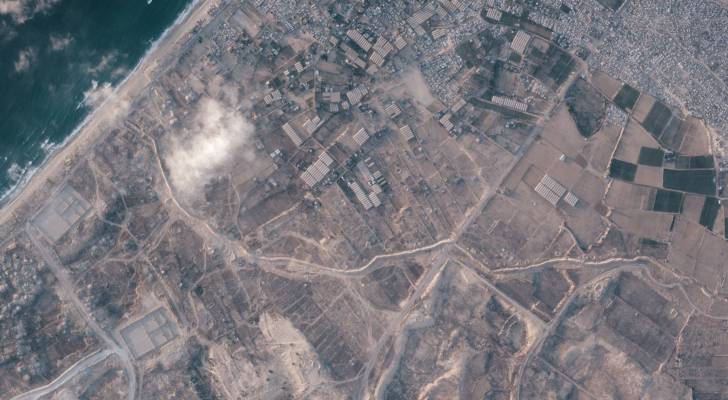
Israel's approval of the entry of stability forces into the Gaza Strip raises questions about its motives and objectives, amidst estimations that the step is linked to the political arrangements for the "day after" the war, and to the ongoing movements ahead of the anticipated meeting between Israeli Prime Minister Benjamin Netanyahu and US President Donald Trump, in light of continued disagreements over the future administration of the Strip.
Writers and political analysts, in separate conversations with "Y", believe that the step is a political maneuver and a message directed to the US administration to show some flexibility without causing a real change in Israeli policy. However, they also indicate that it could be an entry point for new arrangements, including the deployment of an international force that would create conditions for the return of the Palestinian technocrat committee and the administration of civil affairs, while emphasizing that its implementation will remain contingent on a set of security and political conditions set by Israel.
They suggest that the step will remain within the framework of political messages related to international pressures and Israeli electoral considerations, while its seriousness will remain linked to what will be implemented on the ground, and its impact on security and civil administration arrangements and reconstruction in the Gaza Strip.
A Symbolic Political Step
Writer and political analyst Dr. Ahmed Rafiq Awad believes that Israel's approval of the entry of stability forces into the Gaza Strip represents, in essence, a political step of a symbolic nature rather than a practical shift. He suggests that it is likely linked to the political arrangements preceding the meeting between Israeli Prime Minister Benjamin Netanyahu and US President Donald Trump, and to Netanyahu's attempt to show responsiveness to American demands ahead of the Israeli elections. The step aims to ensure the success of the meeting between Trump and Netanyahu, but its implementation will remain postponed until after the upcoming Israeli elections.
A Political Message to Washington
Awad believes that the timing of the announcement of this approval, on the eve of Netanyahu's visit to the United States, carries clear political implications. Netanyahu seeks to send a message that Israel is responding to the American plan for the Gaza Strip, even though the Israeli condition regarding the disarmament of Hamas has not been met. He considers the goal to be gaining Trump's support and satisfaction, which serves Israeli electoral calculations.
Awad clarifies that this approval is not final, but rather preliminary and subject to a set of conditions, most notably that the participating forces must be from countries that Israel classifies as friendly and have no relationship with Hamas. He emphasizes that Israel will not accept these forces playing the role of separation forces between it and Palestinian factions in the Strip.
Awad stresses that any potential deployment of these forces will be limited, likely confined to the Rafah area, and subject to Israeli administration and monitoring. He points out that expanding their deployment within the Gaza Strip remains linked to the fulfillment of Israeli conditions, primarily the disarmament of Hamas and the implementation of Israeli withdrawals, which has not yet been achieved.
Return of the Technocrat Committee is Conditional
Regarding the possibility that this step could pave the way for the return of the Palestinian technocrat committee to the Gaza Strip, Awad believes that talking about it is still premature. He explains that the committee's return requires integrated security and administrative arrangements, including the presence of Palestinian police, an operational plan, funding, and protection, issues that Israel also links to the disarmament of Hamas.
Awad indicates that the Israeli elections currently pose an obstacle to any actual steps on the ground, whether related to the entry of stability forces, the implementation of Israeli withdrawals, or the return of the technocrat committee. He considers what has happened so far to be part of political messages directed to the United States rather than the beginning of implementing real changes on the ground.
An Important and Notable Political Step
Writer and political analyst Akram Atallah considers Israel's approval of the entry of stability forces into the Gaza Strip to be an important and notable political development. He points out that it reflects movement in the second phase of US President Donald Trump's plan for the Strip, and also suggests a change in the approach to administering Gaza in the coming period.
According to Atallah, this approval indicates progress in dealing with the Gaza Strip, which may open the door for new arrangements that go beyond the stagnation that prevailed in the past period. He considers the step to carry implications related to the beginning of a transition to a different phase in managing the situation within the Strip.
Entry of Force is Important Cover for Technocrats' Work
Atallah believes that the entry of stability forces provides the necessary cover for the work of the technocrat committee, as the committee was unable to perform its duties under the military presence and direct Israeli control. The presence of an international force gives it a different framework, allowing it to work under the umbrella of the Peace Council forces, rather than under Israeli cover.
Symbolic and Political Importance
Atallah clarifies that the forces agreed upon, numbering about 200 personnel from Morocco and Uganda, may not constitute a large military force, but they carry symbolic and political importance because they allow the technocrat committee to work in an environment based on international patronage, which changes the nature of the political and administrative landscape in the Strip.
Atallah indicates that these developments may push the situation towards a more dynamic path and break the state of stagnation that characterized the previous phase, which may allow for better progress in the "day after" arrangements in the Gaza Strip.
A Calculated Political Maneuver
Writer and political analyst Mohammed Joudeh believes that the Israeli approval of the entry of stability forces into the Gaza Strip cannot be separated from the political and military contexts of the war. He considers it not to reflect a real shift in the Israeli position, but rather a calculated political maneuver aimed at achieving a set of objectives related to the "day after" the war, where the technocrat committee returns to the forefront again.
Joudeh explains that this step aims, first, to send a positive message to the US administration that Israel is not obstructing international initiatives regarding the Gaza Strip, and that it is dealing flexibly with proposals related to managing the next phase. This helps it alleviate increasing international pressures, especially in light of the widespread criticism it faces due to the catastrophic humanitarian situation in the Strip.
Joudeh clarifies that Israel seeks, at the same time, to ensure a direct role in shaping the arrangements for the next phase, so that solutions are not imposed on it from outside, but rather that it is a partner in drawing up the mechanisms related to the security and political administration of the Gaza Strip. This gives it greater ability to influence the nature of these arrangements in line with its security and strategic interests.
Step Does Not Change Israel's Goals
Joudeh points out that this approval does not mean, so far, a change in Israel's fundamental goals within the Strip. He notes that recent Israeli statements confirming the rejection of withdrawal from Gaza in the current phase reflect the Israeli government's adherence to a policy of security control and not abandoning the reshaping of the geographical reality in the Strip.
Joudeh emphasizes that judging the seriousness of this approval is not linked to its political announcement, but rather to what will be implemented on the ground. He explains that any talk of a real transformation requires an actual deployment of stability forces throughout the Strip, a cessation of military operations, and the creation of conditions for reconstruction and the restoration of civil life. Otherwise, the step will remain merely a tactical measure rather than a strategic transformation.
Step for Discussion of Technocrat Committee's Return
Regarding the possibility of the technocrat committee's return, Joudeh believes that current developments may create a political environment for re-proposing the idea, but it does not mean that the decision has been made or that its return has become certain. He explains that the presence of an international stability force requires a Palestinian entity to manage civil affairs, including services, institutions, relief, and reconstruction, which makes the technocrat committee one of the scenarios proposed for managing the "day after."
Joudeh indicates that the committee, if agreed upon, may undertake a transitional role limited to managing civil files away from political tug-of-war, until a more stable Palestinian formula is reached. However, its success will remain contingent on achieving Palestinian consensus, and the availability of Arab and international support, in addition to clarity of the relationship between it and the Palestinian Authority and other Palestinian factions.
Technocrats Without Sovereign Powers
Joudeh emphasizes that Israel may accept the presence of a Palestinian civil administration to manage daily services, but it may, in return, insist on its security control and freedom of military movement within the Strip. This means that any technocrat committee, if formed, may manage civil affairs without possessing real sovereign powers. He points out that the discussion so far revolves around a political possibility that is still under test, and not about a final agreement or a real shift in Israeli policy towards the Gaza Strip.
A Preemptive Step Before the Netanyahu-Trump Meeting
Writer and political analyst Dr. Reham Odeh believes that Israel's approval of the entry of international forces into the Gaza Strip represents a preemptive step taken by Israeli Prime Minister Benjamin Netanyahu before his visit to Washington. Its primary aim is to send a message to US President Donald Trump that Israel supports the "Peace Council" plan for the Gaza Strip, and that it does not constitute an obstacle to ending the war, but rather supports efforts to implement it, provided Hamas is stripped of its governmental and security powers.
Preempting Any Turkish or Qatari Move
According to Odeh, this step also carries a political dimension related to Israel's attempt to preempt any Turkish or Qatari move to convince the US administration to include Ankara or Doha within the international forces planned for deployment in the Gaza Strip. She explains that Israel has already set a condition that the participating forces must belong to countries it does not consider hostile, which limits the chances of Turkey or Qatar directly engaging in the security file of the Strip.
Israel's Failure to Establish Local Administration in the Strip
Odeh believes that Israel's acceptance of the idea of international forces reflects a conviction of the failure of its previous attempts to establish a local administration in the Gaza Strip through armed militias cooperating with it, after the residents of the Strip refused to deal with those groups, as well as the failure of the displacement policy due to the refusal of world countries to receive Palestinians from Gaza. This made the option of deploying international forces the most realistic and practical solution to alleviate the burdens and responsibilities associated with administering the Strip from Israel.
Challenges Facing the Technocrat Committee
Regarding the technocrat committee, Odeh believes that the Israeli position reflects approval for the committee to work in the Gaza Strip, but within the areas "beyond the yellow line." She explains that committee members may face challenges related to accepting to work only within this geographical scope, which may put some of them in an awkward position and may lead to the dismissal or replacement of a number of members.
Odeh clarifies that estimations indicate Israeli approval for the technocrat committee to work in coordination with international forces within the yellow zone. She considers that this approach came after the last Israeli cabinet meeting, and is consistent with the Israeli vision for managing the next phase in the Gaza Strip.
A Maneuver to Corner Hamas and the Resistance
Writer and political analyst Talal Awkal confirms that Israel is still politically maneuvering to corner the resistance, specifically Hamas, in a tight spot by focusing on the weapons issue, without fulfilling its obligations in the first phase. He considers that this approach aims to put the movement before extremely difficult choices.
Awkal explains that Hamas's refusal to give up its weapons may make it, in the eyes of the residents of the Gaza Strip and mediators, responsible for any subsequent Israeli attacks. Whereas if it agrees to do so, it would have repeated the experience of handing over hostages, and at the same time, it would appear to US President Donald Trump that it is not the party obstructing his plan for the Gaza Strip.
Approval Does Not Mean Change in Israel's Policy
Awkal believes that Israel's approval of the participation of "friendly" forces in the Strip does not mean a change in its policy, as these forces will not constitute an obstacle to the continuation of customary Israeli policies.
Awkal suggests that the decision may be part of the preparation for a larger military escalation during the next phase, in light of data that has prompted a number of former Israeli generals to warn against this path.
Regarding the possibility of the National Committee entering the Gaza Strip, Awkal believes that this issue differs from the issue of stability forces. He suggests that Israel will postpone this step according to its calculations, while keeping Hamas under pressure and awaiting its reactions to demands related to the weapons file.
A Step with Serious Repercussions
Writer and political analyst Majed Hdeib believes that Israel's approval of the entry of stability forces into the Gaza Strip carries security, political, and military implications, and is a step with serious repercussions for the future of the Palestinian cause and the unity of the Palestinian position. It cannot be viewed as a technical or security measure separate from the general political context.
Hdeib explains that the seriousness of this step lies in the fact that, according to what is being circulated, it does not come within the framework of implementing an agreement based on the complete withdrawal of the Israeli army from the Gaza Strip, followed by a transitional phase during which stability forces and the Peace Committee manage the situation until the Strip is returned to the legal jurisdiction of the Palestinian Authority. Rather, it is linked to an alternative phase of US President Donald Trump's plan in case Hamas refuses to disarm and hand over the administration of the Strip to the technocrat committee.
A Step to Prevent the Extension of Hamas's Control
Hdeib believes that the validity of the circulating news regarding the confinement of the deployment of stability forces to the Rafah area, without other areas of the Strip, carries highly sensitive security and political implications. It aims to prevent the extension of Hamas's control over the entire Gaza Strip in the event of a ceasefire or an Israeli withdrawal according to the American vision, in addition to providing an environment for restoring life and securing basic needs for residents in areas that remain outside the security control of the movement.
Hdeib points out that the political dimension of the step is also linked to the implementation of what was stated in Trump's plan, in addition to the proposals attributed to former international envoy Nikolay Mladenov, which are based on implementing an alternative path if Hamas refuses to give up its weapons or hand over the administration of the Strip to a transitional authority represented by the Palestinian technocrat committee.
Hdeib believes that the implementation of these arrangements, if the information about them is correct, will have serious repercussions not limited to the Gaza Strip, but extending to the entire Palestinian cause, because it entrenches dealing with Palestinians on a geographical basis, rather than as one people with a political cause and a unified national identity.
Excluding the Technocrat Committee's Approval
Regarding the possibility that these developments could pave the way for the return of the technocrat committee to the Gaza Strip, Hdeib rules out that the National Committee for Gaza Administration will agree to engage in arrangements based on Trump's dictates and Israeli Prime Minister Benjamin Netanyahu's conditions. He emphasizes that the committee's acceptance of administering the Strip was linked, from the beginning, to it being a transitional phase leading to the return of Gaza to the legal jurisdiction of the Palestinian Authority, within a comprehensive political vision that considers the Strip an integral part of the desired Palestinian state, and not for administering an isolated area or a specific part of the Strip.
Hdeib clarifies that confining the work of stability forces and the Peace Committee to one area over another confirms a fundamental difference between the Israeli perception and Palestinian aspirations. He considers that the National Committee will not accept working outside the framework of the unified Palestinian position or away from the political reference of the Palestine Liberation Organization, even amidst continued differences between Palestinian factions.
A Political Climate Preceding the Netanyahu-Trump Meeting
Hdeib indicates that what is being circulated may be part of a political climate preceding the meeting between US President Donald Trump and Israeli Prime Minister Benjamin Netanyahu, with the aim of showing Israeli acceptance of some provisions of the American plan, without moving to its full implementation, in light of continued disagreement over Hamas's weapons and the administration of the Gaza Strip. This obstructs the deployment of stability forces and the National Committee throughout the Strip, and also delays the complete Israeli withdrawal.
A Step Contingent on the Positions of the Authority, Hamas, and Mediators
Hdeib emphasizes that the future of these arrangements will remain contingent on the positions of the Palestinian Authority, Hamas, and mediating countries, primarily Egypt, Qatar, and Turkey. He explains that the Authority views the entry of stability forces as part of a political process that ends with its return to administering the Gaza Strip, while Hamas believes that the presence of these forces may be acceptable if they play the role of a separation force between it and the Israeli army, while maintaining its control over the Strip.
Hdeib affirms that the National Committee for Gaza Administration will remain committed to the political reference of the Palestine Liberation Organization, and will not deviate from its decisions or political programs.


Share your opinion
Stability Force: "Political Bribe" Preceding Netanyahu-Trump Meeting