






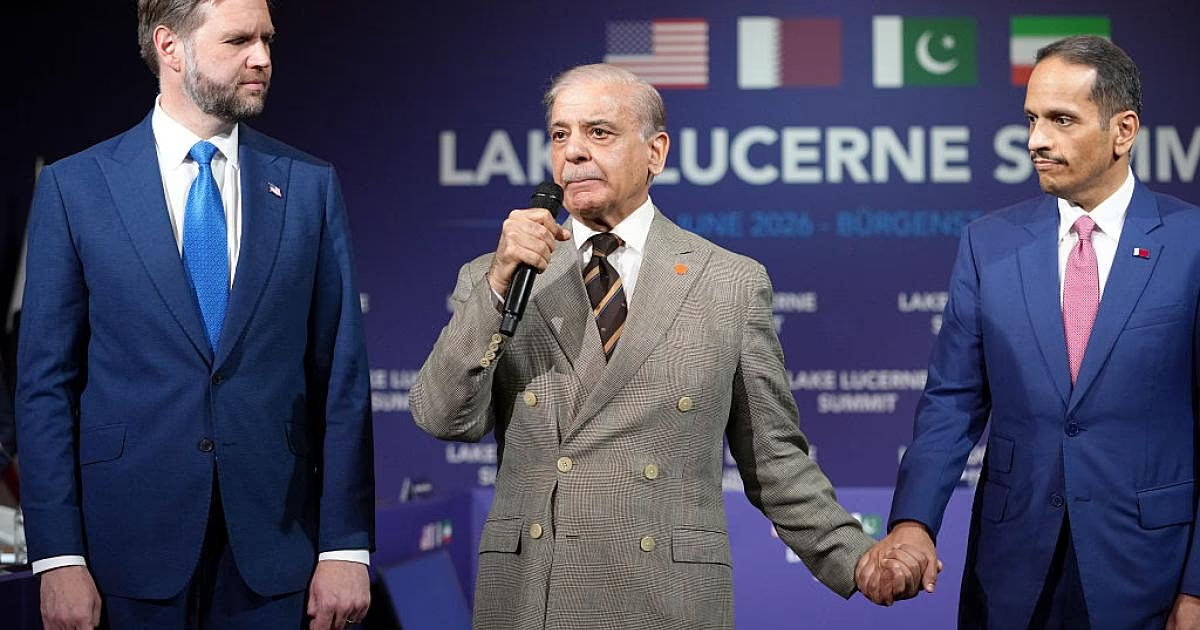
Informed government sources have revealed a diplomatic initiative led by the State of Qatar and the Republic of Pakistan aimed at defusing the escalating crisis between the United States and Iran. The new proposal includes a comprehensive plan to return to the negotiating table and end the recent hostilities, in an attempt to salvage previous understandings that collapsed earlier this month.
Regional sources reported that the US administration is currently studying the terms of the proposal, which calls for an immediate ten-day ceasefire as a test of intentions. This temporary halt aims to provide a safe environment for reopening international shipping lanes in the Strait of Hormuz, which have been directly affected by the mutual military escalation between the two parties.
Reports from Tehran indicate that the proposal is receiving attention from decision-making circles, as it is based on the principle of returning to the field and political situation that prevailed before July 9. The mediating parties consider this return to be the cornerstone for rebuilding trust and resuming meaningful dialogue to end the current state of war.
Should the proposal receive approval from both parties, an immediate round of negotiations is expected to commence, extending beyond the bilateral file to include thorny regional issues. Sources confirm that the ceasefire in southern Lebanon will be strongly present on the agenda, given its close link to the overall stability in the region.
The mediators express cautious optimism about the possibility of receiving positive responses from Washington and Tehran very soon, especially with the increasing economic and military cost of the conflict. The proposal includes precise technical conditions related to the cessation of hostilities and ensuring freedom of global navigation through the strategic Strait of Hormuz.
The proposed vision stipulates a division of tasks in the Strait, whereby the Iranian side commits to stopping any attacks in the southern passage located within Omani waters. In return, the United States commits to lifting the naval blockade on the northern passage through Iranian waters, ensuring a safe flow of global energy supplies.
The proposal also addresses the financial and administrative aspects of navigation, where the option of allowing Iran to collect service fees for providing maritime protection and environmental services is being discussed. This model is similar to what is practiced in the Strait of Malacca, where riparian states charge fees for specific services they provide to passing vessels.
There is an alternative option being circulated that stipulates depositing all collected fees into a joint financial fund under the supervision of the International Maritime Organization. This measure aims to ensure transparency in the management of the Strait's financial resources and avoid their use as a tool in the political conflict between major powers.
For its part, sources in the US administration confirmed that President Donald Trump is studying the proposal, while sending messages to allies about the need for restraint. Washington urged the Israeli side to avoid taking any unilateral military steps that could close the doors to the ongoing diplomatic efforts.
Despite the diplomatic moves, the US military continues to strengthen its capabilities in the region as a precautionary measure in case the mediation fails. Dozens of fighter jets and refueling platforms have arrived at nearby bases, a clear indication of readiness for a large-scale military escalation if necessary.
In the same context, Israeli forces have raised their alert level to the highest degree in preparation for all possible scenarios in the coming days. Military estimates indicate the possibility of limited confrontations turning into a comprehensive and coordinated military campaign, further complicating the field and political landscape.
This diplomatic activity comes at a time when the region is witnessing successive American strikes against targets within Iranian territory, met by responses from Tehran targeting American facilities and bases. The crisis escalated after Washington announced the expiration of the memorandum of understanding signed last June, following accusations against Iran of targeting commercial vessels.
The proposal aims for Washington and Tehran to return to the situation that existed before July 9 as a first step towards resuming comprehensive negotiations.


Share your opinion
Qatari-Pakistani Mediation to End War Between Washington and Tehran: A Proposal for a 10-Day Truce