






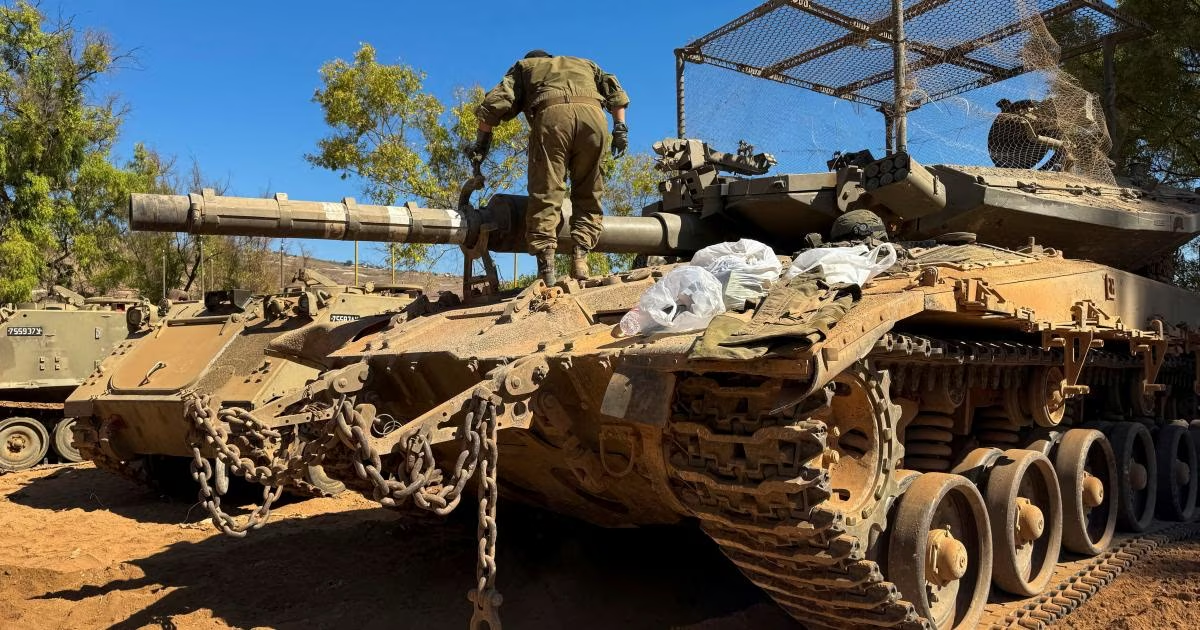
Media sources have revealed new details concerning the framework agreement recently signed in Washington between Lebanon and Israel under American auspices, where the agreement is based on the establishment of what are called 'experimental zones' in the south and north of the Litani River. According to these arrangements, the Israeli army will begin a gradual withdrawal from these areas in exchange for the deployment of Lebanese Army units, which will undertake the task of imposing full control and ensuring the area is free of armed manifestations belonging to Hezbollah.
Informed sources reported that the security annex to the agreement includes a controversial clause that grants the Israeli side the right to field access to those areas to verify the implementation of disarmament procedures. This clause comes amid continuous Israeli skepticism regarding the accuracy of reports provided by the Lebanese Army about its field deployment, as the occupation's security agencies claim they have not observed actual movements in some locations that Lebanon officially announced its forces had entered.
The leaked data indicates that the United States will play a pivotal role in overseeing the disarmament process of Hezbollah within these experimental zones, with the formation of a tripartite military coordination group to monitor implementation. This move comes at a time when Israeli media rhetoric has escalated against the structure of the Lebanese Army, attempting to portray it as an entity incapable of fulfilling its security obligations or suffering from internal divisions, which Beirut completely denies.
On the political front, Israeli Prime Minister Benjamin Netanyahu described the agreement as a strategic achievement that deals a strong blow to Iranian influence in the region, while the agreement faces internal opposition from far-right ministers such as Itamar Ben-Gvir, who considered it a grave mistake. In contrast, a state of anger prevailed among circles close to Hezbollah, where Naim Qassem described the agreement as 'humiliating and shameful,' amid protests in Beirut warning of the repercussions of these understandings on civil peace.
It is worth noting that this agreement aims to end the war that erupted on March 2, 2026, which resulted in devastating human and material losses in Lebanon, with the Ministry of Health recording 4,230 martyrs and more than 12,000 injured. The agreement also includes an international aid package comprising $100 million for humanitarian relief and $30 million allocated to support the logistical capabilities of the Lebanese Army to enable it to deploy in border areas.
The leaked clause in the security annex grants Israel the right to enter southern sites to verify Hezbollah's disarmament on the ground and not rely solely on Lebanese reports.


Share your opinion
Security Annex Leaks: Clause Grants Israel Right to Field Verification of Hezbollah Disarmament