






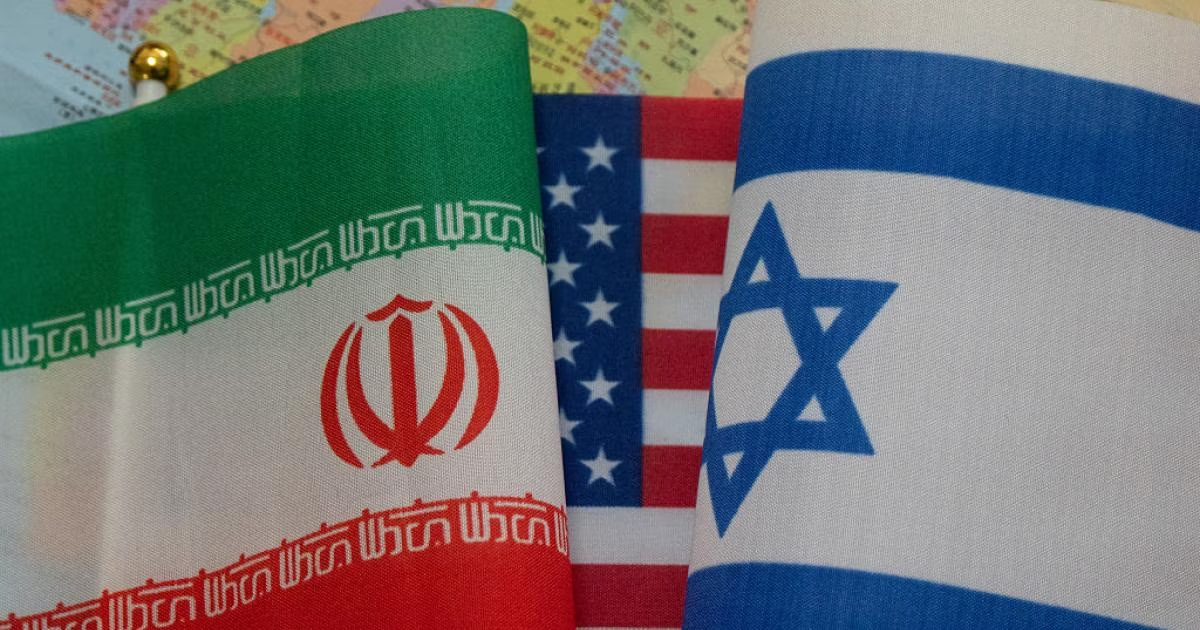
The Iranian capital, Tehran, issued strong warnings, affirming that it will not stand idly by in the face of any threats to its national security, especially given the continued Israeli military movements. Iranian sources linked their stance to the United States' ability to contain Israeli actions and control its movements in the region, emphasizing that Iranian patience has limits in the face of what it described as 'continuous provocations'.
In a statement issued by the Khatam al-Anbiya headquarters, the movements of Israeli warplanes in the airspace of some neighboring countries towards the Iranian borders were described as a 'dangerous act' that directly threatens the country's stability. The statement clarified that Tehran is closely monitoring these movements, affirming its full right to retaliate at the appropriate time and place if international efforts and American restraint fail to stop these aerial violations.
On the other hand, the Israeli response came swiftly from Minister of Defense Israel Katz, who issued a direct threat to the Iranian leadership against committing what he described as 'the biggest mistake in Iran's history'. Katz considered the threats made by the commander of the Quds Force, Esmail Qaani, to lack seriousness and to be part of the recurring rhetoric, emphasizing that Tel Aviv is prepared for all scenarios and will not back down from its military objectives.
The Israeli minister stressed that Iranian threats to close the Strait of Hormuz or target civilians will not deter Israel from continuing its operations, noting that the Israeli army is fully prepared to successfully complete the mission. These statements come in response to Qaani's assertions that Israeli forces will be forced to withdraw from southern Lebanon defeated if they do not choose to voluntarily leave soon.
This wave of mutual threats coincides with ongoing technical negotiations between Washington and Tehran to reach a permanent and comprehensive peace agreement in the region. Despite the existence of a memorandum of understanding stipulating a cessation of hostilities on all fronts, including the Lebanese arena, the field continues to witness escalating tension amid mutual accusations of non-compliance with the proposed truce terms.
Tehran's targeting of Israel would be the biggest mistake in its history, and nothing will stop us from completing the mission.



Share your opinion
Mutual Escalation: Tehran Threatens Retaliation for 'Dangerous Moves' and Katz Warns of 'Historic Mistake'