






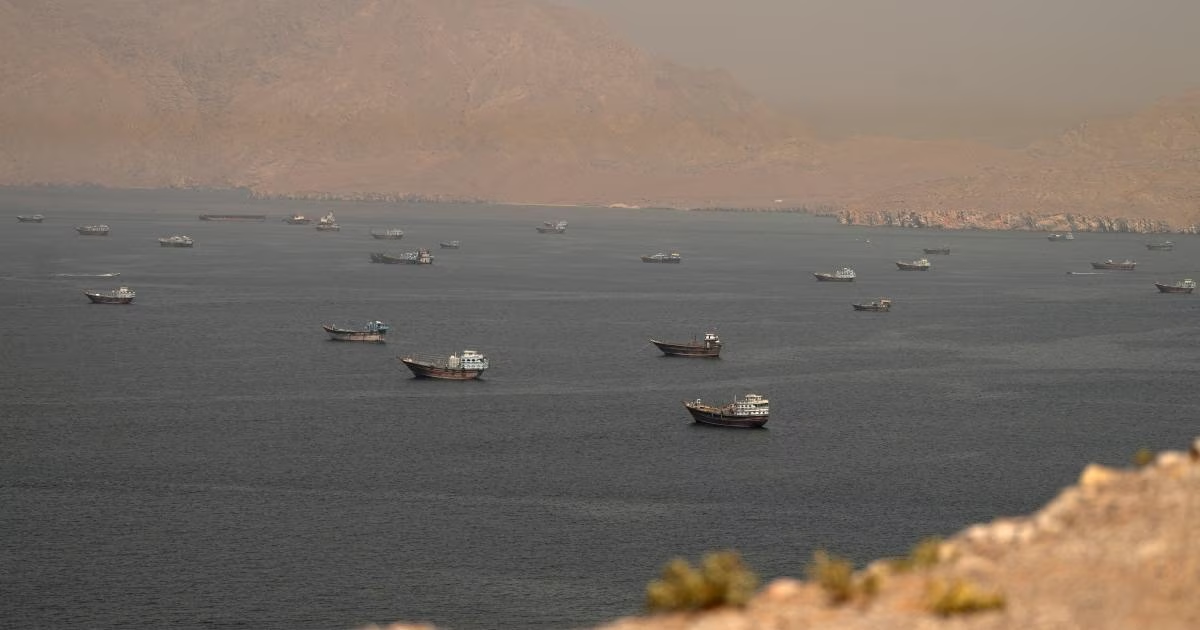
The Iranian Revolutionary Guard, today Thursday, issued an official warning to all ships and oil tankers crossing the Strait of Hormuz, emphasizing the necessity of not deviating from the maritime routes specified by Iranian authorities. The Guard affirmed in a statement that any attempt to create new navigation lanes without direct coordination with Tehran will be met with legal and field measures, considering this a direct threat to navigation security in the region.
The statement clarified that safe navigation in this vital waterway must be subject to full supervision and coordination with the relevant authorities in Iran, to ensure smooth movement and avoid accidents. Sources indicated that Iranian authorities will not hesitate to take firm steps against ships that violate these instructions or attempt to bypass the rules in force in its territorial waters.
This escalation comes amid sharp political and military tensions between Tehran and Washington, especially after Iran closed the strait since the outbreak of military confrontation with the United States and Israel last February. The future of the strait is a key focus in the ongoing discussions, which followed the signing of a memorandum of understanding aimed at ending the armed conflict that the region recently witnessed.
On the diplomatic front, Iran and Oman, as the two countries bordering the strait, announced the start of work on drafting a joint agreement to regulate the future management of navigation. This anticipated agreement aims to define mechanisms for providing navigation services and distributing associated costs, thereby ensuring the stability of the most important waterway for global energy supplies.
In contrast, the United States reiterated its categorical rejection of any approach aimed at imposing financial fees on international navigation in the Strait of Hormuz, considering it an obstacle to global trade. Washington believes that the strait should remain an open international passage without financial or unilateral administrative restrictions, which further complicates ongoing negotiations regarding the management of the passage.
For its part, informed sources in Tehran clarified that what Iran intends to collect is not 'transit fees' in the traditional sense, but rather costs for the logistical and environmental services it provides to ships. The sources indicated that Iran has provided rescue, environmental security, and rapid intervention services in accident cases for decades without charging any financial compensation, a situation it now seeks to change.
Tehran is currently holding intensive consultations with Muscat through a joint technical committee to reach a consensual formula, and has also expressed its readiness to open channels of dialogue with Gulf countries and other countries benefiting from the strait. These moves aim to find a comprehensive regulatory mechanism that enjoys regional acceptance and guarantees the rights of the countries bordering the waterway to protect their waters and marine environment.
Iran justifies its recent strictness by stating that the Strait of Hormuz was used during the recent conflict period to transport military equipment and logistical supplies to American bases that participated in military operations against it. The Iranian leadership believes that this use harmed the country's national security, necessitating stricter control over the nature of ships, their cargo, and the routes they take.
The recent 40-day war proved that any disruption in the Strait of Hormuz immediately reflects on global energy markets and directly threatens the stability of the international economy. This strategic impact is what drives Tehran to adhere to a leading role in navigation management, emphasizing that the security of the strait cannot be fragmented and must be as safe for Iran as it is for the rest of the world.
Any new navigation passage announced in the Strait of Hormuz without prior coordination with Tehran is considered unacceptable and poses a real danger to the safety of international navigation.


Share your opinion
Iranian Revolutionary Guard warns against exceeding navigation routes in the Strait of Hormuz