






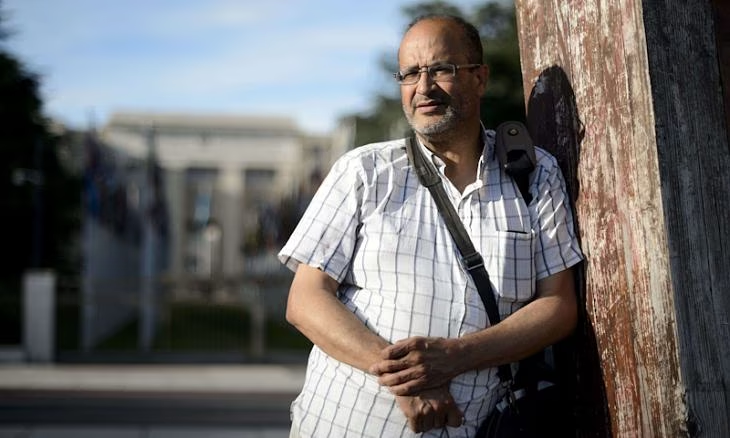
Moroccan authorities arrested prominent journalist Ali Lmrabet at Tangier International Airport immediately upon his arrival from Barcelona, Spain, last Sunday. Judicial sources confirmed that the Public Prosecution ordered his transfer to Casablanca to begin investigations into the content of podcast episodes he broadcasts on social media platforms.
Lmrabet is considered one of the historical figures of independent journalism in Morocco, having previously managed controversial media institutions such as the weekly 'Le Journal' and the magazines 'Demain'. Throughout his professional career, he faced a series of legal prosecutions, including imprisonment in 2003 and a ban from journalistic work for a full decade starting in 2005.
The news of the arrest sparked angry reactions from local human rights bodies, with the Moroccan Association for Support of Political Detainees demanding his immediate release. The National Center for Human Rights and Media affirmed that the timing of the arrest comes in a sensitive human rights context that requires broader guarantees for freedom of opinion and expression.
For its part, the Moroccan Association for Human Rights stressed the need to reveal the precise circumstances of this legal procedure, warning against turning publishing cases into criminal files. The association considered that prosecuting journalists for their opinions constitutes a dangerous regression from the democratic gains that Moroccan society aspires to.
On the international level, 'Reporters Without Borders' entered the crisis, expressing its deep concern about what it described as the use of the judicial apparatus to silence opponents. The organization called on the authorities to respect their international commitments related to protecting the right to access information and not criminalizing journalistic work under any pretext.
Spanish journalism was not absent from the scene, as 'El País' newspaper dedicated extensive space to the issue through an editorial and multiple analytical articles. The newspaper indicated that this step contradicts Morocco's ambitions to present a modern and tolerant image to the world in conjunction with preparations to host the 2030 World Cup.
The Spanish newspaper believed that the royal pardon issued two years ago for detained journalists heralded the turning of a page on restrictions, but Lmrabet's case brings back old concerns. It affirmed that criticizing political systems should not lead its author to exile or arrest in societies that seek pluralism and democracy.
In France, 'Le Monde' and 'Libération' newspapers covered the news with headlines highlighting the arrest of a prominent figure of independent journalism in the Kingdom. These reports considered that Lmrabet's prosecution reflects the continued tension between the executive authority and media voices that adopt a sharp critical line towards official institutions.
In a related context, informed sources explained that the investigations focus on accusations related to defamation and slander through digital media, charges that have been repeated in previous prosecutions of Moroccan journalists. Observers believe that the authorities seek to strictly apply the law in cases of digital content that they consider to cross red lines.
On the other hand, Lmrabet's defenders believe that his return to Morocco, despite knowing about ongoing legal proceedings, reflects his desire to directly confront the charges. They affirm that guaranteeing a fair and public trial is the true test of the judiciary's independence in dealing with public opinion cases.
Social media platforms are witnessing a sharp division between those in solidarity with the detained journalist and those defending security measures on the pretext of protecting citizens from defamation. The team defending the arrest argues that journalistic status does not grant immunity from legal accountability in the event of complaints from individuals or institutions.
However, international organizations insist that the general context of arrests in Morocco suggests a systematic pattern of restricting investigative journalism. International reports indicate a decline in Morocco's ranking in global press freedom indices in recent years, which puts diplomatic pressure on Rabat.
Political analysts link these developments to the 'diplomatic derby' ongoing in the Mediterranean basin, where some external parties exploit human rights issues to achieve political gains. Nevertheless, the fundamental human rights demand remains the separation of powers and ensuring that issues related to freedom of publication are not politicized.
Human rights circles await Ali Lmrabet's upcoming trial sessions, with hopes that the spirit of the law that protects public freedoms will prevail. The ongoing challenge remains balancing the prestige of institutions with the inherent right to journalistic criticism, which is a fundamental pillar in building a modern state.
Criminalizing the work of a journalist is not an application of the law, but rather an exploitation of justice to serve repression and silence critical voices.
Share your opinion
Wave of human rights and international criticism following the arrest of journalist Ali Lmrabet in Morocco