






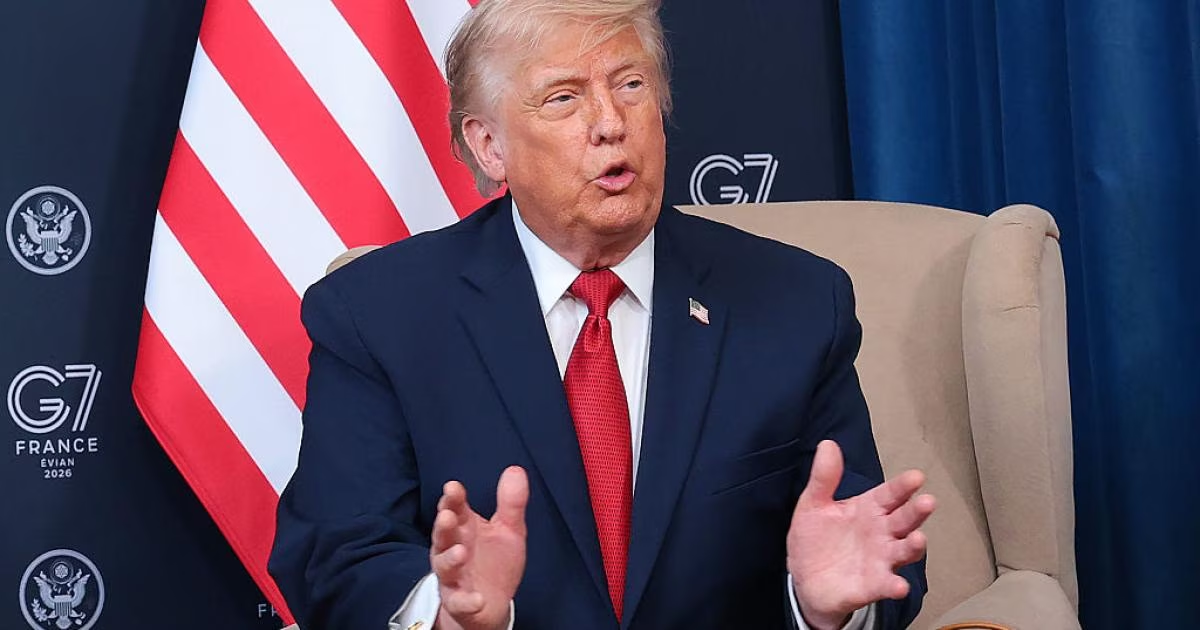
The diplomatic talks in Switzerland witnessed unprecedented tension that nearly scuttled efforts to de-escalate the conflict between Washington and Tehran. This escalation came after US President Donald Trump issued a sudden threat via social media platforms, hinting at military targeting of Iran unless it ceased supporting and funding Lebanese Hezbollah, which the Iranian side considered a dangerous escalation at a sensitive time.
Sources reported that the chief Iranian negotiator, Mohammad Bagher Ghalibaf, was not immediately aware of the post due to leaving his phone outside the closed meeting room. Upon being informed by his aides, Ghalibaf sharply addressed his American counterpart, J.D. Vance, reprimanding him for what he considered a departure from the diplomatic norms agreed upon at the start of the round.
Ghalibaf explained to the US Vice President that these threats constituted a clear violation of the opening paragraph of the recently signed memorandum of understanding between the two parties. That memorandum, which Trump electronically endorsed, obliges both the United States and Iran to refrain from issuing any military threats or engaging in mutual hostile acts throughout the negotiation period.
Consequently, the Iranian team decided to end the direct session and withdraw from the hall, asserting that Tehran would not accept negotiations under pressure or public threats. Ghalibaf later stated in remarks to Iranian state television that the American side attempted to resume the meeting through mediators, but the Iranian delegation maintained its refusal to return to the table under those circumstances.
For his part, J.D. Vance tried to contain the situation by justifying the US President's statements, considering them not a threat to initiate an attack, but rather a clarification of the consequences Tehran might face if it violated the terms of a future agreement. A US official indicated that Vance requested a temporary suspension of talks to give the Iranians an opportunity to study the technical proposals away from the noise of media statements.
Informed sources revealed that international mediators, particularly from Qatar and Pakistan, made strenuous efforts to persuade the Iranian delegation to ignore Trump's posts and focus on what was happening inside the closed rooms. These mediators repeatedly warned the American side that Trump's 'digital diplomacy' approach posed serious obstacles to the possibility of reaching a final and sustainable agreement.
This scene reflects the new reality imposed by the Trump administration, where unconventional envoys and an overt style characterized by excessive frankness and maneuvering are relied upon. Observers believe that Trump deliberately projects an 'unstable' or hardline image to force adversaries to make substantial concessions, a tactic he has previously demonstrated in other international crises.
In an attempt to understand this mindset, Iranian diplomats resorted to studying Trump's book 'The Art of the Deal,' which he authored in the 1980s, explaining his strategies as a business leader. The book advises using extreme and unexpected demands to create anxiety in the other party, which the Iranian team seems to have begun to grasp as part of the political game.
Some reports went further, with sources indicating that Iranian negotiators consulted a team of psychologists to analyze Trump's reactions and anticipate his next moves. Despite official denials from some sources in Tehran, Iranian interest in deciphering the US President's personality has become clear behind the scenes of the diplomatic mission.
Despite these skirmishes, talks continued through back channels and mediators, with Tehran successfully achieving some technical and political gains. Among the most prominent of these results was securing a US commitment to allow Iran to sell its oil in dollars, which is a significant breakthrough in the wall of economic sanctions imposed on the Islamic Republic.
In contrast, Iran managed to thwart Washington's attempts to directly include the role of the International Atomic Energy Agency in the final statement of this round. Tehran insists that the issue of inspecting damaged nuclear facilities must be addressed in a separate track, away from political bargaining related to the comprehensive agreement.
Experts believe that Trump's sharp statements weaken the position of the pragmatic current in Tehran against hardliners who doubt the utility of trusting the United States. Each time Trump issues a new threat, internal pressure on the Iranian government increases to adopt tougher stances and refuse to make any concessions on regional or missile issues.
Trump's previous threats included vows to destroy 'an entire civilization' and target power plants, statements Tehran considered mere tactics to raise the bar of demands. However, the repetition of these threats at crucial diplomatic moments raises the level of risk and threatens the collapse of the negotiation process at any moment.
Ultimately, the Iranian delegation left the luxurious negotiation headquarters in Switzerland to move to a modest residence, in a symbolic gesture of protest against American behavior. As dialogue continues through mediators, the question remains about the ability of traditional diplomacy to withstand the storm of tweets and unexpected decisions emanating from the White House.
I told Vance that your president issued threats today... Understand that we never negotiate under threat or pressure.
Share your opinion
Behind the Scenes of the Switzerland Talks: How Trump's 'Tweets' Nearly Derailed Negotiations with Iran