






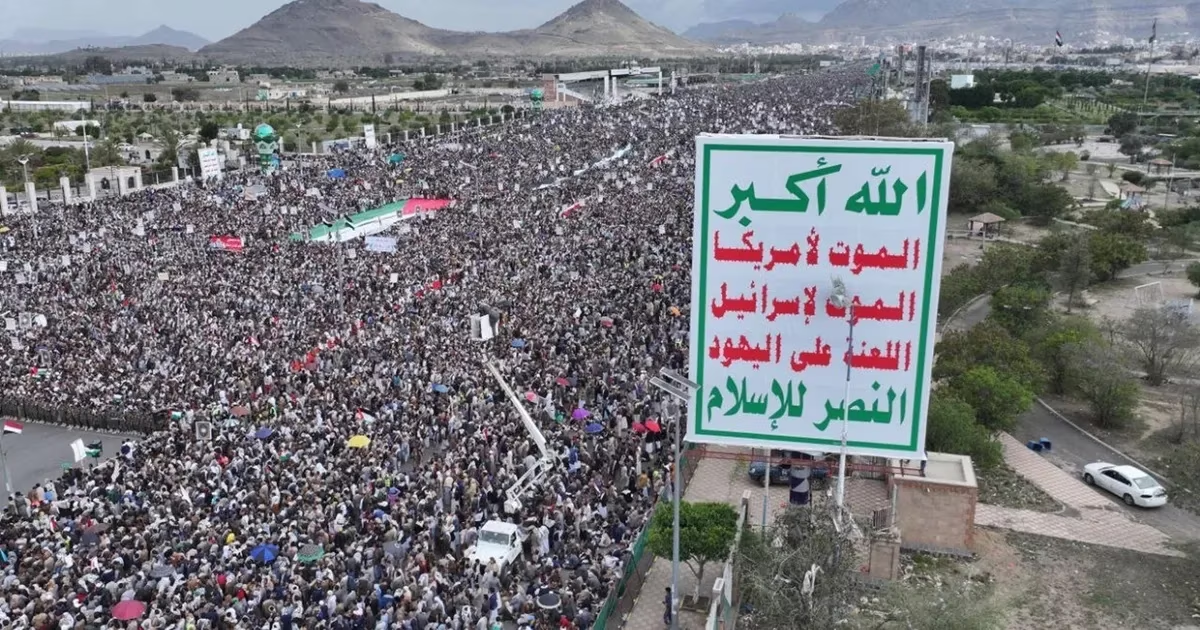
The Houthi group 'Ansar Allah' has raised the level of its military threats in recent days, signaling a move against the internationally recognized Yemeni government and Saudi Arabia. This escalation follows speeches by the group's leader, Abdul-Malik al-Houthi, in which he warned of his group's dwindling patience regarding what he described as the continued siege and control over national resources.
Observers believe that this escalating rhetoric reflects the group's desire to capitalize on regional changes, especially after recent international understandings, to improve its terms in any future negotiations. Through these pressures, the group aims to gain concessions on thorny issues, most notably salary payments, oil exports, and easing restrictions on ports.
Informed sources reported that the current threatening language may not necessarily translate into a widespread confrontation on the ground, given the continuation of diplomatic communication channels. The sources indicated that delegations from the group recently participated in meetings in Riyadh and Amman, suggesting the existence of a political track parallel to the escalating media rhetoric.
In a related context, the office of the UN envoy announced an initial agreement between the Yemeni government, the Kingdom, and the Houthi group to hold a meeting of the Military Coordination Committee next July. This anticipated meeting aims to discuss outstanding security issues, which reinforces the hypothesis that the parties still prefer dialogue over returning to a zero-sum war.
The Houthi group understands that a return to widespread war would undermine the fragile understandings achieved in recent years, which makes it deal cautiously with its military options. According to political analyses, the group manages its positions based on precise calculations that avoid engaging in an open confrontation whose outcomes may not be guaranteed at present.
The economic file stands out as one of the most important drivers of Houthi escalation, as the group seeks to achieve direct financial flows to cover its internal obligations. However, these ambitions clash with a firm American stance that sets red lines against any financial arrangements that are not part of a comprehensive and clearly defined political settlement under international supervision.
Sources indicate that Washington still opposes granting the Houthis additional resources outside the framework of a comprehensive political solution, fearing that it would strengthen their military capabilities away from the peace process. This international complexity increases the difficulty of reaching quick solutions for the salary and oil revenue files, pushing the group to exert more field pressure.
On the other hand, the military balance of power no longer necessarily favors the Houthis as it did in the early years of the conflict, according to recent military assessments. The forces affiliated with the Yemeni government have undergone extensive reorganization and training, which has increased their combat readiness and ability to counter any potential military adventures.
Field sources clarified that the Yemeni government has strengthened its security and military preparations, benefiting from accumulated experience and higher coordination among its various factions. This field development makes the cost of any military escalation by the Houthis very high and could lead to unforeseen negative consequences for the group and its allies.
For Saudi Arabia, it has worked in recent years to enhance its defense systems and protect its vital facilities more effectively. The recent Saudi-Iranian rapprochement has also provided a political margin for maneuver, reducing the likelihood of a major military explosion in the region and encouraging diplomatic solutions.
Analysts believe that the escalation of Houthi rhetoric is a multi-directional message, primarily targeting Saudi Arabia to pressure for the completion of previous understandings. The group is trying to say that it remains a key player in the security of the Red Sea and the region, and its vision cannot be overlooked in any upcoming regional or international arrangements.
Internally, anti-Houthi forces suffer from divergent priorities, which the group tries to exploit by unifying its political and military decision-making under one leadership. However, the continuous need for resources and funding remains the primary driver of the group's actions, whether through negotiation or by threatening military force.
In the event that the Houthis resort to limited military operations, they are likely to be in the framework of 'harsh messages' aimed at opening fronts for political pressure and nothing more. The exclusion of a comprehensive war scenario remains the most likely among most observers, given that all parties realize that the cost of confrontation today is much higher than it was in the past.
In conclusion, it appears that Yemen is experiencing a 'finger-biting' stage between the warring parties, where each side uses its available cards to improve its negotiating position. The bet remains on the extent of success of international and regional efforts to turn these threats into opportunities to complete the stalled peace process and end the suffering of the Yemeni people.
Threats issued from time to time seem closer to political and negotiating pressure tools than to indicators of a decision for comprehensive war.


Share your opinion
Implications of the New Houthi Escalation: Is Yemen Approaching a Comprehensive Conflict?