






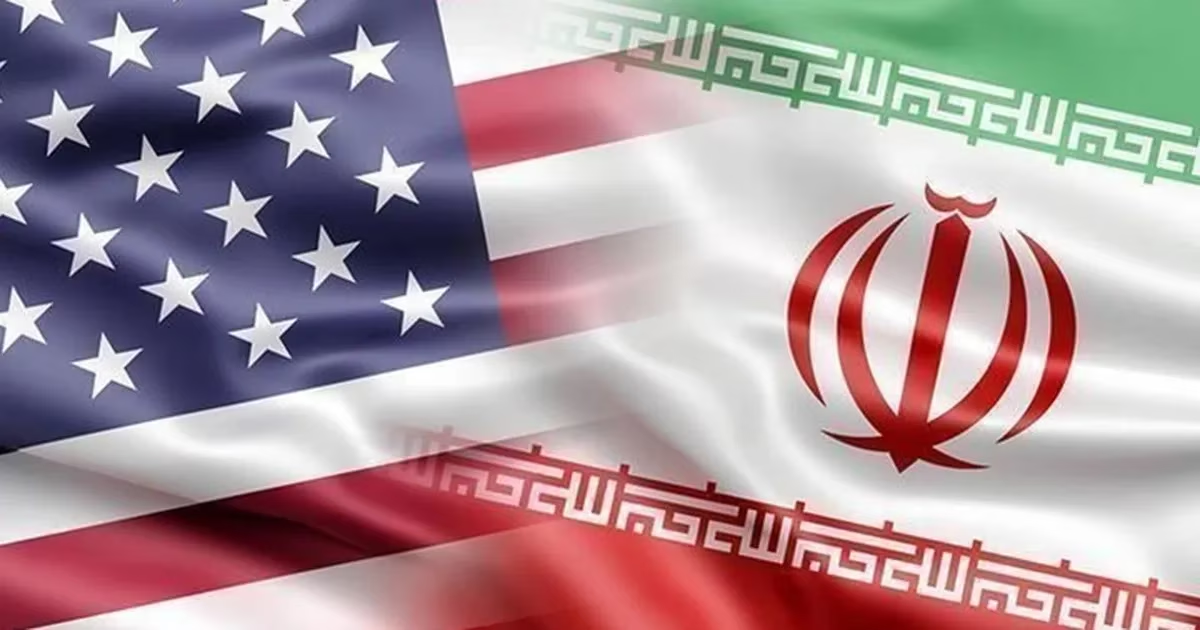
International press sources revealed the behind-the-scenes details of the final hours and the arduous negotiations that preceded the announcement of the historic agreement between the United States and Iran. Sources indicated that four months of direct military confrontations and decades of animosity ended with complex understandings that witnessed successive crises and threats of collapse in the final moments.
The most sensitive moments began late at night in Tehran, when a convoy carrying Qatari officials suddenly stopped on its way to the airport. This halt was due to an urgent dispute over the wording of the final statement, necessitating urgent communications to ensure that the mediators did not leave before reaching an announced formula satisfactory to both parties.
Ultimately, Pakistani Prime Minister Shehbaz Sharif announced the agreement at precisely 12:45 AM on Monday, Tehran time. US President Donald Trump followed by confirming the news, announcing an immediate step to lift the naval blockade imposed on Iranian ports as a gesture of goodwill to strengthen the new understanding.
Last weekend represented the climax of a 47-year conflict, where economic calculations intertwined with Trump's political ambitions domestically. The US President sought to conclude a deal that would fulfill his electoral promises to prevent Iran from acquiring nuclear weapons, despite postponing the technical details of this file to later rounds.
For its part, Tehran insisted on what it describes as its right to enrich uranium, focusing its efforts on extracting major economic gains in exchange for reopening the Strait of Hormuz. The agreement essentially aims to secure international navigation in the strategic strait in exchange for a massive economic support plan for Iran exceeding hundreds of billions of dollars.
Reports were based on interviews with officials in Washington, Europe, and the Middle East, who confirmed that the agreement faces sharp internal criticism in the United States. Trump's opponents believe that the deal made significant concessions to Tehran without definitively resolving the nuclear issue, leaving the door open for future tensions.
The agreement included the launch of a $300 billion development plan to rebuild the Iranian economy, which has been ravaged by long-standing sanctions. In return, Iran showed willingness to maneuver until the last moments to extract further concessions, despite the military threats occasionally issued by Trump.
Regionally, Israeli officials expressed deep concern about the results of these negotiations from which they were excluded, considering them a threat to their national security. The Israeli side warned that leaving the nuclear file without strict and immediate restrictions would give Tehran an opportunity to enhance its military capabilities under the guise of the economic agreement.
Doha played a pivotal and decisive role in bridging viewpoints during the final stages, intensifying its contacts with the Iranian leadership to push them towards approval. This pressure coincided with Trump's desire to finalize the agreement before a prominent sporting event at the White House, which added urgency to the talks.
In Tehran, Iranian Supreme Leader Ayatollah Mojtaba Khamenei ratified the final text on Saturday, referring it to the Supreme National Security Council. Despite objections from some hardline members, the general trend within Iranian governing institutions leaned towards accepting the deal to alleviate crippling economic pressures.
Sunday witnessed a major crisis that almost derailed all diplomatic efforts, following an Israeli airstrike targeting the southern suburbs of Beirut, resulting in casualties. Iran considered this attack a crossing of red lines and threatened to suspend the signing and retaliate militarily by launching ballistic missiles towards Israeli targets.
Qatari mediation intervened again and intensely to calm Iranian anger, conducting high-level contacts with American and Iranian officials to prevent escalation. Mediators convinced the Iranian side that military escalation would serve those parties seeking to derail the agreement, which ultimately led Tehran to back down from immediate retaliation.
Trump, for his part, criticized the Israeli timing of the raid via social media platforms, emphasizing that it should not have happened at this critical time. Officials in his administration confirmed that the decision to immediately implement the lifting of the naval blockade came to dispel Iranian doubts and demonstrate Washington's seriousness in moving forward with the agreement.
In conclusion, the new US-Iran agreement remains a real test of both parties' ability to adhere to their commitments in a volatile regional environment. While the White House celebrates what it sees as a diplomatic achievement, global capitals await the extent of this shift's impact on the balance of power in the Middle East.
We made it clear to them that they had no way to confront us, so they said: Please don't do that, and we will make a deal, and indeed we made the deal right after that.
Share your opinion
Behind the Scenes of the Final Hours: How Was the US-Iran Agreement Brokered by Qatar?