






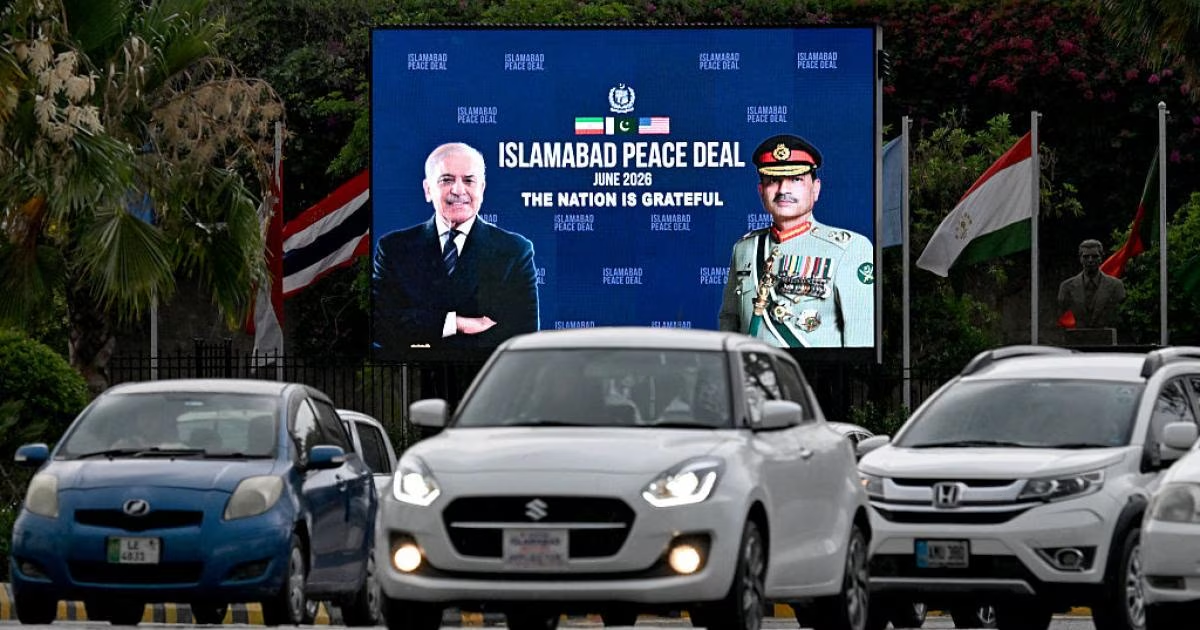
Pakistani Prime Minister, Muhammad Shahbaz Sharif, announced the immediate entry into force of the Memorandum of Understanding (MoU) concluded between Tehran and Washington, following the completion of formal signing procedures by both sides. Sharif clarified that this step represents a fundamental shift towards diplomacy to end the armed conflict that has overshadowed the region, noting that the first practical step will be the reopening of the Strait of Hormuz to international navigation.
For its part, the Iranian Foreign Ministry confirmed that the agreement was signed electronically between the two leaderships, considering this format to lend greater seriousness to mutual commitments. The ministry's spokesperson, Ismail Baghaei, stated that the text of the 'Islamabad Memorandum of Understanding' is now ready for actual implementation, emphasizing that the next phase will be a real test of the parties' commitment to what has been agreed upon.
The terms of the memorandum, revealed by informed sources, stipulate that the United States will immediately suspend sanctions imposed on Iranian oil exports once the agreement enters into force. In return, Tehran commits to ensuring full freedom of maritime navigation in the strategic Strait of Hormuz within thirty days, to end the paralysis that has affected global energy trade.
The agreement also includes a 60-day timeframe for intensive negotiations to reach a final and comprehensive settlement, at the end of which Washington will lift all economic sanctions. The negotiation track includes the controversial Iranian nuclear program, in addition to understandings on the establishment of an international fund dedicated to the reconstruction and development of Iran's war-damaged economy.
In the context of evaluating the results of the military confrontation, reports indicate that the US administration under Donald Trump is seeking to market the agreement as a political and military achievement. This view is based on the extent of losses inflicted on Iran's military infrastructure during months of fighting, which included the destruction of large parts of air defense systems and missile capabilities.
Estimates from military sources indicate that Iran lost about a third of its ballistic missile arsenal, with confirmed losses ranging between 800 and 3,000 missiles. Washington also announced its success in intercepting thousands of drones and neutralizing more than 80% of the Revolutionary Guard's radars and air defense platforms.
Despite these heavy military figures, observers believe that Tehran maintained a degree of deterrence until the last moments of the war, as it continued to threaten vital waterways. The question remains about the extent to which major political goals have been achieved, especially since Iran's nuclear capability has not been completely dismantled according to recent intelligence reports.
Sources clarify that US estimates still indicate Iran's ability to produce enough material for a nuclear weapon in less than a year, a situation that has not fundamentally changed from what it was before the confrontation. This reality places the results of the war under critical scrutiny, as some believe that the exorbitant cost did not lead to a definitive resolution of the nuclear issue.
Regionally, it appears that Iran's network of influence has been subjected to severe pressure, but the goal of 'regime change' hinted at by some parties at the beginning of the conflict remained elusive. Combat operations ended with sitting at the negotiating table with the same political leadership, reinforcing the hypothesis that diplomatic solutions were the only possible way out.
The return to diplomacy through Islamabad reflects an international desire to contain the repercussions of the conflict on the global economy, especially with the sharp rise in energy prices. The opening of the Strait of Hormuz represents the breathing room that the global market awaits to restore its stability after a period of unprecedented disruptions in supply chains.
Analysts believe that the next phase will witness a different kind of struggle at the negotiating table, where Tehran will try to trade its nuclear concessions for quick economic gains. In return, Washington will seek to ensure permanent restrictions that prevent Iran from restoring its offensive military capabilities or threatening US allies in the region.
The current agreement, despite being a framework 'Memorandum of Understanding,' puts an end to a phase of direct military escalation that threatened to ignite a comprehensive regional war. Regional mediations, especially Pakistani and Swiss, play a pivotal role in bridging views and providing the necessary guarantees to begin implementing sensitive provisions related to security and navigation.
Regarding Iran's internal situation, the lifting of oil sanctions represents a lifeline for the struggling economy, which the authorities may use to calm the domestic front after months of wartime pressures. Iranian oil is expected to gradually flow into global markets, which could contribute to lowering global fuel prices.
In conclusion, the implementation of the 'Islamabad Agreement' remains contingent on the mutual trust that is still fragile between the two parties, as the Iranian Foreign Ministry spokesperson warned that the 'test time' has effectively begun. International powers will closely monitor Washington's commitment to the sanctions lifting schedule, against Tehran's seriousness in opening waterways and halting its escalatory military activities.
The drafting of the Islamabad Memorandum of Understanding has been completed with the signing of the presidents, and it is now time to test the implementation of this agreement.
Share your opinion
Washington and Tehran Agreement Enters into Force: Opening of the Strait of Hormuz and Gradual Lifting of Sanctions