






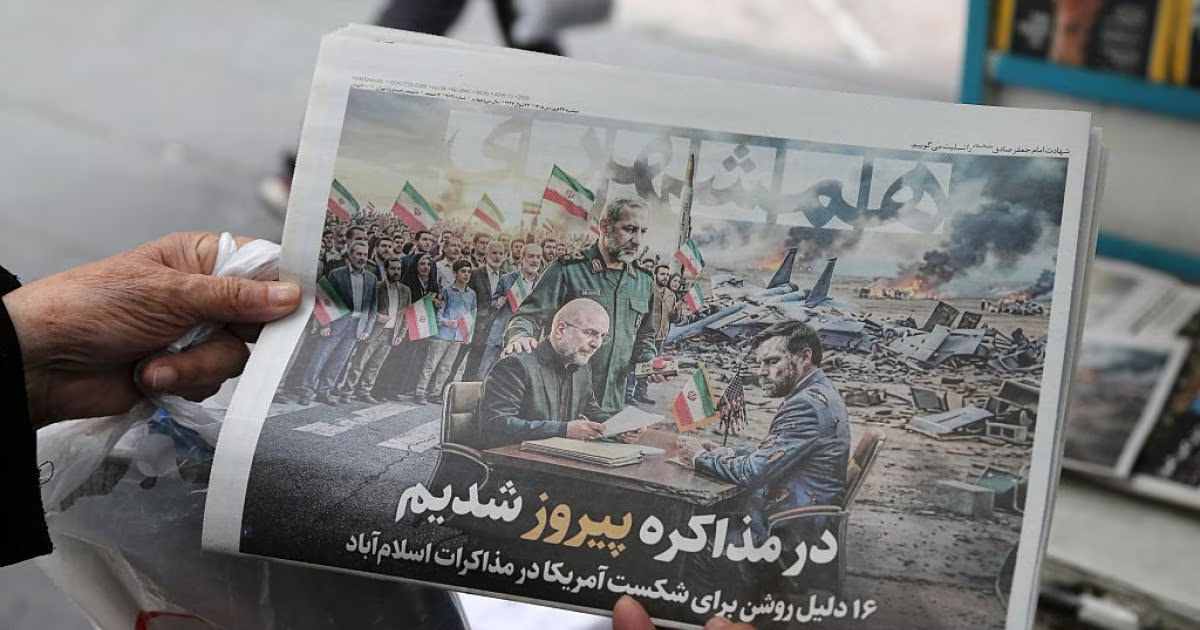
Iranian Foreign Minister, Abbas Araghchi, announced the features of the ongoing draft understanding with the United States, indicating that the interim agreement includes essential provisions to end the American blockade imposed on his country. Araghchi clarified that the understandings include the full reopening of the Strait of Hormuz to international navigation, as part of confidence-building measures between the two parties.
The Iranian minister affirmed that the anticipated memorandum of understanding aims to declare an end to military operations on all active fronts, with a particular focus on the Lebanese arena. He stressed that Tehran would not abandon its allies, asserting that 'Hezbollah' would remain present at the core of any political agreements that guarantee regional stability.
Regarding the timeline for negotiations, Araghchi revealed that the comprehensive sanctions lifting and nuclear program files would be deferred to a second phase of discussions. This additional round is expected to take about 60 days, with Tehran conditioning the continuation of nuclear talks on the success of implementing the provisions of the first interim phase.
Araghchi described Israel as the primary adversary of this agreement, considering that it seeks to obstruct any diplomatic rapprochement that ends the state of tension. He indicated that the strength with which Iran emerged from the recent confrontation with the United States is what imposed this new negotiating path that preserves Tehran's strategic interests.
For his part, the Speaker of the Iranian Parliament and chief negotiator, Mohammad Bagher Ghalibaf, stressed the necessity for all parties to adhere to the commitments made without imposing preconditions or technical excuses. Ghalibaf considered that fulfilling commitments is the only way to complete the deal and ensure its sustainability amidst the current regional complexities.
On the American side, a senior official expressed great optimism about reaching a final agreement soon, estimating the probability of signing within the next few days at over 80%. The official explained that the US administration sees this step as a historic opportunity to contain Iran's nuclear program and secure vital waterways.
According to American sources, the agreement's provisions include an explicit Iranian commitment to dismantle large parts of its nuclear infrastructure and hand over its enriched uranium stockpile. In return, Washington will significantly ease the system of economic sanctions and release frozen Iranian assets in international banks.
The American official indicated that the path of understanding witnessed tangible progress after the two parties agreed on mechanisms for disposing of sensitive nuclear materials. He also noted that the United States observed a decline in the intensity of absolute Iranian control over the Strait of Hormuz, which paved the way for including the navigation file in the deal.
In a related context, informed sources confirmed that the understandings include security arrangements concerning Lebanon, the Gulf states, and Israel alike. The sources mentioned that the agreement grants Israel 'the right to self-defense' if any security breaches threatening its stability are detected, a clause aimed at dispelling security concerns in Tel Aviv.
Pakistani Prime Minister, Muhammad Shahbaz Sharif, had previously announced the reaching of the final text of the peace agreement between Tehran and Washington through international mediation. This announcement reflects the extent of diplomatic efforts made by regional parties to bridge viewpoints and prevent the region from sliding into a comprehensive confrontation.
Despite the prevailing optimism, American officials warned that the historical lack of trust between the two sides still represents an ongoing challenge. They clarified that the remaining 15% of failure probabilities relate to precise logistical details about the place and time of signing, with European capitals being preferred options.
Reports from Tehran indicate that about 75% of Iran's top leadership has approved the provisions of the current agreement. This widespread support within Iranian ruling circles is a strong indicator of the seriousness of the move towards de-escalation and ending the economic isolation imposed by long-standing sanctions.
In a notable development, US President Donald Trump retweeted the Iranian Foreign Minister's statements about the imminent conclusion of the memorandum, which observers considered an implicit sign of support for the diplomatic path. This move enhances the chances of the agreement's success despite the strong opposition expressed by Israeli Prime Minister Benjamin Netanyahu.
Araghchi concluded his statements by emphasizing that the end of the war in Lebanon is linked to the withdrawal of Israeli forces from all recently occupied areas. He stressed that Lebanese sovereignty and the protection of the resistance remain red lines that cannot be crossed in any comprehensive regional settlement with the US administration.
Israel is at the top of the list of enemies of this agreement, and we will not forget Hezbollah in any future understandings.
Share your opinion
Araghchi reveals features of agreement with Washington: End of war in Lebanon and opening of Strait of Hormuz