






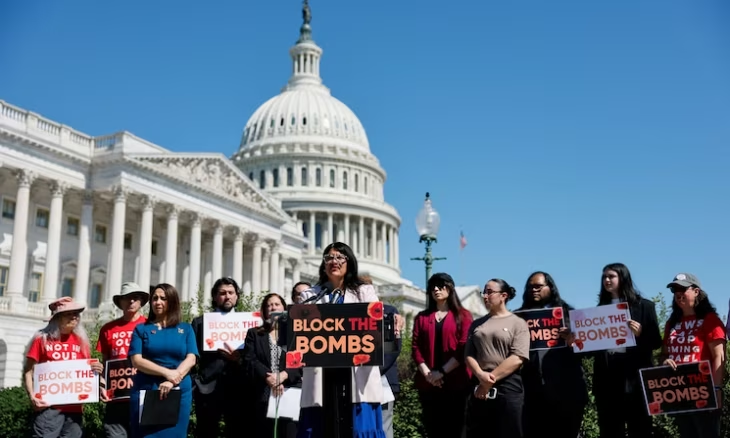
The US House of Representatives on Thursday voted to reject a bill based on the War Powers Act, which aimed to compel President Donald Trump to withdraw US forces from any combat operations in Lebanon that had not received prior congressional approval. The session saw a decisive vote that ended with a majority of 324 representatives opposing the proposal, compared to only 92 members in favor, while two representatives chose to abstain from voting, a move reflecting a division over the mechanisms of foreign military intervention.
The details of the vote showed broad bipartisan opposition to the resolution, with 207 Republicans and 117 Democrats, in addition to one independent representative, opposing it. In contrast, Representative Thomas Massie emerged as the sole Republican voice supporting the resolution, while Democratic Representatives Betty McCollum and Derek Tran were present without taking an explicit stance on the vote, which sparked widespread debate in Washington circles.
Democratic Representative Rashida Tlaib based her proposal on the absence of legal authorization, noting that Congress had not declared war nor granted specific permission for US forces to participate in Israeli military operations within Lebanese territory. Tlaib asserted in her argument that the United States had not designated any entity within Lebanon as a legitimate target under existing authorizations for the use of military force, rendering any combat involvement illegal according to her view.
Via the 'X' platform, Tlaib emphasized the humanitarian aspect of the crisis, pointing out that reports indicate the death of approximately 11 children daily in Lebanon as a result of the ongoing escalation. The representative called for an immediate halt to the shelling, considering that the Israeli government continues to expand the scope of its military strikes in various Lebanese regions, despite previous understandings related to a ceasefire agreement that did not withstand the field escalation.
In contrast, Democratic Minority Leader Hakeem Jeffries, along with party leaders, issued a clarifying statement affirming that no US armed forces personnel are currently engaged in combat or direct hostilities in Lebanon. This stance aimed to calm fears of imminent US involvement, considering that the wording of the proposed resolution does not align with the current field reality of forces deployed in the region.
Democratic leaders explained that addressing the issue of war powers in Lebanon should be done through other legislative channels that ensure the protection of US interests without harming security cooperation with the Lebanese army. They indicated that any legislative action must preserve Washington's ability to protect its diplomatic facilities and secure its personnel, which they considered a weakness in the resolution proposed by Tlaib.
This parliamentary move comes just one day after the House of Representatives successfully passed another resolution aimed at restricting President Trump's ability to launch military action against Iran without congressional approval. This disparity in the results of the two votes reflects the complexity of political calculations in Washington regarding Middle East issues, where lawmakers tend to tighten oversight on the Iran file while maintaining wider room for maneuver in the Lebanese file.
Congress has not granted any specific legal authorization for US forces to participate in Israeli military operations in Lebanon.

Share your opinion
US House of Representatives Rejects Bill to Restrict Military Intervention in Lebanon