






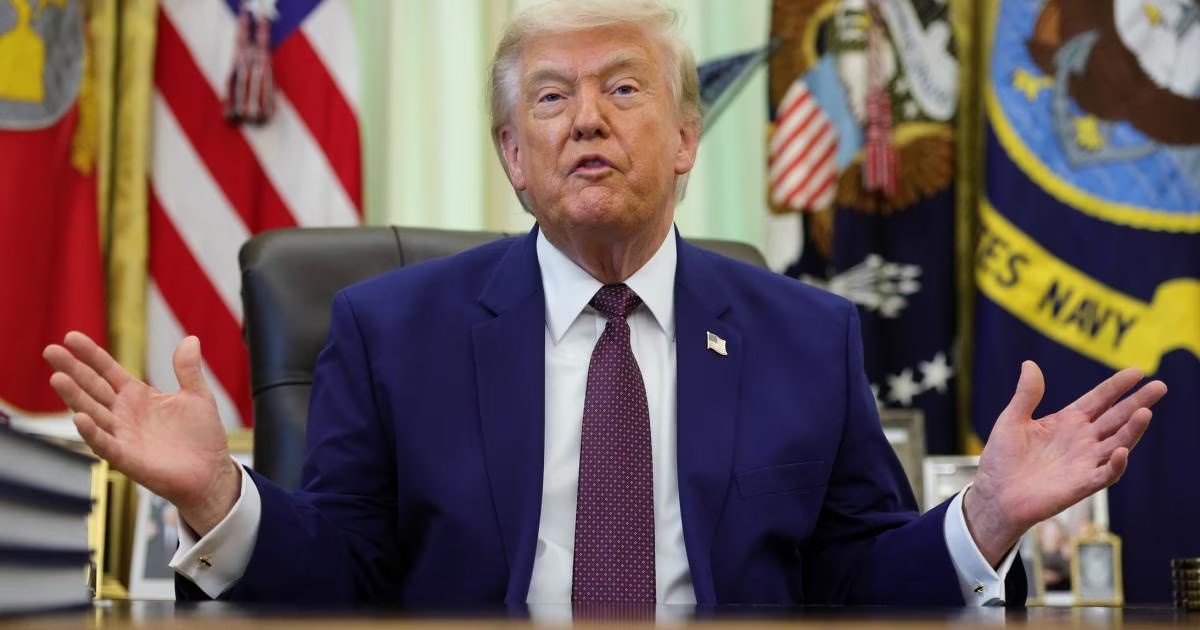
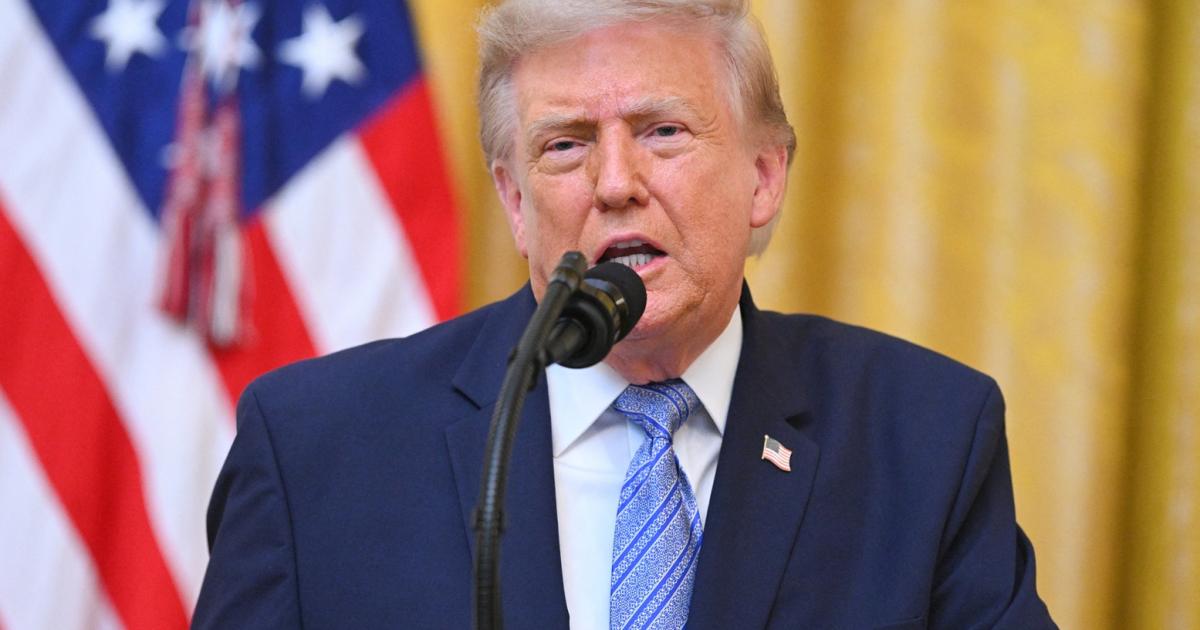
US President Donald Trump revealed rapid developments in the negotiation process with the Islamic Republic of Iran, indicating the possibility of concrete results before the end of the current week. Trump clarified, during statements made from the Oval Office, that the negotiation process is proceeding very positively, despite his affirmation that the possibilities of failure still exist given the complexity of the issues at hand.
The US President stressed that the draft currently being circulated guarantees the United States access to Tehran's entire stock of highly enriched uranium. This issue is a cornerstone of American demands, as Washington aims through it to strip the Iranian nuclear program of its escalatory capabilities and ensure that it does not return to enrichment levels that threaten regional security.
Regarding regional interference, Trump expressed his explicit desire to isolate the negotiating track related to Lebanon from direct talks with Iran. This desire comes at a time when the Iranian leadership insists on the interconnectedness of issues, considering that any comprehensive settlement must include all burning fronts in the region, which represents a new diplomatic challenge for mediators.
Trump refuted news circulated by media outlets about the cessation of communication channels between the two sides, describing those reports as misleading and inaccurate. He affirmed that meetings and discussions have not stopped throughout the past days, stressing that communication continued daily and intensively to reach a consensual formula that ends the current conflict.
The White House urged the leadership in Tehran to make decisive decisions at this critical time, considering that the time has come to conclude an agreement that ends the crisis. Trump indicated that despite the inability to predict the final outcomes, the rapid pace of talks gives indications of the seriousness of the parties in avoiding further military escalation.
These diplomatic moves come after widespread military confrontations erupted last February, in which the United States and Israel participated against Iranian targets. These operations resulted in thousands of casualties and damage to civilian and military facilities, prompting international powers to intervene urgently for fear of the region sliding into an uncontrollable comprehensive war.
Pakistani mediation had previously succeeded in April in securing a temporary truce, but the political process faced significant obstacles that led to its faltering. This was followed by strict American measures, including imposing a naval blockade on vital Iranian ports, including waterways connected to the Strait of Hormuz, which increased the severity of economic pressures on Tehran.
For its part, the Iranian authorities responded by imposing strict restrictions on international navigation in the Strait of Hormuz, requiring prior coordination with its naval forces for ships to pass. This measure raised global fears of the fragile truce collapsing, especially with the noticeable rise in global energy prices and the escalation of inflation rates due to supply chain disruptions.
Political and economic circles are awaiting the outcome of the coming hours, as a potential agreement represents a lifeline for the global economy, exhausted by the consequences of the war. All eyes remain on the White House and Tehran, awaiting an official announcement that could end one of the most violent rounds of conflict in the Middle East in the last decade.
Under an agreement being discussed with Iran, we will obtain Tehran's stockpile of highly enriched uranium, which has been a key point of contention.

Share your opinion
Trump expects decisive results from negotiations with Iran by end of week, insists on seizing 'uranium'