






The diplomatic arena is witnessing accelerated Qatari moves aimed at strengthening the mediation efforts led by Pakistan between the United States of America and the Islamic Republic of Iran. These efforts come within the framework of broad international coordination seeking to contain escalating tensions in the region and ensure they do not slide into a comprehensive confrontation that threatens international peace and security.
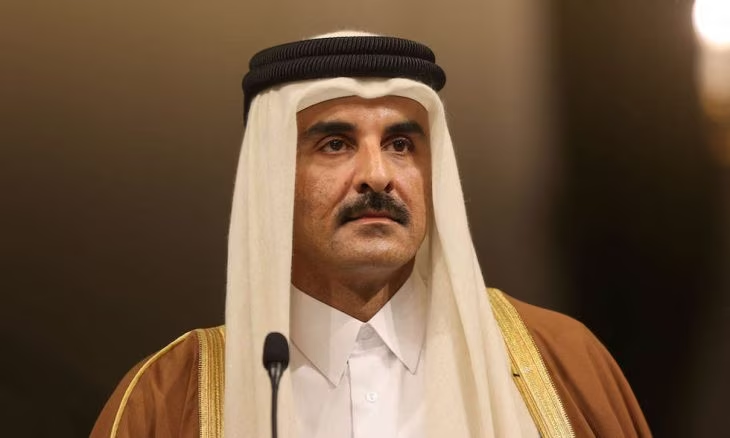
In this context, Sheikh Tamim bin Hamad Al Thani, the Emir of Qatar, engaged in extensive telephone consultations that included US President Donald Trump and a group of Arab and regional leaders, among them the King of Bahrain, the King of Jordan, the President of the UAE, the Saudi Crown Prince, the Egyptian and Turkish Presidents, in addition to the Pakistani Army Chief.
The telephone discussions focused on reviewing current developments in thorny regional issues, where leaders exchanged views on mechanisms for de-escalation and preventing the expansion of conflicts. Participants expressed their appreciation for the continuous coordination with the American side, while also commending the pivotal role played by Pakistan in bringing together the viewpoints of Washington and Tehran.
During the call, the Emir of Qatar stressed the necessity of intensifying joint diplomatic work among active countries to confront security and political challenges. He affirmed that dialogue and negotiation remain the only path capable of sparing the region the repercussions of military escalation and its dangerous effects on the stability and resources of peoples.
In a related context, Sheikh Mohammed bin Abdulrahman bin Jassim Al Thani, the Qatari Prime Minister and Minister of Foreign Affairs, held a call with his Kuwaiti counterpart to discuss ways to support the ongoing mediation. The meeting addressed strengthening bilateral cooperation and coordinating Gulf positions aimed at finding common ground for a sustainable peace agreement that ends the state of permanent tension.
For his part, Dr. Khalid Al-Jaber, Director General of the Middle East Council on Global Affairs, provided an analytical reading of the anticipated agreement, describing it as a 'temporary freeze' rather than a final settlement. He explained that the trust gap between the American and Iranian sides remains deep, especially concerning the nuclear program and roles of influence in the Middle East.
Al-Jaber indicated in his statements that what is currently happening is a process of reordering political priorities for each party; Washington seeks to avoid an uncalculated regional explosion, while Tehran is looking for a breather to alleviate suffocating economic pressures. The analyst believes that this de-escalation carries within it the seeds of future crises that may erupt when political circumstances change.
Analysis pointed out that the current truce might be linked to a specific timeline, such as the end of major international events like the World Cup, making it a 'situational truce'. He considered that American policy historically relies on the principle of managing escalation according to temporary interests, without reaching radical solutions that completely end the conflict with the Iranian regime.
Al-Jaber warned that American pressure tools, whether economic sanctions or political moves, might strongly return to the forefront once the current phase ends. In contrast, he believes that Iran will not easily give up the regional power cards it possesses, meaning that the possibilities of direct or indirect friction remain in the near future.
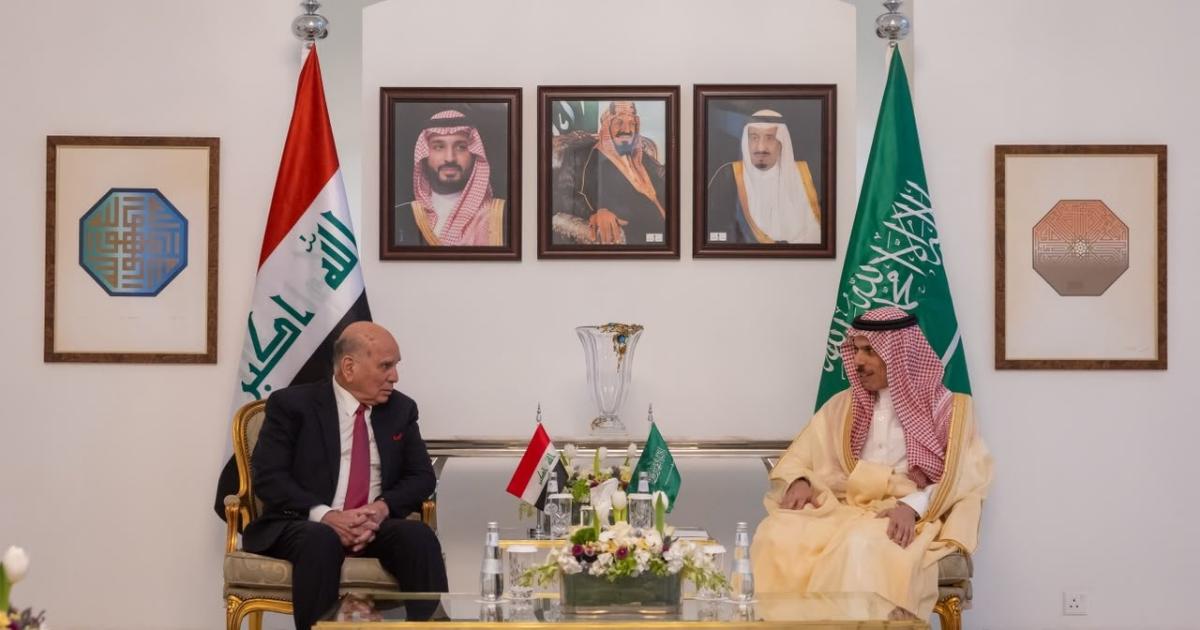
The political analyst praised the role played by Gulf countries, specifically Qatar and Saudi Arabia, in keeping communication channels open and preventing the collapse of the negotiation process. He affirmed that Gulf capitals fully realize that any military clash between Washington and Tehran would cost the region dearly on economic and security levels.
Despite the success in postponing the explosion, there is a Gulf understanding that the current agreement may not provide sufficient guarantees to prevent the return of tension. Therefore, Gulf countries are working to invest the current period of calm to strengthen their internal fronts and boost investment and economic sectors, while keeping all possibilities open to deal with any sudden escalation.
Al-Jaber described the next phase as a period of 'cautious calm' rather than permanent stability, as the region remains in anticipation of what the upcoming rounds will yield. The historical relationship between Washington and Tehran is characterized by recurring cycles that begin with de-escalation and end with a return to confrontation, leaving the region in a state of continuous waiting.
Sources reported that the recent Qatari moves come as a continuation of Doha's traditional role as a center for international mediation and resolving complex disputes. Through these efforts, Qatar seeks to create a balance that preserves the interests of all parties and prevents the region from sliding into security chaos that may not be controllable under current international circumstances.
In conclusion, the bet remains on the extent of the commitment of the concerned parties to the terms of the initial understandings and the ability of mediators to transform the 'temporary freeze' into a long-term political path. Nevertheless, the structural challenges in the American-Iranian relationship remain the biggest obstacle to achieving true and comprehensive peace that ends decades of mutual hostility.
The current agreement does not reflect a real end to the conflict as much as it reflects a temporary freeze of it, as the fundamental differences between Washington and Tehran still exist.
Share your opinion
Intensive Qatari moves to support mediation between Washington and Tehran amid warnings of a 'temporary truce'