






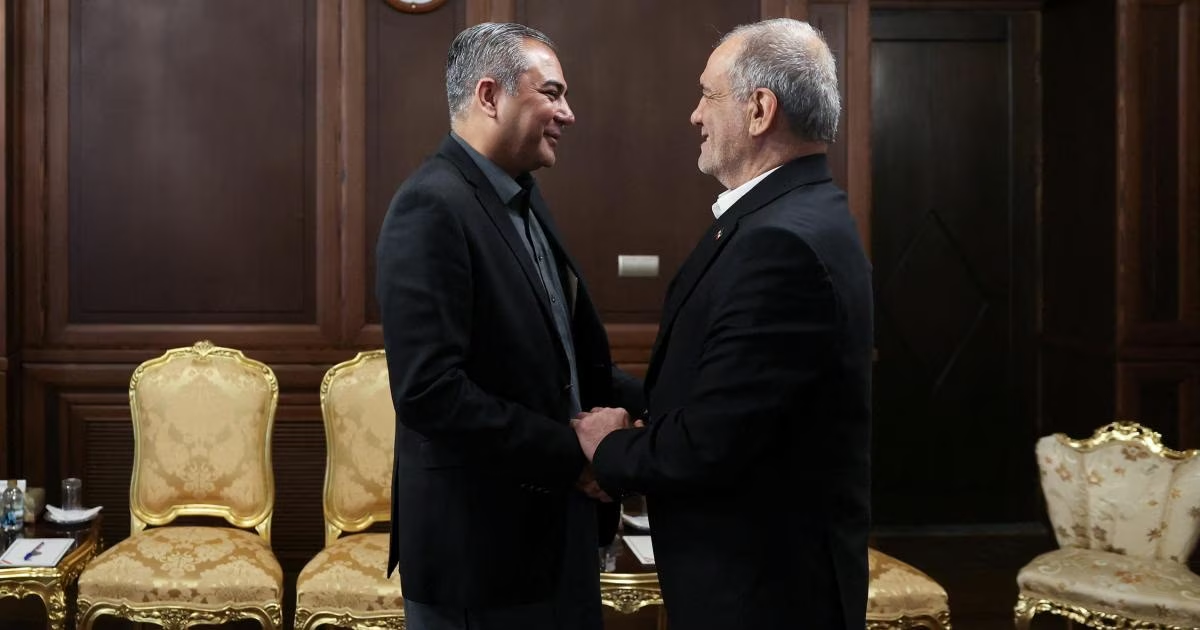
Pakistani Interior Minister Mohsin Naqvi arrived in the Iranian capital, Tehran, on a surprise official visit, less than two days after concluding his previous visit. Official sources reported that these shuttle movements reflect a state of diplomatic alert in Islamabad to deal with the rapidly evolving developments in the Iranian file.
Official circles in Tehran or Islamabad did not precisely disclose the Pakistani minister's agenda, but diplomatic sources indicated deep Pakistani concern about the possibility of resuming military operations. Through this visit, Pakistan seeks to solidify open channels of dialogue and prevent any breakdown in the current diplomatic process.
These movements come within the framework of mediation led by Pakistan and widely supported by China and regional and Gulf powers, aiming to pave the way for a comprehensive political settlement. Observers believe that Islamabad is trying to play the role of a bridge between Tehran and Washington to avoid war scenarios that could destabilize the entire region.
During his first visit, which lasted from Saturday to Monday, Naqvi held a series of high-level meetings, including with Iranian President Masoud Pezeshkian. He also held discussions with Parliament Speaker Mohammad Bagher Ghalibaf, who led his country's delegation in previous negotiation rounds with the American side in Pakistan.
These diplomatic movements coincided with Tehran's announcement of submitting its official response to the latest American proposals regarding the nuclear file and regional issues. In contrast, US President Donald Trump expressed his objection to those proposals, which increased the pace of tension and the need for mediators to intervene.
In a related context, the Iranian President sent reassuring messages to neighboring countries, emphasizing that his country's foreign policy is based on the principle of good neighborliness and regional cooperation. These messages come at a sensitive time when Iran is trying to neutralize regional fronts in the event of any direct confrontation with international powers.
In statements coinciding with the Pakistani minister's presence in Tehran, the US President revealed that he was about to make a decision to attack Iranian targets. Trump explained that he backed down from this military option at the last minute in response to mediations led by active Gulf states in the region.
Pakistani-Iranian discussions also covered sensitive security files related to securing the long shared border between the two countries, which extends for hundreds of kilometers. Tehran fears that Washington might exploit some separatist groups on the border to destabilize internal security, which Iran describes as terrorist movements.
On the economic front, Pakistan has played a vital role in alleviating the burden of the US naval blockade imposed on Iranian exports and imports. Islamabad has opened land trade corridors to facilitate the movement of goods, which has strengthened the robustness of bilateral relations in the face of continuous external pressures.
In Islamabad, the government maintains official silence regarding the details of the mission led by Naqvi, preferring to work away from the spotlight to ensure the success of the mediation. Pakistan aims through this move to provide a safe exit for both the Iranian and American sides, ensuring they save face and preventing a slide towards confrontation.
For his part, former Pakistani Ambassador to Tehran Asif Durrani affirmed that the visit holds exceptional importance in conveying mutual messages between Washington and Tehran. Durrani clarified that his country's role focuses on facilitating discussions and bridging divergent viewpoints, rather than exerting pressure on either party.
Pakistani diplomacy is making redoubled efforts to maintain the extension of the undeclared ceasefire and to try to reach a permanent political settlement. Islamabad realizes that any outbreak of war in its western neighbor would have catastrophic repercussions on its national security and its already struggling economy.
Islamabad has redoubled its efforts to find a solution to the conflict, as it believes that reigniting the war would be a disaster for everyone.
Share your opinion
Shuttle Diplomacy.. Pakistan's Interior Minister Returns to Tehran to De-escalate Tensions with Washington