







Dr. Mohammed Halsa: Netanyahu still possesses political tools that enable him to influence these movements, even though the opposition has taken a first step towards trying to gather its scattered and fragmented forces.
Dr. Adnan Al-Afandi: The upcoming elections are a pivotal station in determining the directions of Israel's internal and external policy, especially after the events of October 7th.
Mazen Al-Jaabari: Netanyahu monopolized executive power by transforming the Likud into a populist right-wing party, becoming a tool for passing a coalition agenda with small, extremist parties.
Wadih Abu Nassar: The upcoming elections involve many aspects that could be pivotal for the fate of Israel, and the formation of the government depends on the alliances that will emerge.
Dr. Thaer Abu Ras: The upcoming elections and their results depend on regional, international, and internal transformations, and an alliance between Ben Gvir and Smotrich is likely.. and the war on Iran is the most important variable.
Wadih Awawdeh: A set of factors reflects the complexity surrounding the upcoming elections, which may constitute a decisive turning point in the future of the Israeli political scene.
Exclusive to -
In light of the political and security transformations Israel has witnessed since October 7th, attention is turning to the upcoming Israeli elections as one of the most sensitive and complex stations in the history of the Israeli party scene. While Prime Minister Benjamin Netanyahu continues to face various internal and external issues, especially the repercussions of the war, corruption files, and questions related to his health after the announcement of his malignant tumor, specialists and observers, in interviews with "e", believe that the balance of power between the ruling coalition and the opposition remains close, emphasizing that the rise of right-wing discourse and the changes brought about by the war in the mood of the Israeli voter will make these elections a fateful battle that may redraw the political map in Israel, at a time when the possibilities of military escalation and new alliances remain crucial factors in determining their results.
No significant change despite Netanyahu's illness
Dr. Mohammed Halsa, a specialist in Israeli affairs, confirms that, even with the announcement of Benjamin Netanyahu's cancer diagnosis, no significant change has occurred in the political party scene regarding the upcoming elections, nor in the balance of power between the ruling coalition and the opposition bloc.
He adds: It is true that the opposition has taken a first step towards trying to gather its scattered and fragmented forces, but Netanyahu still possesses political tools that enable him to influence these movements, by playing on their ideological and political contradictions to serve his interests.
Al-Halsa adds that a political campaign has already begun targeting Yair Lapid and Naftali Bennett, where they are ridiculed within right-wing circles and portrayed as willing to ally with Arab parties, which is used to incite against them.
Al-Halsa continues, the alliance between Lapid and Bennett is presented in right-wing discourse as a product of Lapid's need for political survival in light of his declining popularity and his approaching below the electoral threshold, as well as Bennett's need to present himself as an opposition leader capable of competing with Netanyahu.
What if the opposition parties unite?
Al-Halsa emphasizes that, nevertheless, the scene is not yet complete, as the positions of Gadi Eisenkot and Avigdor Lieberman are still undecided. If they unite, as is being promoted in the Hebrew media, this will add a new and more serious challenge to Netanyahu. However, at present, there is still a kind of balance of power between the ruling coalition and the opposition, where the opposition cannot form a government coalition without the support of Arab parties, and it seems that it will not reach the threshold of 61 seats on its own, unless it allies with an Arab party (Mansour Abbas) as a presumed partner, otherwise the balance of the two Zionist camps means entering again into the cycle of successive election rounds.
Regarding Netanyahu's illness, Al-Halsa says that the latter is trying to overcome it propagandistically, by appearing in video clips exercising, in an attempt to show that he is in good health, which reduces the opposition's ability to exploit this issue politically. The issue of his trial also remains a present factor, although some see the illness as a potential entry point for a political settlement, especially in light of the pardon procedures not yet being initiated.
Netanyahu resorting to military escalation before the elections to give him a boost in the elections.
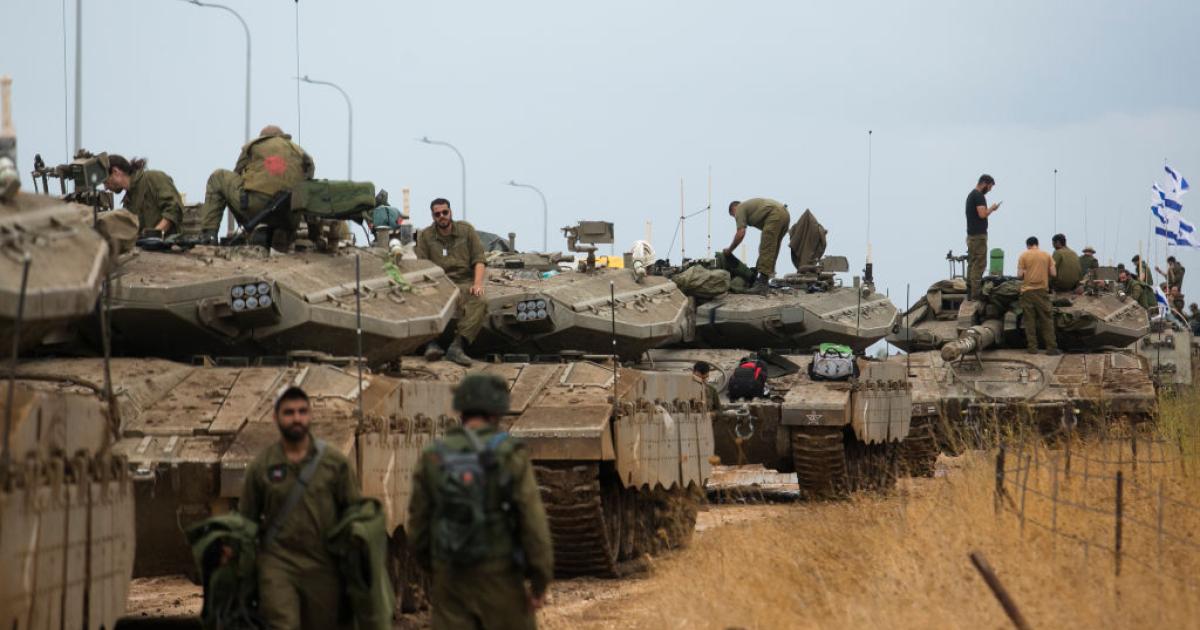
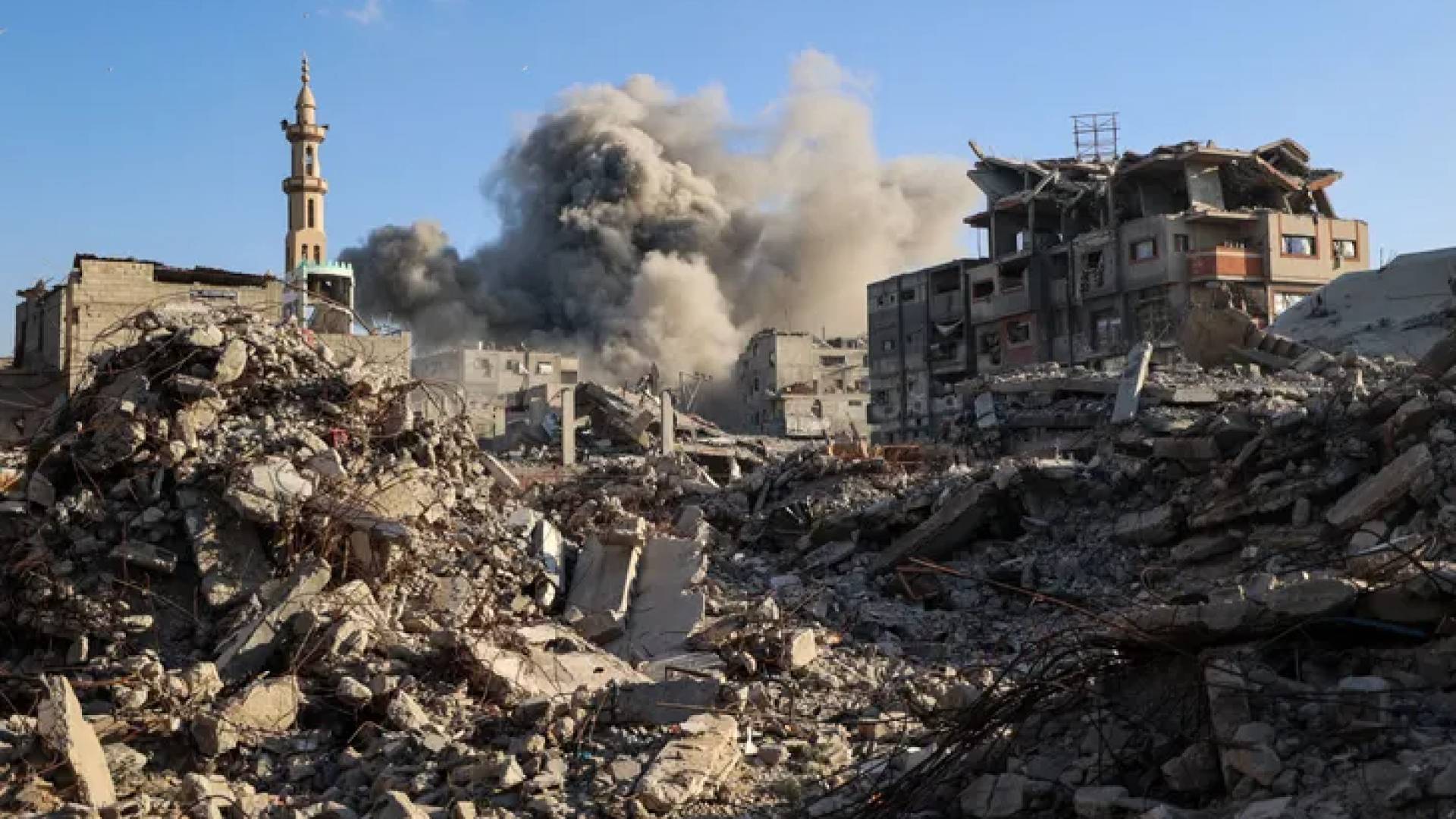
Al-Halsa confirms that, on the other hand, Netanyahu still has other options, including military escalation, whether in the Gaza Strip or Lebanon, in light of the continued regional tension, and perhaps also in the Iranian arena. It is not unlikely that he will resort to a major escalation before the elections, which may reach the point of expanding military operations in Gaza, with the aim of achieving a political or military achievement that will give him a boost in the elections.
Al-Halsa concludes that the scene of political alignments within Israel remains open to multiple possibilities, but the extent of their impact on the balances of the electoral map and its results remains limited according to what opinion polls within Israeli society have shown so far.
Pivotal station
Dr. Adnan Al-Afandi, a specialist analyst in Israeli affairs, believes that the upcoming Israeli elections in Israel are a pivotal station in determining the directions of Israel's internal and external policy, especially after the events of October 7, 2023.
He says that these events constituted a priority for the Israeli voter and what followed October 7th, such as the war with Lebanon and Iran, and the impact of these events on the Israeli voter's point of view.
Al-Afandi emphasizes that voter behavior is one of the most important factors determining election results in Israel, especially in a political system based on party pluralism and proportional representation, noting that voter behavior in Israel reflects an interaction between security, social, economic, and ideological factors.
Al-Afandi points out that October 7th will have a great impact on the Israeli voter through all factors, especially the security and ideological factors, because the religious ideological aspect among Israelis has greatly increased in the last two years, in addition to the security factor, which has become a basic demand for security in Israel, especially after the war with Iran and the extensive rocket attacks on Israeli cities, and in addition to the economic situation that has affected Israelis due to the recent wars, especially with Iran and Hezbollah, all of which will have an impact on voter behavior in Israel.
Israeli right still maintains its alliance
Al-Afandi believes that this will be in favor of the far-right alliance formed by Benjamin Netanyahu, explaining that this alliance is cohesive because its formation is from the most extremist government since the establishment of the entity, and Netanyahu's latest statements, even about the political process and the Palestinian situation, were clear that there would be no political path with the Palestinians. I believe all these matters satisfy the mood of Israelis who will lean towards the far right, therefore
Al-Afandi believes that the Israeli right still maintains its alliance as a result of the clear extremism among the majority of Israeli society after October 7th, and that the map of alliances within the right will be stronger than other alliances in the opposition. Also, as a result of the continuous increase in the relative weight of the ultra-Orthodox Haredi Jews and religious Jews, and also the rise of movements such as Religious Zionism, which will work to strengthen the alliance with the right more strongly than before, and it is worth noting that this alliance has historically existed between Haredi parties and the right for a long time.
Al-Afandi confirms that Benjamin Netanyahu's coalition and government are still cohesive to the utmost extent, despite the revelation of Netanyahu's malignant tumor, and despite the opposition parties having directed and continuing to direct criticism at the hardline right-wing government led by Netanyahu regarding the management of recent wars and the political situation. All these criticisms are confined to the management of the war in general and do not oppose the war itself.
Al-Afandi believes that the map of alliances clearly shows that the right-wing alliance led by Netanyahu will be the strongest, representing the far-right current, in contrast to a center-right current led by Naftali Bennett, which will oppose Netanyahu and his project.
Radical change in political and military realities
Mazen Al-Jaabari, a writer specializing in Israeli affairs, says: The upcoming elections in Israel are fateful elections in which the conflict intensifies, especially after the revelation of Benjamin Netanyahu's malignant tumor.
He adds, this time, the elections do not seem like previous ones, as the political and military reality has radically changed after October 7th, and the revelation of the illness added another complex dimension, making the Knesset battle a referendum on the life and rule of a man who dominated the scene for more than a decade and a half.
Al-Jaabari believes that the main focus of these elections will be the overthrow or survival of Netanyahu, which is the same essence that dominated the recent election rounds in Israel, but this time with the difference that Netanyahu no longer has the cover of a strong security man, after the failure of October 7th and the leaks about his health condition.
Al-Jaabari confirms that since 2009, Netanyahu has been the first prime minister after Ben-Gurion to rule for the longest continuous period, breaking records in Israeli politics. He adds that during this period, he was able to rally the Zionist right and religious movements in his government, placing them in key decision-making positions, from the Haredi budget to the settlement file and also internal security. He monopolized executive power in Israel by transforming the Likud party into a populist right-wing party, but in essence, it became a tool for passing a coalition agenda with small extremist parties that control its decisions and survival. This transformation would not have happened without a radical change in the joints of governance, where professional competencies were replaced by political loyalties.
Al-Jaabari points out that the differences within Israeli society, especially those resulting from attempts to subjugate the judiciary to the right-wing government, have created an irreparable rift. The appointment of most security officials and decision-making circles from right-wing supporters has brought about a structural change within decision-making institutions, where the army, intelligence, and police have become subject to purely political considerations.
Al-Jaabari believes that this situation led the state after October 7th to radical transformations, which were not limited to managing the war in Gaza, Lebanon, and Iran, but also affected the nature of the state itself. The conflict between the religious and the liberals reignited, with liberals accusing the religious right of dismantling the army through exemption from conscription laws, while the religious believe that liberals are exploiting the war to impose extreme secularism.
Al-Jaabari confirms that the alliance of Yair Lapid and Naftali Bennett from the Israeli opposition, and the possibility of forming a broad opposition front with Gantz and Eisenkot for the elections with the support of Mansour Abbas from the United Arab List, is the most likely scenario to turn the tables. He points out that Mansour Abbas, who previously formed a lifeline for the Bennett-Lapid coalition, today finds himself in a position of strength, where he sets his conditions for supporting any camp, which is the biggest challenge for Netanyahu.
Al-Jaabari believes that the probabilities of the upcoming elections are limited to two options: either the removal of Netanyahu and the formation of a transitional government, or the conflict turning violent if the far-right (led by Ben Gvir and Smotrich) refuses to give up its gains achieved during the last three years, especially control over the judiciary and security positions.
Netanyahu's illness, the continuation of corruption trials, and his abysmal failure to achieve any military or political resolution are all factors that will inevitably increase the chances of opponents to overthrow him.
Al-Jaabari concludes that Netanyahu's illness, the continuation of corruption trials, and his abysmal failure to achieve any military or political resolution as he promised in Gaza, Lebanon, and Iran, are all cumulative factors that will inevitably increase the chances of opponents to overthrow him. But the real question is not just "Will Netanyahu fall?", but what will happen after his fall? In a state whose institutions have been transformed and engineered for the benefit of one man, the vacuum he will leave may be more dangerous than his continued presence.
The elections involve aspects that may be pivotal
Wadih Abu Nassar, an analyst specializing in Israeli affairs, confirms that the upcoming Israeli elections involve many aspects that could be pivotal for the fate of the State of Israel.
He adds: The first aspect concerns Benjamin Netanyahu and his position. While it is true that he announced suffering from health problems, the major problem lies in his pursuit of remaining prime minister despite the ongoing trial against him, especially in light of an offer from the Israeli president to reach a deal between Netanyahu and the prosecution. On the other hand, the government's legal advisor insists that any deal must effectively include Netanyahu's withdrawal from political life.
Abu Nassar points out that there are no direct elections in Israel, and therefore the formation of the government depends on the alliances that will emerge after the elections. This path is fraught with many complexities, especially since opinion polls so far indicate that neither of the two camps, whether pro-Netanyahu or anti-Netanyahu, is able to form a government coalition without support from the other side or the inclusion of at least one Arab party.
Abu Nassar explains that an additional problem is that the vast majority of Zionist parties, especially the right-wing ones, are preoccupied with rejecting the legitimization of Arab participation, which is a very serious matter.
Abu Nassar says that the third problem with the election results is the question of whether the far-right, led by Netanyahu, will accept them. Some doubt this, believing that if this camp loses, it may resort to challenging the integrity of the Central Elections Committee. In this context, the resignation submitted by Orly Adas, the Secretary-General of the Central Elections Committee two days ago, was not surprising.
The indicators seem to be, despite everything, in favor of Netanyahu in particular, and in favor of the right in general.
Abu Nassar confirms that there is also a present security dimension, as Netanyahu is likely to resort to some escalation before the elections, which may affect their results and push towards further rightward shift. So far, the indicators seem to be, despite everything, in favor of Netanyahu in particular, and in favor of the right in general.
Elections contingent on regional, international, and internal transformations
Dr. Thaer Abu Ras, a political analyst specializing in Israeli affairs, believes that the upcoming elections in Israel and their results will be contingent on regional, international, and internal transformations related to Israel.
He says, if we talk about regional transformations, the war on Iran is the most important variable in this context. Until this moment, it seems as if the American-Israeli project in Iran has failed, which negatively reflects on Prime Minister Benjamin Netanyahu, as he initiated this war.
Abu Ras adds: Netanyahu has always spoken, for many years, about the only solution to confront Iranian influence in the region being a war led by the United States. After years, he got what he wanted, as Israel's strategic situation worsened. Israel is also globally accused of facing a worsening economic crisis, in addition to a decline in its ability to establish its position in the region.
Abu Ras confirms that before the war on Iran, Israelis spoke of themselves as the coming dominant power in the region, but now the talk has begun to shift towards Iran potentially emerging stronger from this war, especially if it reaches an agreement that lifts sanctions, which will further weaken Israel and negatively reflect on Netanyahu in the elections.
Netanyahu has not succeeded in making significant progress
Abu Ras points out that opinion polls show that since the outbreak of this war, Netanyahu has not succeeded in making significant progress; on the contrary, his standing has relatively declined. Therefore, the regional variable is an important factor, as is the international variable, especially if the world enters an economic crisis, particularly with the current energy crisis contributing to rising living costs globally, including within Israel. If these crises are not contained, they will negatively reflect on the Israeli government.
Abu Ras confirms that Israel has not achieved success either in the war on Iran or in controlling internal economic conditions, especially regarding the cost of living. In addition, internal changes that have recently become clear are emerging, most notably the alliance between Naftali Bennett and Yair Lapid, which strengthens Bennett's position as a main competitor to Netanyahu for the prime minister's office.
He points out that this does not mean that Bennett is the confirmed candidate, but he is the most favored compared to the rest of the party leaders seeking to replace Netanyahu. He also expects the political arena to witness additional alliances, whether between Avigdor Lieberman and Gadi Eisenkot, or the possibility of one of them joining the Bennett-Lapid alliance. If an alliance is formed between the Arab parties, this could, according to opinion polls, lead to the withdrawal of at least two seats from Netanyahu's camp, which will weaken him further.
Abu Ras, on the other hand, expects Itamar Ben Gvir to ally with Bezalel Smotrich, especially since opinion polls indicate the difficulty for Smotrich to cross the electoral threshold on his own. The most prominent question remains about the possibility of forming an alliance between the Arab parties, as if this happens, it could, according to opinion polls, lead to the withdrawal of at least two seats from Netanyahu's camp, which will weaken him further.
Abu Ras concludes that the picture remains unclear, especially with about five months remaining until the elections, but these three variables: regional, international, and internal, will remain the decisive factor in determining the final results.
Fateful elections
Wadih Awawdeh, a political analyst specializing in Israeli affairs, believes that these elections are indeed fateful. Every time it is said that the elections are fateful, but this time it truly seems so for the hardline Zionist right, and for Benjamin Netanyahu in particular, for two main reasons.
The first reason is the extent of internal pressures and increasing criticism, in light of issues such as widespread corruption, escalating violence, declining governance, in addition to the accusations against Netanyahu. All of this weakens the chances of the ruling coalition, which is accused of failure at the internal level, posing a significant challenge to it.
The second reason relates to the external file, as the open fronts since October 7th have not yet been resolved, and an impression is forming among Israelis, Arabs, and the international community that Israel has not achieved a decisive victory, neither in Iran nor in Lebanon, and that the bleeding continues. There is also widespread criticism of the absence of a political component for solutions, the excessive reliance on military force, in addition to the arrogant discourse that has created a gap between expectations and reality.
Awawdeh confirms that the confrontation in Lebanon seems different from what it was previously, as Israel no longer moves freely as in the past, in light of new deterrence equations. He points out that with the entry of drones into the confrontation, a state of frustration and disappointment escalated within Israel, especially with the feeling that political and military decisions are greatly influenced by the United States, raising questions about the independence of Israeli decision-making.
Replacing Netanyahu's image with Trump's image
Awawdeh says: This was reflected in symbolic positions, such as replacing Netanyahu's image with that of the American president in some offices, indicating the extent of external influence. Opinion polls also indicate a decline in Netanyahu's standing and the possibility of his loss, which reinforces the description of these elections as fateful for him.
He adds: This is also related to Netanyahu's image, which he sought to consolidate over the years, as the "security man" and the maker of major transformations in the Middle East, but this image today faces major challenges, with increasing doubts about his ability to fulfill these promises.
Awawdeh believes that if Netanyahu leaves the premiership, it will not be an ordinary event, given the length of his rule compared to most of his predecessors, which will leave a significant impact on the Israeli political scene. Therefore, Netanyahu is fighting a decisive battle to maintain his position and his political legacy in the memory of Israelis, especially since he belongs to a family that cares about writing and documenting history.
A state of sharp division
Awawdeh addresses the internal situation, saying: Israel is witnessing a state of sharp division, with intense debate about Netanyahu's performance, whether regarding the management of the war, internal and external affairs, corruption issues, or maintaining the state's prestige and independence of its decision. Other contentious issues also arise, such as the Haredi issue, which is a sensitive issue in light of the war and multiple fronts.
Regarding his health, Awawdeh says Netanyahu may try to use it politically, either to gain sympathy or to justify some of his decisions. Some also raise the possibility that he might use this issue as a political exit if he feels that his chances of remaining in power are diminishing, by withdrawing from the scene under the pretext of illness, which could open the door to a legal settlement ending his prosecution.
He adds: On the other hand, some opinions within Israel go to other scenarios, including the possibility of questioning the election results if he loses, or even seeking to postpone them by extending the state of emergency, although these scenarios remain controversial and some dismiss them, but they are raised in political discussions within Israel.
Awawdeh concluded by saying: "These factors combined reflect the complexity surrounding the upcoming elections, which may constitute a decisive turning point in the future of the Israeli political scene."
Share your opinion
The Upcoming Elections.. A Fateful Battle That May Redraw Israel's Political Map