






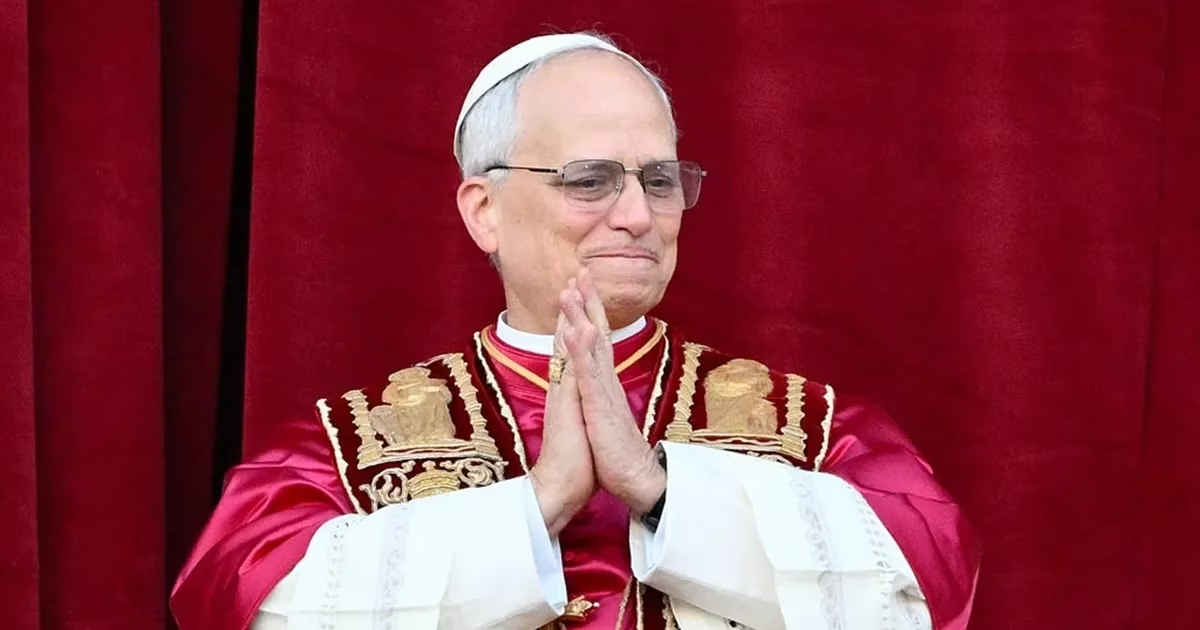
The relationship between the Vatican and the White House has entered a dark tunnel of open confrontation, where the conflict is no longer merely a difference in political views, but has transformed into a deep clash of values. This tension became clearly evident after the sharp criticisms directed by Pope Leo XIV at US President Donald Trump, against the backdrop of his violent threats towards Iran, which placed religious values in direct opposition to extreme nationalist tendencies.
The US President had caused global shock when he wrote on social media platforms phrases suggesting comprehensive annihilation, indicating that an entire civilization could perish in one night. This condescending rhetoric, described by observers as reflecting megalomania, prompted the global conscience to act, as diplomatic sources considered such written statements to express a conscious will and not merely a fleeting slip of the tongue.
For its part, the Vatican was quick to respond, with Pope Leo XIV, the first Pope of American origin, affirming that threatening peoples with annihilation is morally and humanly unacceptable. The Pope emphasized in his statements that the matter goes beyond the complexities of international law to reach the essence of morality, calling for the protection of civilians, children, and the elderly from the ravages of wars that begin with irresponsible verbal escalation.
The reaction from the White House was swift and abrupt, with Trump describing the Pope as a 'very bad' person and accusing him of weakness, a move analysts considered unprecedented in the history of relations between Washington and the Holy See. This spat not only angered the Vatican but also raised concerns within the US administration and among Washington's allies who saw Trump's statements as a threat to international peace and security.
Historians and commentators believe that Trump's methods of using 'violent language' and targeting minorities intersect with historical populist narratives witnessed in the last century. While Trump derives his legitimacy from an electoral democratic system, the Pope represents a spiritual authority for nearly one and a half billion Catholics worldwide, making the clash between them a global ideological polarization par excellence.
The election process of Pope Leo XIV, which took place through the closed conclave of cardinals in the Sistine Chapel, had carried great hopes for promoting global peace. Although Trump initially congratulated the Pope on his 'Truth Social' platform, expressing pride in him being the first American Pope, this welcome quickly evaporated in the face of differing visions on issues of immigration, wars, and social justice.
The Pope's criticisms were not limited to the Iranian file but extended to warning against the danger of democratic systems sliding into what he described as 'the tyranny of the majority'. In a message addressed to participants in a meeting at the Vatican, the Pope affirmed that democracy cannot remain sound unless it is rooted in moral values that protect the rights of all, not just those who hold power or the numerical majority.
During an African tour that included Cameroon, the Pope sharply criticized foreign powers that plunder the continent's wealth, considering them a primary cause of widespread poverty. These statements were seen as an indirect attack on the imperialist system adopted by the current US administration, further intensifying the polarization between the Vatican and Washington on foreign policy issues.
JD Vance, the US Vice President, entered the confrontation defending the administration's policies, considering that the Pope erred in his theological interventions concerning the use of force. Vance demanded that the Pope exercise caution when discussing matters related to national security, reflecting a deep gap in understanding the role of religious institutions in guiding public policies.
Adding to the Christian anger towards Trump was his posting of an expressive image showing him in a position suggesting an embrace from 'Jesus Christ', which many considered a desecration of religious symbols and blatant political exploitation. Although Trump enjoys a wide Christian electoral base, this move angered conservatives who saw it as crossing all moral and religious red lines.
Reports indicate that this ongoing spat could erode Trump's popularity among American Catholics who view the Pope as a supreme authority. With increasing criticism of his management style and his disregard for human values, the possibility of Congress moving to interrogate him has begun to loom, amid fears that his policies could lead to complete international isolation for the United States.
This difficult historical era puts the relationship between religion and politics to the test, where values of peace and dialogue clash with tendencies of bullying and destruction. It seems that the coming years will witness more ideological interaction that may reshape political trajectories in the West, amidst urgent calls for the emergence of wise leaders who prioritize humanistic tendencies over narrow interests.
Today, as everyone knows, a threat has been issued to the Iranian people, and this is truly unacceptable; it is a moral issue concerning the well-being of an entire people.

Share your opinion
Clash of Values and Politics: An Open Confrontation Between the Vatican and the White House Threatens Trump's Future