






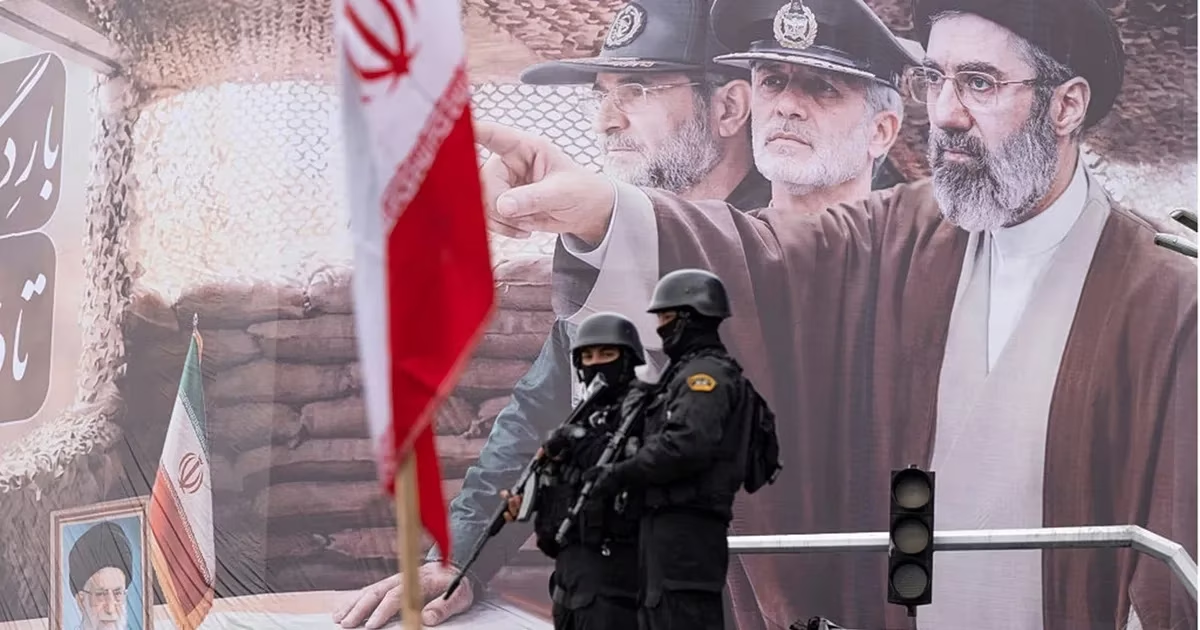
International media sources reported that the American Central Intelligence Agency (CIA) and the Israeli Mossad are in a state of high alert, attempting to understand the current leadership structure in Tehran. Monitoring operations during the Nowruz holiday focused on observing any public appearance of the new Supreme Leader, Mojtaba Khamenei, who was expected to follow his late father's tradition of delivering a public speech. However, the mystery deepened after only a written statement was issued on his behalf, without a physical appearance.
Intelligence information available to Washington and Tel Aviv indicates that Mojtaba Khamenei is still alive, despite doubts surrounding his physical condition and actual whereabouts. Sources confirm that attempts by Iranian officials to arrange direct meetings with him have failed, which security agencies attribute to strict precautionary measures imposed by the deteriorating security situation in the country.
In light of this absence, the American National Security team is working to assess who is actually running affairs in Tehran, with an American official stating that the situation appears strange and complex. The official explained that the lack of evidence of Mojtaba exercising leadership duties raises questions about who is issuing military and political orders at this critical stage of the conflict.
Joint intelligence assessments had indicated that Ali Larijani, a prominent security official, was the de facto leader and primary mover of the Iranian state recently. However, Larijani's assassination last Tuesday created a new void in Western analyses regarding the center of gravity in Iranian decision-making, further complicating the intelligence landscape.
Sources quoted officials in the occupation authorities as saying that senior Iranian leaders have adopted complex disappearance strategies, constantly moving between unknown safe houses. Reports also confirmed that the Iranian leadership completely avoids using digital communications, fearing tracking and assassination operations that have targeted a number of military and political officials recently.
Despite the existing security threats, Iranian President Masoud Pezeshkian appeared in a video message for Nowruz, which observers considered a disturbing sign given Mojtaba Khamenei's failure to use this opportunity to appear and consolidate his legitimacy. Analysts believe that this disappearance may reflect either a critical health condition or an overly cautious security strategy to avoid the fate of assassinated leaders.
On the ground, the military confrontation enters its eighteenth day with widespread destruction affecting about 15,000 civilian and military infrastructure sites in Iran. In return, Tehran continues to assert its full sovereignty over the Strait of Hormuz, threatening global energy supplies passing through this vital waterway, which accounts for about 20% of the world's oil needs.
In a related context, tensions are escalating on the Lebanese front, where the occupation army has mobilized more than 100,000 soldiers, coinciding with the displacement of one million Lebanese from southern areas due to intensive raids. These developments coincide with increasing popular opposition within the United States to the ongoing war, with the percentage of those rejecting the continuation of the conflict exceeding two-thirds, according to recent polls.
Missile confrontation continues between the two sides, with Iran launching 'Nasrallah' type missiles towards vital facilities in Haifa, while Hezbollah continues to carry out complex attacks with missiles exceeding 300 kilometers in range. Amidst the strict military censorship imposed by the occupation on its losses, questions remain about the ability of the parties to continue this violent escalation that began in late February.
It's very strange, we don't think the Iranians would go to the effort of choosing a dead person as Supreme Leader, but we have no evidence that he is actually in charge.
Share your opinion
Mystery surrounds the identity of the decision-maker in Tehran, amidst American-Israeli intelligence alert