







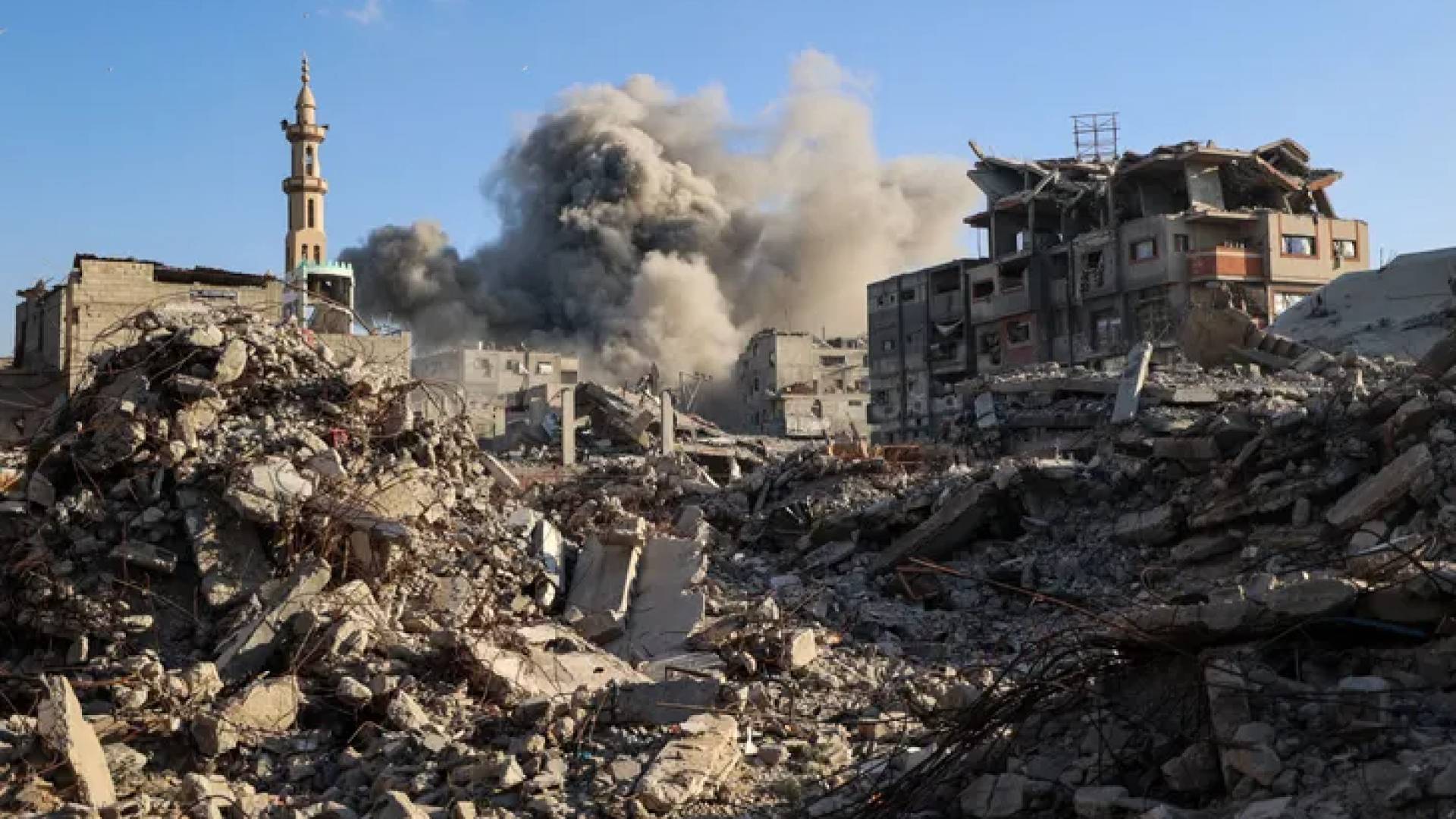
The scent of Eid cookies wafts from the rooms of the displaced at the Al-Amal Institute for Orphans in central Gaza City, but it brings no joy to eleven-year-old Ghazal Al-Kabariti. This scent now evokes sad memories of a family and a home of which only rubble remains, after Ghazal lost her parents and four siblings in a raid that targeted their displacement site.
Ghazal describes her state on Eid with brief words, saying 'No Eid.' The occasion that once meant her father's voice and her mother's laughter has completely vanished. On January 29, 2024, an Israeli raid destroyed the girl's life in the Al-Rimal neighborhood, making her the sole survivor among twenty members of her family.
Ghazal now lives with her elderly grandmother, who holds Egyptian citizenship and is trying hard to compensate her granddaughter for the immense loss. The grandmother bitterly says that she has nothing to offer but her embrace, expressing her helplessness in the face of the needs of a child who lost all elements of safety and joy at an early age.
In another aspect of the tragedy of orphanhood, the story of Nibal Halayqa, who is not yet seventeen, stands out. She suddenly found herself in the role of a surrogate mother. Nibal, who lost her parents and older sister in a bombing that targeted the Al-Shuja'iyya neighborhood, now bears the daily life details of her four younger siblings.
Nibal says she was forced to accept the description 'orphan' despite hating the word, as she abandoned her teenage dreams to care for her siblings. She is the one who wakes them up, feeds them, washes their clothes, and even the Eid clothes that her parents used to buy, she now searches for them in the exhausted markets to make her little ones happy.
Nibal faces challenges beyond her years. She tries to preserve family traditions that disappeared with her mother's passing, such as cooking 'feseekh' and ma'amoul. Despite her lack of experience in these rituals, she enlists the help of her neighbors in the shelters to try to create an atmosphere similar to what they lived before the war.
Behind Nibal's strong facade hides a deep pain, which she expresses by saying that parents cannot be replaced in any way. The girl misses having sisters to confide in, and she asserts that constant worrying about her siblings' future deprives her of sleep, in a reality that lacks the most basic elements of stability.
In the adjacent rooms, the tragedy repeats with Umm Hussam, who cares for three of her orphaned grandchildren. The children only cry whenever they see preparations for Eid. The grandmother recounts that the children do not ask for toys or clothes, but rather insist on asking about their parents who died under the rubble of their homes.
Nidal Jarada, director of the Al-Amal Institute for Orphans, indicates that the nature of work at the institution, which was founded 77 years ago, has changed dramatically. The institute, which used to receive orphans individually, has now become a shelter for thousands of displaced people, where orphans live with their remaining relatives in cramped spaces lacking privacy.
Figures released by the institute reveal an unprecedented humanitarian catastrophe, with approximately 47,000 new orphans registered during the current war of extermination. The total number of orphans in the Gaza Strip is estimated to be between 65,000 and 70,000 children, a figure that reflects the extent of social devastation left by the aggression.
Among these orphans, more than 4,000 children have lost both parents, leaving them adrift without direct support. More than 3,000 children have also lost their mothers, which doubles the suffering of extended families trying to fill the emotional and material void amidst harsh living conditions.
Psychological specialist Safaa Hijazi explains that double orphans suffer from a 'severed sense of security,' making them susceptible to conflicting emotions of sadness and guilt. A child in Gaza may feel guilty if they try to be happy on Eid, as if their joy represents a betrayal of the memory of their deceased parents.
These children suffer from severe psychological symptoms including nightmares, hypervigilance, and sudden fits of anger resulting from successive traumas. Hijazi believes that the absence of usual Eid customs increases psychological tension, emphasizing the need to provide a safe environment that acknowledges their feelings and supports them.
These humanitarian tragedies come at a time when official data indicates the martyrdom of 72,000 Palestinians and the injury of approximately 172,000 others since October 2023. Most of these victims are women and children, leaving a deep wound in the fabric of Palestinian society that will take generations to heal.
Parents cannot be replaced... I am an orphan of both parents, and although I hate this word, I was forced to say it.
Share your opinion
Gaza's Orphans on Eid: Childhood Burdened by Responsibility, Memories of Loss Haunt Survivors