






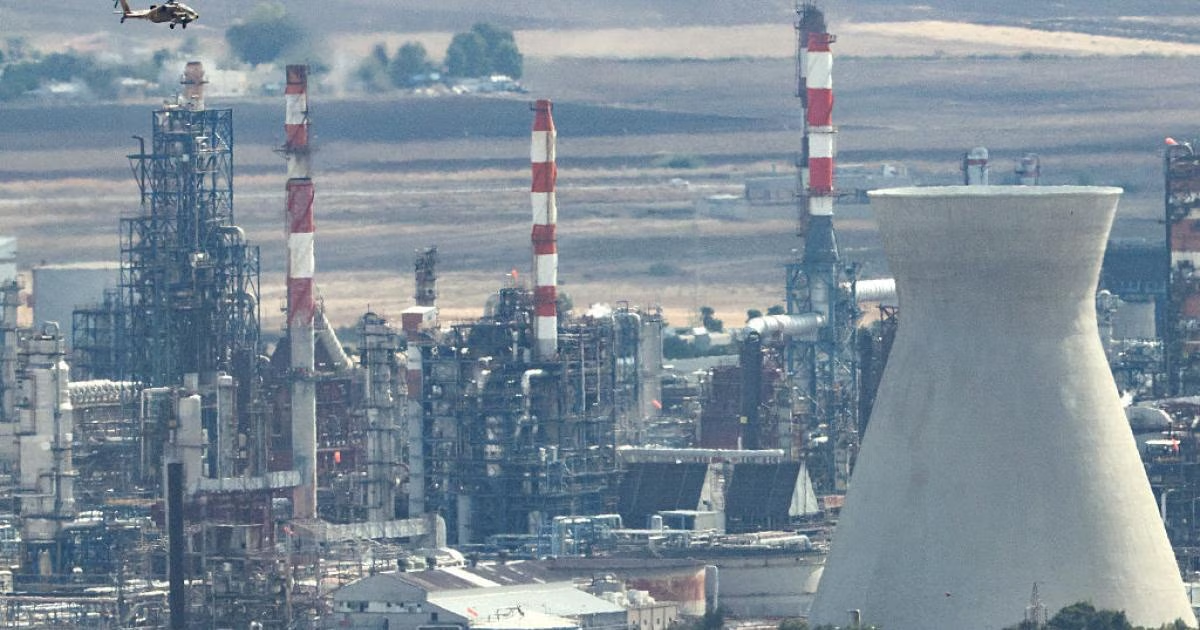
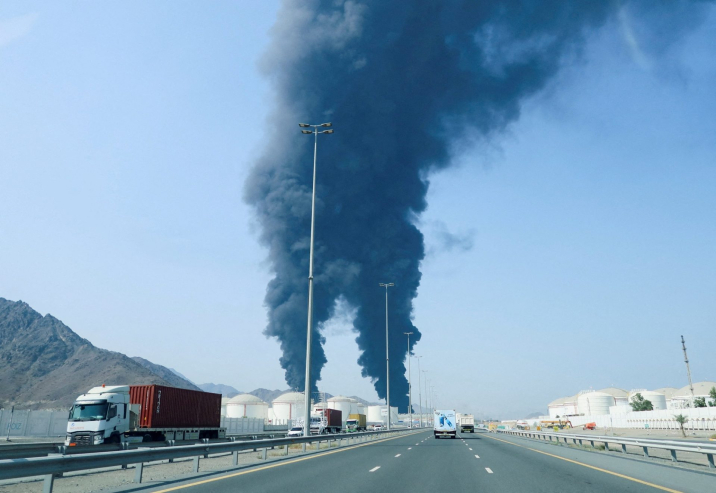
The occupied city of Haifa and its surroundings were subjected to an intense Iranian missile attack today, Thursday, directly targeting the strategic petrochemical plant in the Bay area. Field sources confirmed that the bombardment led to an immediate power outage in large parts of northern Israel, while columns of black smoke rose to cover the sky of the vital industrial zone.
Israeli military censorship imposed strict media blackout on the details of the attack, preventing the publication of any information related to the extent of the damage inside the petrochemical facility. This step comes amidst Israeli fears of the repercussions of revealing damage to energy infrastructure on the home front and the state of panic among settlers in the north.
For his part, the Israeli Minister of Energy tried to reassure the public with brief statements, claiming that the damage to the electricity grid in the northern areas remained limited. Despite these statements, circulating videos showed the scale of the massive explosions that rocked Haifa Bay, indicating direct hits on sensitive facilities.
Israel's home front witnessed a state of maximum alert, as sirens blared across wide geographical areas estimated at about 60% of Israel. The warnings included the Jerusalem and Greater Tel Aviv areas and coastal cities, extending to West Bank settlements, forcing millions to descend into shelters.
Media sources from within Tel Aviv reported a systematic policy of concealment followed by the authorities regarding human and material losses resulting from the recent missile barrages. A significant decline was observed in the military establishment's boasting about the interception rates of defensive systems, which was a prominent feature in previous attacks on the country.
Field data indicates a clear gap in the announced figures, as ambulance crews monitor injuries and panic attacks immediately after the explosions that do not subsequently appear in official data. The Israeli Ministry of Health only issues a delayed morning toll reporting dozens of injured, without directly linking them to the nature of the targeted sites.
The Iranian missile attack coincided with a parallel escalation launched by Hezbollah from southern Lebanon, targeting the Galilee and border areas with a barrage of shells and rockets. This field coordination placed Israeli air defenses under immense pressure, reducing the efficiency of interception operations in several strategic axes.
The targeting of the petrochemical plant in Haifa is considered a qualitative development in the course of the confrontation, especially since the area contains highly sensitive oil and chemical facilities. Iran had previously placed this area within its target bank, having previously targeted the Haifa oil refinery in June of last year.
Amidst this escalation, a state of anticipation prevails for what the coming hours will bring, especially with military censorship continuing to withhold information about the damaged sites. Observers believe that Israeli silence reflects the extent of military embarrassment in the face of the accuracy of the hits that affected facilities that were supposed to be fortified with advanced defensive systems.
Missile barrages continue to launch from Iranian territory towards the Israeli interior, amidst reports of new waves of bombardment that may target other economic and military centers. Haifa Bay remains the hottest spot in this conflict, given its industrial weight and the danger of the materials stored in its facilities, which are now at the mercy of the flames.
Damage to the electricity grid in the north is limited, but military censorship imposes strict restrictions on the details of targeting vital facilities.


Share your opinion
Iranian Missiles Strike Petrochemical Facility in Haifa Amidst Israeli Military Censorship