







US President Donald Trump faces a complex strategic situation in his military confrontation with Iran, making repeated victory declarations seem premature and inconsistent with the reality on the ground. Analytical sources indicated that the war has gradually begun to spiral out of control, with increasing regional and international repercussions posing challenges that exceed the ability to achieve a quick resolution.
Trump had explicitly declared a complete victory last Wednesday, claiming that the battle was decided in its first hour, but facts on the ground indicate that increasing complexity casts doubt on this political narrative. Observers believe that the desire to market a quick victory to the American public clashes with geopolitical and economic obstacles that were not taken into account at the start of military operations.
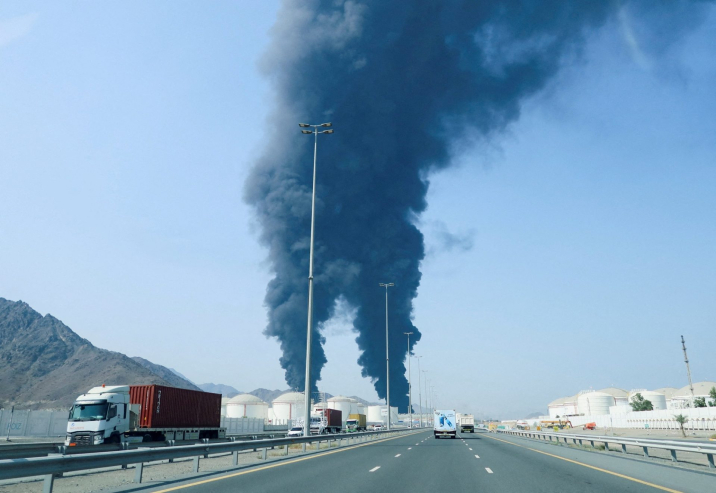
The issue of the Strait of Hormuz closure by the Iranian side is one of the most prominent reasons hindering the declaration of victory, as the strait represents the lifeline for global oil supplies. Forcibly reopening this waterway is not an easy task, and attacks on tankers have sharply raised fuel prices and insurance costs, casting a shadow over the global economy.
The fundamental dilemma is that the challenges posed by Tehran are political in nature, not just military, which makes solutions based solely on force insufficient. Even if Washington succeeds in temporarily securing navigation, it would require a permanent and costly military presence that could exhaust Western fleets already suffering from the pressures of continuous operations.
Although joint US-Israeli airstrikes have achieved tactical successes, such as weakening drone capabilities and destroying missile platforms, these results do not amount to a strategic victory. The ability to inflict damage on military infrastructure does not necessarily mean paralyzing the Iranian state's ability to respond or maneuver in other arenas.
Regarding Iran's internal situation, the continued normal functioning of government institutions has weakened American bets on an imminent collapse of the regime. Despite reports of the Supreme Leader's absence, the rise of a new leadership represented by Mojtaba Khamenei could lead to the adoption of more hardline and confrontational policies, rather than succumbing to pressure.
The fourth reason complicating the scene is Washington's inability to dictate a timeline for ending the war, especially with differing calculations between the American administration and the Israeli government. While Trump seeks a quick end to serve his electoral agenda, Israel tends to view the conflict as a long-term battle aimed at a fundamental change in regional power balances.
On the nuclear front, the Iranian file still poses an ongoing threat, with international reports indicating that Tehran may retain a stockpile of highly enriched uranium in fortified facilities. This means that the ability to resume the nuclear program has not completely ended, despite the intensity of airstrikes targeting declared sites in recent weeks.
Expectations promoted by the American administration regarding the possibility of a widespread popular uprising overthrowing the regime from within as a result of the bombing also failed. Instead, analysts believe that the regime may strengthen its security grip under the pretext of war emergency, making the major political goals of the war unattainable for now.
Domestically in the United States, the repercussions of the war have begun to appear through scattered incidents of violence and economic pressures resulting from rising energy prices. These factors have begun to affect the mood of the American voter, making it difficult for the White House to continue portraying the war as a successful and low-cost operation.
Analytical readings concluded that overwhelming military superiority has not yet translated into a decisive victory that sustainably ends the conflict. The biggest challenge for Trump now is how to find a face-saving exit that can be presented to public opinion as an achievement, before the confrontation turns into a long war of attrition that drains American resources.
Ultimately, the conflict with Iran remains a test of the United States' ability to withstand asymmetric wars that extend beyond the traditional military field. With the continued closure of vital waterways and escalating regional tensions, the 'victory' declared by Trump remains merely a political slogan awaiting real-world evidence on the ground.
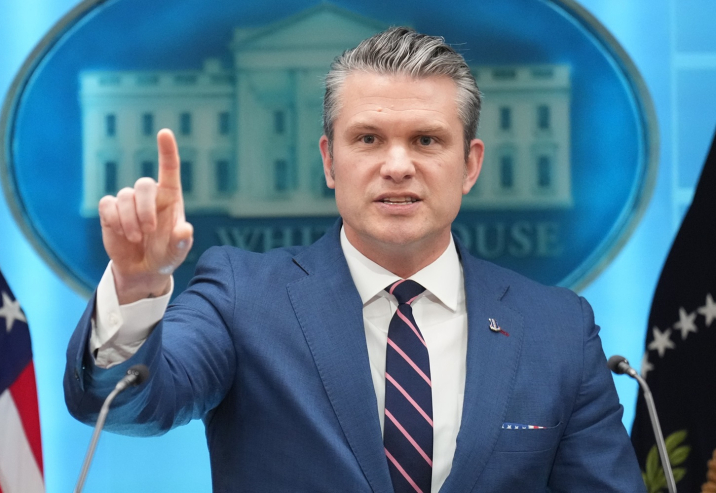
We have won. It was decided in the first hour, we saved.
Share your opinion
7 Reasons Trump's 'Victory' Declaration Over Iran Is Unrealistic