






Dr. Saeed Shahin: Opening the crossing does not mean the end of Israeli attempts to disrupt it and place obstacles in its way, coinciding with the return to escalation..
Talal Awaql: Netanyahu will politically accept opening the crossing but will work to impose field realities that allow continuing the displacement plan, even if slowly..
Dr. Raham Auda: Washington will begin implementing the second phase propagandistically, titled Rafah Crossing, to create a positive impression among mediators while ignoring core issues..
Nizar Nazal: Opening Rafah Crossing is considered a prelude to the post-war phase within broader arrangements related to the future of governance in Gaza and disarmament issues..
Dr. Aql Salah: Obliging Israel to open the crossing in both directions is considered a clear failure of the forced displacement plans for Palestinians..
Labeed Tah: Concerns that the crossing may become a tool to facilitate the exit of Palestinians instead of being a step to end the war and improve living conditions..
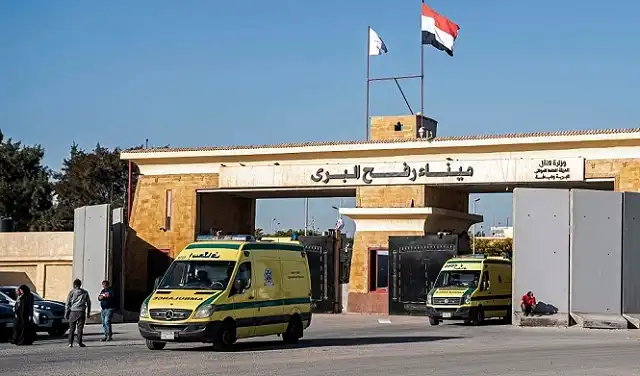
Attention is turning once again to Rafah Crossing after talks about the possibility of opening it in both directions, as one of the most prominent commitments of the ceasefire agreement, and a pivotal step that directly touches the future of Gaza's humanitarian and political sector.
And writers, political analysts, specialists, and university professors in separate interviews with "Al-Quds" see that this development, despite its importance, is not separate from deep political and security complexities, as warnings increase about possible Israeli attempts to disrupt the crossing's operation or turn it into a new pressure tool, whether by imposing field and security conditions, or maintaining control over movement and aid entry.
According to the writers, analysts, specialists, and university professors, there are concerns emerging about the possibility of utilizing the opening of the crossing in the context of displacement plans, by facilitating exit in exchange for hindering return, or using the humanitarian aspect as a cover for broader political goals.
Moreover, Rafah Crossing gains an increasing regional and international dimension according to the writers, analysts, specialists, and university professors, with the return of international and regional parties to manage it, and paving the way for transitioning to the second phase of the agreement, which includes post-war arrangements and the future of governance in Gaza. Between hopes of reconnecting the sector with the world, and warnings of superficial or selective operation.
An important political achievement for the guarantor parties..
The political media professor at Hebron University, Dr. Saeed Shahin, sees that the talks about reaching an agreement to open Rafah Crossing in both directions is an important political achievement for the ceasefire agreement guarantor parties, and reflects a clear retreat in the positions of the occupation government head Benjamin Netanyahu and his far-right government, which insisted on the option of displacing Palestinians and imposing strict security conditions that contradict the crossing management protocol, especially regarding the physical inspection procedures insisted upon by the occupation authorities.
And Shahin explains that opening the crossing in both directions constitutes a pivotal step for the besieged Gaza Strip, as it reconnects it with the outside world, contributes to preventing displacement plans, and enables the return of residents who were forced to leave the sector due to the war, in addition to allowing patients, students, and employees to travel and reach their destinations.
And Shahin considers that this step can alleviate the severity of the worsening humanitarian catastrophe, and open wider political horizons for the sector.
And Shahin points out that opening the crossing paves the way for the return of parties supposed to manage it, primarily the Arab Republic of Egypt, and the Palestinian National Authority, and the European Union, which enhances the international character of the crossing management, and opens the way for transitioning to the second phase of the agreement, which includes the possibility of deploying an international force in specific locations within the sector.
Reducing Netanyahu's ability to return to war..
And Shahin points out that this contributes to reducing Netanyahu's ability to return to war under the pretext of Hamas's non-compliance with the agreement, whether regarding disarmament or the latest Israeli soldier file.
However, Shahin warns that opening the crossing does not mean the end of Israeli disruption attempts, confirming that Israel may place obstacles in its way, and may return to military escalation if Hamas insists on refusing to hand over its weapons or dismantle its tunnel network.
And Shahin notes that the United States, despite Israeli complexities, seems genuinely interested in transitioning to the second phase of the agreement, in the context of its efforts to oversee the reconstruction process and establish a foothold in the sector under the name "Peace Council" headed by Donald Trump, which puts Netanyahu and his government in a real political dilemma that is difficult to evade.
And Shahin confirms that the implementation of the second phase will proceed, most likely, at a slow pace, in light of ongoing Israeli efforts to derail it, in parallel with Hamas's positions, especially the statements of the Qassam Brigades regarding refusing to hand over weapons, which may be used as a pretext to explode the agreement and hinder the transition to the next stage.
Concerns about field realities enabling displacement..
The writer and political analyst Talal Awaql confirms that the Rafah Crossing file cannot be dealt with as a purely procedural issue subject to Israel's approval or rejection of its opening conditions, whether in both directions as proposed by the American plan, or in the exit direction only as insisted upon by the occupation government, confirming that the crossing constitutes a central arena in the struggle over the future of Gaza Strip and displacement plans.
And Awaql explains that the insistence of Arab and Muslim mediators on opening the crossing for the movement of individuals freely in both directions comes in a clear context of rejecting the displacement project, and intersects with the American administration's desire to transition to the second phase of the agreement.
And Awaql points out that Netanyahu realizes that he must politically accept opening the crossing, but in return, he will work to impose field realities that allow continuing the displacement plan, and even if through slower mechanisms and over a longer time period.
And Awaql points out that Israel will resort to repressive field measures after the returnees cross into the sector, through establishing security barriers inside Gaza to arrest those it wants to arrest under the pretext of "security," and humiliating and delaying others, in an attempt to deter Palestinians from returning to the sector.
And Awaql explains that the road extending from Rafah Crossing to inside Gaza is under complete control of the Israeli army, which gives the occupation wide capabilities to control movement and transportation.
Restrictions on humanitarian aid..
And Awaql notes that the entry of trucks and humanitarian aid and relief materials will remain subject to the Israeli conditions and mechanisms currently in place, which means continuing to use the crossing as a pressure tool, and not as a free humanitarian gateway.
And Awaql expects that the Israeli army will work to facilitate the exit of Palestinians from the sector, even those with security suspicions, in the context of encouraging departure, while retaining the right to arrest those pursued by its security agencies.
And Awaql explains that Israel has long restricted the travel of patients, allowing only one companion, and sometimes prohibiting companions altogether, but today, in the context of displacement, it allows the entire family to accompany the patient, in a clear indicator of utilizing the humanitarian aspect to serve political goals.
And Awaql sees that the American vision indicates moving things towards the second phase after overcoming some Israeli objections, which is likely to have been discussed during Netanyahu's recent visit to the United States.
And Awaql rules out that Donald Trump will intervene to remove obstacles related to the mechanism of opening the crossing if they do not serve the displacement plan, considering that this goal constitutes a common denominator between the two parties.
Netanyahu's flexibility after obtaining American approvals..
The writer and political analyst Dr. Raham Auda explains that the anticipated announcement of opening Rafah Crossing in both directions reflects a political reality in which the occupation government head Benjamin Netanyahu is forced to respond to the request of the American President Donald Trump.
And Auda points out that Netanyahu cannot reject all Washington's demands, especially in light of Egypt's success in convincing the American administration and the international public opinion of the necessity of opening the crossing in both directions, which refutes fears of "going without return" or the forced migration of Palestinians from Gaza Strip, and allows the return of the stranded.
And Auda explains that Netanyahu resorted to showing flexibility on secondary files, at the forefront of which is the Rafah Crossing file, in exchange for obtaining American approvals in more important strategic files for him.
And Auda notes that among these potential gains is obtaining an American green light to direct a military strike against Iran if it insists on developing its nuclear program, in addition to allowing the Israeli army to carry out a military operation in Gaza to disarm Hamas if it refuses to hand it over, in addition to ignoring the file of the Israeli withdrawal from the zero zone inside the sector.
And Auda considers that these promises constitute winning cards in Netanyahu's hand, enabling him to contain the opposition of the far-right to opening the crossing, considering it a secondary file compared to those major understandings.
Egypt's important role in lifting the siege on Gaza..
And Auda emphasizes the need to appreciate the Egyptian role, which led an international advocacy campaign to lift the siege on Gaza Strip, pointing out that the invitation of the famous American actress Angelina Jolie to visit Rafah Crossing accompanied by the governor of North Sinai contributed to influencing international public opinion, and increased the pressure on Israel and Trump to open the crossing in both directions, and not in one direction only.
Return of Palestinian sovereignty..
And Auda points out that the importance of opening the crossing is the return of Palestinian sovereignty over it, even partially, through its administrative management by the Palestinian Authority in cooperation with the European Union, through employees affiliated with the Authority in Ramallah, considering that this constitutes a positive indicator of the beginning of implementing the second phase of the agreement, and allows the travel of humanitarian cases, students, and patients, with guaranteeing their right to return to the sector.
Rafah Crossing as a positive propaganda title for the second phase..
Regarding whether this step represents an actual move for the second phase of the ceasefire agreement, Auda sees that Washington will begin implementing this phase formally and propagandistically, taking Rafah Crossing as its title, with the aim of creating a positive impression among Arab and Palestinian mediators, while ignoring the core files related to reconstruction and the complete Israeli withdrawal from the sector.
And Auda points out that the next phase may witness the announcement of forming a technocrats committee and a peace council, in the context of gradually withdrawing the administrative file from the Hamas government, and giving time space for negotiating disarmament and the role of international forces, considering that what is happening represents a partial and gradual application of the second phase, and a real test of the sincerity of intentions of all parties.
Alleviating humanitarian pressure on Gaza..
The researcher specialized in Israeli affairs and conflict issues, Nizar Nazal, explains that opening Rafah Crossing transcends the procedural dimension to humanitarian, political, field, and strategic dimensions, in light of the accelerating developments related to the war on Gaza Strip and what comes after.
And Nazal points out that the first dimension of opening the crossing is represented in alleviating the humanitarian pressure on Gaza Strip, by opening it in both directions, which contributes to increasing the flow of humanitarian aid and reducing the severity of needs inside the sector, especially in light of the suffocating humanitarian crisis suffered by the residents, as opening the crossing in this formula limits the use of human suffering as a political pressure tool.
Failure of one-way travel..
And Nazal notes that opening Rafah Crossing constitutes a clear indicator of the strong return of the Egyptian role to the scene, after previous Israeli attempts to marginalize Cairo or blackmail it, especially through seeking to open the crossing in one direction serving the plans of displacing Palestinians from Gaza Strip, while Nazal considers that Egypt's recovery of its role in this file reflects the failure of those Israeli attempts.
And Nazal points out that the step carries important field implications, as it indicates an Israeli intention towards field calm, which reflects a gradual transition from the military phase to a phase with a political character, in which the possibilities of returning to war decrease, and political options are presented instead of military solutions.
And Nazal points out that opening the crossing sends direct political messages to Israel, the most prominent of which is reducing its ability to use the siege weapon to impose its agendas and achieve political gains, which constituted in previous stages one of the most important Israeli pressure tools.
Opening the crossing as a prelude to the post-war phase..
And Nazal confirms that opening Rafah Crossing is considered a prelude to the post-war phase, within broader arrangements related to the future of governance in Gaza and disarmament issues, explaining that this step constitutes a real test of Israel's intentions, and not of the mediators or Palestinian resistance intentions that see in opening the crossing a direct interest.
And Nazal points out that these developments came as a result of simultaneous American-Egyptian pressure, considering that what is happening represents a major political transformation and an American commitment to opening a calculated political path, reminding of the arrangements of 2005 related to opening Rafah Crossing, before Hamas's control over the crossing, in the context of reshaping the political scene in Gaza Strip.
Ambiguity surrounds the crossing's operation mechanisms..
The writer, political researcher, and professor of comparative political systems, Dr. Aql Salah, confirms that the current talks about opening Rafah Crossing came in the context of the latest ceasefire agreement, confirming that the agreement explicitly stipulated opening the crossing since October 10th last year, but the occupation government head Benjamin Netanyahu managed to evade implementing this clause until the current stage.
And Salah explains that the mechanism for operating the crossing is still ambiguous and unclear, in light of the absence of any official announcement specifying the nature of the management or the timing of the full operation, pointing out that Netanyahu and the American President Donald Trump are still the most informed parties on the details and mechanism of the operation, which raises serious concerns about the future of the crossing and its true function.
And Salah points out that there is a real fear that the operation of the crossing will be superficial, through continuing Israeli control over it, and not its operation as an international crossing performing its natural role as before the war, whether in terms of the movement of individuals or the entry of goods.
Concerns about turning the crossing into a pressure tool..
And Salah warns that this scenario may turn the crossing into a new pressure tool in Netanyahu's hand to manage the conflict instead of ending it, in light of the absence of any official information so far about the nature of the operation.
And Salah addresses a set of important implications related to opening Rafah Crossing, the most prominent of which is that it constitutes a real window to lift the imposed siege on Gaza Strip, as it is the only gateway connecting the sector with the outside world, whether for individuals or goods.
And Salah points out that obliging Israel to open the crossing in both directions, travel and return, is considered a clear failure of the plans of the far-right Israeli extreme right that sought to open it in one direction only, serving the goal of the forced displacement of Palestinians, and this goal that Israel failed to achieve.
And Salah confirms that the announcement of opening the crossing came as a result of direct American pressure, especially after the last meeting between Trump and Netanyahu, in an American attempt to show Israel's commitment to agreements and improve its image internationally from the humanitarian aspect.
And Salah points out that opening the crossing contributes to ending the suffering of thousands of Palestinians stranded in Egypt and other countries for about two years, who are waiting to return to Gaza Strip.
Important guarantees for the crossing's operation..
And Salah confirms that among the most important implications of opening the crossing is breaking the geographical isolation imposed on the sector, and opening the way for the return of Palestinian sovereignty over the crossing as it was before the war, in addition to European participation in monitoring it, which gives the process an international character and limits direct Israeli control.
And Salah notes that the decision to open the crossing was not in Israel's hands alone, but came as a result of understandings in which the United States, Egypt, Qatar, and other parties participated, which provides international guarantees for its continued operation, despite his expectation that Netanyahu will seek to create new crises to satisfy the far-right, specifically Smotrich and Ben Gvir.
An important entrance to start the reconstruction and the second phase..
And Salah points out that opening the crossing may constitute an actual entrance to start the reconstruction process in Gaza, by lifting restrictions on building materials and housing and increasing humanitarian aid, in addition to it constituting direct pressure on Netanyahu to transition to implementing the second phase of the agreement, which includes the Israeli withdrawal from the yellow line and the areas occupied by the army inside the sector.
And Salah confirms that opening Rafah Crossing represents the real test for Netanyahu to transition to the next stage of implementing the agreement and ceasefire, warning that the occupation government head will continue the policy of evasion and creating new crises, whether by linking the crossing to weapon files or soldiers' remains or withdrawal, in an attempt to hinder the actual implementation of the agreements, as he historically did since derailing the implementation of the Oslo Agreement in 1996.
The pressure that led to opening the crossing..
The researcher and political analyst Labeed Tah confirms that the talk about announcing the opening of Rafah Crossing falls within the commitments stipulated in the ceasefire agreement, confirming that this step is not a favor from the Israeli side, but a political and legal commitment that was supposed to be implemented previously.
And Tah points out that the experience with Israel shows that it does not deal seriously with its commitments, and does not proceed to implement them except under pressure, or considering them a formal concession in exchange for insisting on larger and more dangerous impositions.
And Tah explains that Israel had tried about a month ago to pass a plan to open Rafah Crossing in one direction only, in a context aimed at facilitating the displacement of Palestinians from Gaza Strip, but this plan failed due to not obtaining regional and international acceptance. And Tah confirms that the American pressures, especially what leaked about the last Florida summit between the American President Donald Trump and the occupation government head Benjamin Netanyahu, played a direct role in imposing the issue of opening the crossing.
Two-way passage is a double-edged sword..
And Tah points out that opening the crossing for the movement of people back and forth may be a double-edged sword, as on the one hand it gives Palestinians a limited margin for movement through Egypt, but on the other hand it may turn into an indirect tool to facilitate the exit of some from Gaza Strip under the pressure of harsh humanitarian conditions, which raises real concerns about utilizing this step in the context of displacement.
And Tah points out that despite the importance of opening Rafah Crossing, there are more urgent humanitarian priorities for the sector's people, at the forefront of which is providing shelter, and introducing medicines and food, and starting practical steps for reconstruction, considering that these issues are no less important, and perhaps exceed in necessity, the issue of opening the crossing itself.
And Tah notes that this step represents a partial response to American pressures and Arab, Islamic, and international appeals that called for improving the living conditions of Palestinians, who live in the open in light of harsh climatic conditions, suggesting that opening the crossing is part of a broader deal in which Israel is given greater freedom to move in other files.
And Tah warns against opening Rafah Crossing turning into a tool to facilitate the exit of Palestinians from their land instead of being a real step towards ending the war and improving living conditions in Gaza Strip.
Continuation of the killing..
Regarding the talk about moving the second phase of the agreement following the inauguration of opening the crossing, Tah expresses his pessimism, confirming the absence of real indicators of its launch, but on the contrary, the field realities indicate the continuation of killing and destruction at a lighter pace than before as in the previous two years, in light of a ceasefire that seems unilateral committed to by the Palestinians only, while aid still enters at less than the agreed level.
And Tah sees that the region is heading towards a highly dangerous regional and international phase, in light of developments in Iran, Syria, Lebanon, and Yemen, in addition to other international crises.
Share your opinion
Rafah Crossing.. The Serious Test Gate for Commitment to Ceasefire in Gaza