







The phenomenon of the rise of non-traditional presidents in the United States cannot be fully understood through moral or psychological lenses alone, nor by reducing it to personal traits or individual deviations. At its core, this phenomenon reflects a profound structural transformation in how the United States manages its power and role in the international system, as well as a cumulative crisis in its ability to sustain global leadership according to the frameworks established during the twentieth century.
During the era of stable hegemony, the United States successfully combined hard power with soft legitimacy, exercising influence through international institutions, alliances, legal frameworks, and value-driven narratives linked to democracy and human rights. This model allowed Washington to manage the international system as a leading power rather than merely a dominant one. However, this balance began to erode gradually after the end of the Cold War and accelerated with the rise of competing international powers, particularly China, as well as the declining ability of the U.S. to regulate the global system through multilateral consensus.
In this context, the civilizational discourse shifted from a source of power to a political constraint. The wider the gap between America’s strategic interests and its publicly declared values, the higher the cost of adhering to norms, and the less effective moral justifications became. It is precisely here that the non-traditional president emerges, a leader who feels little need to maintain institutional decorum or rhetorical consistency, treating politics as a direct exercise of power and replacing persuasion with confrontation, legitimacy with capability.
What is commonly referred to, in populist terms, as “clownish” or non-traditional presidents does not necessarily reflect a weakness in the American state; rather, it reveals its structural dilemma. A president who breaks norms, disregards institutions, and relies on performative and media-driven strategies grants the political system a broader margin of maneuver beyond the constraints imposed during the era of unipolar stability. In this sense, political performance becomes a functional instrument, not merely a behavioral deviation.
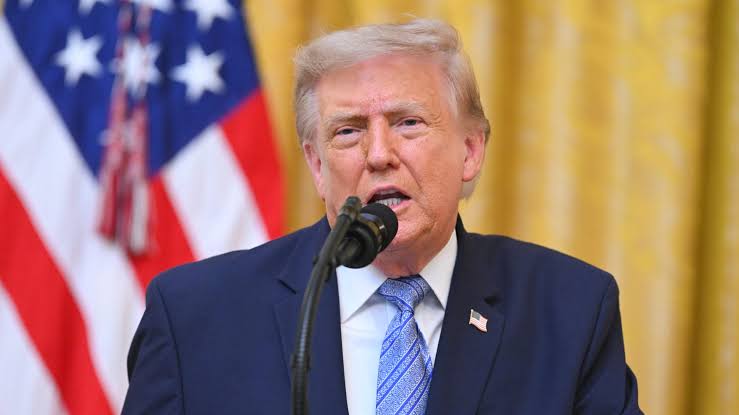
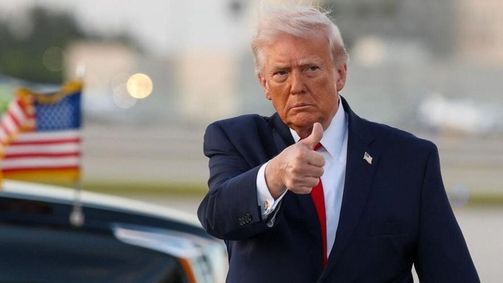
Historically, this function can be traced in pivotal moments. George W. Bush exemplified a president suited to the post-9/11 phase, when the United States needed to normalize preemptive wars, suspend international legal norms, and redefine the concepts of security and the enemy. Donald Trump, in contrast, represents a more radical transition, abandoning much of the civilizational mask and treating the presidency as a confrontational platform enabling the implementation of harsh policies without ethical or institutional justification.
These practices, however, cannot be separated from the deeper crisis of the U.S. system itself. The rise of China and other emerging powers has limited America’s capacity to maintain its position as the sole global superpower, revealing the boundaries of its power to prevent structural shifts in economic, technological, and political balances worldwide. As traditional instruments of containment became less effective, the inclination within Washington to adopt more direct and forceful approaches grew, reflecting an increasing perception of diminishing control rather than its enhancement.
In this context, the non-traditional presidency becomes a reflection of systemic crisis rather than a deviation from it. It is a political front that absorbs symbolic chaos and political shock, allowing enduring institutions to maintain core policies without shouldering the full burden of justification. What appears as deviation in form is, in essence, a redistribution of roles between political performance and strategic depth.
Entering the twenty-first century, this transformation appears neither temporary nor incidental but rather likely to deepen. The American system is undergoing a dramatic shift in its character and behavior, moving from a power that long sought to manage the international order through rules to a power striving to assert its position in a world no longer accepting unipolarity. This transformation will not affect the United States alone; the world will also bear the repercussions, whether through increased conflicts, erosion of regulatory norms in international relations, or the emergence of new forms of contestation that traditional instruments cannot contain.
We are thus entering a transitional phase in which the political reality is being redefined, not according to a clear plan but through a series of shocks, experiments, and tests. The American system, in its attempt to adapt, is likely to become one of the most significant sources of uncertainty. The new pattern emerging today may shape the global system in radically different ways from the model the United States crafted at the peak of its power—ways we cannot yet fully predict or comprehend.
In conclusion, non-traditional presidents in the United States are neither an incidental phenomenon nor a transient democratic flaw; they are a direct reflection of deep structural transformations in America’s position and role. They mirror the crisis of unipolarity and function as instruments to manage a historically critical transition, one that may determine the shape of the international system for decades to come. While this mode of leadership may provide temporary capacity for action and decisiveness, in the long term it exposes the limits of American power in an increasingly multipolar and unpredictable world.
Share your opinion
Unconventional Presidents as a Mirror of U.S. System's Crisis and Its Transformations in the 21st Century