OPINIONS

Date unavailable - Jerusalem Time

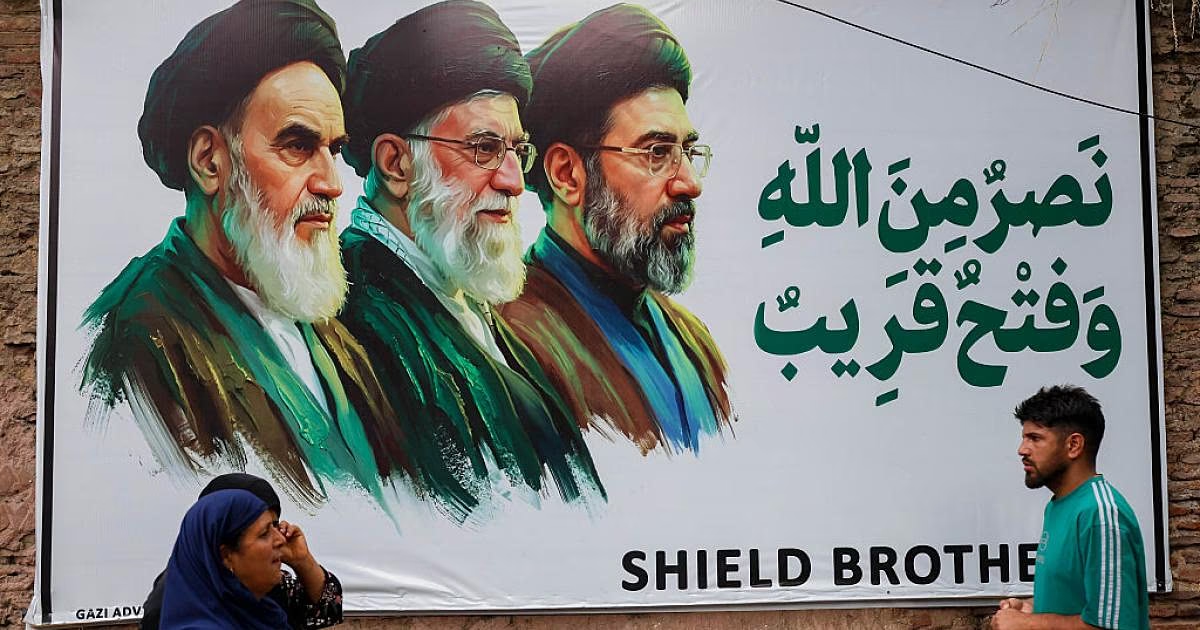
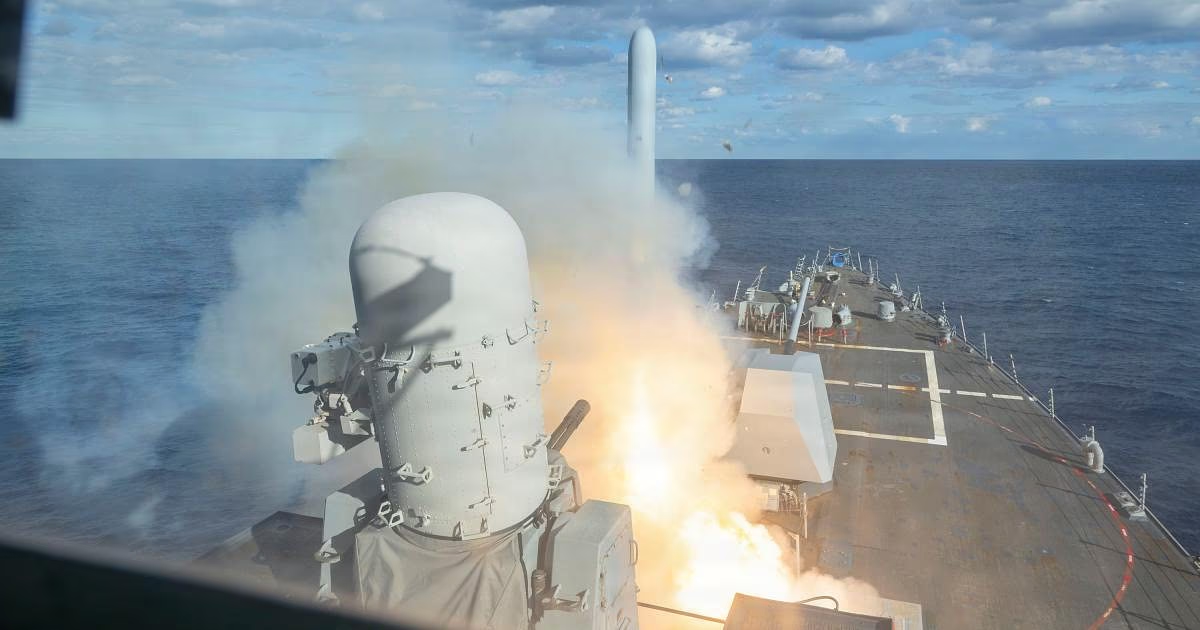
America, Iran, and Controlled Madness: Calculations of a War That Won't Happen

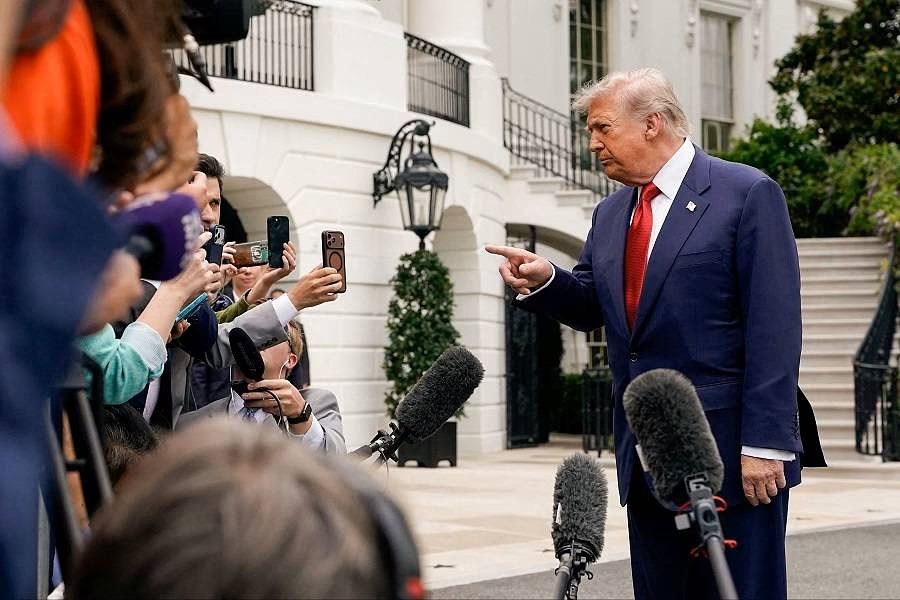
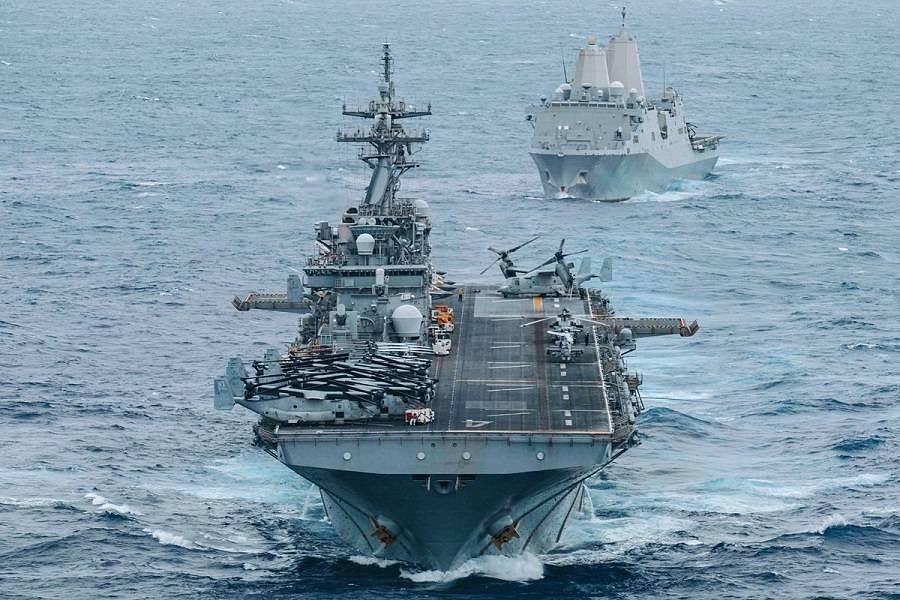
Despite the escalation in rhetoric, the unprecedented military buildup of American capabilities in the region, and President Donald Trump's "brinkmanship" policy, contrasted with Iranian Supreme Leader Ali Khamenei's statements reflecting a tone of defiance and insistence on responding to American and Israeli threats; the pressing question is: Are we on the verge of an imminent military confrontation between Washington and Tehran? What are the chances of the United States succeeding in changing the political regime in Iran? Conversely, what are the limits of Iran's military response capability? Can Iran target aircraft carriers and American bases in the region? And finally, what are the repercussions of all this on the security and stability of the region and the world?

Anyone who reads the scene with a cool eye, away from media sensationalism, will realize that what is happening is closer to "controlled madness" than to a blind rush towards war. The United States fully understands that any comprehensive war with Iran will not be a quick military picnic, nor will it end with a limited surgical strike. Instead, it could open the doors of the region to strategic chaos extending from the Gulf to the Eastern Mediterranean. The experiences of Iraq and Afghanistan are still fresh in American memory, with the costs in money, reputation, and lives.

As for talk of regime change in Iran, it is a slogan that has been repeated in the corridors of American politics for decades, but it has never turned into an executable strategy. The Iranian regime, despite its internal crises and suffocating sanctions, has proven an extraordinary ability to adapt and endure, relying on a cohesive institutional security and military structure, and an impressive network of regional and international alliances.

Conversely, Iran's capabilities cannot be underestimated. Over the past years, Tehran has developed an advanced missile system and has demonstrated its ability to operate in multiple theaters through its regional allies. While targeting American aircraft carriers or major bases would remain a high-cost and extremely risky option, it is not impossible should an open confrontation erupt. Any direct hit on strategic American interests would certainly mean the region entering a spiral of escalation whose outcomes cannot be controlled.

This is precisely where the danger of the situation lies: if war breaks out, it will not remain bilateral between Washington and Tehran, but will affect Gulf security, threaten the stability of Iraq, Syria, and Lebanon, and perhaps extend its effects to global energy markets, threatening the international economy with a new crisis. Therefore, the precise cost-benefit calculations of both parties make the option of a comprehensive war more likely to be brandished than actually implemented.

In my estimation, Trump will continue to mobilize, threaten, and warn, but he will not launch a military strike that leads to a wide regional war. The man realizes that any major slip could turn the tables on him domestically, especially in light of the political crises and scandals pursuing him, and the unrest and decline in support within his party. Despite the image he tries to project of himself as a president who does not hesitate to use force, he is not at all interested in the "Samson option" that would bring down the temple on himself and his adversaries at home and abroad.

It is more likely that this round of escalation will end in negotiated outcomes related to the Iranian nuclear program, which will be marketed domestically in Washington as a political and security achievement. If this happens, Israeli Prime Minister Benjamin Netanyahu will not dare to go it alone into a military confrontation with Iran, because any open war could mean the end of his political future, and perhaps plunge the Hebrew state into an existential dilemma, especially given its escalating international isolation after the Gaza war and the growing global calls for a just solution to the Palestinian issue.

As for Iran, it will not initiate a preemptive strike, nor will it seek to ignite a war it does not need at this stage. However, at the same time, it will not stand idly by in the face of what it considers existential threats. It will continue to develop its deterrent capabilities and strengthen its relations with Russia and China, thereby solidifying its position as a significant regional power within an international system that is gradually leaning towards multipolarity.

Iran, in historical memory, is not an emergent state, but the heir to the Persian Empire that once extended its influence over vast areas of the world. It understands that bowing under American pressure would mean undermining its regional project and international standing. Therefore, it will maneuver, negotiate, and accumulate power assets, without rushing into a comprehensive confrontation.

In conclusion: We are facing a calculated escalation, and fiery rhetoric that serves deterrence calculations more than it paves the way for war. A comprehensive military confrontation will not occur, because its exorbitant cost exceeds the capacity of both parties to bear. The Iranian regime will likely emerge with a greater presence and influence, while Washington seeks to save face through a new agreement or understanding. These are precise calculations for a war that is intended to be threatened, not to happen.
OPINIONS

Wed 24 Jun 2026 4:38 am - Jerusalem Time

The Limits of Power: A Lesson from the Last War on Iran

Wars have taught us many lessons, full of insights for those who wish to learn. If politicians were to learn from the calamities of past wars, they would refrain from embroiling their peoples and nations in them, and their number would at least have decreased year after year in our world, if not completely ceased. The Israeli-American war on Iran is no exception; it brought with it many lessons, perhaps the most important of which relates to "the limits of power."In modern political thought, political realism is associated with the ideas of the Italian statesman Niccolò Machiavelli, presented in his book "The Prince," in which he offered advice to the prince of the Medici family regarding matters of governance. What distinguished Machiavelli's ideas in this regard was their directness, clarity, and frankness: the ultimate goal is to preserve the state's survival, and the prince must do everything necessary to achieve this, without any deterrent whatsoever; for politics and morality do not meet, and the end, which is the realization of the state's survival interest, justifies the means to ensure this survival.

If moral constraints are absent from political action, what then limits this action between states and defines the boundaries between them? The determining factor for politics between states, at the core of realist theory, is power; the amount of power a state accumulates compared to other states. According to the power it possesses, primarily military power, which has come to be known as "hard power," the state's position and status among nations are determined.

Realist theory of international relations settled on the basis that "hard power" is the foundation that grants a state its position among nations. The stronger a state is, the more it can achieve its interests and impose its will on weaker states. If a state is weak, it must accept that the will of stronger states will be imposed upon it.Therefore, in order to preserve the state's existence and independence, the political actor must make the accumulation of its power their primary concern. On this basis, realist theory held that the world is composed of geographical regions, and the international system is hierarchically structured from states that compete with each other for dominance over the region in which they are located.

Whoever tops the list of contenders enters the ranks of regional powers, some of which, through the power differential, transform into major powers. If any of them can achieve complete dominance over its region, its influence and status extend beyond it to become a superpower. As a result, the relationship between major powers, vying with each other for regional, and then global, hegemony, controls the contexts of the international system and the rules that govern its paths.Therefore, it is observed that since the inception of the state, the accumulation of "hard power" has been a primary goal for states, which have continued throughout history in a frantic race with each other for armament. This was the goal of militaristic Sparta to achieve victory over its rival democratic Athens, leading to the endeavor of both the Soviet Union and the United States to gain an advantage over each other in the military field, until the competition between them reached not only the possession of nuclear weapons, but also the number of nuclear warheads each of the two states possessed. As for the intense conflict that has been raging for decades in our region, especially between Israel and Iran, which have continuously accumulated their military power, it is a struggle between them to exclude one another from achieving the status of a dominant regional state.

Although the recent war launched by Israel and America on Iran falls within this context, its outcome, which ended without achieving the objectives it called for, specifically the overthrow of the Iranian regime and the termination of the Iranian project to transform Iran into an entrenched regional power, calls into question the foundation upon which realist theory was built, namely the maximization of "hard power." Indeed, it indicates that this power, no matter how great, has limits that states discover, and exceeding them makes reliance on maximizing the use of this power of little, if any, benefit. The resulting consequence is that states' achievement of an advanced position in the hierarchical international system transcends, and does not exclude, the accumulation of "hard power," to achieving progress in other fields—scientific-cognitive, economic, technological, and cultural—within a general vision with an optimistic radiance of moving the world to a better state. Sparta's reliance solely on militarization, and its victory over Athens because of it, did not last, but ended in its collapse and demise as a dominant power after little more than three decades, while Athens' intellectual legacy has endured to this day.

Returning to the limited effect of "hard power," the Israeli-American war on Iran alerts us to the necessity of deconstructing the relationship and differentiating between the influence and effect of three motives for state actions, which are different from each other, although they appear at first glance to be interconnected, even intertwined: desire, capability, and ability. Not everything a state desires can be achieved, even if it possesses the material capability to achieve its desire, as many factors can stand between it and its ability to achieve what it desires, and what its material capability enables it to achieve.

This is the limit of power: that a state cannot achieve its desire, even with the accumulation of the capability that qualifies it to achieve this desire.Since the overthrow of the pro-Israel Shah's regime, the latter has been wary of the alternative regime, as it possesses an opposing project for regional hegemony. With Netanyahu's rise to power in the 1990s, Israel's desire to overthrow the Iranian regime and replace it with a compliant one crystallized. Although Tel Aviv possesses a great deal of "hard power," it alone was not capable of achieving its goal, and therefore needed to enlist its major ally, America, to carry out the mission with it.

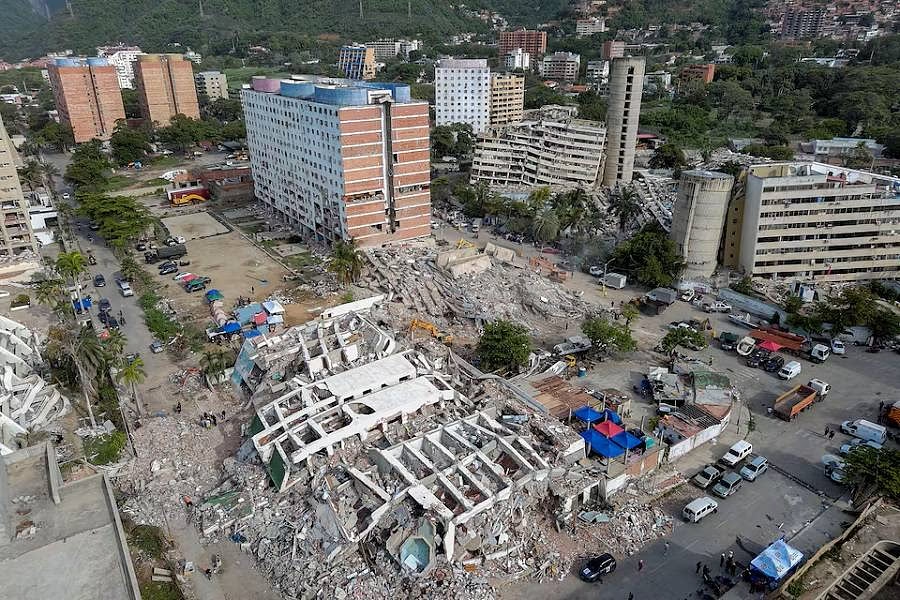
Despite his insistence, Netanyahu was unable to convince three American presidents who had no desire to embroil America in an unproductive war with Iran. Netanyahu persisted in his insistence and, with the help of his allies in America, managed to involve Trump in making American capability available to Israeli desire. Trump was convinced that superior American capability, when combined with Israel's capability, would overthrow the exhausted and dilapidated Iranian regime within days, and at most within two weeks. The war broke out, and America and Israel poured the lava of their bombers on Iran, successfully targeting the elimination of the regime's leadership and causing severe material destruction.

The war, especially in its early days, was a stark example of the intensive use of the combined "hard power" capability of two forces, a superpower and a regional one, who eagerly awaited the fall of the regime in Tehran. But the regime, which received successive waves of painful blows, did not fall. Instead, it relied on its high capacity for endurance to withstand the bombardment and managed to turn a mighty military campaign, which its perpetrators expected to be short-lived and without losses, into a war of attrition that Iran was prepared to keep long-term. With the losses Tehran inflicted on Israel and America and their interests in the region, and its creation of a global energy crisis by closing the Strait of Hormuz, which threatened to turn into a global economic crisis, and threatened to destabilize America's position as a superpower in the world, and warned Trump of the possibility of sabotaging what remained of his second term, the latter quickly concluded that he had to find a face-saving way out for himself and his country; to withdraw from a war in which his country's superior capability could not achieve victory.Of course, Trump's conclusion that American capability could not accomplish the mission did not align with the continued Israeli desire to escalate the use of that capability to achieve the unfulfilled goal. While Netanyahu and his allies in Washington intensified their pressure on Trump to continue the confrontation, the American president concluded that continuing would further plunge America into a bottomless pit with no way out. So he decided on an implicit acknowledgment of the inability to achieve the desired goal, regardless of the capability at his disposal, by agreeing to negotiate with the very regime that was targeted for overthrow. The result was that negotiations led to a framework agreement, which not only curbed Israel's rampant desire to change the Iranian regime but also solidified Iran's position as a regional power with American recognition.

Events have proven that the war failed to achieve its objectives, foremost among them the overthrow of the Iranian regime, not due to a lack of desire and capability, as these were available in unprecedented abundance. What was lacking was the ability to transform rampant desire and superior capability into a successful outcome. Therefore, Israel and America lost their failed war on Iran.A note worth mentioning: America and Israel's possession of nuclear weapons did not grant them additional power, as the purpose of these weapons is deterrence, not use. In contrast, Iran's ability to control the Strait of Hormuz, and its capacity to use this capability and actually close it, had a greater impact than America and Israel's possession of nuclear weapons, or even Iran's own possession of them.And the question that no longer needs an answer after this failed war is: Why does Iran seek to possess nuclear weapons in the short and medium term, as long as it has proven its ability and capacity to control the Strait of Hormuz?!

ARAB AND WORLD

Wed 24 Jun 2026 3:41 am - Jerusalem Time

US Senate Votes to Halt Military Operations Against Iran

The US Senate, controlled by the Republican Party, approved a bill aimed at ending military operations directed against Iran. This decision passed with a majority of 50 votes to 48, reflecting growing political concern within Washington regarding the continuation of armed conflict, despite the diplomatic efforts led by the current administration to reach a peace agreement with Tehran.

This vote is a continuation of a similar step taken by the House of Representatives earlier this month, highlighting the escalating legislative reservations towards the war that erupted on February 28th. A number of Republican lawmakers joined their Democratic colleagues in supporting the decision, indicating a crack in the unified stance within the President's party regarding foreign policy.

Politically, this move represents a moral blow to President Donald Trump, especially as it comes at a sensitive time in the ongoing negotiations with the Iranian side. Although the procedural rules within Congress may not force the President to use his veto power, the political message reflects a loss of complete control over the war file within the halls of Capitol Hill.

President Trump had launched a sharp attack on previous legislative moves in the House of Representatives, describing them as 'unpatriotic.' He accused his political opponents of trying to obstruct his foreign victories, considering that Democrats and some dissenting Republicans prefer to see the country fail rather than acknowledge his administration's successes in managing the crisis.

This legislative attempt comes within the framework of efforts led by Democrats to restrict the President's military powers, as they accuse the White House of exceeding constitutional mandates. Lawmakers emphasize that the US Constitution limits the power to declare wars to Congress, while the President's role is limited to responding to imminent threats with the necessity of returning to Parliament within two months.

Data indicates that the US administration exceeded the 60-day legal deadline last May, justifying it by stating that the conflict, which began with joint strikes with Israel, had effectively ended. However, the Democratic opposition rejects these justifications, asserting that the military presence on the ground is still ongoing despite the recently announced truce.

In the context of the parliamentary debate, Democratic Minority Leader Chuck Schumer stated that the American people are paying the price for what he described as Trump's 'historic mistake' in starting this war. In contrast, Republican senators warned that this decision could weaken Washington's negotiating position, which might prompt the Iranians to withdraw from the diplomatic talks table.

Concurrently with the political moves, recent opinion polls conducted by international media sources showed that only a quarter of Americans believe there is a real justification for the war on Iran. The data revealed a sharp decline in President Trump's popularity to 34%, his lowest rating since the beginning of his second presidential term, amidst public fears of a truce collapse.

The survey results showed that a large segment of the American public believes that the United States' global standing has become weaker as a result of this conflict. Also, 63% of participants expressed doubts about the ability of recently signed agreements to achieve sustainable peace, a pessimistic view shared by a large part of supporters of both the Republican and Democratic parties alike.

On the diplomatic front, the Swiss resort of Bürgenstock witnessed an intensive round of talks between American and Iranian officials earlier this week. These meetings fall within the framework of the 'Islamabad Memorandum of Understanding,' which aims to establish a roadmap for ending the joint military operations launched by Washington and Tel Aviv against Iranian targets.

In mid-June, the parties announced reaching a preliminary agreement consisting of 14 basic articles to address outstanding issues. The agreement stipulates a transitional period of several weeks, during which all hostilities will cease and a comprehensive negotiation process will begin, aimed at resolving the contentious issues that led to the outbreak of military confrontation.

Despite the lifting of the naval blockade on Iranian ports as a gesture of goodwill, tension remains dominant in American political circles. The question remains about the administration's ability to balance internal legislative pressures with the requirements of the complex diplomatic path with Tehran amidst a sharp division in public opinion.

Americans paid the price for Trump's historic mistake in Iran, and he should never have started this war.

PALESTINE

Wed 24 Jun 2026 3:41 am - Jerusalem Time

The health sector in the West Bank on the verge of collapse due to the withholding of clearance funds

Hospitals in the West Bank are facing a severe and unprecedented crisis, as warehouse shelves have been emptied of essential treatments and necessary medical supplies. This deterioration is a direct result of the Israeli occupation authorities withholding clearance funds, which constitute the backbone of the Palestinian Authority's budget, accounting for up to 68%.

This financial policy has led to the accumulation of huge debts on the Palestinian Ministry of Health, negatively impacting the ability of pharmaceutical supply companies and private hospitals to continue operating. Official bodies have warned that hundreds of essential drug types have completely run out, putting the lives of thousands of patients at risk.

Official data for 2025 indicates that Israel is withholding approximately 3 billion dollars of Palestinian clearance funds. This measure has caused deep economic fragility and led to the Authority's inability to fulfill its obligations towards the health sector, which relies primarily on these revenues.

Private and non-governmental hospitals were not immune to this disaster, despite having served as a safety valve in previous crises. The Ministry of Health's debt to these hospitals reached about 900 million dollars, out of a total health debt of 1.3 billion dollars, posing an existential challenge that threatens their survival.

Figures released by the Ministry of Health reflect the depth of the tragedy, with 726 types of medicines completely depleted from central warehouses. The shortage also affected 265 specialized medical products, in addition to the absence of 50 types of cancer drugs out of 97 types previously available.

Yousef Al-Takrouri, head of the Union of Private and Non-Governmental Hospitals, confirmed that the situation has reached a critical stage, prompting some institutions to apologize for accepting new cases. He explained that the severe shortage of medicines and supplies has made it difficult to provide advanced services or adequately care for oncology patients.

For his part, Muhannad Habash, head of the Union of Pharmaceutical Supply Partners, revealed a tragic reality faced by supply companies that have received only 1% of their dues over the past six months. This financial setback has led to the depletion of the strategic stock allocated for emergencies without the ability to replenish it from external sources.

This crisis has caused the postponement of approximately 11,000 surgical operations scheduled since the beginning of the current year in various hospitals. The difficulties extend to the inability to provide the simplest surgical tools, such as surgical sutures, exacerbating the suffering of patients awaiting urgent medical interventions.

The Ministry of Health warned of an imminent danger threatening the lives of 4,000 cancer patients due to the absence of specialized treatment protocols. The depletion of essential medical consumables from central warehouses means the cessation of vital services that Palestinian patients cannot obtain elsewhere.

Mustafa Al-Qawasmi, Director General of Hospitals, launched an urgent appeal for international intervention to save what can be saved in the health sector. He indicated that the continued withholding of funds makes it impossible to continue localizing medical services, calling for immediate support to ensure the provision of minimum care for citizens.

The health sector, whose services were previously highly regarded, now faces a real threat of comprehensive collapse due to the suffocating financial crisis.

PALESTINE

Wed 24 Jun 2026 3:41 am - Jerusalem Time

Israeli plan to undermine Gaza agreement: Expansion of military control and discussion of population displacement

Field and political indicators are escalating, suggesting the Israeli occupation authorities' intention to completely overturn the ceasefire agreement in the Gaza Strip and return to the option of comprehensive military confrontation. Data indicates that Tel Aviv seeks to confine US President Donald Trump's plan to one clause: disarming the resistance, ignoring all other commitments stipulated in the agreement signed in October 2025.

Since the agreement came into effect, Israeli forces have not ceased violating its terms by launching hundreds of attacks that have resulted in hundreds of martyrs and wounded among civilians. These continuous crimes have prompted the independent United Nations committee to state that deliberately targeting children reflects a premeditated intention for genocide, putting the credibility of international guarantors at stake.

Geographically, the occupation army has expanded its military presence within the Strip unprecedentedly, with reports indicating its effective control over approximately 70% of Gaza's area. This is being done by moving the so-called 'Yellow Line' westward, reducing the areas available to Palestinians and turning residential areas into isolated military barracks.

In a move reflecting intentions of forced displacement, the Israeli National Security Council has resumed discussions on plans to deport the Strip's residents under the guise of 'voluntary migration.' Press sources link these movements to potential secret understandings between Prime Minister Benjamin Netanyahu and US President Donald Trump, aimed at permanently changing the demographic and geographic reality of the Strip.

For his part, Dr. Muhannad Mustafa, an expert in Israeli affairs, believes that Israel has succeeded in 'normalizing' its violations and making them part of an internationally acceptable daily reality. Mustafa explained that the occupation considers these violations a necessary prelude to resuming widespread military operations once a final green light is obtained from the American administration.

In an attempt to empty the agreement of its content, Israel insists that the sole objective of the understandings is to disarm the Hamas movement, considering humanitarian issues and reconstruction as marginal matters. Although Washington largely goes along with this narrative, it still expresses reservations about returning to a comprehensive war that could ignite the entire region.

Palestinian resistance, for its part, finds itself in a complex situation, having shown positive engagement with proposals put forward by the Executive Director of the Peace Council, Nikolai Mladenov. Although these proposals essentially adopt the Israeli vision, the occupation refuses to respond to them officially, seeking instead to present proposals that return negotiations to square one.

Political analyst Dr. Iyad Al-Qarra affirmed that the Hamas movement has not definitively rejected the principle of disarmament, but it has stipulated that this be done within a comprehensive Palestinian national framework and with clear political guarantees. The movement calls on mediators and guarantors to deal seriously with the Gaza file, similar to the seriousness shown by the international community in addressing other regional files such as Lebanon.

Hamas spokesman Hazem Qassem considered that the expansion of Israeli control and the closure of crossings represent conclusive evidence of Tel Aviv's desire to destroy the agreement. Qassem stressed that the continuation of collective punishment and the movement of military lines places the international community before its historical responsibilities to stop this aggression that threatens the lives of millions.

In contrast, former US State Department officials justify the current leniency with Israeli violations by the Trump administration's preoccupation with other regional issues, primarily the confrontation with Iran. They believe that the absence of direct American pressure gives Netanyahu an opportunity to maneuver and evade the requirements of a permanent ceasefire.

Observers believe that the resistance may eventually be forced to militarily confront this Israeli expansion if the silence of the mediators continues. Remaining in a state of 'no war, no peace' with the continued gradual encroachment on land and starvation of the population is no longer a sustainable option for Palestinian factions who watch the collapse of understandings day by day.

In conclusion, the fate of the Gaza Strip remains suspended between an Israeli desire for military decisive action and displacement, and faltering international attempts to save a dying agreement. Implementing the agreement 'as a whole,' as some American experts suggest, seems out of reach given the absence of political will from the far-right government in Tel Aviv.

Israel has normalized its violations and made them part of reality because it considers them a preliminary prelude to resuming the war on the Strip.

ARAB AND WORLD

Tue 23 Jun 2026 10:37 pm - Jerusalem Time

Washington's Allies Seek Economic and Technological 'Independence' in the Trump Era

The international political arena is witnessing a remarkable shift in the strategies of traditional US allies, as these partners have begun working behind the scenes to reduce their historical dependence on Washington. These moves come as the United States prepares to celebrate its 250th anniversary of independence, yet its partners are realizing that these relationships no longer provide sufficient protection from the pressure tactics employed by President Donald Trump's administration.

Analytical sources reported that the new political climate has transformed close ties with Washington from a source of strength into a potential weakness, especially after the US administration demonstrated its ability to use economic power against friends and foes alike. This concern was evident in the statements of Italian Prime Minister Giorgia Meloni, who criticized Trump's treatment of democratic allies, which at times exceeded his treatment of authoritarian regimes.

The artificial intelligence sector stands out as one of the most important battlegrounds for national sovereignty, as Washington's decisions to restrict access to advanced models like 'Mythos 5' have caused widespread concern among European capitals. These steps have prompted industry leaders in Europe to warn of the risks of complete reliance on technology that the United States could shut down with a sudden political decision, threatening the stability of emerging digital economies.

In Paris, Arthur Mensch, CEO of the AI company 'Mistral,' warned that technological sovereignty has become an urgent necessity, not just a strategic option. Observers believe that what is known as the 'Mythos moment' served as a wake-up call for European countries to strengthen their own models and reduce their reliance on American companies subject to the political whims of the White House.

The concern is not limited to the technical aspect but extends to the defense and arms sector, where Trump's previous threats regarding sovereign issues like 'Greenland' served as a reminder of the extent of European military dependence. This reality has led American defense companies to fear losing major markets, as European governments seek local alternatives or diversify their arms sources to ensure the independence of their military decisions.

In Asia, India emerges as a model for countries that have begun to re-evaluate their partnership with Washington due to tariffs and American rapprochement with regional adversaries. Research studies have indicated that the 'Trump factor' was a key driver for New Delhi's decision to prefer purchasing French fighter jets over American ones, in an attempt to avoid the political pressures associated with arms deals.

Canada, the closest neighbor to the United States, has adopted a more systematic approach to the issue of national sovereignty, especially after Trump's controversial statements about its political status. The Canadian government identified nine vital economic sectors, including semiconductors and payment systems, and considered them essential pillars that must be protected from any external interference or consequences that Washington might impose.

Despite these efforts, the question remains about the feasibility of complete independence from the American economy, as 70% of Canadian trade is still linked to the United States. Moreover, emerging European companies in advanced technology still face major challenges in competing with American giants who possess enormous financial and technical resources that are difficult to overcome in the short term.

Analysts point out that the Western world faces a dual dilemma: technological dependence on Washington and reliance on China for critical minerals. These deep dependencies make the idea of complete separation almost impossible, but they push countries to seek strategies to mitigate the negative effects of this dependence by building new trade alliances that do not include the two major poles.

The Comprehensive and Progressive Agreement for Trans-Pacific Partnership (CPTPP) is a potential model for this trend, as it includes middle powers such as Japan, Australia, and Britain. Discussions are currently underway between this bloc and the European Union to conclude trade deals aimed at reducing tariffs and enhancing inter-trade, away from American or Chinese dominance.

Some strategic visions suggest that the solution lies not in complete independence, but in possessing economic 'leverage tools' that can be used for deterrence when needed. Experts cite the Chinese model, which used restrictions on critical mineral exports to retaliate against American tariffs, a strategy that proved effective in forcing Washington to review some of its hardline policies.

In this context, India can leverage its position as a global producer of generic drugs as a bargaining chip in any future economic confrontation with the US administration. Similarly, Canada possesses strategic natural resources such as 'potash,' essential for American agriculture, giving it maneuverability if its economic interests are directly threatened by its southern neighbor.

Europe, in turn, possesses strong technical and industrial assets, such as the Dutch company 'ASML,' which controls the most advanced semiconductor production technologies in the world. In addition to its role as a major source of uranium and turbines, these are vital sectors that can be used to ensure a balance of power in any trade dispute that may arise with the United States in the future.

In conclusion, it appears that the world shaped by Trump's policies has forced Western democracies to prepare for scenarios previously considered unbelievable, including economic wars between allies. Despite the bitterness of this reality, it pushes towards the formation of a new world order in which middle powers seek to assert their sovereignty and protect their interests amidst declining trust in traditional American leadership.

The biggest risk for Europe is that its industry becomes entirely dependent on technology that can be shut down if the United States decides to do so.

ARAB AND WORLD

Tue 23 Jun 2026 10:37 pm - Jerusalem Time

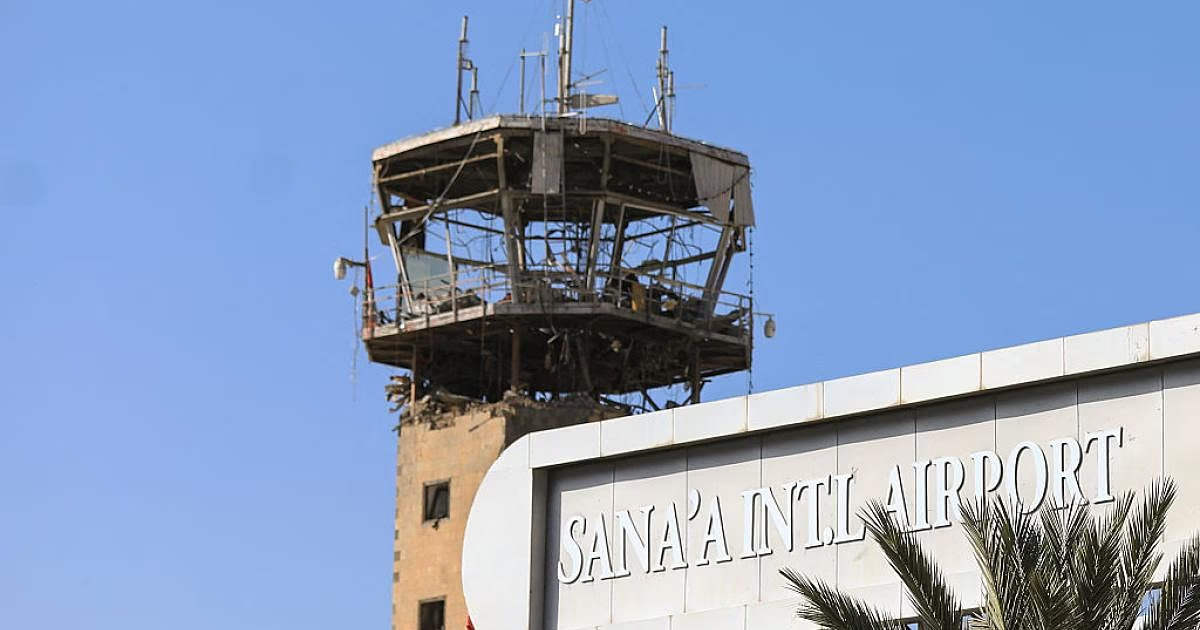
Implications of the New Houthi Escalation: Is Yemen Approaching a Comprehensive Conflict?

The Houthi group 'Ansar Allah' has raised the level of its military threats in recent days, signaling a move against the internationally recognized Yemeni government and Saudi Arabia. This escalation follows speeches by the group's leader, Abdul-Malik al-Houthi, in which he warned of his group's dwindling patience regarding what he described as the continued siege and control over national resources.

Observers believe that this escalating rhetoric reflects the group's desire to capitalize on regional changes, especially after recent international understandings, to improve its terms in any future negotiations. Through these pressures, the group aims to gain concessions on thorny issues, most notably salary payments, oil exports, and easing restrictions on ports.

Informed sources reported that the current threatening language may not necessarily translate into a widespread confrontation on the ground, given the continuation of diplomatic communication channels. The sources indicated that delegations from the group recently participated in meetings in Riyadh and Amman, suggesting the existence of a political track parallel to the escalating media rhetoric.

In a related context, the office of the UN envoy announced an initial agreement between the Yemeni government, the Kingdom, and the Houthi group to hold a meeting of the Military Coordination Committee next July. This anticipated meeting aims to discuss outstanding security issues, which reinforces the hypothesis that the parties still prefer dialogue over returning to a zero-sum war.

The Houthi group understands that a return to widespread war would undermine the fragile understandings achieved in recent years, which makes it deal cautiously with its military options. According to political analyses, the group manages its positions based on precise calculations that avoid engaging in an open confrontation whose outcomes may not be guaranteed at present.

The economic file stands out as one of the most important drivers of Houthi escalation, as the group seeks to achieve direct financial flows to cover its internal obligations. However, these ambitions clash with a firm American stance that sets red lines against any financial arrangements that are not part of a comprehensive and clearly defined political settlement under international supervision.

Sources indicate that Washington still opposes granting the Houthis additional resources outside the framework of a comprehensive political solution, fearing that it would strengthen their military capabilities away from the peace process. This international complexity increases the difficulty of reaching quick solutions for the salary and oil revenue files, pushing the group to exert more field pressure.

On the other hand, the military balance of power no longer necessarily favors the Houthis as it did in the early years of the conflict, according to recent military assessments. The forces affiliated with the Yemeni government have undergone extensive reorganization and training, which has increased their combat readiness and ability to counter any potential military adventures.

Field sources clarified that the Yemeni government has strengthened its security and military preparations, benefiting from accumulated experience and higher coordination among its various factions. This field development makes the cost of any military escalation by the Houthis very high and could lead to unforeseen negative consequences for the group and its allies.

For Saudi Arabia, it has worked in recent years to enhance its defense systems and protect its vital facilities more effectively. The recent Saudi-Iranian rapprochement has also provided a political margin for maneuver, reducing the likelihood of a major military explosion in the region and encouraging diplomatic solutions.

Analysts believe that the escalation of Houthi rhetoric is a multi-directional message, primarily targeting Saudi Arabia to pressure for the completion of previous understandings. The group is trying to say that it remains a key player in the security of the Red Sea and the region, and its vision cannot be overlooked in any upcoming regional or international arrangements.

Internally, anti-Houthi forces suffer from divergent priorities, which the group tries to exploit by unifying its political and military decision-making under one leadership. However, the continuous need for resources and funding remains the primary driver of the group's actions, whether through negotiation or by threatening military force.

In the event that the Houthis resort to limited military operations, they are likely to be in the framework of 'harsh messages' aimed at opening fronts for political pressure and nothing more. The exclusion of a comprehensive war scenario remains the most likely among most observers, given that all parties realize that the cost of confrontation today is much higher than it was in the past.

In conclusion, it appears that Yemen is experiencing a 'finger-biting' stage between the warring parties, where each side uses its available cards to improve its negotiating position. The bet remains on the extent of success of international and regional efforts to turn these threats into opportunities to complete the stalled peace process and end the suffering of the Yemeni people.

Threats issued from time to time seem closer to political and negotiating pressure tools than to indicators of a decision for comprehensive war.

OPINIONS

Tue 23 Jun 2026 9:41 pm - Jerusalem Time

What Awaits Groundwater Wells in the West Bank

There is no doubt that the need for water in the West Bank is increasing significantly, due to the needs of people for drinking water for everyone living in the West Bank, and also for agriculture for everyone farming in the West Bank. In addition, various factories also need water daily. These simple facts highlight the extent of daily water consumption for various daily life requirements. However, we all know that there are those who reside in the West Bank against our will and control everything, and at the same time, they monitor everything – I am talking about water, not anything else. A simple statistic states:

Only 36% of West Bank residents receive running water daily, 47% of West Bank residents receive running water less than ten days a month, and 92% of West Bank residents store water in tanks on their rooftops, in an attempt to overcome the problem of constant water scarcity. The total water consumption by Israelis during 2020 was ten times the total consumed by Palestinians in the West Bank.

However, Israel treats the water resources between the sea and the river as if they belong solely to it, and considers itself the exclusive authority empowered to make decisions regarding their use. Immediately after the occupation, Israel seized the Palestinian water sector and imposed severe restrictions and prohibitions on it. It compelled Palestinians to obtain permits from it to drill new wells and exploited new water sources for its own needs that it had not been able to access before the occupation, especially in the Jordan Valley.

In addition, Israel connected all settlements established throughout the West Bank – except those established in the valleys – to the Israeli water network. Settlements are supplied with water according to water consumption indicators within Israel, where the supply of water to Israeli towns on both sides of the Green Line is managed as a single system. However, what increases the danger and great concern is what the Foreign Affairs and Security Committee in the Israeli Knesset said on Wednesday, in a special session to discuss what was described as serious and systematic damage to the "national water system" in the occupied West Bank. Although Israel occupies the land, with its water and resources, and controls its capabilities, it accuses Palestinians in the West Bank of stealing water, drilling illegal wells, and illegally connecting to Israeli water networks belonging to the "Mekorot" company.

During the session, data was presented indicating that the Israeli Water Authority knows about approximately 440 "illegally" drilled wells, but estimates suggest that the actual number is much higher. The extent of the damage to the water system was also estimated at about 140 million cubic meters annually. It appears that this committee made decisions related to this meeting, which were not disclosed, but we will certainly see them on the ground. We should not forget that the occupation's water authority is undertaking significant measures, foremost among them inspecting all wells in the West Bank in terms of their depth and the amount of water they extract per hour, for example, on a regular basis. But once again, what happened in the meeting of the Foreign Affairs and Security Committee regarding the wells in the West Bank, their number, and their illegality, puts us in great concern in anticipation of measures on the ground that will exacerbate the current water crisis, making it related to the political project of the occupation, which says, "Dry up everything to force them to leave and depart." The question arises as to what awaits the West Bank and its groundwater.

PALESTINE

Tue 23 Jun 2026 9:40 pm - Jerusalem Time

Widespread Arrest Campaign Targets 21 Palestinians, Settler Attacks East of Ramallah

Israeli occupation forces launched a series of widespread raids and incursions early Tuesday morning, covering several governorates in the occupied West Bank. These operations resulted in the arrest of at least 21 Palestinians, including released prisoners and activists, amid strict security measures and thorough house searches.

In details of the aggression in the southern West Bank, Israeli forces stormed Al-Fawwar refugee camp south of Hebron, where they carried out raids on dozens of residential homes. Local sources reported that the occupation detained about 25 citizens for field investigations, before releasing the majority and keeping six of them under arrest.

Bethlehem Governorate also witnessed a significant escalation, with occupation forces arresting 11 citizens from various areas in the governorate. Among those arrested was released prisoner Marwan Mahmoud Fararjeh, who serves as the Secretary of the Fatah movement in Aida refugee camp, indicating a deliberate targeting of local leaders.

In the northern West Bank, arrests targeted a citizen from Kafr Qallil village, east of Nablus, and another from Tammun town, south of Tubas. Sources also reported that Israeli forces raided homes in Tulkarem Governorate and arrested two Palestinians after provocatively searching and vandalizing the contents of their homes.

For its part, the Prisoners' Information Office confirmed that these coordinated campaigns reflect a systematic escalation policy pursued by the occupation for months. The office explained that the focus on night raids and collective investigations aims to terrorize the population and specifically target active cadres and released prisoners.

In a related context to settler crimes, groups of settlers attacked Burqa village, east of Ramallah, early this morning. The attackers smashed two vehicles belonging to Palestinian citizens before withdrawing from the area under the protection of occupation forces present in the vicinity.

Burqa village is subjected to repeated and systematic attacks by settlers, including the destruction of agricultural lands and attacks on residential homes. These attacks come amid a general escalation in the pace of settler violence in various areas of the West Bank, often occurring under the gaze of the Israeli army.

Official Palestinian data indicates that the pace of arrests has increased unprecedentedly since the start of the aggression on the Gaza Strip in October 2023. Approximately 23,000 Palestinians from the West Bank have been arrested during this period, under harsh detention conditions that lack the minimum humanitarian standards.

The synchronization of these campaigns in several governorates reflects an escalation in the occupation's policy, especially through targeting released prisoners and activists.

PALESTINE

Tue 23 Jun 2026 9:40 pm - Jerusalem Time

Settlers perform Talmudic rituals in front of the Dome of the Rock amid tight protection

Dozens of extremist settlers stormed the courtyards of the blessed Al-Aqsa Mosque this Tuesday morning through the Mughrabi Gate, under strict security provided by the Israeli occupation forces. Local sources reported that the intruders carried out provocative tours throughout the Al-Haram Al-Sharif, in a move aimed at establishing the near-daily incursions as a forced reality within the mosque.

Video clips documented groups of settlers standing on the steps opposite the Dome of the Rock, where they openly performed collective Talmudic prayers and rituals. The Islamic Endowments Department in occupied Jerusalem confirmed that these violations also focused on the eastern area of the mosque, amidst intensive security measures by occupation police elements who accompanied the invading groups.

Coinciding with these incursions, the occupation forces tightened their repressive measures at the gates of Al-Aqsa Mosque, preventing many worshipers from entering and scrutinizing their personal identities. The occupation authorities also continued their policy of detaining IDs at the outer gates, in addition to issuing expulsion orders against a number of male and female guardians to prevent them from reaching and maintaining the mosque.

In the face of these developments, Palestinian calls escalated from various national and religious events for the people of Jerusalem and the occupied Palestinian interior to intensify their presence and steadfastness in Al-Aqsa Mosque. These calls emphasized the importance of popular mobilization to thwart the occupation's plans aimed at changing the existing historical and legal status in Al-Haram Al-Sharif, and to confront attempts at temporal and spatial division.

These violations come amidst a continuous escalation by settler groups that receive direct support from the Israeli government to perform their rituals inside the mosque. Observers believe that the continuation of these public incursions in front of the Dome of the Rock represents a major provocation to the feelings of Muslims, and aims to impose new realities that cross the red lines in place for managing the affairs of Al-Aqsa Mosque.

The settlers collectively performed public Talmudic prayers and rituals on the steps opposite the Dome of the Rock.

ARAB AND WORLD

Tue 23 Jun 2026 9:40 pm - Jerusalem Time

Damascus's Stance on Lebanon: Al-Shara Rejects Trump's 'Military Proxy' and Adheres to the Economic Path

The head of the Syrian government, Ahmed Al-Shara, settled the debate surrounding the possibility of Syrian forces engaging in a military confrontation against "Hezbollah" within Lebanese territory. Al-Shara clearly explained that the current Syrian approach completely avoids armed conflicts, emphasizing that Damascus seeks to build bridges of economic cooperation and reconnect vital arteries between the two neighboring countries, rather than engaging in proxy military missions.

These statements come in response to reports indicating US President Donald Trump's desire to refer the "Hezbollah" file to the Syrian side, due to his frustration with the stalled Israeli military operations in achieving their ultimate goals. Observers believe that the official Syrian position is rational by refusing to be drawn into dangerous pitfalls that could threaten regional stability and hinder the ongoing international understandings, especially concerning the Iranian file.

Regarding the relationship with "Hezbollah," Al-Shara adopted a discourse that combines firmness and historical review, recalling the war crimes in which the party participated inside Syria during the Assad regime, but at the same time affirmed turning that page for the sake of building a new Syria. He sent a message to the party's environment, citing the principle of reviewing the truth, considering that the real battle his country faces now is the war against poverty, living collapse, and reconstruction.

The Syrian position concluded that any positive influence of Damascus within Lebanon remains contingent primarily on internal Lebanese consensus, with full respect for national sovereignty. This approach puts the ball in the court of Lebanese forces, specifically Hezbollah, to review the options of regional dependency that could endanger civil peace, at a time when Syria seeks to fortify its internal arena away from military adventures with uncertain outcomes.

We are looking for economic lines between Lebanon and Syria, not military lines, and our proposal with Washington is based on the necessity of stopping the war.

OPINIONS

Tue 23 Jun 2026 9:40 pm - Jerusalem Time

The Israeli Trap: How Has the Arab Stance Eroded in the Face of Annexation and Extermination Policies?

Ramallah - “Alquds ” dot com

Ramallah - “Alquds ” dot com

Opinion Writer

The primary criterion for assessing the justice of the Palestinian cause among Arabs has always been linked to the extent of official policies' ability to directly confront Zionist aggression. With the ongoing crimes of genocide and ethnic cleansing policies, these criteria seem to have lost their effectiveness, as depriving Palestinians of any political gain has become an implicit goal for some regional and international powers.

The occupation authorities have succeeded in imposing the 'fatigue and disengagement' equation on the Arab periphery, using tools of military arrogance and political blackmail. This path has necessarily led to the acceptance of what is called 'peace of power,' which has left the Arab street in a state of forced habituation to news of destruction without a real ability to effect change.

The recent escalatory steps, such as the cancellation by the occupation's Finance Minister Bezalel Smotrich of the 1997 Hebron Agreement, confirm the premeditated intentions for complete control. Control over the Ibrahimi Mosque and the establishment of new settlement plans reflect an Israeli desire to erase any trace of previously signed agreements, amidst suspicious international silence.

The matter did not stop at the Hebron Agreement but extended to movements within the Knesset to completely cancel the 1993 Oslo Accords. This trend proves that the path of Israeli aggression on the ground has surpassed all political understandings, exploiting the global failure to prevent ongoing war crimes in the Gaza Strip and the West Bank.

Annexation and settlement plans are accompanied by fascist statements from occupation leaders, with National Security Minister Ben Gvir openly calling for the burning of Lebanon. This aggressive nature is no longer just a verbal threat but is translated daily through policies of total displacement of populations in Jerusalem and the West Bank, and the demolition of properties in Gaza.

In contrast, some Western capitals merely express 'timid displeasure' at the settlers' behavior, while continuing to supply the occupation with weapons. The United States adopts the narrative of 'self-defense' as a cover for crimes, despite knowing that American shells are claiming the lives of civilians in Gaza and Lebanon.

Israel's policy of escaping forward through expansion and aggression has completely undermined the pillars of stability in the region. If the fate of the Palestinian Authority is self-fettering within the Ramallah compound, then questions increase about the utility of political initiatives that are celebrated while settlement devours the land.

Official Arab positions have not yet crystallized into a formula of real pressure or an effective lever to support Palestinian steadfastness. Instead, the Arab League appears in a marginal role that is inconsistent with the fateful moments the region is experiencing, deepening the gap between peoples and their regimes.

This Arab retreat cannot be linked solely to other regional tensions or conflicts with neighboring powers; rather, it is the result of clear political choices. International understandings on certain issues have not positively impacted the cessation of Israeli aggression or the prevention of expansion in Syria, Lebanon, and the West Bank.

There is a state of imbalance in assessing responsibilities, where excuses are sought for the occupation to justify silence on its continuous crimes. Even in cases where the crime cannot be justified, traditional condemnations and denunciations appear, which have never succeeded in protecting Arab self-interest or deterring the aggressor.

Abandoning the weapon of economic and political boycott has granted the perpetrator continuous impunity and encouraged further encroachment. Instead of besieging the occupation, we find that Arab sovereignty is eroding, while the enemy continues to impose its agenda by force and fire.

It is a painful irony that the Arab role often boils down to that of an 'intelligence mediator' seeking to prevent embarrassment for regimes. This role reduces the issue to narrow security dimensions, ignoring the historical and political rights of the Palestinian people who face an unrelenting killing machine.

Solidarity with Palestine in some Arab circles has become classified as an act detrimental to national security, a dangerous shift in political consciousness. While some elites view the occupation as a potential ally, institutions and unions attempting to raise their voice in protest against Israeli crimes are being suppressed.

Ultimately, Arabs find themselves falling into the same trap set by Washington and Tel Aviv decades ago. Each time they try to escape by making new concessions, they find themselves bound by tighter restrictions, while Israel continues to write a new reality with blood and destruction at the expense of Arab rights.

Israel discusses with Arabs and Palestinians with blood and fire, while Arabs discuss with Palestinians with the sword of austerity and abandonment, and crawl towards normalization with the occupation.

PALESTINE

Tue 23 Jun 2026 9:39 pm - Jerusalem Time

Under threat of arms.. The occupation forces a young man from Jenin to broadcast a threatening message to 'Telegram' followers

Social media platforms were abuzz with a video clip documenting harsh moments of a young Palestinian man from Jenin Governorate, who fell into the hands of the Israeli occupation forces. They forced him to deliver a threatening message to followers of the 'Telegram' platform. The young man, a resident of Arraba village east of the city, appears sitting in a coerced position while two soldiers point their weapons directly at his head and body to complete the filming process.

During the widely circulated recording, the young man was forced, under duress, to address members of a local group he manages, announcing that the army had arrested him from his home. In his forced message, the detainee demanded that all subscribers leave the group immediately, warning them that remaining in it would expose them to arrest and security pursuit by the occupation authorities.

The occupation did not stop at forcing the young man to speak; the clip also included the voice of a soldier who identified himself as 'Captain Youssef,' directing direct threats to anyone monitoring army movements. The soldier claimed that he had a list of the names of all members and photographers who monitor military incursions, emphasizing that the forces would reach every individual in their home.

Local sources reported that the targeted young man managed a news channel specialized in monitoring Israeli military movements and alerting residents when incursions occurred in villages and towns. The sources clarified that the arrest and filming took place in a public place before the young man was transferred to an unknown location to complete his interrogation on charges of incitement and monitoring army activity.

This incident reflects the Israeli anxiety about local news groups that Palestinians in the West Bank rely on to avoid checkpoints and sudden raids. These digital platforms are considered a civilian defensive tool used by residents to document violations and warn passersby and workers of the dangers of roads where military forces are present.

This incident comes amid an unprecedented field escalation witnessed in West Bank cities since October 2023, where the pace of night raids and abuse of prisoners has increased. Human rights reports indicate that the occupation has been using technological and psychological means to intimidate digital activists in an attempt to impose a complete blackout on its field movements.

According to official data, the toll of violations in the West Bank has reached record levels, with more than 1173 Palestinians martyred and thousands injured to varying degrees. Arrest campaigns have also affected about 23,000 citizens, under harsh conditions aimed at breaking popular will and preventing any form of monitoring or peaceful resistance.

I am Captain Youssef, I know all members of the group and everyone who photographs army movements, and we will reach everyone who transgresses against us.

ARAB AND WORLD

Tue 23 Jun 2026 9:39 pm - Jerusalem Time

Moscow Accuses Washington of Undermining Mediation Efforts and Escalating Economic Pressure

The Russian leadership has sharply criticized the American administration, accusing it of clearly abandoning its role as a neutral mediator in the ongoing Ukrainian crisis. Moscow believes that Washington's current approach primarily focuses on increasing the pace of economic pressure and imposing more sanctions, instead of creating the appropriate ground for reaching a comprehensive political settlement that would end the conflict that erupted in 2022.

In this context, Russian Foreign Minister Sergey Lavrov, during a meeting with foreign ambassadors in the capital Moscow on Tuesday, affirmed that American behavior, both on the ground and politically, demonstrates Washington's unwillingness to play an impartial role. Lavrov explained that the current approach is based on a systematic escalation of sanctions pressure, which contradicts the requirements of diplomatic mediation that necessitate maintaining an equal distance from all parties to the conflict.

These statements come at a sensitive time when American diplomatic efforts are experiencing a stagnation, despite the promises made by President Donald Trump since his return to power in 2025. Despite declared efforts to push Moscow and Kyiv towards the negotiating table, the reality on the ground and politically indicates a wide gap between the White House's aspirations and the results achieved so far.

On the international front, the G7 summit hosted by France earlier this month showed Western consensus, in which Trump participated, on tightening the noose on the Russian economy. The summit's final communiqué included explicit commitments to strengthen Ukrainian air defense systems, in addition to imposing new strict restrictions targeting Russian energy sector revenues, which Moscow considered blatant bias.

Russian criticism was not limited to Washington alone but also included the European continent, which Lavrov described as once again becoming a source of threat to international peace and security. The Russian Foreign Ministry considered that the continued qualitative military support provided by European capitals to Kyiv contributes to prolonging the military confrontation and undermines any real opportunities for launching a serious and sustainable peace process.

Regarding negotiation terms, Moscow still insists on the necessity of Ukrainian forces withdrawing from specific areas in the Donbas region that are still under Kyiv's control as a prerequisite for any agreement. Russia considers this demand a security necessity that cannot be conceded, while it believes that continued Western support encourages the Ukrainian side to reject these proposals and adhere to its hardline positions.

In contrast, the Ukrainian government rejects these conditions outright, considering that any concession of territory would encourage Russia to continue its military and political ambitions. Kyiv emphasizes that any future agreement must fully guarantee its national sovereignty and internationally recognized territorial integrity, stressing that Western military support is the only guarantee to prevent the collapse of defensive fronts.

The United States, judging by its actions, no longer seeks to play the role of a neutral mediator, but rather follows an approach based on escalating sanctions pressure against Russia.

PALESTINE

Tue 23 Jun 2026 9:39 pm - Jerusalem Time

The Hebron Protocol of 1997: When Temporary Division Became Permanent Settlement Reality

The 1997 Hebron Protocol is one of the most controversial turning points in the history of the Palestinian-Israeli conflict. It was not merely a set of political texts but left deep impacts on Palestinian geography and consciousness. This agreement redrew the boundaries of control within one of the oldest and most symbolic Palestinian cities, at a time when Palestinians hoped for a comprehensive Israeli withdrawal.

The agreement, signed on January 15, 1997, addressed the unique situation of Hebron, which includes the Ibrahimi Mosque (Cave of the Patriarchs) and settlement outposts within its urban fabric. Under this protocol, the city was divided into two distinct areas with differing powers and sovereignty, creating a complex reality that affected the lives of tens of thousands of Palestinian residents who found themselves victims of the new spheres of influence.

The first area, known as 'H1', covered about 80% of the city's area, where administrative and security responsibilities were transferred to the Palestinian Authority. Although this part seemed like a restoration of sovereignty, it remained constrained by the security arrangements imposed by the occupation on the entrances and exits connected to the second area.

The second area, 'H2', remained under full Israeli control. This area includes the Old City, the Ibrahimi Mosque, and the settlements. This division placed thousands of Palestinians under direct military rule, turning their daily lives into a series of confrontations with permanent checkpoints and barriers.

Politically, the agreement was marketed at the time as a step towards peace and a continuation of the Oslo Accords. However, reality proved it to be a 're-engineering' of the occupation. Israel retained strategic and sensitive locations, while granting Palestinians limited administration in densely populated areas, constrained by heavy security obligations.

Since then, Hebron has become a stark example of the idea of 'control without withdrawal,' where the world was led to believe in an Israeli military retreat while dominance was entrenched in the heart of the city. Over the years, the historical heart of Hebron has transformed into a closed space filled with electronic gates and concrete blocks that separate neighbors from each other.

This reality has shifted the conflict from a comprehensive confrontation with the occupation to a fragmented management of daily life, where laws and security responsibilities have become intricately intertwined. The distance between one street and another in Hebron now means moving from a certain level of freedom to strict security restrictions imposed by the occupation forces.

Economically, the city paid a heavy price due to this geographical and security division, as commercial activity in the historical markets was paralyzed. Hundreds of shops closed their doors forcibly or due to a lack of customers, leading to the deterioration of the vital economic artery that the Old City represented for the entire southern West Bank.

The division is no longer just lines drawn on political maps; it has become a daily factor reshaping the social fabric and human relations within the city. Barriers have completely isolated families and made access to essential services or visiting relatives a journey fraught with risks and administrative complexities.

The protocol entrenched an unequal security equation, where the presence of a small number of settlers justified imposing exceptional measures on tens of thousands of Palestinians. This paradox made 'Israeli security' the absolute priority, overriding all human and civil rights of the indigenous population in the city.

With the faltering of political settlement paths in subsequent decades, the Hebron Protocol transformed from a temporary transitional arrangement into a permanent reality that is difficult to overcome. The exceptions made in 1997 are now the rules governing the city today, reflecting a deep crisis in the approach of partial agreements that do not end the occupation.

Observers believe that this agreement embodies the failure of peace bets that are not based on justice and ending the root causes of the conflict. Instead of being a bridge towards independence, the protocol became a tool to legitimize the settlement presence in the heart of major Palestinian cities under the guise of security coordination.

After nearly three decades, the streets of Hebron and its closed markets still bear witness to the complexities of that agreement, which tightened the noose on the homeland and expanded the influence of the occupation. The city, once a symbol of historical diversity, is now an intense model of the identity and sovereignty conflict that was not resolved by papers signed in closed rooms.

The question posed by Hebron's contemporary history remains suspended above its minarets and barriers: Was the 1997 protocol a step towards liberation or an innovative formula for sustaining the occupation? The city's reality today indicates that true peace is not made by dividing spheres of influence, but by completely ending the system of control.

The Hebron Protocol was not merely a partial withdrawal, but a re-engineering of control with new tools through which the occupation retained strategic and religious sites.

OPINIONS

Tue 23 Jun 2026 9:39 pm - Jerusalem Time

UN Inquiry Committee Accuses Israel of Genocide in Gaza Through Deliberate Targeting of Children

Washington Message

Washington – Said Arikat - 23/6/2026

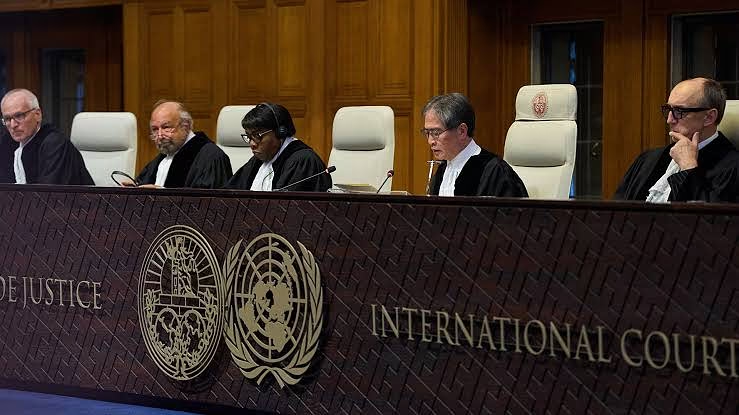
An independent international commission of inquiry affiliated with the United Nations Human Rights Council stated that it has reasonable grounds to believe that Israel has committed acts amounting to genocide, crimes against humanity, and war crimes in the Gaza Strip, through the deliberate targeting of Palestinian children and causing the death and injury of hundreds of thousands of them.

The commission, in a new report issued on Tuesday, clarified that Israeli authorities and their security forces "deliberately carried out actions that led to the death and inflicted severe physical and psychological harm on hundreds of thousands of Palestinian children," noting that the killings continued even after the ceasefire witnessed in Gaza during recent months.

The report added that the commission concluded that there are reasonable grounds to believe that these actions constitute part of a "deliberate strategy to destroy the future of Palestinians in Gaza by targeting their children," considering that what happened is not limited to isolated violations, but falls within a broad and systematic pattern of practices targeting the demographic and social structure of Palestinian society.

The report also accused Israeli forces of committing war crimes in the occupied West Bank, in addition to the violations attributed to them in the Gaza Strip, indicating that children were among the most affected groups by the ongoing military operations.

The Israeli Ministry of Foreign Affairs categorically rejected the report, describing its findings as "null and slanderous," considering it a "propaganda document" lacking credibility and objectivity, a stance that reflects the ongoing disagreement between Israel and UN investigation mechanisms regarding the war in Gaza.

These accusations come in the context of the war launched by Israel on the Gaza Strip following the attack on October 7, 2023, led by the Hamas movement and other Palestinian factions against towns and military sites in the Gaza envelope area, which resulted in the killing of about 1,200 people, including 391 soldiers, and the capture of 251 others, according to the Israeli narrative.

Since then, at least 73,035 Palestinians have been killed in the Gaza Strip, including more than 21,280 children, according to the Palestinian Ministry of Health in Gaza. The United Nations and many international organizations consider these figures to be highly reliable despite ongoing political debate surrounding them.

The Independent International Commission of Inquiry on the Occupied Palestinian Territory and Israel was established in 2021 by a resolution of the United Nations Human Rights Council to investigate alleged violations of international humanitarian law and international human rights law. Although the commission does not officially speak on behalf of the United Nations, its reports receive widespread attention within international institutions and relevant legal forums.

The UN inquiry commission's report represents the latest episode in the escalating legal and political debate surrounding the nature of the Israeli war in Gaza. While Israel focuses on its right to self-defense after the October 7 attacks, international voices are increasingly arguing that the enormous scale of human losses, especially among children, exceeds the limits of traditional military operations and falls within the scope of grave violations of international law. The report gains particular importance because it links the targeting of children with the concept of genocide, a description that carries serious legal and political dimensions that could affect the course of international accountability in the future.

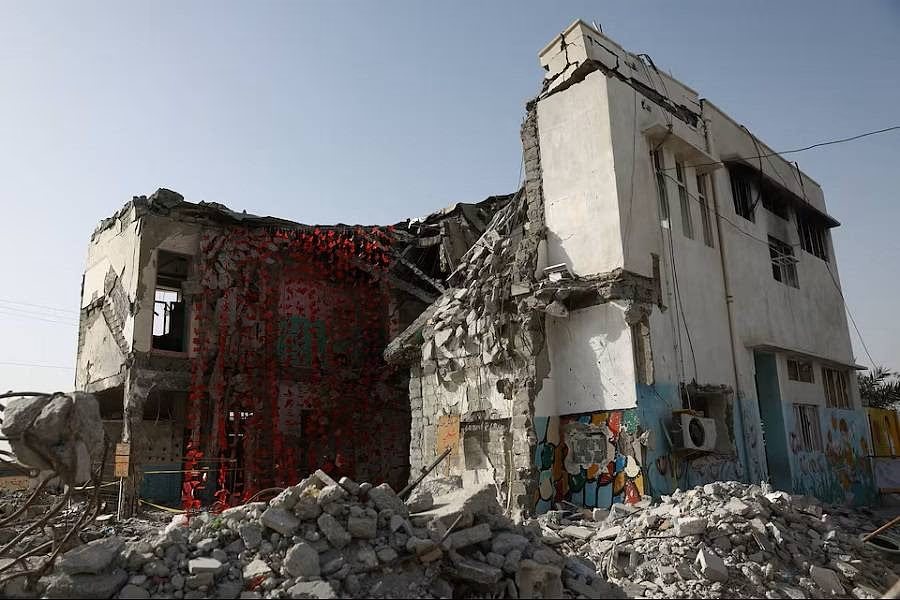
The report comes at a time when Israel is facing increasing diplomatic and judicial pressure from international institutions and global human rights organizations. In recent months, calls for independent investigations into the targeting of civilians and civilian infrastructure, including schools, hospitals, and shelters, have increased. The focus on children reflects a significant shift in international human rights discourse, as the discussion is no longer limited to the number of victims, but now addresses the long-term effects of the war on the future of Palestinian society and its ability to recover and rebuild after the end of military operations.

Despite Israel's categorical rejection of the report's content, its repercussions may extend beyond political and media debate to influence legal discussions before international judicial bodies. The report may also add momentum to demands for imposing more pressure on Israel to halt military operations and ensure the protection of civilians. In contrast, Israel's supporters believe that such reports ignore the complexities of the conflict and the role of Palestinian armed groups. Between these two opposing positions, Palestinian civilians, especially children, remain the party most bearing the cost of the war that has been ongoing for nearly three years.

PALESTINE

Tue 23 Jun 2026 9:38 pm - Jerusalem Time

Surprise Israeli Moves to Revive Plans for Displacing Gaza Residents Under the Guise of 'Voluntary Migration'

The issue of displacing Palestinians from the Gaza Strip has once again taken center stage in the political and security landscape within Israel, as media sources revealed intensive moves led by the new head of the National Security Council, Shmuel Ben Ezra. These moves have caused a state of astonishment within security circles due to their sensitive timing, especially after the call for an urgent meeting to discuss what is called 'encouraging voluntary migration'.

The meeting, chaired by Ben Ezra, saw wide participation from representatives of the Ministry of Defense and the Israeli army, in addition to leaders from the Mossad and the Shin Bet (General Security Service). This step comes just two weeks after Ben Ezra assumed his position, succeeding Tzachi Hanegbi, who was dismissed last October, indicating new directions in managing this file.

During the deliberations, Mossad representatives acknowledged the existence of fundamental obstacles preventing the implementation of these plans on the ground. Sources confirmed that the agency has not yet succeeded in finding any country in the world that shows actual willingness to receive hundreds of thousands of residents of the Strip, which puts the plan in a major logistical and political dilemma.

Security circles expressed their surprise at the speed with which the file was brought up again, as discussions about 'voluntary migration' had ceased for many months. Observers believe that summoning security agency leaders in this manner suggests high-level political pressure to revive a project that was previously described as unfeasible.

In the context of searching for the motives behind this move, sources quoted security officials as ruling out any international change that would allow this step without complex coordination. However, a hypothesis emerged suggesting that the revival of the program might be linked to secret understandings recently held between Prime Minister Benjamin Netanyahu and US President Donald Trump.

Estimates indicate that Washington may have given implicit approval for these moves as a form of 'compensation' to Israel for concessions it made in other regional files, specifically regarding the agreement with Iran. This link between the two files reflects the complexity of the political calculations that govern the fate of the Gaza Strip in international decision-making circles.

For his part, a political source in the Knesset downplayed the practical feasibility of these moves, describing them as lacking the necessary international and political cover. The source affirmed that the categorical Arab rejection and the unified international stance against displacement make these plans merely a tool used by Netanyahu for domestic consumption or political maneuvering.

Defense Minister Yisrael Katz had previously made statements vowing to implement the displacement plan, asserting that 'everything will happen in its own time'. Despite the formation of the 'Directorate for Voluntary Transition of Gaza Residents' earlier in 2025, this body has not recorded any tangible practical steps on the ground since its establishment, remaining merely an administrative structure without results.

In previous attempts, reports revealed that Caroline Glick, Netanyahu's international affairs advisor, had made contacts with African parties such as 'Somaliland' and the Democratic Republic of Congo. These contacts aimed to find a foothold for displaced Palestinians, but these efforts failed and did not result in any formal agreements.

These moves intersect with the 'Gaza Riviera' proposal promoted by Donald Trump, which envisions transforming the Strip into a luxury tourist area after its evacuation of residents. This vision relies primarily on the idea of transferring Palestinians to third countries, with the United States taking full oversight of the administration and reconstruction of the area.

In parallel, extremist right-wing organizations such as 'Ad Kan' are active in organizing secret trips to transfer limited numbers of Palestinians to countries such as South Africa and Indonesia. These organizations use intermediary associations to conceal their direct connection to the occupation, in an attempt to create a new demographic reality, even if its impact remains limited.

This activity comes at a time when the Gaza Strip is suffering from an unprecedented humanitarian catastrophe, as the ongoing aggression since October 2023 has left more than 73,000 martyrs and massive destruction of infrastructure. The occupation authorities are betting that the 'scorched earth' policy and daily hell might push residents to seek a forced exit under the name of migration.

Despite all these pressures, Palestinians in the Gaza Strip continue to demonstrate their attachment to their land and their categorical rejection of all displacement projects, whether forced or under 'voluntary' pretexts. Gazans affirm that staying in camps and destroyed homes remains the only option in the face of ethnic cleansing plans that Israel seeks to impose.

In conclusion, the Israeli displacement project continues to collide with a solid wall of Palestinian, Arab, and international rejection, despite repeated attempts to revive it. The recent moves by the Israeli National Security Council remain an indicator of the continued security mindset in searching for radical demographic solutions that transcend human rights and international laws.

This step lacks political and international feasibility, especially with the categorical rejection from Arab countries and the international community, but Netanyahu finds in it a convincing justification.

PALESTINE

Tue 23 Jun 2026 9:38 pm - Jerusalem Time

Warnings of danger threatening the lives of pregnant female prisoners in occupation prisons due to abuse and starvation

Palestinian human rights organizations have launched an urgent distress call due to the exacerbated suffering endured by three pregnant female prisoners inside Israeli occupation detention centers, where they face harsh detention conditions that contradict the lowest humanitarian standards. Sources confirmed that the systematic starvation policy and continuous abuse now pose a real danger threatening the lives of the female prisoners and the safety of their fetuses, in the absence of medical care.\n\nThe Prisoners' Affairs Authority and the Palestinian Prisoner's Club warned of the rapid deterioration in the conditions of female prisoners in general, and pregnant women in particular, especially with the occupation authorities continuing to prevent the International Committee of the Red Cross and prisoners' families from visiting. These measures are part of a series of collective punishments imposed by the prison administration since the start of the widespread aggression against the Palestinian people.\n\nThe case of female prisoner Amina Shaher Al-Tawil (37 years old) from Qalqilya city stands out as one of the painful examples. She is a mother of four children and is four months pregnant. The occupation authorities have continued to detain her since last March on the pretext of incitement. Al-Tawil lives in difficult health conditions, lacking the necessary nutritional supplements for her condition, despite being the wife of a released prisoner who spent many years in prison.\n\nIn a related context, female prisoner Dana Enad Joudeh (35 years old) from Nablus faces an unknown fate after being transferred to administrative detention for six months without a clear charge or a fair trial. Dana, who is in her fifth month of pregnancy, suffers from the consequences of detention in an unhealthy environment, which increases concern for her fetus in light of the deliberate medical negligence policy pursued by the Damon Prison administration.\n\nAs for female prisoner Manar Ibrahim Ibrahim (28 years old) from Ramallah, she is held in cells while four months pregnant. She was arrested at the end of last April due to her activity on social media platforms. Legal reports indicate that Manar is subjected to harsh interrogations that do not take into account the specificity of her health condition, exposing her to severe physical and psychological exhaustion.\n\nHuman rights sources, based on testimonies from released female prisoners and visits by legal teams, reported that the prison system has escalated its retaliatory measures, which included unprecedented and humiliating naked searches. The sources explained that these practices are part of a comprehensive approach aimed at breaking the will of male and female prisoners through continuous physical and psychological abuse.\n\nThe data indicates that female prisoners go through harsh stages of detention, starting from violent interrogation centers, then transfer to 'Hasharon' prison as a temporary detention station lacking the most basic necessities, leading to 'Damon' prison. In all these stations, pregnant women are deprived of balanced meals or regular examinations necessary to monitor fetal growth and maternal health.\n\n"The Prisoners' Affairs Authority revealed a state of severe overcrowding inside the female prisoners' rooms, which led to the spread of skin diseases and difficulty in movement and breathing, especially for pregnant women who need special care spaces. The Authority described the situation inside Damon Prison as 'catastrophic,' where the administration deliberately ignores vital demands to provide adequate clothing and blankets or improve the quality of food provided.\n\nPalestinian institutions called on international bodies and women's and human rights organizations to intervene immediately to pressure the occupation to end the isolation of female prisoners and stop the policy of medical negligence. They stressed that the continued detention of pregnant women in these conditions represents a flagrant violation of the Fourth Geneva Convention and all international conventions that guarantee the protection of civilians and women under occupation.\n\nIt is worth noting that the number of female prisoners in occupation prisons has reached 93, including children and elderly women, as part of a widespread arrest campaign that has targeted more than 765 women since last October. These statistics come amid an increase in the total number of prisoners in prisons to about 9,500 prisoners, all of whom live under the weight of unprecedented repressive measures in the history of the prisoner movement.\n\nPregnant female prisoners are not immune from systematic torture and oppression and humiliating and naked searches, which have become a policy that has escalated in the context of the genocide approach inside prisons.

PALESTINE

Tue 23 Jun 2026 9:38 pm - Jerusalem Time

Two Martyrs by Occupation Bullets in Nabatieh, Hezbollah Condemns 'Flagrant' Ceasefire Violation

Two martyrs fell and others were injured today, Tuesday, as Israeli occupation forces opened fire on a group of civilians in southern Lebanon. Official sources reported that the occupation army targeted citizens in the Deir neighborhood of Nabatieh al-Fawqa while they were attempting to open closed roads and retrieve the bodies of martyrs from under the rubble.

For its part, Hezbollah issued a statement condemning the incident, considering the enemy army's act of firing machine guns from among homes at civilians a blatant violation of existing understandings. The party affirmed that the resistance has adhered to the ceasefire until now, warning of the repercussions of these repeated aggressions on the stability of the front.

In a separate incident, a number of residents of the town of Hadatha in southern Lebanon were subjected to gunfire by occupation forces while on their way to bury their dead in the town's cemetery. This aggression occurred despite coordination and escort from the Lebanese army for the funeral procession, reflecting the continued field tension despite the relative calm.

These bloody field developments come at a time when the fifth round of talks between Beirut and Tel Aviv has begun in the American capital, Washington. These discussions, taking place at the US State Department headquarters, aim to solidify the pillars of stability and reach final understandings that would end the ongoing conflict.

On the international level, the United States and Iran concluded a first round of negotiations in Switzerland, which resulted in a memorandum of understanding aimed at ending the war in the region. The two parties agreed to establish an international mechanism called the 'Dispute Resolution Cell' in Lebanon, to ensure the prevention of any new military escalation that could threaten the major understandings.

Iranian Foreign Minister, Abbas Araghchi, described the establishment of this cell as the first real test of the seriousness of the parties in adhering to the memorandum of understanding. Araghchi indicated that Tehran closely links the implementation of the agreement with Washington to a comprehensive and final cessation of the war on Lebanese territories.

Tehran had previously taken escalatory steps, including closing the Strait of Hormuz in response to Israeli strikes, before the intensity of the raids decreased since last Saturday evening. These threats led to a relative calm in the Lebanese atmosphere, prompting the occupation authorities to lift restrictions on the northern border areas.

Despite this cautious calm, the spokesperson for the UN Secretary-General, Stéphane Dujarric, confirmed the monitoring of extensive ground activities by the occupation army in areas south of the Litani. Dujarric clarified that UNIFIL forces continue to observe intensive Israeli military movements despite the general decline in the pace of direct hostilities.

In contrast, Israeli Prime Minister Benjamin Netanyahu stressed that his forces retain what he described as 'complete freedom' to act against any threat in southern Lebanon. Netanyahu affirmed that the Israeli army will remain deployed in the border areas as long as the military leadership deems it necessary, indicating no immediate withdrawal.

Politically, Lebanese President Joseph Aoun received a phone call from his French counterpart, during which they discussed the latest field developments in the South after the announcement of the ceasefire. The call addressed the subsequent diplomatic steps required to strengthen Lebanese sovereignty and ensure no return to comprehensive confrontations.

It is worth noting that the Iranian-American memorandum of understanding stipulated in its first clause an immediate and permanent cessation of military operations on all fronts. However, observers believe that the continuous Israeli violations in Nabatieh and Hadatha place these international understandings before difficult challenges that could lead to their collapse at any moment.

What the enemy did is a flagrant violation of the ceasefire that the resistance has adhered to until now.

OPINIONS

Tue 23 Jun 2026 9:38 pm - Jerusalem Time

Rubio from the Gulf: Progress with Iran contingent on international inspection and curbing armed proxies

Urgent: Washington's Message

Washington – Said Arikat – 23/6/2026

US Secretary of State Marco Rubio affirmed that the future of the negotiating path between Washington and Tehran depends on the extent of Iran's commitment to the pledges it made during the recent talks, especially regarding cooperation with the International Atomic Energy Agency, stressing that the US administration "knows exactly what Iran has agreed to," and that the decision is now in the hands of the Iranian leadership to move forward or face new options that President Donald Trump may decide.

Rubio's statements came during a meeting with journalists in the United Arab Emirates, as part of a Gulf tour aimed at consulting with regional allies on developments in negotiations with Iran and the resulting security and political implications.

Rubio said that the public disagreements issued by Iranian officials regarding the acceptance of international inspections do not change Washington's understanding of what was agreed upon, adding that the implementation of Iranian commitments will open the door for the continuation of the political process, while backtracking will lead to a comprehensive American review of the current path.

The US Secretary affirmed that Washington views its Gulf partners as an essential party in any future security or political arrangements, noting that the purpose of the visit is to listen to their assessments and concerns after the recent meetings held in Switzerland regarding the Iranian file.

Regarding the position of the Gulf states on the proposed framework for understanding with Tehran, Rubio explained that all allies support the principle of peace and de-escalation, but that ultimate success depends on the details and implementation mechanisms. He added that the crisis, which has lasted for nearly five decades, cannot be resolved in a few days, despite what he described as the progress achieved in recent hours.

Rubio indicated that the US administration is aware of the security and economic concerns of the region's countries, stressing that these concerns will be an essential part of any future agreement, given that the Gulf states will be most affected by the outcomes of understandings or their failure.

In response to questions about proposals to establish a fund for the reconstruction of Iran in the event of a comprehensive agreement, Rubio denied the existence of any American plans to finance such a fund, stressing that the United States will not provide government funds for this purpose.

However, he noted that Iran could obtain extensive investment opportunities if it chooses to transform into a "normal state" instead of continuing what he described as supporting armed movements and exporting terrorism. He added that any future investment flows will remain contingent on tangible progress in other security and political files.

Regarding the Lebanon file, Rubio stressed that the ongoing discussions between Lebanese and Israeli officials in Washington are separate from the negotiations with Iran, affirming that Lebanon is a sovereign state and that its future must be decided by the Lebanese through their elected institutions.

He explained that he had contacted Lebanese President Joseph Aoun, and that the United States is working directly with the Lebanese government to address bilateral issues, while acknowledging that Iranian support for Hezbollah will remain part of the US-Iranian dialogue.

Regarding criticisms that the current draft understanding does not clearly include the issue of Iranian missiles or the activities of Tehran's allied groups in the region, Rubio affirmed that these issues will be an essential part of future negotiations.

He said that talk of ending conflicts in the Middle East cannot be achieved as long as groups linked to Iran launch missiles and drones or engage in armed activities, considering that addressing these issues is a necessary condition for the success of any lasting agreement.

The US Secretary also addressed the issue of navigation in the Strait of Hormuz, affirming that freedom of navigation is a principle governed by international law, and that the waterway is an international passage over which no state has the right to impose fees or restrictions on its transit, expressing his belief that the countries of the region agree with this principle.

Rubio's statements reveal that the US administration seeks to market negotiations with Iran as a gradual process that goes beyond the nuclear file towards reshaping entire regional balances. The repeated talk about armed proxies, missiles, and regional influence suggests that Washington does not view the anticipated agreement as merely a technical understanding on enrichment and inspection, but rather a broader framework for readjusting Iranian behavior in the Middle East. However, past experiences indicate that linking all these complex issues to a single agreement may make the chances of success more difficult, given the conflicting regional interests and the entanglement of existing crises.

Rubio's focus on consulting with Gulf allies also reflects a growing American realization that any agreement with Iran will not be sustainable if regional partners feel that their security interests have been ignored. The Gulf states view with concern Iranian missile programs and the network of armed allies spread across several Arab countries, and believe that addressing these issues is no less important than addressing the nuclear program itself. Therefore, it appears that Washington is trying to strike a delicate balance between the requirements of understanding with Tehran and reassuring allies who fear a repeat of past experiences that raised their suspicions.

As for the Lebanese aspect, Rubio's statements reveal an American attempt to separate the path of building the Lebanese state from the path of negotiation with Iran, despite his explicit acknowledgment of Tehran's continued influence through Hezbollah. This approach reflects Washington's desire to strengthen the legitimacy of Lebanese institutions and give the new government a wider margin to act away from regional tug-of-war. However, the success of this approach will remain linked to the ability of the Lebanese state to impose its full authority, a goal that still faces complex political and security challenges amid continued internal divisions and border tensions with Israel.

ARAB AND WORLD

Tue 23 Jun 2026 9:04 am - Jerusalem Time

Massacre in El Obeid Displacement Centers: Dead and Wounded in Drone Attack, International Warnings of 'Mass Atrocities'

Medical and human rights sources in Sudan reported deaths and injuries due to a drone attack targeting a displacement center in El Obeid, the capital of North Kordofan state. The Sudan Doctors Network stated that the shelling hit the 'Unified Shelter Camp' inside the city, resulting in the death of two displaced persons and the injury of about 17 others, including a number of women and children who were sheltering in the center.

In an official statement, the network accused the Rapid Support Forces of being behind this attack, noting that targeting civilian sites and shelter centers represents a dangerous escalation that threatens the lives of thousands fleeing the conflict. The sources explained that this assault comes as part of a series of continuous attacks that the city has been subjected to for more than a week, leading to a severe deterioration in humanitarian conditions within residential neighborhoods.

Internationally, the United States expressed its grave concern over reports of massive military buildups by the Rapid Support Forces and their allies around El Obeid. Washington warned that this mobilization could be a prelude to committing 'mass atrocities' against civilians, calling on all parties to adhere to international humanitarian law and protect unarmed civilians from the ravages of armed confrontations.

For his part, the head of the European Union mission in Sudan criticized the policy of besieging strategic cities, describing it as a strategy of 'siege and starvation.' The European official pointed out that these practices have been repeated in cities such as El Fasher, Al Jazirah, and Kadugli, stressing that perpetrators of these violations may face legal prosecution and strict international sanctions as a result of their direct targeting of the livelihoods of civilians.

In the context of regional movements, the African Union Commission and the Intergovernmental Authority on Development (IGAD) called for an immediate cessation of attacks on El Obeid and containment of the escalating military escalation. The regional organizations stressed that the continuation of hostilities in densely populated areas thwarts peace efforts and further complicates the humanitarian crisis, which has been described as the largest globally in terms of the number of displaced persons.

El Obeid has witnessed an intensification of drone attacks for about two weeks, with these strikes targeting vital facilities including the main power station and fuel stations. According to local sources, these attacks aim to paralyze movement within the city and destroy essential infrastructure, leading to the disruption of vital services for thousands of resident and displaced families alike.

On the ground, the Sudanese Army continues to strengthen its defenses within the city, with its military units carrying out preemptive strikes targeting gatherings and movements of the Rapid Support Forces in various areas of Kordofan state. The armed forces seek through these operations to prevent any ground advance towards the heart of the city, relying on the positioning of the Fifth Infantry Division, which is considered the military safety valve for the region.

Field data indicate that the Rapid Support Forces have imposed a complete siege on El Obeid from several directions for months, with their presence concentrated in strategic points such as Bara city. Despite this siege, the city remains under the control of the Sudanese Army, while fears are growing of a large-scale ground attack that could lead to bloody confrontations within densely populated neighborhoods and displacement camps.

El Obeid city acquires extreme strategic importance due to its geographical location connecting the capital Khartoum with the Kordofan and Darfur regions, making it an indispensable logistical center for managing military operations. The city is about 370 kilometers from Omdurman, and is considered the main starting point for military and civilian supplies to the western and southern states of Sudan, which explains the fierce struggle for control over it.

In addition to its military value, El Obeid represents a global economic weight, as it is known as the main center for the production and trade of gum arabic, contributing about 80% of the global production of this vital commodity. Economic experts warn that the continuation of fighting in the city will disrupt global supply chains and destroy the main source of income for thousands of farmers and workers in the Kordofan region.

The targeting comes amid ongoing attacks on the city for more than a week, exacerbating humanitarian conditions and directly threatening civilian lives.

OPINIONS

Tue 23 Jun 2026 9:04 am - Jerusalem Time

"Return to Jewishness" for Liberation from Zionism

Young Jewish generations in the United States are increasingly distancing themselves from Zionism. This divergence is particularly evident in a renewed interest in historical movements such as the Bund, which advocated for a Jewish identity based on diaspora life, in contrast to the doctrine of a "Jewish state." In France, a similar trend is emerging, though still relatively limited. Philosopher Michel Feher's latest book, "Return to Jewishness," reflects this trend.

By: Sylvain Cypel – June 11, 2026

"Diasporic" Jewishness

American Jewish youth are showing a noticeable distancing from the State of Israel. This shift began gradually since the turn of the new millennium, but it accelerated significantly after the October 7, 2023 attack, as a result of what the author describes as the cruelty shown by the Israeli government towards Palestinians. One of the most prominent manifestations of this shift is that the word "Zionist" has become used as an insult among a segment of Jewish youth.

Another striking manifestation of this distancing is the growing interest in the history of the Bund movement, a Jewish organization founded in the late 19th century. In April 2026, American author Molly Crabapple achieved remarkable success with her book "Here Where We Live Is Our Home," which recounts the history of the Bund, and remained for weeks on the New York Times bestseller list.

But why this sudden interest in a Jewish labor and cultural movement that combined a political party, a trade union, and a community organization? The movement emerged in the late 19th century in the Jewish Pale of Settlement in Eastern Europe, then disappeared by the late 1940s.

Crabapple's book title encapsulates the essence of the idea: Jews, according to the Bund, do not need to leave the places where they live to be liberated, and certainly not by seizing the land of others. What particularly distinguished the Bund was its progressive orientation and its radical opposition to Zionism. It considered itself a Marxist movement advocating for cultural autonomy.

In October 1938, its prominent leader, Henryk Erlich, wrote:

"If a Jewish state were ever established in Palestine, its spiritual climate would be based on a constant fear of the external enemy (Arabs), and an endless struggle with the internal enemy (Arabs) over every piece of land and every job opportunity. Is this the climate in which freedom, democracy, and progress can flourish? Or is it the climate in which chauvinism and reactionary tendencies grow?"

In short, the Bund believed that Jews did not need to establish a state by expelling its indigenous inhabitants, and that this idea would lead to catastrophic results.

Renewed Interest in the Bund

The author believes that what drives American Jewish youth today to be interested in the Bund is what they perceive as Zionism reaching the peak of its violence towards Palestinians. This is not because the movement can come back to life; it disappeared with the extermination of Jews in Europe, and its remaining leaders were assassinated by Joseph Stalin's regime.

However, this renewed interest embodies the possibility of living a different Jewish identity, one not based on messianism, Jewish racial superiority, or the glorification of the Israeli army as the "most moral army in the world." Instead, it aspires to a Jewishness based on the diaspora experience itself.

The author points out that a similar phenomenon has also begun to appear in France, albeit on a smaller scale. Michel Feher's book is considered one of the first French works that attempts to construct a vision of a new "diasporic" identity liberated from the burden of Zionism, following the statement issued by the "Tsedek!" group in February 2026.

Ideological Convergence Between Zionism and Antisemitism

The author describes Feher's book as a profound intellectual work that addresses the history of the Zionist movement and its contemporary reality. Among the topics he discusses are the relationships between the American Zionist right and some wings of the "Make America Great Again" (MAGA) movement, including currents accused of antisemitism.

Feher provides examples of tensions within these circles, noting that some figures associated with the MAGA movement sometimes promote conspiracy theories targeting Jews, despite their political alliance with Israel.

The author believes that this climate, which combines ideological convergence with the Donald Trump administration and the persistence of anti-Jewish tendencies within some American right-wing circles, is pushing an increasing number of young Jews to seek an alternative to Zionist thought.

The Jew as an "Outcast"

Feher dedicates the last part of his book to discussing the image of the Jew as an "outcast" or "marginalized" in society. He reviews the ideas of Hannah Arendt, in addition to the French thinker Bernard Lazare.

Lazare was initially drawn to Zionism after the Dreyfus affair, and participated in the Second Zionist Congress in 1898, but he soon distanced himself from it and severed his relationship with its founder, Theodor Herzl. The author believes that this trajectory resembles what an increasing number of young American Jews are experiencing today.

He also evokes the works of historian Yuri Slezkine, who distinguished between two types of people: "Apollonians" associated with land, nationalism, and closed belonging, and "Mercurians" who embody crossing borders, cultures, and ideas. Slezkine considered the revolutionary and cosmopolitan Eastern European Jews to be a model of this second type.

In contrast, historian Enzo Traverso, in his book "The End of Jewish Modernity," argued that the success of Zionism and the integration of Jews in the United States pushed Jews from a position of revolution and change to a position of political conservatism.

Will the Future Change?

Feher hints that Traverso may have misjudged. American campuses today are witnessing a widespread presence of young Jews who are radically distancing themselves from the policies of Benjamin Netanyahu and his allies.

But will they succeed in achieving their goals? And will they be able to expand this trend outside the United States? The author does not provide a decisive answer, considering that the current stage is characterized by a great deal of uncertainty.

In conclusion, Feher expresses his fear that current Israeli policies will lead to a new wave of mass displacement of Palestinians, pointing to what he sees as widespread support for some of these ideas within Israeli Jewish society. Therefore, the project of "Return to Jewishness" in its liberating and diasporic sense may take a long time to crystallize and take root.

Note: This translation conveys the content of the article as it appeared in the original text, including the political opinions and descriptions contained therein, and does not necessarily represent agreed-upon facts or an objective stance on the issues mentioned.

ARAB AND WORLD

Tue 23 Jun 2026 7:14 am - Jerusalem Time

Iran reveals five-point understandings with Washington, including Lebanon's security and lifting oil sanctions

The media committee of the Iranian negotiating delegation, known as 'Minab 168,' revealed details of the first round of talks with the United States at the 'Bürgenstock' resort in Switzerland. Official sources confirmed that the negotiations resulted in an agreement on five strategic points aimed at de-escalating regional tensions and addressing outstanding issues between the two parties.

At the forefront of the understandings, a new security equation for the Lebanese arena was agreed upon, with the Iranian delegation pushing for the consolidation of the fragile ceasefire. Consequently, it was decided to establish an international monitoring mechanism called the 'Conflict Control Unit' with direct participation from Tehran, which is considered official recognition of its role in Lebanese security arrangements, with the complete exclusion of any role for the Israeli occupation in this system.

Regarding international navigation, the agreement approved measures to ensure sovereignty over the Strait of Hormuz and its gradual reopening to trade traffic. This mechanism includes establishing a 'direct communication line' to inform the Iranian side of any executive obstacles, which Tehran considered a confirmation of its legal and security authority over this vital waterway.

Tehran linked the activation of joint working groups for the nuclear file and sanctions to the actual implementation of what is known as 'Article 13.' This article stipulates a comprehensive ceasefire on all fronts, especially in Lebanon, in addition to ending the naval blockade and releasing frozen Iranian financial assets abroad before moving on to the final phase of negotiations.

On the financial front, the Swiss round witnessed the signing of a bilateral memorandum of understanding between Iran and Qatar to establish executive mechanisms for releasing frozen funds. This step aims to facilitate the flow of liquidity to the Iranian Central Bank within an agreed-upon timeframe to ensure compliance with the terms of economic de-escalation.

In a remarkable development, the Office of Foreign Assets Control (OFAC) of the US Treasury Department issued official documents lifting sanctions on the Iranian oil and petrochemical sector for 60 days. This temporary measure allows Tehran to export its oil production and receive financial revenues through official banking channels, representing a gesture of goodwill from the American side towards the progress of negotiations.

Tehran emphasizes that these understandings represent an integrated package that cannot be disaggregated, as it refuses to delve into any technical details before seeing tangible results on the ground related to lifting economic restrictions. International parties are monitoring the sustainability of these agreements amidst ongoing field complexities in the region and mutual political pressures.

The establishment of the Conflict Control Unit with Tehran's participation means Iran's official entry into Lebanese security equations, which thwarts attempts to exclude it.

PALESTINE

Tue 23 Jun 2026 7:13 am - Jerusalem Time

Switzerland Talks Between Tehran and Washington: Oil Understandings and a New Monitoring Mechanism in Lebanon

A new round of technical talks between the Islamic Republic of Iran and the United States of America began today, Monday, in Switzerland, aimed at discussing mechanisms for implementing the joint memorandum of understanding and forming specialized working groups. These meetings are taking place under the patronage of the mediating countries, Qatar and Pakistan, to bridge viewpoints on thorny and complex issues.

The Iranian delegation in this technical round is headed by Deputy Foreign Minister Kazem Gharibabadi, accompanied by a high-level team including experts in political, economic, and legal fields. This step follows intensive consultations held behind closed doors to ensure the precise formulation of executive frameworks for the initial agreements.

Informed sources reported that a high-ranking Iranian delegation, including Parliament Speaker Mohammad Bagher Ghalibaf and Foreign Minister Abbas Araghchi, left Switzerland returning to Tehran after a round of indirect consultations that lasted approximately 18 hours. This round was characterized by a focus on outstanding issues that require high-level political decisions before moving on to technical details.

For its part, the Swiss Ministry of Foreign Affairs expressed its welcome for the tangible progress achieved during these discussions, describing the atmosphere as positive. Despite the official welcome, the Swiss side preferred not to delve into the precise details of the results achieved, leaving the announcement to the concerned parties and mediators.

The Iranian negotiating delegation revealed a significant breakthrough in obtaining official American documents stipulating the lifting of sanctions on the oil and petrochemical sectors for 60 days. This step is seen as a gesture of goodwill from Washington to encourage Tehran to move forward in the regional and nuclear negotiation process.

On the regional level, the two parties reached initial understandings aimed at maintaining the stability of the security situation in Lebanon and preventing military escalation. These understandings include the establishment of an international monitoring mechanism that grants Iran an official role in the Lebanese security equation, which is considered a fundamental shift in managing regional issues.

The agreements also included a move towards establishing a direct communication line regarding navigation in the Strait of Hormuz, to ensure the security of waterways and avoid military friction. This mechanism aims to enhance Iranian sovereignty in its territorial waters while providing international guarantees for the safety of global trade.

Regarding the nuclear file, Iranian Foreign Ministry spokesman Esmaeil Baghaei clarified that discussions in this regard were very brief and did not delve into complex technical details. Baghaei indicated that what happened was a mutual presentation of initial positions, emphasizing that comprehensive nuclear negotiations have not officially begun yet.

In contrast, a state of anticipation and caution prevails in Israeli circles regarding the outcomes of the Switzerland talks and their impact on the northern front. Media sources reported that Tel Aviv is closely monitoring the drafting of the final statement and the proposed security arrangements that may affect its influence in the region.

The Israeli government attempted to preempt the results through media leaks speaking of the army's intention to carry out partial withdrawals from positions in southern Lebanon. This step, according to observers, aims to demonstrate an independent Israeli political initiative before anticipated negotiation rounds begin in Washington with the participation of Lebanese parties.

Despite these leaks, Israeli Prime Minister Benjamin Netanyahu and his security minister, Israel Katz, stressed their rejection of any full withdrawal that could weaken Israeli deterrence. Tel Aviv insists on remaining in what it describes as the 'security zone' to prevent any future threats similar to what happened on October 7th.

Through its field and political actions, Israel seeks to emphasize that any change in the positioning of its forces is a sovereign decision and not the result of international pressure. Attention is now turning to Washington, where an Israeli-Lebanese negotiation session is expected to be held to discuss final border arrangements in light of the new diplomatic climate.

The talks resulted in American documents related to the lifting of sanctions on the oil and petrochemical sectors for 60 days, along with regional understandings.

PALESTINE

Tue 23 Jun 2026 7:13 am - Jerusalem Time

Occupation Violations in Gaza and Lebanon: A Thousand Martyrs and Settlement Expansion Under the Guise of a 'Truce'

The Israeli occupation army continues to practice a policy of deception towards the international community, by persisting in committing massacres in the Gaza Strip and Lebanon despite repeated announcements of ceasefire agreements. These practices reflect Tel Aviv's lack of commitment to any genuine understandings, as it continues killing and destruction operations in areas it had previously classified as safe.

In a recent statistic issued by the Government Media Office, sources revealed that the occupation's violations of the ceasefire agreement in the Gaza Strip amounted to approximately 3338 violations. These fiery violations resulted in the martyrdom of over a thousand people and the injury of more than 3249 citizens, in addition to the arrest of dozens of Palestinians in various areas.

On the ground, the occupation army is working to expand what is called the 'Yellow Line' and control additional areas of the Gaza Strip, with reports indicating its current control over more than 60% of the Strip's area. This coincides with similar movements in southern Lebanon, where the occupation seeks to impose a new geographical reality under the pretext of establishing a buffer zone.

Imtanes Shihadeh, an expert in Israeli affairs, believes that the occupation state deals with truce agreements according to its own interpretations, which grant it freedom of military action. The occupation authorities claim that these agreements do not prevent them from carrying out preemptive strikes to remove what they describe as 'future security threats' or self-defense.

Shihadeh pointed out that Israel continues its war in Gaza at a pace that may sometimes seem slower, but it remains essentially ongoing due to the absence of real international or Arab pressure to force it to stop. He explained that the occupation is trying to maneuver on the Lebanese front to gain time and search for a 'victory image' that it has lacked since the beginning of the military confrontations.

In the context of the internal crisis, analysts affirmed that Benjamin Netanyahu and his government coalition are experiencing a strategic dilemma due to their failure to achieve the main war objectives in Gaza or Lebanon. Despite the massive destruction caused by the military machine, military achievements have not translated into political gains that would ensure the stability of the Israeli government.

Israel seeks to impose a new equation based on 'freedom of military action' to strike any attempts to restore the capabilities of the resistance in Gaza or Hezbollah in Lebanon. However, this equation faces rejection on the ground, while Tel Aviv is betting on the time margin available to it before any change in the US administration occurs.

For his part, Hassan Lafi, an expert in Palestinian and Israeli affairs, explained that understanding current Israeli policy requires delving into Netanyahu's personality and personal calculations. After the events of October 7, Netanyahu became obsessed with restoring his image among his far-right audience, who reject any military retreat.

Lafi noted that Washington is no longer the only influential factor in Netanyahu's decisions; rather, internal opinion polls have become the primary driver of his actions. He realizes that his political future will be decided at the Israeli ballot boxes, not in the White House, which pushes him to take hardline stances to satisfy his electoral base.

The head of the occupation government sometimes deliberately opposes American wishes to appear as a strong leader capable of saying 'no' to the biggest ally when it comes to Israel's security. This message resonates widely with the Israeli right, which aspires to build a state that imposes its will without succumbing to external pressures, which explains the continuous escalation.

Netanyahu also realizes a harsh truth: that his continued stay in power is the only guarantee of his political and legal immunity, as losing his position means facing trials and isolation. Therefore, he prefers to continue with the option of military escalation and maneuvering with political agreements to ensure the prolongation of his stay in power.

Ultimately, the occupation continues to cram hundreds of thousands of displaced people in Gaza into very confined spaces, with ongoing military operations targeting infrastructure and what remains of the necessities of life. The reliance remains on real international pressure to stop these violations that transcend all international covenants and norms.

Israel acts from the interpretation it desires for the ceasefire agreement, claiming that it does not prevent it from carrying out attacks under the pretext of removing future threats.

OPINIONS

Tue 23 Jun 2026 7:13 am - Jerusalem Time

The Dilemma of Comprehensive Reform: Why Can't Humanity Be United as One?

Ramallah - “Alquds ” dot com

Ramallah - “Alquds ” dot com

Opinion Writer

The issue of understanding the depths of the human psyche and exploring its intricacies remains one of the most complex axioms that has eluded human comprehension throughout the ages. Some attempts to impose specific frameworks for human understanding or behavior always clash with the reality that there are areas in consciousness and divine decree that we cannot comprehend or alter their inevitable paths.

In the context of political oddities, a statement by former US President Donald Trump emerged, in which he claimed that his country had reached a level of capability that enabled it to raise the dead. Although this statement transcends the bounds of logic and reason, it reflects a deeply rooted human tendency to desire control over what is beyond human will and fixed cosmic laws.

Since Adam's descent to Earth, humanity has striven to achieve the unattainable, attempting to transform grand aspirations into tangible realities. This desire, though sometimes stemming from an absolute will to do good and spread righteousness, often collides with the complex reality of human nature, which is inherently diverse.

The late 19th and early 20th centuries witnessed the emergence of great reformers who dedicated their lives to trying to uplift the Arab and Islamic nation. These pioneers developed theories to define the path, and those who came after them tried to codify these ideas and translate them into practical steps aimed at creating a reformist core that would start from Egypt and encompass the world.

These reform projects were essentially based on the eternal principle of Omar, which links the glory of Arabs to Islam, a truth on which no two people disagree. However, the major problem arose in the attempt to formulate a model that would compel everyone, from the individual to the state, to agree on a single pace and a unified, literal application that disregards innate diversity.

The goal of restoring the glory of Arab-Islamic civilization is a noble and legitimate one, but the mechanisms for achieving it by uniting the entire world around a single idea remain a difficult aspiration. History and reality prove that absolute unity in opinion and methodology has never been a characteristic of stable human societies.

Quranic texts confirm that difference is the origin of human creation, as Allah Almighty says: 'And they will continue to differ, except those on whom your Lord has bestowed mercy; and for that He created them.' This difference is not a flaw, but rather a means for the integration of life and the clarification of truths, and by its opposite, things are distinguished and their true value in existence is known.

If the Creator, Exalted be He, had willed, He would have made people one nation from the very first moment, and would not have allowed the existence of contradictions and conflicts between good and evil. But divine wisdom dictated that man should have free will, endowed with faculties of reason and the ability to choose between guidance and error, which makes the idea of forcibly 'enslaving souls' impossible.

It is narrated that one of the great movement theorists, at the end of his life, made an important review reflecting the maturity of experience, where he wished he had focused his efforts on deeply educating a limited number of young people instead of trying to accommodate the broad masses. This belated vision acknowledges the difficulty of dealing with the human psyche and its many fluctuations.

Human nature is a complex mixture of faculties and minds, capabilities and hopes, desires and self-restraint. It is an entity that carries within it opposites and contradictions that only its Creator comprehends, who inspired it with its wickedness and its piety, making the attempt to direct it in one direction an act that exceeds limited human capabilities.

Successive generations lived dreaming of the theory of 'world mastery' and the possibility of uniting all people on the path of guidance, ignoring the differences in backgrounds and inclinations and the existence of minorities. These questions about how to deal with human diversity continued to require answers and development that did not keep pace with the grand ambitions of those movements.

Looking at early Islamic history, we find that apostasy occurred in parts of the Arabian Peninsula immediately after the death of the Prophet, peace be upon him. Lady Aisha described the state of Muslims at that time as weak and scattered, indicating that faith and commitment are not necessarily a fixed and stable state for everyone.

Even during the era of prophethood, the most glorious period of guidance, hypocrisy and hypocrites were found within the Muslim community, which confirms that human nature can accommodate contradictions even in the presence of revelation. This historical reality requires contemporary reformers to build their visions on the possible, not on the imagined impossible.

Building a just civilization that includes in its justice humans, animals, and nature requires a realistic vision that starts from what is possible and available. True reform begins with understanding that we cannot reform all of humanity, but we can work to improve reality and develop societies in accordance with God's laws in His creation.

If Allah, the One, the Irresistible, had willed, He would have made all people one nation, for difference is a cosmic law through which life is integrated.

PALESTINE

Tue 23 Jun 2026 7:13 am - Jerusalem Time

Christians in Palestine: Eight Decades of Steadfastness in the Face of Displacement Attempts and Identity Falsification

Father Abdullah Yulio, with his national voice transcending sectarian divisions, stands as a witness to the deep roots of Christian identity in the Palestinian land. Yulio believes that Christians in Palestine are the legitimate heirs of the Arab Christians who defended the region since the dawn of history, emphasizing that the local church speaks and prays in Arabic and considers the Palestinian cause its spiritual and existential compass.

Yulio warns of an Israeli project that seeks to fragment the social fabric by inciting sectarian strife and portraying Christians as a persecuted minority, paving the way for their displacement. He points out that soft social isolation policies, which separate neighbors through sectarian institutions, aim to break the unity of destiny that was manifested in the sacrifices of national figures such as Archbishop Hilarion Capucci and the martyr Shireen Abu Akleh.

For his part, Hassan Khater, head of the International Jerusalem Center, confirms that attacks on Christian holy sites follow the same methodology used against Islamic holy sites. He explained that the occupation targeted more than 500 destroyed villages during the Nakba, and sources have recorded more than 120 documented attacks on churches and monasteries, including burning, theft, and looting, since 1948.

The confiscation of church properties and their vast lands is one of the most dangerous tools of conflict, as the endowments of the Orthodox Church, estimated at 80,000 dunams, are subjected to fraud and forgery. Khater describes these operations as systematic attempts to empty the land of its owners, considering that the survival of stones without people is the greatest aggression against the authentic Christian presence.

Experts link the systematic looting of land with the sharp demographic decline of Christians in historical Palestine. After their percentage ranged between 11% and 14% before 1948, it has now fallen to less than 1%, which reflects the success of the policies of restriction and forced displacement practiced by the occupation for eight decades.

The forms of daily violations in occupied Jerusalem vary, where clergy are subjected to spitting, egg-throwing, and beating by settlers. These attacks occur under the cover of organized policies of the occupation state that seeks to impose a purely Jewish character on the holy city, ignoring the historical rights of Muslims and Christians alike.

In a related context, Omar Awadallah, a member of the Presidential Higher Committee for Church Affairs, believes that Israel seeks to transform the conflict from its national political character into a confined religious conflict. He stresses that targeting Christians falls within the project of extermination or forced displacement, emphasizing that Christians are the "living stones" that protect Palestinian identity from falsification.

The Presidential Committee documented egregious attacks, including targeting nuns because of their religious attire, and encroaching on lands in Bethlehem, Beit Jala, and Silwan. The committee works at the international level to explain the reality of the persecution experienced by Palestinian Christians, emphasizing that suffering does not differentiate between one citizen and another based on their religious belief.

Palestinian institutions are fighting an intellectual battle against the "Christian Zionism" movement, which attempts to distort Christian doctrine to serve the goals of the occupation. Officials stress that this movement is alien to the values of Eastern Christianity, which calls for justice and peace, and has no connection to the teachings of Jesus Christ, which are believed by the children of the national churches.

Statistical figures reflect a tragic reality, as the number of Christians in the West Bank, Gaza, and Jerusalem has decreased to only about 47,000 people according to the 2017 census. The Christian population is currently concentrated in the Bethlehem Governorate, followed by Ramallah and East Jerusalem, while the Christian presence in the Gaza Strip faces the risk of complete extinction due to the ongoing war of extermination.

During the recent war on Gaza, churches were not spared from direct shelling, as the occupation targeted the Baptist Church and the Greek Orthodox Church of Saint Porphyrius. These attacks resulted in the martyrdom of dozens of civilians who sought refuge in houses of God for safety, proving that the Israeli war machine does not value the sanctity of holy places.

In a tragic incident inside the Latin Church of the Holy Family, an Israeli sniper killed a mother and her daughter in cold blood, a crime that shook international church circles. The shelling of the same church was repeated in July 2024, leading to more casualties and injuries among the displaced and the priest responsible for the parish, amid international demands for an investigation.

As for the West Bank, settler attacks have become daily news affecting cemeteries and monasteries in Christian towns such as Taybeh and Beit Jala. These attacks coincide with legal and coercive attempts to seize historical properties in the heart of old Jerusalem, aiming to change the demographic and geographical character of the city in favor of settlers.

In conclusion, Christian steadfastness in Palestine remains an integral part of the comprehensive national steadfastness in the face of occupation. Despite declining numbers and pressures of displacement, national churches insist on remaining as guardians of history and identity, emphasizing that the unity of destiny among the people is the only guarantee to confront projects of liquidation and displacement.

My church is no longer confined to a place; it is all the streets and all the people, and it is my duty to protect Al-Aqsa just as a Muslim protects the Church of the Holy Sepulchre.

ARAB AND WORLD

Tue 23 Jun 2026 7:13 am - Jerusalem Time

54 Injured, 18 Missing in Gas Plant Explosion in Northern Qatar

The Qatari Ministry of Interior announced today, Sunday, an explosion inside an industrial facility in the Ras Laffan area, located in the north of the country, noting that the incident resulted in 54 people sustaining injuries of varying degrees. Authorities clarified that the explosion was caused by a technical malfunction during operations, while confirming that no chemical or gas leaks were detected that could threaten the public safety of residents or workers in the surrounding areas.

In a related context, the Qatari International Search and Rescue Group, affiliated with the Internal Security Force (Lekhwiya), launched extensive operations in cooperation with civil defense teams to search for 18 people who went missing after the explosion. Field teams are combing the affected site and removing debris in an attempt to locate the missing, amidst a full security and medical alert to deal with the repercussions of the operational incident that shook the industrial area.

For its part, 'QatarEnergy' issued a clarifying statement confirming that the incident occurred during the start of operational activities in Ras Laffan city, specifically at the 'Barzan' plant, which is a vital facility for securing local gas needs. The company indicated that the explosion led to a fire at the site, but emergency response teams were able to intervene quickly, contain the flames, bring them under complete control, and prevent their spread to neighboring facilities.

The competent authorities in the State of Qatar are continuing their investigations to determine the precise causes of the technical malfunction that led to this industrial disaster, while the area is subject to strict security measures to facilitate the tasks of the rescue teams. The Barzan plant is considered one of the main pillars of Qatar's energy infrastructure, and efforts are currently focused on ensuring the safety of the site and assessing the material damage resulting from the explosion, in parallel with the ongoing search operations for the missing workers.

An internal explosion occurred in one of the factories in the Ras Laffan industrial area due to a technical malfunction, and specialized teams are dealing with the incident.

PALESTINE

Tue 23 Jun 2026 7:12 am - Jerusalem Time

Qamati: The occupation must withdraw from Lebanon unconditionally, and the resistance is betting on regional equations

Hezbollah leader Mahmoud Qamati stressed the necessity of the Israeli occupation forces' immediate and unconditional withdrawal from all Lebanese territories. Qamati explained in media statements that the occupation has no right to impose withdrawal mechanisms or determine its conditions, considering Lebanese sovereignty non-negotiable under military pressure.

Qamati pointed out that the occupation army is facing severe field dilemmas in several strategic border points, especially in Ali Al-Taher Hill and the vicinity of Arnoun Castle, in addition to the areas of Hadatha and Zawtar. He added that these military complexities make the occupation seek a way out that ensures it saves face after failing to achieve its declared field objectives.

Regarding security arrangements, the leader affirmed that the Lebanese army is the only party authorized to assume deployment and security tasks in the areas evacuated by the occupation. Qamati categorically rejected the idea of turning the South into experimental areas or giving the enemy an opportunity to impose a new security reality that serves its interests at the expense of Lebanese national sovereignty.

Qamati considered that Israel's insistence on establishing a so-called 'security zone' is not due to defensive fears, but rather part of a broader Zionist strategic project aimed at controlling areas adjacent to the borders. He saw that this plan extends to include the occupation of parts of Syria and the control of the Gaza Strip and the displacement of West Bank residents within a comprehensive aggressive vision for the region.

He explained that the occupation fully realizes that its presence in these areas will not provide security guarantees for its settlements in the North, but will rather increase the attrition of its forces. He affirmed that the resistance is closely monitoring Israeli movements and dealing with them according to field data that has proven the failure of the theory of absolute military superiority in the face of guerrilla warfare.

Regarding the cards of strength that Hezbollah possesses, Qamati said that the party relies on two main pillars: the strength of the resistance in the field and the regional political track. In this context, he referred to movements and diplomacy taking place in capitals such as Islamabad and Switzerland aimed at formulating understandings that guarantee Lebanese rights.

Qamati revealed the existence of regional power factors supporting the resistance's position, including the ability to influence vital waterways such as the Strait of Hormuz and Bab al-Mandab. He also noted that Iranian military support remains a standing and available option if the occupation decides to go towards a comprehensive escalation that exceeds the currently established rules.

Despite acknowledging the occupation's possession of a massive military machine, Qamati stressed that the resistance has developed effective elements of strength capable of harming the enemy. He affirmed that human losses among the occupation soldiers are the biggest price the entity pays, especially with the increasing effectiveness of kamikaze drone attacks and guided missiles.

Qamati concluded his speech by referring to the 'Ali Al-Taher Hill' model, which exhausted the capabilities of the occupation army for a full week despite its use of all land and air capabilities. He considered that this field steadfastness is the strongest message confirming that the option of resistance is the only way to impose withdrawal and protect Lebanese territories from expansionist ambitions.

Israel does not want to withdraw but faces military dilemmas in several border locations and needs to exit while saving face.

PALESTINE

Tue 23 Jun 2026 7:12 am - Jerusalem Time

Khan Yunis Dignitaries Appreciate the Role of the Jordanian Field Hospital in Relieving the Wounded in the Strip

The leadership of the Jordanian Field Hospital South Gaza/10 received a delegation on Monday, comprising an elite group of elders and dignitaries from Khan Yunis city and representatives from the city's families forum. This visit came within the framework of popular appreciation for the medical and humanitarian efforts exerted by the Jordanian cadres, especially after the arrival of the new medical supply convoy, which enhanced the hospital's capabilities during the past week.

The hospital force commander affirmed during the reception of the delegation that the continuous provision of treatment services comes in response to the high royal directives and as a commitment to the national duty towards Palestinians in the Gaza Strip. He stressed that the medical teams continue to perform their duties with the highest levels of efficiency to ensure alleviating suffering for patients and visitors in light of the current circumstances.

For their part, the dignitaries of Khan Yunis expressed their gratitude for the qualitative Jordanian initiatives, foremost among them the pledge to treat 2000 Palestinian children within the Kingdom, and the launch of the "Hope Restoration" project, which aims to provide 1000 prosthetic limbs for amputees. The delegation indicated that these steps represent vital support for the dilapidated health system in the Strip and give the injured a new chance at life.

These humanitarian initiatives embody the depth of steadfast Jordanian positions towards the Palestinian people and contribute to restoring hope for thousands of families.