PALESTINE

Tue 17 Feb 2026 11:11 am - Jerusalem Time

Arab-Islamic Bloc Condemns Occupation's Confiscation of West Bank Lands

Eight Arab and Islamic countries, today, Tuesday, issued a unified stance strongly condemning the Israeli occupation authorities' classification of vast areas in the occupied West Bank as 'state lands'. The diplomatic alliance included Saudi Arabia, Jordan, the UAE, Qatar, Egypt, Turkey, Pakistan, and Indonesia, affirming in a joint statement that this step aims to impose a new administrative and legal reality that accelerates de facto annexation operations.

The signatory countries to the statement emphasized the absence of the occupation's sovereignty over Palestinian territories, considering these practices an attempt to displace the Palestinian people and obstruct any international efforts to achieve stability in the region. This move comes at a time when the occupation authorities, since mid-February, have begun unprecedented measures to register lands in Area C - which represents about 61% of the West Bank - under the categories of 'absentee property' and 'state lands', in a step that is the first of its kind since 1967.

For its part, the United Nations entered the crisis, with international sources reporting Secretary-General António Guterres' condemnation of these measures, affirming that settlement expansion in the West Bank and East Jerusalem lacks any legal legitimacy. Previous reports warned that the occupation government seeks to approve a proposal aimed at gradually annexing 15% of Area C by 2030, exploiting legal loopholes to seize lands whose Palestinian owners do not have officially registered ownership documents.

These illegal measures constitute a grave violation of international law, contradict Security Council resolutions, particularly Resolution 2334, and undermine peace prospects.

PALESTINE

Tue 17 Feb 2026 11:10 am - Jerusalem Time

Kenneth Roth: International Law Faces a 'Breaking Point' in Gaza and Sudan, and the ICC is Shackled

American legal expert Kenneth Roth believes that international humanitarian law remains the only necessary tool to address atrocities and grave violations in the Gaza Strip, Sudan, and Ukraine. Roth, the former director of Human Rights Watch, explained that this law is currently facing unprecedented challenges that threaten its effectiveness in protecting civilians during armed conflicts.

Roth based his analysis on a comprehensive study of current conflicts, noting that humanitarian law has reached a 'critical breaking point' due to major powers ignoring international standards. However, he considered that the widespread global reactions to the targeting of civilians confirm that it is too early to declare the death of this global legal system.

Regarding the aggression on the Gaza Strip, Roth affirmed that Israel flagrantly violated the Geneva Conventions, which are the cornerstone of international law. He pointed out that the occupation army adopted a policy of indiscriminate bombing of residential areas, directly targeted civilians, and used starvation as a weapon through the deprivation of food and necessities.

The legal expert criticized the paralysis that has afflicted the UN Security Council as a result of Washington's use of the 'veto' to protect Israel from accountability. Despite this obstruction, Roth noted that the UN General Assembly and the Human Rights Council continued to issue repeated condemnations and activated monitoring mechanisms that confirmed the occurrence of genocide.

The article touched upon the international judicial process, where the International Court of Justice is considering genocide accusations against Israel, with a clear demand to end the illegal occupation. The movements of the International Criminal Court also emerged, which directly accused Benjamin Netanyahu and Yoav Gallant of committing crimes against humanity.

In the context of the American position, Roth observed a sharp contradiction, as Washington continued to provide absolute military support to Israel despite documented crimes. He considered that this behavior made the United States appear as a partner in the atrocities committed, which weakened the prestige of international law that it claims to protect.

Roth drew a comparison between the international reaction to Gaza and to the Russian invasion of Ukraine, where Moscow faced widespread sanctions and international prosecutions. He believed that this response, despite the obstruction of the Security Council, proves that the international community does not accept illegal behaviors when there is political will.

As for the African continent, Roth noted a significant weakness in the international response to the bloody civil war in Sudan and military interventions in eastern Democratic Congo. He considered that this disparity in dealing with humanitarian crises fuels the feeling of double standards and undermines the universality of international law.

Regarding the role of the International Criminal Court, the Princeton University professor affirmed that it is the most appropriate body to enforce justice and prosecute war criminals. However, he warned against continuous attempts to undermine it, especially by the American administration which imposed sanctions on court officials to deter them from prosecuting Israeli leaders.

Roth revealed an internal crisis within the International Criminal Court, as it suffers from a vacancy in the position of the chief prosecutor since May 2025. This obstruction comes against the backdrop of investigations into prosecutor Karim Khan for harassment allegations, which prevented decisive action on the Gaza and Sudan files.

The article explained that this deteriorating situation prevented the court from issuing public accusations regarding the violent bombing campaigns in Gaza or the settlement expansion in the West Bank. Prosecutions were also absent for perpetrators of atrocities in Sudan, which gave the perpetrators a sense of permanent impunity.

In conclusion of his analysis, Kenneth Roth called on the 125 member states of the International Criminal Court to take urgent action to appoint a permanent prosecutor. He stressed the need to unite international efforts to defend victims and ensure the consistent enforcement of law, away from narrow political calculations.

International humanitarian law does not face an existential threat, but it has reached a critical breaking point in light of what is happening in Gaza and Sudan.

PALESTINE

Tue 17 Feb 2026 11:10 am - Jerusalem Time

UN warnings of forced displacement of Palestinians due to expanding Israeli control in the West Bank

Ravina Shamdasani, spokesperson for the UN Human Rights Office, expressed deep concerns regarding the expansion of Israeli occupation authorities' control in the occupied West Bank. Shamdasani affirmed that these moves are directly aimed at facilitating the forced displacement of Palestinians from their lands by creating an environment that expels residents.

The UN official clarified in press statements that Israel's decision to expand surveillance and control activities in areas administratively under the Palestinian Authority raises serious legal and human rights questions. She pointed out that these measures impose cumulative pressures on Palestinian citizens, pushing them towards indirect forced departure without the need for official eviction orders.

Shamdasani warned that the accelerating Israeli steps reinforce a reality that leads to the illegal annexation of Palestinian lands, which constitutes a blatant violation of international law principles. She considered that these policies aim to change the legal and civil status in the occupied West Bank to impose permanent Israeli sovereignty over it.

The Israeli Ministerial Committee for Political and Security Affairs, 'the Cabinet,' approved on February 8 a series of decisions aimed at changing the reality on the ground in the West Bank. These decisions grant the occupation authorities broad powers of surveillance and enforcement in areas classified as 'A' and 'B' that were administratively under the Palestinian Authority.

The occupation authorities justify their new decisions by pursuing what they describe as unlicensed building violations, water issues, and the protection of archaeological and environmental sites. However, these pretexts open the door wide for the implementation of widespread demolition and confiscation operations of Palestinian properties in the heart of cities and villages under Palestinian control.

These developments undermine what remains of the 'Oslo II' agreement understandings signed in 1995, which divided the West Bank into three administrative and security zones. While Area 'A' was under full Palestinian control, it is now threatened by direct Israeli administrative and security encroachment that ends its legal specificity.

The UN spokesperson affirmed that the West Bank is experiencing an extremely 'pressurized environment' whose intensity has escalated since October 7, 2023, coinciding with the ongoing war on the Gaza Strip. She indicated that the narrowing of the available space for Palestinians to live and work was an existing approach and has dramatically escalated in recent months.

The UN Human Rights Office documented the killing of at least 1,052 Palestinians in the West Bank, including East Jerusalem, since the beginning of the latest escalation. Reports clarified that these victims fell by the bullets of the occupation forces or during attacks carried out by settlers whom the international organization describes as illegal.

UN sources monitored multiple patterns of systematic violations, including severe beatings and arbitrary detention of Palestinians in conditions described as inhumane. She also drew attention to the escalation of restrictions on freedom of movement, which hindered residents' access to food, basic health, and educational services.

Shamdasani stressed that these restrictions prevent Palestinian farmers from accessing their agricultural lands and workplaces, destroying the economic and social structure of local communities. She considered that this systematic siege falls within a broader plan to consolidate the reality of illegal annexation on the ground.

In her assessment of the human rights situation, the international official indicated that the United Nations has observed systematic violations of Palestinian rights for decades. She affirmed that the office documented forms of continuous discrimination that may amount in their legal description to the level of an apartheid system.

The spokesperson called on the international community to urgently intervene to stop this escalatory approach and oblige Israel to respect its responsibilities as an occupying power under international law. She called for greater attention to what is happening in the West Bank in terms of rapid demographic and legal changes.

For its part, official Palestinian data indicates more tragic figures, as the number of martyrs in the West Bank since October 2023 has reached about 1,112 martyrs. Medical teams also recorded injuries to more than 11,500 Palestinians, while the number of detainees in occupation prisons exceeded 21,000 detainees.

Shamdasani concluded that the intensification of Israeli attacks, including killings, arrests, and settlement expansion, paves the way for the official annexation of the West Bank. She warned that international silence towards these measures will lead to the consolidation of an illegal reality that will be difficult to reverse in the near future.

Israeli decisions create conditions that facilitate indirect forced displacement by accumulating pressure on residents, rather than resorting to official eviction procedures.

OPINIONS

Tue 17 Feb 2026 6:45 am - Jerusalem Time

Brinkmanship Negotiations: The Game of Power and Legitimacy in the American-Iranian Conflict

Dr. Ibrahim Nairat

Opinion Writer

Dr. Ibrahim Nairat

In the international political landscape, wars do not begin with a sudden shot, but with a precise narrative carefully constructed within closed rooms. Here, the American and Iranian delegations sit at opposite ends of a long table, with thick files and calculated diplomatic smiles between them, while behind closed doors, the threads of power and legitimacy that will determine the course of events later are being woven. The United States, by mobilizing its air and naval forces, expanding its military bases, and at the same time opening the door to negotiations, is not moving in two contradictory directions, but in two parallel paths: the first displays power, and the second builds legitimacy for public opinion and institutions that diplomacy was given a chance and then exhausted.

When the head of the American delegation rises to announce that negotiations have failed, the words are carefully chosen: the other party was intransigent, crossed red lines, and rejected necessary conditions. But this moment is not just a casual event; it is part of a carefully orchestrated scenario. The United States knows in advance that Iran will not accept the imposed conditions, as the negotiations are not really aimed at reaching an agreement but at highlighting Iran's rejection of international pressure. The deeper American goal at this stage is not to impose conditions on Iran, but to accelerate the process of regime change and open the way for expanding military and political pressure.

This moment is not the result of zero hour, but the accumulation of years of suspicion and accusations, especially regarding the Iranian nuclear file, where every technical advance in enrichment is read in Washington as approaching a dangerous threshold, and every additional sanction is read in Tehran as a new link in an open economic war. Between these readings, the trust gap widens, but Iran is not a naive party; it realizes that negotiation can be a strategic tool in itself, giving it time, alleviating international pressure, and highlighting it as a party willing to dialogue even if the chances of success are limited.

However, the United States and Israel will undoubtedly benefit from the momentum created by these pressures so far. By Iran accepting negotiations, even though it did not respond with a strong challenge to American crowds and Israeli pressures, Iran appears as the party forced to accept, which strengthens Washington's and Tel Aviv's position in the international arena. At this moment, the United States and Israel gain the power to justify their position that they have offered every opportunity to reach a peaceful settlement, but Iran's refusal to respond seriously will show it as an intransigent party, unwilling to accept the conditions.

On the other hand, the personal characteristics of US President Donald Trump added a new dimension to this crisis. If the American president had been someone else, like previous presidents who followed more traditional and diplomatic policies, Iran would have read the message completely differently. Iran might have considered the American military buildup as a direct declaration of war, and it would have expected a more traditional reaction from Washington in this context. Trump, who has become known for his unconventional interventions, as happened in Venezuela, affects Iran's reading of the situation. Iran carefully observed Trump's personality and history, so instead of seeing the American military buildup as a direct threat of imminent war, it saw it as merely a media maneuver or a temporary pressure game that might not be followed by a comprehensive military step. This duality in messages made it difficult for Iran to make a decisive decision, as it did not know whether Trump was serious about escalating the situation or was continuing to pursue a chaotic and unpredictable policy approach.

In the regional background, a new element appears in the equation: Israel's role. According to analyses, the role Israel might play is to ignite the first spark — carrying out a limited action or a calculated provocation against Iran-linked targets, leading to a direct response from Tehran. This response becomes the ideal pretext for the United States to intervene later, either by increasing military pressure or carrying out limited operations, allowing it to appear as a defensive intervening force rather than an aggressor. In these calculations, the division of roles between Washington and Tel Aviv seems not just a casual coordination, but a precise tactic: Israel moves first to generate the event, and the United States waits for the opportunity to present the intervention as a legally and politically justified option to the world.

But this strategy carries a significant risk; Israel's first step could quickly spiral out of control, and Iran's response could expand geographically, including direct and indirect response tools through its regional allies. The United States, even if it is aware of or partially involved in the planning, bears the largest part of the political and diplomatic burden later, especially if the conflict expands or prolongs.

While to an outside observer there appears to be clear tension between the United States and Israel, this actually appears as a division of roles. One appears more rigid and potentially violent, while the other maintains the option of negotiation, creating a dual pressure equation: "an agreement on our terms, or a worse scenario." Internally, this allows each leader to address their electoral base, and externally it creates a state of uncertainty for Iran, making the messages multi-layered: it is impossible to determine whether the disagreement is real or merely a calculated political theater.

In this way, the room from which the American delegation exited, seemingly a moment of diplomatic failure, transforms into part of a larger play: each party plays its role in the conflict, with Israel appearing as the initial provocateur, and the United States appearing as an intervening force to protect its interests and allies, while maintaining the legitimacy of its decision before the international community. In contrast, Iran tries to read these signals, sometimes exercising self-restraint, and calculating every step according to its strategic, economic, and political interests.

International politics is not a stage with a fixed script, but a long chess game, where parties move cautiously between military buildup, provocations, and diplomatic opportunities. Between the moment of withdrawal from the room and the expected Iranian response, and between the buildup in the Gulf and strike plans, the course of the conflict is determined, and the question of when and where the major spark will be ignited becomes a matter of precise probabilities rather than a predetermined and inevitable decision.

In the end, this moment is not summarized by failed negotiations or a division of positions, but by an intricate interaction between power strategy, legitimacy calculations, the division of roles among allies, and the adversary's reading of every step. The gray area between escalation and de-escalation is what ultimately determines the course of the conflict, not merely words spoken at the negotiating table.

OPINIONS

Tue 17 Feb 2026 6:45 am - Jerusalem Time

The Justice of the International Community in the Balance: From Epstein's Island to Gaza

Ramallah - "Al-Quds" dot com

Ramallah - "Al-Quds" dot com

Opinion Writer

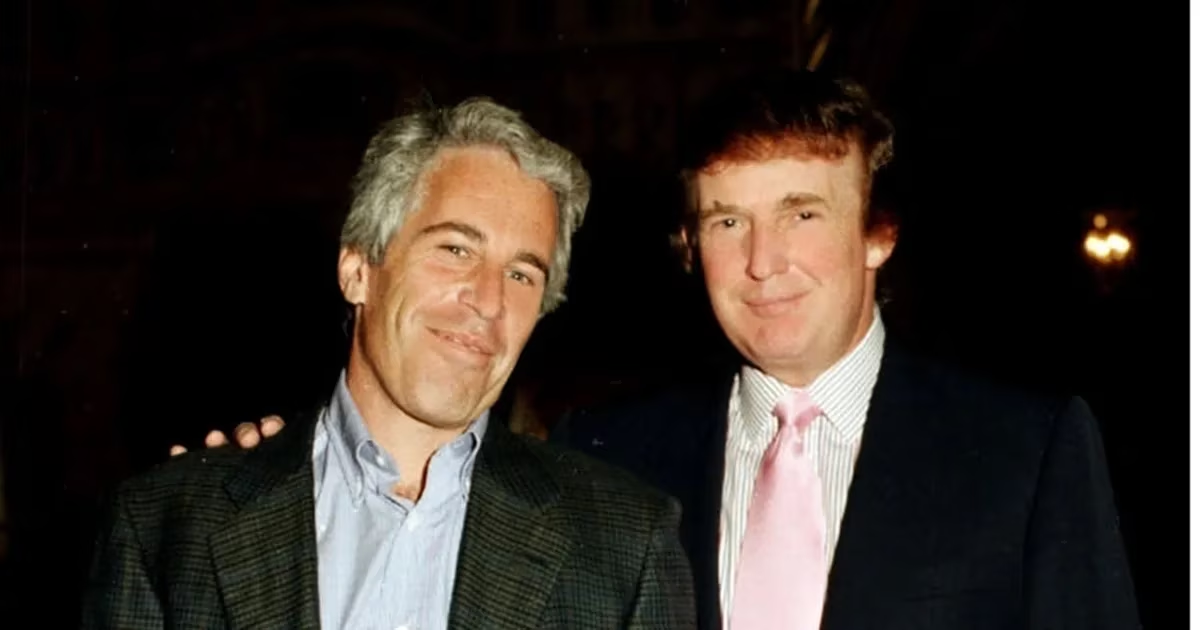
Day after day, horrific chapters of what was happening on what is known as Jeffrey Epstein's 'Devil's Island' unfold, with reports indicating that the number of kidnapped and raped child victims has exceeded 1,500. These crimes, which occurred at the heart of a system that promotes democracy and freedoms, affected innocent children, some as young as nine years old, amidst a suspicious judicial silence.

Sources quoted eyewitnesses from Epstein's inner circle, including his head housekeeper and main chef, detailing chilling accounts of death chambers, human kitchens, and pits used to dispose of victims. These testimonies were not mere hearsay; they were corroborated by audio and visual evidence that places financial, political, artistic, and military figures in the direct line of accusation for committing brutal crimes.

Despite a deluge of confessions from Epstein's private doctor and personal pilot about horrors that extend beyond sexual assault to include murder, mutilation of bodies, and organ theft, justice remains elusive. It seems these weighty files have been reduced to mere media material and documentaries for viewing, without any genuine intention to bring those involved to investigation and accountability platforms.

This deliberate absence of justice raises fundamental questions about the selectivity of international justice, especially when compared to the speed with which Guantanamo and Abu Ghraib detention centers were built. The powers that today fail to hold the criminals of 'Devil's Island' accountable are the same ones that attacked countries and executed their leaders based on reports later proven false, exposing the falsity of their moral slogans.

The world bitterly recalls how pretexts were used to invade Iraq, destroy its civilization, and displace its people, an aggression that caused the death of over a million people under the false pretense of possessing weapons of mass destruction. After the Iraqi president was executed and the country was destroyed, the same powers coldly admitted that those weapons never existed, in a clear disregard for the blood of peoples.

This does not stop at distant history but extends to current practices where heads of state are kidnapped and tried according to laws tailored by major powers to suit their interests. This double standard gives the green light to continue tampering with the destinies of peoples, as long as the 'international judge' turns a blind eye to the crimes of elites close to global decision-making circles.

In the Gaza Strip, this lame justice manifests in its ugliest forms, where life in all its forms—human, animal, and inanimate—is annihilated without real deterrence. What is happening in Palestine is an extension of the same mentality that allows Epstein's crimes to go unpunished, where human ethics are sacrificed on the altar of major political and military interests.

Epstein's file contains all the legal elements of a crime: known defendants by name and description, conclusive material evidence, close eyewitnesses, and thousands of grieving victims. Yet, the judge remains the only absent element from the scene, confirming that the international legal system was designed to protect the powerful and oppress only the weak.

Ultimately, belief in the democracy and freedoms promoted by these powers remains a mere illusion that grants them a mandate for further destruction on Earth. While the testimonies of chefs and doctors on Epstein's island remain locked in drawers, the war machine continues to claim lives in other parts of the world, awaiting a justice that may not come from Earth but from heaven.

One element was missing in the Epstein case: the judge... That is their justice, which evaporates when it concerns their elites.

ARAB AND WORLD

Tue 17 Feb 2026 6:45 am - Jerusalem Time

Trump warns Tehran of consequences of failure to reach an agreement ahead of Geneva talks

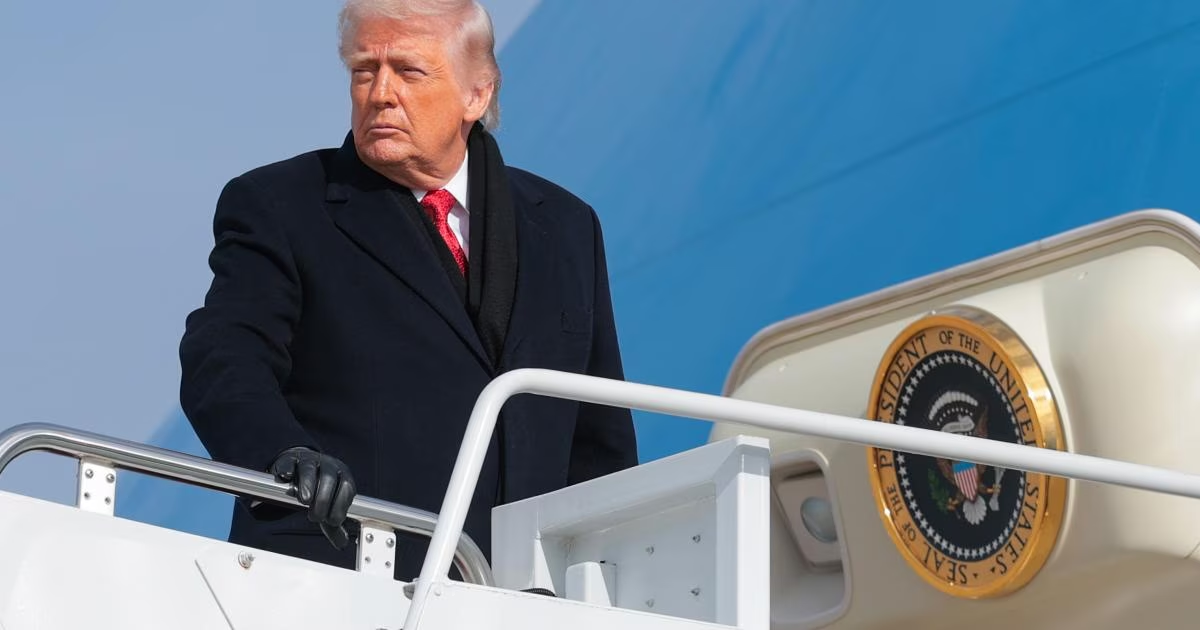
US President Donald Trump issued a strong warning to the Iranian leadership, stressing that Tehran would face dire consequences if a final agreement on its nuclear file was not reached. These statements came during his conversation with journalists aboard the presidential plane while heading to Washington D.C., where he indicated the Iranian side's desire to reach understandings to avoid increasing pressures.

Trump announced his intention to indirectly participate in the upcoming round of negotiations in the Swiss city of Geneva, to ensure that the talks proceed according to the new American vision. He explained that the current administration is closely monitoring diplomatic movements, emphasizing that the time has come to make decisive decisions that end the state of tension that has existed for many years.

For its part, Tehran showed cautious optimism towards the recent shifts in American rhetoric, with the Iranian Foreign Ministry describing Washington's stance as more realistic compared to previous periods. Iranian sources considered that this change might pave the way for overcoming the technical and political obstacles that hindered previous agreements.

Iranian Foreign Minister Abbas Araghchi arrived in Geneva to lead his country's delegation in the second round of talks, which begin on Tuesday, affirming that Tehran has serious ideas to reach a fair settlement. Araghchi stressed that his country would not succumb to the policy of threats, and that any agreement must respect Iran's sovereign rights in the peaceful nuclear field.

This round comes as a continuation of the diplomatic efforts that began in the Omani capital, Muscat, at the beginning of February, where the Sultanate of Oman plays the main mediating role in bringing viewpoints closer. These indirect meetings aim to set a specific timeline for lifting sanctions in exchange for clear restrictions on the Iranian nuclear program.

The spokesman for the Iranian Foreign Ministry, Ismail Baqaei, confirmed that previous discussions showed an implicit recognition of Iran's inalienable rights under the Nuclear Non-Proliferation Treaty. Baqaei indicated that the right to enrichment for peaceful purposes remains a red line that cannot be compromised in any future draft agreement.

On the ground in Geneva, the White House announced that a high-level delegation including Steve Witkoff, the President's envoy to the Middle East, and Jared Kushner, the President's son-in-law, would oversee the negotiations. The presence of these figures close to Trump reflects the utmost importance the US administration attaches to quickly resolving the Iranian file.

Diplomatic movements in Geneva are not limited to the Iranian file only, but also include American sponsorship of separate negotiations between Russia and Ukraine aimed at ending the ongoing war. This synchronicity indicates Washington's desire to play a pivotal role in resolving major international crises through comprehensive deals.

Western powers insist on the necessity of strict guarantees to prevent Tehran from developing a nuclear weapon, which Iran consistently denies, emphasizing the peaceful nature of its program. The results of the current Geneva round will determine the path international relations in the region will take, whether towards comprehensive de-escalation or a return to the square of economic and political escalation.

I will participate in those talks indirectly, and I don't think the Iranians want to bear the consequences of not reaching a deal.

PALESTINE

Tue 17 Feb 2026 6:45 am - Jerusalem Time

Human rights reports reveal occupation prisons turning into execution platforms for Palestinian prisoners

International human rights warnings are escalating regarding the transformation of Israeli detention centers and occupation prisons into systematic execution grounds for Palestinian prisoners. The latest data shows that approximately 115 prisoners died inside these prisons between 2023 and 2025, amid a complete absence of punitive measures against those responsible for these violations.

Data from monitoring bodies indicates that the occupation authorities have taken disciplinary action in only ten cases out of the total recorded deaths. More alarmingly, only one case has been referred for criminal investigation, reflecting absolute leniency by the Prison Service towards wardens involved in the repression and oppression of detainees.

Media sources quoted observers stating that the reality inside prisons has become a 'shield for killers,' where wardens are given the green light to inflict abuse without fear of prosecution. Reports confirm that this approach has exacerbated the humanitarian tragedy of prisoners who face detention conditions that lack the lowest international standards.

In documented testimony, sources revealed the case of a Palestinian prisoner in his forties, who was in good health at the time of his arrest during the ongoing war. After only one year of detention, he passed away due to a severe health deterioration that led to him losing about half of his normal weight without receiving adequate medical care.

The medical file of the deceased prisoner, obtained by his family, showed that he was not transferred to the hospital until his condition had reached a hopeless stage. An expert doctor who examined the materials on behalf of the Public Committee Against Torture confirmed that the death was a direct result of the deprivation of approved treatment and deliberate negligence.

The medical examination clarified that the prisoner was returned to the detention center despite his deteriorating health instead of being kept under intensive care. The report concluded that saving his life would have been possible if his condition had been diagnosed and treated according to recognized medical standards, but negligence was paramount.

The Public Committee Against Torture is following this case with great concern, demanding the disclosure of the reasons for the misdiagnosis and the severe deterioration in the detainee's health. The committee considers what happened to be a joint crime of negligence between the prison staff and the medical teams in Israeli detention centers and hospitals.

Reports indicate that the scarcity of open criminal investigations points to a systematic cover-up of crimes committed behind bars. Testimonies from lawyers and autopsy reports confirm that detainees have been subjected to severe physical violence and extreme medical negligence since the outbreak of the current confrontation in October 2023.

These violations come within the framework of an official policy adopted by National Security Minister Itamar Ben-Gvir, which includes restricting the amount of food provided to prisoners and depriving them of medication. This policy aims to tighten the noose on Palestinians and turn prisons into retaliatory tools that exceed international laws.

For his part, Noam Gielman Hofstatter, an official at the Public Committee Against Torture, affirmed that the absence of accountability grants actual immunity to investigators and wardens. He pointed out that the Prison Service treats the death of a Palestinian detainee as a simple disciplinary matter that does not warrant opening in-depth criminal investigations.

Despite repeated human rights demands to open criminal investigations in every death case, the occupation authorities refuse to apply this standard to Palestinians. This blatant discrimination is evident in the handling of detainees' lives, where files are often closed without any real charges being brought against those involved.

Regarding the role of oversight bodies, sources revealed severe weakness in the performance of the entities responsible for monitoring the conduct of wardens and the Shin Bet. Over the past two years, only two criminal investigations have been opened out of more than two hundred complaints filed against occupation practices within interrogation centers.

This oversight failure extends to previous decades, where only three criminal investigations have been opened out of 1,450 complaints filed against the Shin Bet in the past twenty years. These figures raise major questions about the fate of these investigations and their effectiveness under a judicial system that provides cover for violations.

In conclusion, human rights activists emphasize that international silence on these crimes encourages the occupation to continue its policy of 'silent killing' of prisoners. Occupation prisons remain a witness to a major humanitarian tragedy, where thousands of Palestinians face the risk of death due to torture and systematic negligence away from the eyes of international oversight.

The death of a Palestinian detainee is considered a simple disciplinary matter from the perspective of the Prison Service, and there is no real accountability but actual immunity for wardens.

PALESTINE

Tue 17 Feb 2026 6:45 am - Jerusalem Time

Hamas Rejects Occupation's Ultimatum to Surrender Weapons, Affirms: Netanyahu's Threats Will Not Achieve Their Goals

The Islamic Resistance Movement (Hamas) announced its absolute rejection of the ultimatum circulated by Hebrew media reports, which claim to grant the movement 60 days to surrender all its weapons in the Gaza Strip, including individual weapons. The movement affirmed that these reports are not based on any official basis in the ongoing negotiation rounds, but rather fall within the psychological warfare practiced by the occupation.

In press statements, Hamas leader Mahmoud Mardawi clarified that the resistance has not received any official notification from mediators or any other party regarding this alleged ultimatum. He indicated that what Benjamin Netanyahu is promoting through the media is an attempt to impose impossible conditions that have no basis on the ground or in political circles.

Mardawi stressed that the Israeli occupation is waging a comprehensive religious war targeting the Palestinian presence in Jerusalem and the West Bank, and not merely a traditional military occupation. He cited the continuous violations in the Ibrahimi Mosque and Rachel's Tomb, considering that the policies of annexation and displacement primarily aim to Judaize Islamic and Christian landmarks.

The Hamas leader affirmed that the occupation's attempts to push Palestinians towards forced migration, whether from Gaza or the West Bank, will fail in the face of the steadfastness of a people clinging to their land. He pointed out that Palestinians in villages, neighborhoods, and cities realize the magnitude of the conspiracy aimed at liquidating their cause, and they are ready to defend their holy sites by all available means.

Mardawi warned that any military escalation that the occupation might undertake after the expiry of the alleged ultimatum would lead to an explosion of the situation in the entire region. He explained that the Palestinian people will not raise the flag of surrender, and that Israeli threats will only increase the resistance's determination to extract legitimate national rights.

Regarding national unity, Mardawi revealed the existence of ongoing dialogues between various Palestinian factions, including Fatah and the Palestinian Authority, to formulate a unified position. This coordination aims to confront the plans of Judaization and land seizure in the West Bank, emphasizing that the absence of unity represents the greatest danger to the cause.

The movement called for the necessity of forming a collective and firm Arab and Islamic stance to confront Israeli policies aimed at liquidating the Palestinian presence. It considered that the protection of holy sites and land is a national and religious responsibility that falls on the entire nation, and not merely an internal Palestinian affair, to confront rejected partial peace projects.

For his part, occupation Prime Minister Benjamin Netanyahu reiterated his assertion that the Gaza Strip will not pose any security threat to Israel in the future, claiming that this will be achieved by all available means. Netanyahu claimed that the disarmament of Hamas is a strategic goal that his government will not compromise on to ensure that the events of October 7 are not repeated.

Netanyahu demanded that Hamas surrender light weapons such as Kalashnikovs, in addition to rocket launchers and mortars, claiming that the movement's heavy military capabilities have been significantly undermined. He indicated that Israel seeks to possess a completely independent military force to repel attacks and reduce reliance on external support in defensive operations.

In conclusion of his statements after returning from Washington, Netanyahu affirmed that the relationship with the United States will remain based on strategic partnership despite the pursuit of military self-sufficiency. These statements come at a time when the region is witnessing escalating tension with the occupation's insistence on imposing a new security reality in the Gaza Strip and the West Bank.

Any threat from the occupation will have serious repercussions for the region, and the Palestinian people will not raise the white flag, no matter the sacrifices.

PALESTINE

Tue 17 Feb 2026 6:45 am - Jerusalem Time

Occupation claims assassination of 9 resistance fighters in a tunnel east of Rafah

The Israeli occupation army claimed today, Monday, that it had assassinated nine Palestinian resistance fighters during a military operation targeting an underground tunnel in the eastern area of the city of Rafah, located south of the Gaza Strip. An official statement issued by military sources affiliated with the occupation stated that the operation began with monitoring a combat group that emerged from a tunnel opening and engaged with soldiers from close range.

The sources clarified that the sweeping and search operations conducted yesterday, Sunday, inside the targeted tunnel, led to the discovery of the bodies of three fighters, before the occupation later announced the killing of six others during complementary military activities at the same location, bringing the total number of those targeted in this incident to nine.

This announcement coincided with the continued military escalation in the southern areas of the Strip, especially in Rafah and Khan Yunis, where these areas are witnessing continuous air raids and field clashes. In a related context, the latest data issued by the Ministry of Health in Gaza indicate that the death toll from the ongoing aggression since October 7, 2023, has exceeded 72,000 martyrs, with casualties continuing to fall daily.

Israeli forces in southern Gaza last week spotted a group of armed men emerging from an underground tunnel opening and firing at soldiers.

PALESTINE

Tue 17 Feb 2026 6:44 am - Jerusalem Time

Draft of the Provisional Palestinian Constitution: Features of the Transitional Phase and Questions of Timing and Powers

Palestinian President Mahmoud Abbas announced the submission of the draft 'Provisional Constitution of the State of Palestine' for public discussion, opening the door for institutions and the public to submit their observations within a sixty-day period. This step comes after a seven-month gestation period of continuous work by the drafting committee formed by the Palestinian presidency in August of last year.

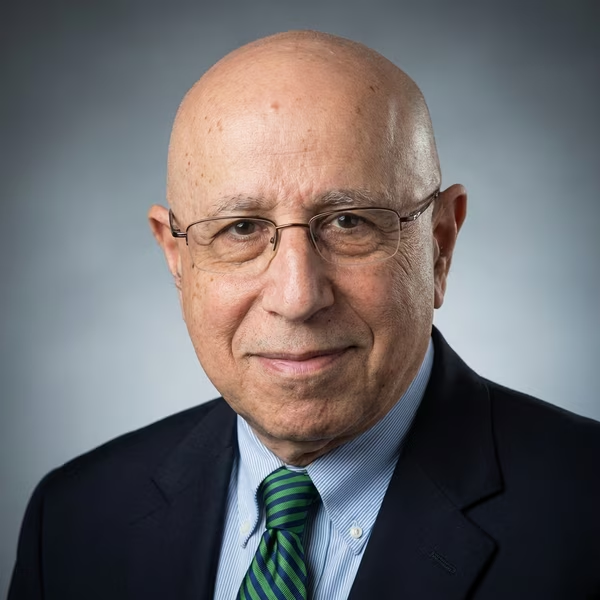
This draft is a new attempt to frame the transition from the national authority phase to the embodiment of the state, and it is not the first attempt in Palestinian history; it was preceded by drafts that underwent revision since 1999, leading to the 2003 version, whose committee was chaired by Nabil Shaath at the time.

The current path began on August 18, 2025, with a presidential decree to form a committee headed by Dr. Mohammed Al-Haj Qassem, which included prominent legal, political, and community competencies. The committee was entrusted with the task of drafting a document consistent with the Declaration of Independence and international law to serve as a legal basis for the transition towards an independent state.

Over seven months, the committee held about 70 intensive meetings and workshops, culminating in the submission of the final draft to the President on February 5, 2026. The committee presidency affirmed that the document adheres to the principles of political pluralism and the separation of the three powers, while enhancing the oversight role of the future parliament.

The draft consists of 162 articles divided into 13 chapters, with its preamble emphasizing the Palestinian Liberation Organization (PLO) as the legitimate and sole representative of the Palestinian people. The initial texts also stress the Arab identity of Palestine and the democratic republican system of government based on the balance of powers.

Article three explicitly states that Jerusalem is the eternal capital of the state and its spiritual and political center, while Article four designates Islam as the official religion of the state, with the principles of Sharia as a primary source of legislation, while ensuring full respect for Christianity and all other religions.

Among the most prominent new articles in this version is Article 79, which grants the head of state the authority to appoint a deputy and assign specific tasks to them or relieve them of those tasks. This amendment opens the door for new leadership arrangements that were not clearly present in the currently applicable Basic Law.

Despite the organizational nature of the draft, it faced sharp legal criticism; experts believe that the current timing is inappropriate given the existential threats facing the Palestinian cause. Legal scholars point out that the Basic Law is still valid for managing the current phase without the need for a provisional constitution.

Legal sources reported that the draft significantly expanded the powers of the President compared to previous legislation, which could upset the principle of separation of powers. Some also criticized the use of terms that diminish the prestige of the judiciary, such as replacing 'the profession of judiciary' with 'the judicial function'.

Observers noted the absence of explicit texts in the chapter on the judiciary guaranteeing the abolition of the death penalty or granting judges the right to form their own associations. Questions were also raised about the mechanism for appointing the head of the Constitutional Court, which some considered an infringement on the independence of the judiciary from the executive branch.

Politically, the former deputy speaker of the Legislative Council criticized the draft's lack of clear reference to the borders of the Palestinian state or an affirmation of the right of return for refugees. He considered that ignoring these constants in a constitutional document could raise popular concerns about the ceiling of national demands in the next phase.

There are fears that the adoption of this constitution under international pressure could marginalize the role of the Palestinian Liberation Organization (PLO), which is the legal entity representing Palestinians in international forums. Critics believe that the priority should be to strengthen the resilience of citizens amidst the war rather than being preoccupied with secondary constitutional issues.

In contrast, the Palestinian presidency defends the move as part of comprehensive reform efforts and preparation for general elections. Official sources confirm that the constitution will be the reference for amending election laws, ensuring that all political forces adhere to the national program and international commitments.

The debate remains ongoing about the extent to which this draft can achieve national consensus, especially since its last article stipulates that the document must be put to a general popular referendum. The next two months will be crucial in determining the fate of this document based on the volume and quality of observations submitted by the active forces in Palestinian society.

The draft maintained political pluralism and the separation of powers, and aims to enable parliament to exercise its oversight and legislative powers.

PALESTINE

Tue 17 Feb 2026 6:44 am - Jerusalem Time

Occupation targets Palestinians north of Gaza on pretext of approaching 'Yellow Line'

Field sources reported that the Israeli occupation army carried out direct targeting operations against two Palestinians in the northern Gaza Strip, on the pretext of their approaching what is known as the 'Yellow Line'. The occupation authorities claimed that this measure comes within the framework of implementing strict security rules to neutralize what it described as an 'imminent danger' to its forces stationed in that area.

In a related context, civil defense crews in Gaza confirmed that they were able to recover the body of one of the martyrs who fell as a result of this targeting, while the fate of the other person remains unknown. This escalation coincided with intense artillery shelling carried out by occupation vehicles targeting points east of the Bureij camp in the central Strip, which led to a state of extreme tension in the border areas.

These developments come amid the occupation's continued imposition of buffer zones and intensified firing on anyone approaching the lines it has militarily drawn, as the occupation army claimed that immediate use of weapons was necessary to prevent any potential threat, which frequently results in casualties among civilians and displaced persons.

Occupation artillery targeted sites east of the Bureij camp, coinciding with firing on Palestinians on the pretext that they posed an imminent danger.

PALESTINE

Tue 17 Feb 2026 6:44 am - Jerusalem Time

'State Land' Law.. Israel's New Weapon to Swallow What Remains of West Bank Lands

Legal expert Hassan Breijieh revealed serious implications of the Israeli occupation authorities' decision to resume registering occupied West Bank lands under the name 'state land'. Breijieh explained that this measure directly targets Area C, where Tel Aviv seeks to seize all land for which its Palestinian owner does not possess official registered ownership documents, threatening vast areas of historical lands.

The 'Land Registration' unit, affiliated with what is called the Israeli Government Coordinator of Activities in the Territories (COGAT), has full oversight of this process. The new powers include issuing sales permits and collecting fees, a step aimed at completely excluding the Palestinian Authority from exercising its administrative and legal duties in these areas, thereby strengthening absolute Israeli control.

Breijieh pointed out that this announcement is not entirely new, but rather a renewal of a decision taken by the Israeli government in May 2025 to resume procedures that had been suspended since the 1967 occupation. Israel is exploiting legal loopholes resulting from the freezing of 'settlement' operations that existed during the Ottoman, British, and Jordanian eras, to pass current confiscation plans.

Under the 'Oslo II' agreement signed in 1995, the West Bank was divided into three areas, with Area C, which constitutes 61% of the area, under Israeli control. These arrangements were supposed to be temporary until 1999, but the occupation turned them into a permanent tool to prevent Palestinians from registering their lands and establishing their historical rights in them.

Palestinians face a major dilemma, as many own lands inherited through generations without official 'Tabu' deeds due to deliberate Israeli freezing. Farmers often rely on customary 'bills of sale' or tax receipts, documents that prove land disposal but are not recognized by the occupation today as definitive ownership deeds in its new procedures.

The registration process currently imposed by Israel requires complex and costly proofs, including inheritance records and cadastral maps that are difficult to obtain under occupation conditions. Observers believe that these complexities are intentional to drive Palestinians to despair of establishing their ownership, making it easier to later transfer these lands to the settlement project and settlers in a supposedly 'legal' manner.

The Palestinian expert linked this decision to the political orientations of Israeli Finance Minister Bezalel Smotrich, who seeks to strengthen control over the West Bank to win the favor of settlers. These steps come within a package of decisions recently approved by the Israeli government, aimed at bringing about a radical change in the legal and civil reality in the occupied territories.

Among the most prominent legal changes imposed by the occupation is the annulment of Jordanian law, which prevented the sale of land to Jews in the West Bank, in addition to lifting the secrecy of land records. Israel has also expanded its oversight and enforcement powers to include Areas A and B, in a clear and explicit violation of the agreements signed with the Palestinian side.

Human rights sources confirm that these measures violate international humanitarian law, particularly the 1907 Hague Convention, which obliges the occupying power to respect the laws in force in the occupied territory. The United Nations and the international community consider all settlement activities and land confiscation operations in the West Bank and Jerusalem illegal and an impediment to the peace process.

In a related context, Breijieh stressed that Israel is implementing what is called 'creeping annexation' of the West Bank, ignoring UN resolutions, including Security Council Resolution 2334. He also drew attention to the advisory opinion of the International Court of Justice issued in July 2024, which clearly affirmed that the continued Israeli presence in the Palestinian territories is an illegal act that must be ended.

For his part, Israeli Defense Minister Yisrael Katz stated that land regulation is a 'security necessity' to ensure Israeli control, while Smotrich described the process as a 'settlement revolution'. These statements reflect the true intentions of the occupation to turn administrative procedures into political tools to impose full Israeli sovereignty over the heart of the West Bank.

Data from the Wall and Settlement Resistance Commission indicate that the occupation has seized about 58,000 dunams since the start of the current war, under various pretexts, including 'state lands'. The head of the commission, Moayad Shaaban, affirmed that these measures aim to cancel all that the Palestinian government has achieved in the land settlement file in recent years and impose irreversible facts.

The Israeli government claims that this step comes in response to the Palestinian Authority's attempts to settle lands in Area C, claiming that it will end legal disputes. However, the reality indicates that the real goal is to settle 15% of the area for the Zionist project by 2030, according to Hebrew press reports.

This 'creeping annexation' represents an existential threat to the possibility of establishing a geographically contiguous Palestinian state, as Palestinian villages and cities are fragmented by settlement blocs registered as 'state lands'. Popular steadfastness and adherence to the land remain the last line of defense against these plans that attempt to legitimize the looting of Palestinian resources and rights with internationally invalid administrative decisions.

What is happening is the dispossession of land from Palestinians and its registration in the name of the state, and then its transfer to settlers, which poses a threat to most of the West Bank lands.

PALESTINE

Tue 17 Feb 2026 6:44 am - Jerusalem Time

Palestinian Alliance Sues FIFA and UEFA Presidents at International Criminal Court for Complicity with Occupation

A broad Palestinian alliance has brought global football leaders into an unprecedented legal confrontation by filing an official complaint with the International Criminal Court. The list of plaintiffs includes 16 diverse Palestinian entities, comprising sports clubs, affected players, and landowners, in a move aimed at holding accountable those responsible for legitimizing sports activities in illegal settlements.

The lawsuit directly targets Gianni Infantino, President of the International Federation of Association Football (FIFA), and Aleksander Čeferin, President of the Union of European Football Associations (UEFA). The two officials face serious accusations of complicity in war crimes and crimes against humanity, resulting from the organizations' continued provision of sports and legal cover for settlement activities in the occupied territories.

The core of the case revolves around allowing 11 Israeli clubs to conduct their official activities and compete in local leagues on occupied Palestinian lands in the West Bank. Legal experts view this action as a clear violation of FIFA and UEFA regulations, which prohibit any national association from organizing matches on another association's territory without explicit consent, which the Palestinian Football Association has never granted.

In this context, Jill Thompson, spokesperson for 'Scottish Sport for Palestine,' explained that Palestinian efforts to rectify this situation have not ceased for over a decade and a half. She noted in press statements that the Palestinian Football Association has repeatedly demanded the application of international laws and the exclusion of settlement clubs, but international organizations have preferred a policy of silence and disregard.

The lawsuit addressed the issue of 'double standards' adopted by international sports bodies in dealing with humanitarian and political crises. Sources quoted a professional Palestinian player involved in the lawsuit, expressing his dismay at FIFA's quick response to incidents affecting foreign players, in contrast to a complete disregard for the suffering of Palestinian athletes officially registered with the international federation.

The Palestinian alliance cited in its legal file the case of the late star Suleiman Al-Obeid, known as the 'Palestinian Pelé,' who was martyred during the aggression on the Gaza Strip last summer. Despite his illustrious sports career and representation of the national team, the international federation did not issue any obituary or statement of solidarity, which the plaintiffs considered additional evidence of blatant bias against Palestinians.

These judicial actions seek to compel football organizations to adhere to their own charters and international law, and to halt all sports activities that contribute to entrenching the occupation. This complaint represents a significant legal escalation that could place global sports leaders under international prosecution, in light of the documented ongoing violations against stadiums and players in Palestine.

For 15 years, the Palestinian Football Association has not stopped demanding that FIFA apply its laws and exclude settlement clubs, but silence has been the only response.

ISRAELI AFFAIRS

Tue 17 Feb 2026 6:44 am - Jerusalem Time

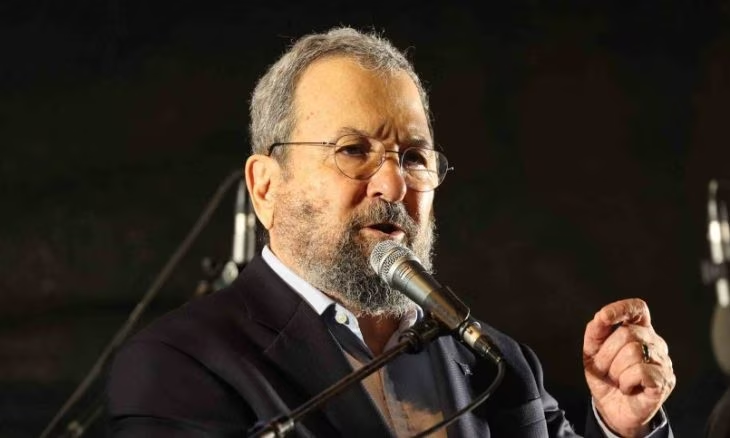
Unveiling Ehud Barak's Old Plans: Replacing Jews from Arab Countries with 'White Immigrants'

New data has revealed the behind-the-scenes ideas proposed by former Israeli Prime Minister Ehud Barak during meetings held approximately 13 years ago with Jeffrey Epstein and former US Treasury Secretary Larry Summers. Barak's proposals at the time were not limited to what he called the 'demographic problem' concerning Arab citizens, but extended to a sharp desire to change the demographic composition of Jews themselves within the country. Barak harshly criticized the state's founders, considering them not 'selective' enough when they brought Jews from North African and Arab countries during the early days of establishment.

According to what was published, Barak sought to correct what he saw as a 'structural flaw' by bringing in one million immigrants from Russia, emphasizing that they must be white-skinned, even if their origins were not Jewish. To achieve this goal, Barak proposed breaking the Chief Rabbinate's monopoly on marriage, burial, and conversion files, to facilitate the integration of these immigrants into Israeli society. This vision reveals criteria based on 'immigrant quality' according to racial and health considerations, including physical fitness and intelligence level, in line with the concept of the 'chosen people' who accept only the chosen from other nations.

These statements reopen the debate about the nature of Zionism as a European product that tried to separate itself from its Eastern surroundings. Historical studies indicate systematic discrimination practiced against Mizrahi Jews from the very first moments of the state's establishment. While immigrants from Arab countries were seen as a tool to solve the European minority's crisis, they were denied property rights and equal housing compared to Ashkenazim. Barak's thinking of transforming Israel into a 'white state' threatens the legitimacy of its existence as a refuge for all Jews worldwide, and turns it into an entity based on racial and class segregation.

In light of the current reality, observers believe that the 'villa in the jungle' mentality promoted by Barak has transformed into an internal conflict threatening the cohesion of Israeli society. A state that ignores its Arab citizens and leaves them to face crime and organized terrorism betrays its legal essence and descends into a state of chaos. Linking the control over Arabs with the control over Jews themselves based on skin color or ethnic origin puts Israel before a fateful question about its identity: Is it a state of law for all its citizens, or merely a settlement project that sanctifies the white race?

The chosen people accept only the chosen from other nations; this is how Barak summarized his vision for immigrant quality.

ARAB AND WORLD

Tue 17 Feb 2026 5:23 am - Jerusalem Time

The Ellison Media Empire and the Remaking of America’s Israel Narrative

February 17, 2026

News Analysis

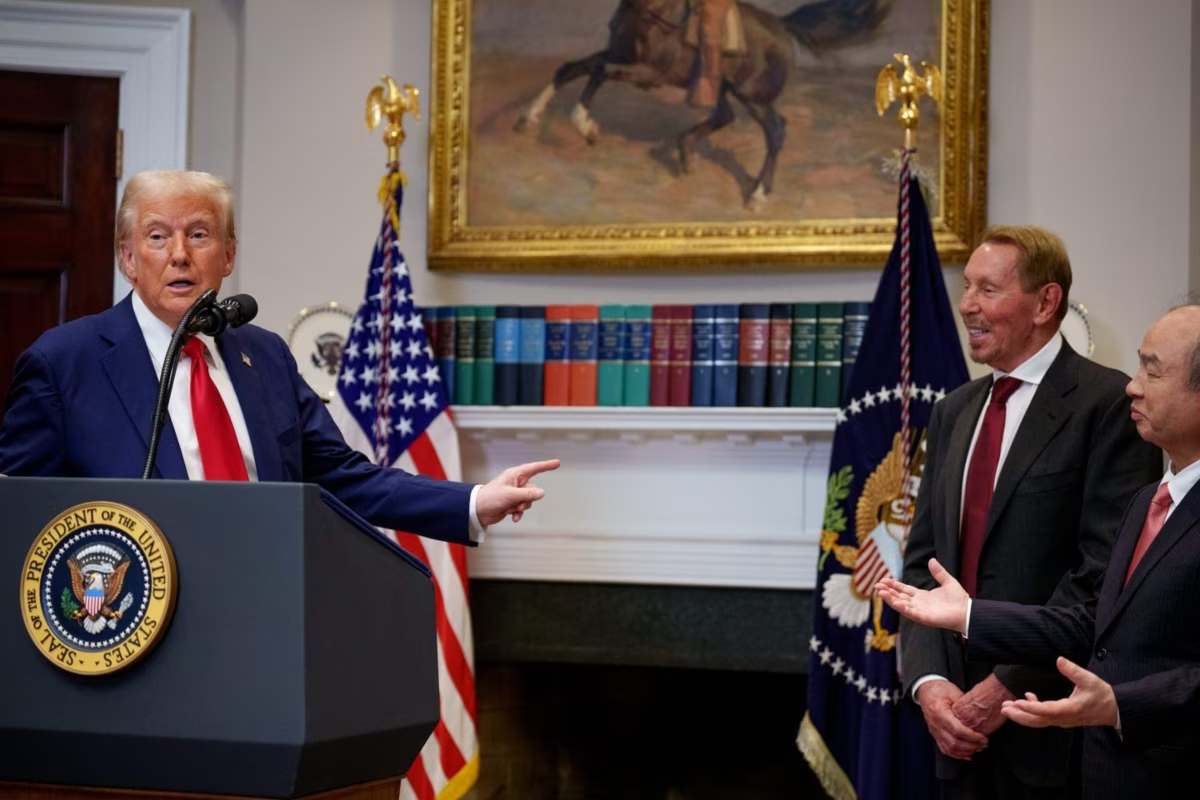
By early 2026, Oracle founder Larry Ellison and his son David had assembled one of the most consequential media-and-tech power blocs in modern U.S. history. Through Skydance Media—financially backed by Larry Ellison—David Ellison acquired Paramount Global, the parent company of CBS, placing a major broadcast news operation and a vast entertainment library under a family whose political and ideological commitments are not subtle. In parallel, an investor group led by Ellison and Oracle secured majority control of TikTok’s U.S. operations, shifting the most influential youth-facing platform in America into the orbit of the same billionaire network. Reports also indicated that Warner Bros. Discovery—owner of CNN, HBO, and a major Hollywood studio—was being discussed as a future target.

To understand why this matters, one must abandon the comforting fiction that media ownership is a neutral business arrangement. Ownership is narrative infrastructure. It is the power to decide what a society sees, what it ignores, what it calls “complicated,” and what it calls “criminal.” Over the past two years, Israel has faced an unprecedented collapse in global moral credibility as images, casualty figures, and legal arguments circulated faster than traditional gatekeepers could contain them. For Israel’s strongest American backers, the central problem is no longer simply policy; it is legitimacy. And legitimacy, in the modern age, is manufactured as much through platforms and entertainment as through Congress.

Ellison’s role is especially significant because it merges three forms of power that are often treated separately: Silicon Valley data dominance, traditional media distribution, and partisan political influence. Ellison is not merely a wealthy donor with opinions; he is a strategic actor with the capacity to reshape the information ecosystem. The Paramount-CBS purchase matters not just because it controls news programming, but because it controls cultural output. The TikTok stake matters not just because it controls an app, but because it controls the algorithmic pipeline through which political reality is consumed by millions of Americans, especially those under 30.

This is where the Israel issue becomes central. Ellison has long been associated with pro-Israel political networks and philanthropy, including support for organizations that bolster the Israeli military’s image and material strength. That support is politically potent in the United States because it exists inside a legal structure that treats such giving as charitable, even when it effectively subsidizes a foreign army. The result is a moral asymmetry: U.S. tax policy can indirectly assist the Israeli occupation’s coercive apparatus, while Palestinian advocacy is often treated as suspicious, radical, or legally precarious.

The acquisitions arrive at a precise historical moment: Israel is losing the narrative war among global publics, and U.S. elite institutions are working to contain the reputational damage. The new strategy is not persuasion through evidence. It is narrative management through infrastructure. You do not need to “win” debates if you can control what counts as debate, who is invited, and what vocabulary is allowed.

This logic became explicit when Paramount announced it was acquiring The Free Press and named its co-founder, Bari Weiss, editor-in-chief of CBS News. That appointment matters because Weiss represents a new type of gatekeeper: not a traditional editor committed to neutral framing, but a culture-war operator who treats pro-Palestinian activism as a moral threat and Israel’s critics as suspect by default. Her approach does not simply defend Israeli policy; it delegitimizes the language of accountability itself. Apartheid becomes a slur. War-crimes allegations become hysteria. International law becomes naïve. Dissent becomes antisemitism-adjacent. This is not designed to persuade committed critics. It is designed to keep liberal audiences from defecting.

TikTok is the most strategically important piece. Unlike cable news, TikTok is not simply a broadcaster; it is an amplifier. It is where Gaza was narrated in real time by civilians, medics, journalists, and diaspora communities, often bypassing the filters that traditionally protected Israel from sustained scrutiny. It became, in effect, the largest pro-Palestinian communications platform in the Western world—not because the company endorsed Palestine, but because its structure rewarded raw footage, eyewitness testimony, and emotional immediacy. That is precisely why political pressure to “solve” TikTok intensified. A U.S. TikTok under Ellison-linked control would not need overt censorship to reduce pro-Palestinian reach; algorithmic downranking, content “safety” policies, shadow-banning, and selective enforcement would be sufficient. The implicit aim is not to ban speech, but to make it invisible.

If Warner Bros. Discovery enters this orbit, the implications would be profound. CNN still serves as a national legitimacy machine: it tells the political class what is “serious,” what is “balanced,” and what is “extreme.” HBO and the studio system shape the emotional imagination of the public: who is humanized, who is exoticized, who is feared, and who is mourned. This is why media consolidation by ideologically motivated billionaires is not a side story—it is the story.

What emerges is a vertically integrated narrative empire: broadcast news, prestige commentary, entertainment, and algorithmic social distribution. This is not simply pro-Israel bias in the familiar sense. It is the construction of a new informational order in which Israel’s conduct becomes insulated from accountability by default. When evidence of atrocities surfaces, the system does not deny it outright; it reframes it, dilutes it, buries it, or distracts from it until outrage expires.

The danger is democratic hollowing. Citizens still vote, but the range of morally thinkable positions is narrowed. Palestinian life becomes background noise. International law becomes a punchline. Calls for sanctions or arms embargoes are treated as fringe. And a foreign state’s military campaign is normalized through the soft power of American media. This is why the Ellison empire matters: it is not only about Israel, but about the future of truth.

ARAB AND WORLD

Mon 16 Feb 2026 10:02 pm - Jerusalem Time

US Withdrawal from Syria: A Strategic Imperative Amid Shifting International Priorities

The political history of great powers indicates that attrition does not always occur through major military defeats, but rather by clinging to secondary fronts that no longer serve the vital interests of the state. The US military presence in Syria is currently going through this critical phase, where remaining in field positions has become less rational than making a deliberate strategic withdrawal decision.

Since the military intervention began in 2014 to confront ISIS, the United States has succeeded in dismantling the group's geographical structure and preventing its use of Syrian territory as a platform for international threat. However, the mission gradually expanded to include containing Iranian influence and managing complex balances, which transformed the military presence into a long-term commitment with low strategic returns.

International press reports during 2024 revealed serious discussions within the US Department of Defense about the future of forces deployed in northern Syria. These reviews come amidst rising security risks and changing global priorities imposed by new challenges in geographical areas more critical to US national security.

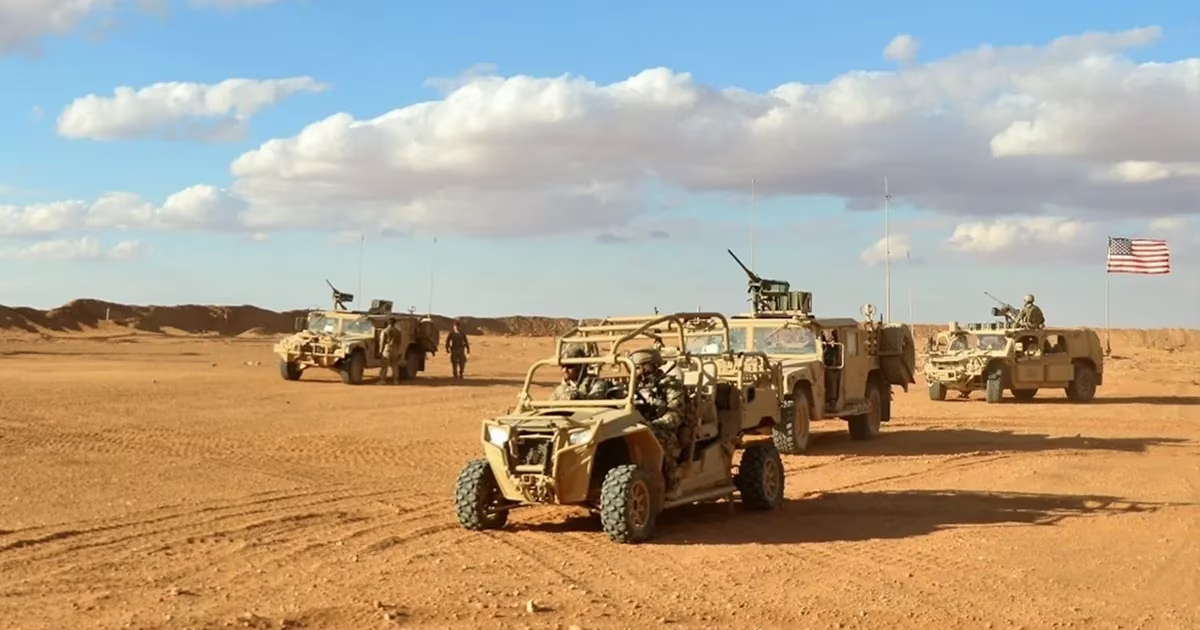
Official figures released by the Pentagon indicate that the number of US troops in Syria ranges between 800 and 900 soldiers, a limited but high-risk deployment. These forces have been subjected to more than 150 rocket and drone attacks since October 2023, raising the cost of operational protection to unprecedented levels.

Financially, billions of dollars are drained annually within the allocations for Operation 'Inherent Resolve' to support this limited military presence. This spending raises fundamental questions in Washington about the feasibility of continuing these costs at a time when the US administration seeks to rationalize military spending and direct it towards more vital operational theaters.

The shift in American strategic thinking has become evident in the national security documents for 2022 and 2023, where great power competition, primarily with China, topped the list of threats. This trend necessitates a transition from an open deployment model in the Middle East to a 'smart balancing' model that focuses on remote deterrence.

Experts believe that military and political resources are not limitless, and their allocation to low-priority theaters such as Syria may weaken the ability to deter in sensitive areas like Eastern Europe. Therefore, the presence in Syria appears to be a remnant of the 'War on Terror' era that no longer aligns with Washington's new grand strategy.

Regarding deterrence and credibility, some argue that withdrawal might be interpreted as a sign of weakness, but reality indicates that deterrence depends on actual capability, not symbolic presence. The United States possesses the ability to intervene rapidly from neighboring regional bases and employ advanced intelligence and cyber tools to manage balances without the need for a permanent physical presence.

Any decision for a US withdrawal will have a direct impact on the calculations of regional powers, foremost among them Israel, which views this presence as an indirect balance against Iranian expansion. However, Tel Aviv primarily relies on its own capabilities to carry out preemptive operations, which reduces the impact of the US field absence on it.

For Turkey, the Syrian file is linked to security concerns regarding Kurdish forces in the northeast, making it a key party in any future security arrangements. An organized withdrawal requires close coordination with Ankara to ensure that a security vacuum does not occur, which could lead to a new military escalation on the Turkish-Syrian border.

Jordan, in turn, is monitoring developments cautiously, as border security and preventing arms and drug smuggling operations are a top priority for Amman. Continued effective intelligence coordination remains an urgent Jordanian demand, whether the direct US presence continues or is replaced by internationally supported regional security arrangements.

From a purely strategic perspective, the US mission in Syria has exhausted its original justifications, and the military presence is no longer capable of decisively preventing Iranian influence. Instead, this presence exposes American soldiers to the risks of an uncalculated escalation that could drag Washington into conflicts it does not wish to engage in.

Safe and organized withdrawal requires parallel paths, including strengthening regional intelligence coordination to prevent the return of extremist organizations. Local security arrangements must also be supported to give regional powers greater responsibility in managing their affairs, with a readjustment of legal frameworks for the use of force when absolutely necessary.

In conclusion, the issue is not just about Syria, but about the United States' ability to redefine the concept of power in a multipolar world. Proving that a deliberate withdrawal is an act of strength, not a sign of weakness, will be the true test of the American role in the international system over the next decade.

A successful strategy is not one that avoids withdrawal, but one that knows when to end a mission that has exhausted its usefulness and no longer yields security returns commensurate with its cost.

PALESTINE

Mon 16 Feb 2026 10:02 pm - Jerusalem Time

Guterres Demands Occupation Immediately Reverse West Bank Land Registration Measures

The Secretary-General of the United Nations, Antonio Guterres, called on the occupation authorities to immediately and unconditionally reverse recent decisions related to the registration of vast areas of land in the occupied West Bank. This demand came through an official statement read by his spokesperson, Stéphane Dujarric, in which he affirmed the categorical UN rejection of any unilateral steps aimed at changing the legal or demographic reality in the occupied Palestinian territories.

Guterres stressed in his statements that the continuation of these settlement policies and administrative procedures on the ground not only constitutes a flagrant violation of international law but also directly contributes to regional instability. He pointed out that these practices contradict the legal opinions issued by the International Court of Justice, which affirm the illegitimacy of the settlement presence and related policies in the territories occupied in 1967.

The Secretary-General warned that the path currently being pursued by the occupation government places serious obstacles in the way of international peace efforts aimed at ending the conflict. He explained that these steps systematically undermine the possibility of establishing an independent and geographically contiguous Palestinian state, making the two-state solution option elusive amidst the continuous expansion of land confiscation and the legitimization of settlement outposts.

In a related context, sources reported that Palestinian forces considered these decisions an attempt to legitimize the theft of land under flimsy legal pretexts such as 'state land.' The sources affirmed that the occupation government's approval of such decisions is null and void and does not change the historical and legal reality of the land, calling on the international community to take practical steps beyond verbal condemnation to stop the settlement encroachment.

Current measures are illegal according to International Court of Justice opinions and directly undermine the chances of achieving a two-state solution.

PALESTINE

Mon 16 Feb 2026 10:02 pm - Jerusalem Time

European Union Decides to Participate as an Observer in the "Peace Council" in Washington

The European Commission officially announced its intention to participate in the work of the "Peace Council" established by US President Donald Trump, but only as an observer without formal membership. The European Union will be represented at these meetings by the Commissioner for Mediterranean Affairs, Dubravka Šuica, during the sessions scheduled to be held in the US capital, Washington, next Thursday, February 19.

The spokesperson for the European Commission, Guillaume Mercier, confirmed during a press conference held in Brussels that the European presence would focus primarily on the aspect related to the Gaza Strip within the meeting's agenda. He explained that this move comes as an expression of the European Union's firm commitment to supporting the stability of the ceasefire in the Strip and ensuring the implementation of understandings related to ending the conflict.

Despite this participation, the European Union expressed clear reservations and legal and administrative questions regarding the nature of the new council. Sources in the Commission indicated the need for further clarifications on the "scope of application" and the "governance" mechanisms followed, as well as the extent to which this new organization is compatible with the United Nations Charter and international legitimacy.

US President Donald Trump announced the establishment of the "Peace Council" in mid-January, as an executive tool linked to his proposed plan for the Gaza Strip. Although the UN Security Council welcomed its establishment through Resolution No. 2803 issued late last year, Trump's broad powers within the council, including the right of veto and the appointment of members, raised concerns that it was an attempt to bypass the traditional UN role.

The work of this council is based on the "Peace Plan" proposed by Trump in September 2025, which included twenty items aimed at ending military operations and disarming Palestinian factions in exchange for new security and political arrangements. These diplomatic moves come at a sensitive time, as the international community seeks to consolidate the foundations of the de-escalation that began last October after a long period of military escalation.

In a related context, political circles are monitoring the extent to which this council can make a real breakthrough in the file of reconstruction and a permanent political solution. With some field attacks continuing despite the ceasefire agreement, observers believe that European participation as an observer reflects Brussels' desire to remain close to decision-making centers while maintaining a legal distance that protects its diplomatic constants.

This participation does not mean EU membership in the Peace Council, but rather comes within the framework of our commitment to implementing the ceasefire in the Gaza Strip.

PALESTINE

Mon 16 Feb 2026 10:02 pm - Jerusalem Time

Lawsuit against the occupation authorities protesting the reduction of operating hours at Allenby Bridge

Mr. Nassar Nassar, Secretary of the Coordinating Council of Private Sector Institutions and Chairman of the General Union of Palestinian Industries, announced the initiation of formal legal proceedings against the occupation authorities. The lawsuit, filed on February 12, 2026, before the Central Court, included both the Airports Authority and the Civil Administration, in protest of the policies adopted in sharply and continuously reducing the operating hours of Allenby Bridge.

Nassar affirmed in his statements that this legal action stems from the necessity of protecting the fundamental rights of Palestinians, emphasizing that the issue goes beyond routine administrative disputes. He clarified that the main goal is to restore the dignity and freedom of movement for millions of travelers who suffer daily, in addition to mitigating the serious negative repercussions that have affected the structure of the national economy and the movement of exports.

Allenby Bridge is considered the only international land crossing available to West Bank residents to access the outside world via Jordan, in the absence of any other effective alternatives. More than three million Palestinian citizens rely on this vital facility, in addition to hundreds of thousands of Jerusalemites who face severe difficulties in movement and travel due to the imposed restrictive measures.

Nassar pointed out that the past two years have witnessed a significant and unjustified decline in operating hours, causing severe daily overcrowding at the entrances and exits. This reality has forced travelers to spend the night in difficult humanitarian conditions, in addition to citizens incurring additional financial and psychological burdens due to endless long queues.

The Palestinian official described the current situation at the crossing as no longer merely a transient seasonal circumstance, but has transformed into a permanent state that violates the internationally and locally guaranteed right to movement. He affirmed that the continuation of these restrictions constitutes a direct infringement on signed agreements, and turns travelers' lives into a journey of daily suffering that requires urgent legal intervention to stop it.

Nassar revealed previous attempts to communicate with the relevant authorities to demand a clear timetable for extending operating hours and operating the crossing at its full capacity. However, the Israeli responses were characterized by generality and evasion of practical commitments, citing security and operational considerations and a shortage of human resources, justifications that the Palestinian side rejected outright.

The lawsuit's legal basis relies on the responsibility of the Airports Authority as a public body obligated to manage crossings efficiently to provide adequate service to the public. The legal documents also refer to the obligations contained in the interim agreements of 1995, which set minimum operating hours for the crossing that far exceed what is currently in practice.

Nassar stressed that excuses related to budgets or operational shortages cannot be accepted as a permanent justification for infringing on the rights of millions of citizens to movement and travel. He considered that maintaining the smooth flow of movement is a legal and moral duty incumbent upon the authorities managing the crossing, and cannot be linked to narrow financial considerations at the expense of human dignity.

The effects of the restrictions were not limited to the movement of individuals, but also extended to the commercial crossing, where Palestinian exports destined for dozens of countries around the world were harmed. Nassar warned that the continuation of this situation threatens the growth of national industry and weakens the efficiency of supply chains, leading to enormous economic losses for the Palestinian private sector.

In conclusion of his statements, Nassar demanded the court to issue an order obliging the occupation authorities to extend operating hours to 24 hours a day, or at least return to the previous minimum limits. He affirmed the determination of Palestinian institutions to continue both legal and international tracks to ensure the achievement of these demands before the upcoming summer season, thereby ensuring the flow of goods and the freedom of travelers.

This lawsuit is not part of an administrative dispute, but rather concerns a fundamental right that affects the dignity and freedom of movement of millions of travelers annually and its repercussions on the national economy.

ISRAELI AFFAIRS

Mon 16 Feb 2026 10:02 pm - Jerusalem Time

Graham from Tel Aviv: Washington and Israel are approaching a decisive confrontation with Iran

Prominent Republican Senator Lindsey Graham launched a sharp attack on the Iranian regime, considering that the United States and Israel are approaching a decisive moment to end what he described as Tehran's sponsorship of terrorism in the region. Graham affirmed during a press conference held in Tel Aviv that there is complete agreement and a unified vision between US President Donald Trump and Israeli Prime Minister Benjamin Netanyahu regarding ways to deal with Iranian threats.

Graham described Iranian Supreme Leader Ali Khamenei as a 'religious Nazi,' likening him to Adolf Hitler in his pursuit of imposing ideological hegemony, religious cleansing, and the destruction of the State of Israel. He pointed out that Iranian goals extend beyond regional borders to directly target vital US interests, making confrontation with it a strategic necessity for American national security.

The American senator considered that the continuation of the current leadership in Tehran represents the biggest obstacle to stability in the Middle East, expecting that the fall of the regime would lead to the collapse of the influence of its regional allies. He explained that forces such as Hezbollah, Hamas, and the Houthi group would lose their momentum and capabilities in the absence of Iranian support, which would pave the way for accelerating normalization processes in the region.

Regarding the options available to Washington, Graham indicated that the US administration is moving along two paths; the first is diplomatic, aiming to reach a settlement that protects common interests, and the second is military, to be resorted to if political solutions fail. He affirmed that President Trump always tends to achieve results at the lowest costs, but he will not hesitate to use the superior military force his country possesses.

Graham praised Israel's military capabilities, describing them as the most innovative and intelligent in dealing with complex security challenges. He stressed that the partnership between Washington and Tel Aviv would be at its highest level if circumstances necessitated resorting to the military option, affirming that the United States does not necessarily need to deploy ground forces inside Iranian territory.

In a related context, Graham touched upon the situation in the Gaza Strip, where he stressed that lasting peace in the region will not be achieved without the complete disarmament of Hamas. He explained that the continued military capabilities of the movement represent a continuous threat, indicating that Israel may be forced to return militarily to eliminate the movement if it refuses to abandon its weapons.

The Republican senator affirmed that any future political solution must deal with the West Bank and the Gaza Strip as a single unit under a framework that ensures security and stability. Graham believes that intensive military and political pressure is the only way to compel opposing parties to accept settlements that end the prolonged conflict in the Palestinian territories.

Graham expressed his deep skepticism about Iran's ability to adhere to any new diplomatic agreements, pointing out that any potential deal would face strict review by the US Congress. He explained that the Senate would exercise its full powers to have the final say in accepting or rejecting any commitments made by Tehran to the international community.

Graham conveyed the Israeli leadership's concerns about three basic issues: Iran's nuclear program, the development of cross-border ballistic missiles, and the continued support for armed groups. He considered that these issues pose an existential threat that requires high-level coordination between Washington and its allies to ensure that Tehran does not acquire weapons of mass destruction.

Graham concluded his remarks by emphasizing that the region is experiencing a 'rendezvous with history,' where the results of the current confrontation with Iran will determine the shape of the Middle East for decades to come. He expressed his support for the Iranian people in their quest for freedom, considering that the success of international pressures coinciding with internal movements may open the door to a new dawn that ends decades of oppression and tension.

We and Israel are on the verge of eliminating the largest state sponsor of terrorism in the region, and the Iranian leader seeks to destroy Israel and target Washington.

PALESTINE

Mon 16 Feb 2026 10:02 pm - Jerusalem Time

Ben Gvir Tramples Prisoners' Heads in Ofer: Systematic Escalation and 'Slow Genocide' Policies Inside Prisons

Since late 2022, Israeli occupation prisons have witnessed an unprecedented escalation in policies of repression and abuse, led by the far-right National Security Minister Itamar Ben Gvir. These policies reached their peak on Friday morning, February 13, 2026, when Ben Gvir stormed prisoners' cells in Ofer Prison near Ramallah, in a showy move aimed at bolstering his image among his extremist audience.

Human rights sources reported that Ben Gvir personally participated in the assault on prisoners, trampling on their heads during the repression operations carried out by special units. The raid was accompanied by extensive use of police dogs and stun grenades inside the sections, amidst Israeli media coverage that deliberately published scenes of humiliation to intimidate Palestinian society.

A lawyer who visited Section 26 in Ofer Prison conveyed harsh testimonies from prisoners, who confirmed that the raid took place during the evening security check and lasted for about fifteen minutes of continuous abuse. Ben Gvir aims to use these video clips to turn the suffering of prisoners into material for political propaganda, coinciding with his frantic efforts to pass the prisoners' execution law.

In the context of continuous threats, Ben Gvir warned prisoners against undertaking any protest movements during the holy month of Ramadan, threatening to intensify penalties to the maximum extent. The extremist minister boasted that prisons had become a 'real hell' under his tenure, considering the deprivation of prisoners' basic rights an effective means of achieving security deterrence.

Institutionally, the Israeli Prison Service announced last December its full adoption of Ben Gvir's policies, confirming no intention to alleviate the harsh detention conditions. Observers believe that this harmony between the political level and the executive body reflects the transformation of cruelty from individual practices to an official doctrine adopted by the occupation institutions.

In parallel with the field repression, the 'Jewish Power' party continues to push for the passage of the prisoners' execution law, which passed its first reading in the Knesset in November 2025. This legislation aims to legitimize killings and liquidations of prisoners under legal cover, turning prisons from detention centers into camps for slow, systematic extermination.

Medical and human rights reports indicate a complete collapse of the health system inside prisons, where deliberate medical neglect and starvation are rampant as tools of torture. Human rights organizations have recorded a sharp increase in deaths due to severe beatings and systematic sexual assaults suffered by detainees, especially those from the Gaza Strip.

The Palestinian Prisoner's Club announced an increase in the number of martyrs of the prisoner movement since the start of the war of extermination in Gaza to 88 martyrs, the latest of whom was paramedic Hatem Rayan. Data confirms that 52 of these martyrs are detainees from Gaza who died under torture, while the fate of dozens remains unknown due to the policy of enforced disappearance.

The total number of martyrs of the prisoner movement since 1967 has reached 325 martyrs, while the occupation authorities continue to detain the bodies of 96 prisoners who died inside prisons. This phase is considered the bloodiest in the history of the prisoner movement, where death has become an expected outcome of detention in the absence of international oversight.

As of early 2026, the number of prisoners in occupation prisons exceeded 9,300, including 350 children facing inhumane conditions. The number of administrative detainees also rose to 3,300 people, held without charge or trial, as part of the collective detention policy pursued by the occupation as a tool of political punishment.

In a new field escalation, occupation forces carried out a widespread arrest campaign in the West Bank, affecting at least 60 Palestinians from Sunday evening until Monday morning. The arrests included women, a journalist, and former prisoners, and were accompanied by widespread destruction of homes and intimidation of families before the arrival of Ramadan.

Statistics indicate that the number of arrests in the West Bank since October 2023 has exceeded 22,000 cases, a figure that reflects the scale of the frenzied attack against Palestinians. These arrests are carried out daily and systematically, with detainees subjected to harsh field interrogations and detention conditions that degrade human dignity.

Experts believe that the 'deterrence' policies promoted by Ben Gvir could lead to counterproductive results and ignite the situation in all Palestinian territories. The pressure exerted inside prisons, along with killings and starvation, creates a state of popular tension that cannot be contained, turning prisons into an open confrontation arena.

The project led by the far-right in Israel goes beyond the concept of traditional punishment to the extent of crimes against humanity according to international organizations' classifications. In light of the international community's silence, the occupation system continues to expand the 'triangle of death' consisting of torture, racist legislation, and field executions, threatening the lives of thousands of prisoners.

Prisons have become a real prison, not a hotel, and we will continue to work until the law for the execution of saboteurs is passed.

PALESTINE

Mon 16 Feb 2026 10:01 pm - Jerusalem Time

Using 'incitement' to justify oppression.. How is the occupation preparing to escalate its violations in Ramadan?

The Israeli occupation systematically seeks to link the holy month of Ramadan with concepts of 'violence and terrorism', in an attempt to distort the sanctity of the month and justify its continuous crimes against Palestinians. Israeli media arms work to broadcast content claiming tolerance, while forces on the ground practice the highest degrees of escalation, which was evident in the resumption of the war of extermination on March 17, 2025, which coincided with the middle of the holy month.

Media sources reported that the Israeli security system has completed extensive preparations in the occupied city of Jerusalem, in anticipation of what it described as escalating tension in the West Bank and the Old City. These preparations are centered around Al-Aqsa Mosque, where the occupation fears that large religious gatherings will turn into friction points and direct confrontation with its heavily deployed forces.

Proposed repressive measures include imposing strict restrictions on the ages and numbers of worshipers coming from the West Bank to reach Jerusalem, especially on Fridays. These security recommendations aim to reduce the Palestinian presence in Al-Aqsa Mosque under the pretext of preventing 'disorder', in parallel with a preemptive arrest campaign targeting activists in East Jerusalem.

On the ground, the occupation police began closing what it calls 'gaps' in the separation wall, especially in areas north of Jerusalem, Dahiyat al-Barid, and Beit Hanina. Border Guard forces are deployed around the clock to carry out ambushes and thorough vehicle inspections, in a step aimed at preventing any Palestinian who does not hold special entry permits from entering during the sensitive days of the month.

In a related context, Hebrew reports confirmed that the new Jerusalem Brigade commander intends to continue implementing the policies of the extremist National Security Minister Itamar Ben-Gvir, related to demolishing Palestinian homes. Demolition operations and their securing by reinforced forces are expected to continue even during Ramadan, exacerbating the state of tension and popular anger in the holy neighborhoods.

The occupation police face challenges in manpower, especially in the 'Yasam' unit responsible for dealing with protests in the Old City, which prompted it to call up reserve forces and reinforcements from other brigades. Security leaders acknowledge that this year's operational challenge appears complex in light of the ongoing war on Gaza and the escalation of operations in the West Bank.

Inside the occupation prisons, the Prisons Service announced a state of 'high alert', where prisoners were deprived of performing central prayers inside the sections. Rapid response units using motorcycles were created to accompany convoys and secure security prisons, with joint training conducted in Ofer Prison to simulate suppressing any prisoner protests.

Right-wing media outlets adopt a discourse that incites against Palestinian religious and political institutions, claiming that Hamas exploits Ramadan to turn it from a month of worship into a platform for incitement. These reports claim that Israeli intelligence is closely monitoring 'Laylat al-Qadr', alleging attempts to turn it into a time for widespread unrest and sedition.

Historically, the month of Ramadan has been associated with a series of bloody Israeli massacres, the latest of which was in March 2025 when more than 413 Palestinians were martyred in raids targeting civilians while they were preparing for Suhoor. These attacks coincided with a complete قطع of communication and internet services, which hampered rescue operations and the documentation of crimes committed against displaced families.

In 2014, the occupation launched the 'Protective Edge' aggression, which began on the tenth of Ramadan and lasted 51 days, committing more than 144 horrific massacres. Among the most prominent of these atrocities were the Shuja'iyya massacre and the UNRWA school, in addition to the famous Rafah massacre that occurred in early August, leading to the martyrdom of hundreds amid complete international silence.

Ramadan 2021 also witnessed the outbreak of the 'Sword of Jerusalem' battle in defense of Sheikh Jarrah neighborhood and Al-Aqsa Mosque, where about 250 martyrs fell during the confrontations. During that war, the occupation deliberately destroyed civilian infrastructure and bombed inhabited residential towers, in a policy of collective punishment that was repeated in all subsequent confrontations.

Since October 7, 2023, the Palestinian territories have entered a tunnel of genocidal war that has not stopped even during holidays and religious occasions. Ramadan 2024 passed under the weight of continuous bombing and hunger, with statistics recording thousands of martyrs and wounded, with thousands more remaining under the rubble amid a suffocating siege.

The occupation's strategy of 'securitizing' the month of Ramadan primarily aims to dehumanize and de-religiousize Palestinians and turn their worship practices into a 'security threat'. Israeli authorities use this description to justify the deployment of thousands of soldiers and turning Jerusalem into a military barracks, which deprives thousands of worshipers of their natural right to access holy sites.

In conclusion, the month of Ramadan remains in Palestinian memory a mixture of steadfastness and pain, where acts of worship intertwine with the sacrifices of martyrs. Despite the occupation's continuous attempts to distort the image of this month through its incitement machine, Palestinians insist on staying in Al-Aqsa Mosque and confronting displacement and Judaization policies by all available means.

The occupation tries to turn the religious occasion into a platform for security incitement to justify policies of oppression, displacement, and home demolitions.

ARAB AND WORLD

Mon 16 Feb 2026 10:01 pm - Jerusalem Time

Tehran observes American 'realism' ahead of Geneva nuclear talks

The Iranian government announced its observation of a shift in the American approach to the nuclear issue, describing Washington's stance as having become more 'flexible and realistic' hours before a new round of talks. This assessment was made by the spokesperson for the Iranian Foreign Ministry, Ismail Baqaei, who based his conclusion on the results of preliminary meetings hosted by the Sultanate of Oman earlier this month.

Baqaei explained in statements reported by official media that Tehran is cautiously monitoring developments in the American position, emphasizing that his country defends its legitimate right to develop a nuclear program for peaceful purposes. These statements come at a time when Iran is seeking international recognition of its right to nuclear technology in accordance with the Non-Proliferation Treaty it signed.

For his part, US Secretary of State Marco Rubio affirmed that reaching a final agreement with Tehran represents a formidable challenge for the current US administration. Despite acknowledging the difficulty of the task, Rubio expressed optimism about the possibility of a diplomatic breakthrough, noting that American negotiators are on their way to Geneva to begin the anticipated meetings.

During a press conference held in the Hungarian capital, Budapest, Rubio indicated that President Donald Trump always leans towards negotiated solutions and peaceful outcomes. He considered diplomacy to remain the preferred option for the US administration, despite the complexities imposed by the nature of the political system in Tehran and escalating regional tensions.

In an interpretation of the nature of Iranian leadership, Rubio stated that decision-makers in Tehran base their political choices on ideological and theological foundations. This American perspective reflects the magnitude of the cultural and political gap that negotiators are trying to bridge during the indirect rounds hosted by Switzerland.

A crucial round of indirect talks is scheduled to begin tomorrow, Tuesday, in Geneva, where mediators seek to narrow the differences between the two sides. This round comes as a continuation of intensive diplomatic efforts that began in Muscat, aiming to defuse the long-standing nuclear crisis and avoid a comprehensive military confrontation.

Tehran adheres to its fundamental demand for the lifting of severe Western economic sanctions as a condition for restricting its nuclear activities. The Iranian leadership views sanctions as an illegal pressure tool aimed at undermining internal stability, asserting that it will not relinquish its scientific achievements in enrichment without tangible compensation.

In contrast, Washington sets a strict list of demands, including the complete cessation of uranium enrichment and the transfer of highly enriched stockpiles out of Iranian territory. The US administration also seeks to expand the scope of negotiations to include the ballistic missile program and Iranian support for armed groups in the region, which Tehran rejects outright.

There is a state of apprehension in Iranian circles regarding American and Israeli movements in the region, with Tehran accusing both capitals of fabricating pretexts for military intervention. Iranian sources have warned that any military aggression, no matter how limited, will be met with a firm and harsh response that will affect the interests associated with the aggressors in the region.

While Israel and its allies accuse Iran of actively seeking to acquire a nuclear weapon that threatens regional security, Tehran insists that its objectives are purely civilian. The Iranian government affirms that its program is dedicated to generating electricity and meeting medical needs, noting that religious fatwas and international commitments prevent it from seeking to acquire weapons of mass destruction.

Considering the talks in the Sultanate of Oman, we can cautiously conclude that the American position on the Iranian nuclear issue has become more realistic.

PALESTINE

Mon 16 Feb 2026 10:01 pm - Jerusalem Time

By numbers and maps.. How did the occupation re-engineer the camps of the northern West Bank militarily?

An in-depth analysis of satellite images revealed unprecedented geographical and urban changes affecting the camps of the northern West Bank, specifically Jenin, Tulkarm, and Nur Shams. Visual data showed the transformation of these densely populated communities into what resemble military barracks and isolated islands as a result of systematic demolition operations and forced road construction carried out by the occupation army.

The technical analysis was based on comparative temporal maps and UN data, which clarified the extent of the bulldozing and the complete destruction of vital infrastructure. Officials in the UNRWA agency described the current scene in these camps as 'ghost towns,' emphasizing that the policy aims to erase the urban identity of the camp and dismantle its social fabric.

In Jenin camp, which is the primary target, images taken between November 2024 and January 2026 showed massive destruction, with at least 237 buildings razed to the ground. Statistics confirm that Jenin Governorate recorded double the number of demolished structures and displaced persons compared to neighboring areas, reflecting the intensity of military operations there.

Mamdouh Assaf, the director of Jenin Municipality, confirmed that the occupation forces deliberately bulldozed almost all the camp's streets and forcibly displaced entire neighborhoods under the threat of arms. These operations were not random but were subject to an engineering vision aimed at constructing a network of military roads exceeding 4 kilometers in length, which split the camp into two completely separate sections.

Satellite images detected the establishment of earth berms and tight ground barriers at all main entrances and exits of Jenin camp. This measure clearly indicates the imposition of a strict security cordon and a permanent military control pattern, aimed at monitoring entry and exit movements and restricting the freedom of movement of Palestinians within their residential areas.

In Tulkarm camp, the analysis revealed the application of the same military approach through the complete destruction of 181 buildings and the transformation of the cohesive urban block into 'isolated islands.' A network of internal roads, 2.5 kilometers long, was created, whose paths matched the demolished buildings, to facilitate the movement of heavy military vehicles deep inside the camp.

Tulkarm camp is considered one of the oldest camps established by UNRWA in the West Bank since 1950, but recent operations aimed to dismantle this historical legacy. The new wide roads separated residential communities from each other, making internal movement for residents fraught with risks and under constant surveillance.

As for Nur Shams camp, destruction affected about 48% of the total buildings according to official estimates, with the complete destruction of 111 buildings documented. Engineering operations focused on the densely populated northern part, where the occupation constructed roads 2.2 kilometers long to ensure its vehicles could reach the most complex urban areas.

Deep bulldozing operations in Nur Shams resulted in the comprehensive destruction of water, electricity, and sewage networks, making daily life almost impossible for the remaining residents. This policy aims to secure 'freedom of maneuver' for the army at the expense of the basic humanitarian needs of Palestinian refugees in the camp.

Field data indicates that the occupation adopted a consistent engineering pattern based on erasing traditional geographical features and replacing narrow alleys with wide streets. This forced change aims to break the resistance within the camps by exposing them militarily and facilitating continuous incursions and arrests.

On the human level, human rights reports documented the martyrdom of 84 Palestinians in Jenin and 17 in Tulkarm since the beginning of 2025, in addition to the arrest of about 2,300 citizens. This was accompanied by the conversion of hundreds of private homes into observation points and military barracks, forcing thousands of families into forced displacement with no prospect of return.

The analysis concluded that what the northern West Bank camps are witnessing is a comprehensive re-engineering of the geographical and demographic reality to serve the security objectives of the occupation. The transformation of the camps into divided security squares represents a blatant violation of international laws and places the international community before its responsibilities to protect civilians and UNRWA facilities.

What is happening is a systematic and relentless process of destruction that has turned the camps into ghost towns.

ECONOMY

Mon 16 Feb 2026 9:08 pm - Jerusalem Time

Middle East CEOs Lead Global Confidence Rankings as Strategic Investment Accelerates

Chief executive officers (CEOs) across the Middle East are entering 2026 with confidence levels that surpass many of their global peers.

PwC’s 29th Global CEO Survey shows that regional business leaders are optimistic about domestic economic prospects despite ongoing geopolitical tension and shifting global trade dynamics.

Eighty-eight percent of Middle East respondents expect economic growth in their territories to improve over the next 12 months.

Within the Gulf Cooperation Council (GCC), that figure rises to 93%, placing the bloc among the most confident business environments worldwide.

This confidence is not rooted in short-term commodity cycles. It reflects structural reform, institutional strengthening and deliberate capital deployment across diversified sectors.


Structural Reform Anchors Long-Term Growth


Executives in the region are prioritising transformation strategies designed to sustain growth beyond hydrocarbons.

Major national programmes in Saudi Arabia, the United Arab Emirates and other Gulf markets continue to direct investment towards renewable energy, logistics, advanced manufacturing and digital infrastructure.

These initiatives are reshaping economic foundations and expanding private-sector participation.

Survey findings reveal that Middle East CEOs recorded average revenue growth of 12% over the past year, compared with eight percent globally. Net profit margins are four percentage points higher than the global benchmark.

Such figures underline the operational advantages available in markets supported by policy clarity and capital access.

Cross-border investment remains central to corporate strategy. Eighty-eight percent of CEOs plan to invest outside their home markets, with nearly three-quarters of that investment expected to stay within the region.

These figures highlight growing intra-regional integration and deeper confidence in local value creation. Dealmaking momentum further reinforces this trajectory.

Almost 80% of Middle East CEOs intend to pursue a significant acquisition within the next three years. Strategic acquisitions are increasingly used to secure technology capabilities, enter adjacent industries and expand geographic reach.

The region’s growth story is therefore being driven by deliberate repositioning rather than passive expansion.


Technology at the Core of Competitiveness


Digital transformation continues to shape executive priorities. More than four-fifths of CEOs say their organisational culture enables artificial intelligence adoption.

Nearly 40% report that AI has already been integrated into demand generation, customer service and operational support.

Technology is no longer treated as a supporting function. It is embedded across enterprise value chains to improve efficiency, decision-making and customer engagement.

National AI strategies across the Gulf are closely aligned with corporate objectives, strengthening the link between public policy and private-sector competitiveness.

Cybersecurity investment is also accelerating. Fifty-seven percent of CEOs plan to significantly enhance enterprise-wide cybersecurity frameworks over the next three years.

Climate risk has emerged as another strategic consideration, prompting greater integration of sustainability metrics into long-term planning.

As digital infrastructure expands, adjacent technology-driven sectors are also attracting interest.

While gambling regulation remains limited in much of the Middle East, the broader online gaming and betting ecosystem is increasingly viewed through a diversification lens.

Comparison platforms such as haz-tayeb.com/en/ illustrate how Arabic-language digital betting environments are being developed within compliant jurisdictions, supported by secure payment systems and modern user interfaces.

Although still largely untapped across many territories, the sector highlights how technology-enabled industries are evaluated alongside more traditional investment segments.

For policymakers and investors, such industries reflect the region’s wider willingness to explore innovation-led revenue streams aligned with regulatory evolution and digital maturity.


Resilience Shapes Executive Mindset


Despite elevated confidence, Middle East CEOs remain sharply focused on risk. Geopolitical tension continues to rank as a leading concern, particularly in light of ongoing regional instability and global trade fragmentation.

Supply-chain resilience has become a boardroom priority. However, executives express strong belief in their organisations’ capacity to navigate disruption.

Forty-six percent say they can anticipate disruption before it occurs, while 60% are confident in their ability to lead an effective organisational response once disruption materialises.

More notably, 42 percent report that their organisations can create new business opportunities from periods of instability. This represents a shift from defensive risk management towards opportunity-driven resilience.

Recent tariff developments and trade tensions provide a practical example. Rather than retreating, many Middle East businesses have diversified supplier networks, strengthened alternative trade partnerships and accelerated localisation strategies.

As a result, 62% of regional CEOs expect little to no impact on profit margins from tariff measures, slightly exceeding the global average.

Experience navigating pandemic shocks, supply-chain constraints and prolonged geopolitical volatility have shaped a more adaptive leadership culture.

Resilience is increasingly treated as a competitive asset rather than a contingency plan.


Confidence Rooted in Execution


The survey ultimately portrays a region where optimism is grounded in measurable performance and strategic clarity.

Revenue growth, margin strength and active dealmaking indicate tangible progress. Technology integration continues to redefine enterprise capabilities.

Capital flows from Europe, Asia and North America remain robust, reinforcing the Middle East’s role as a key investment destination.

Executives are embedding risk management, cybersecurity enhancement and sustainability considerations into core strategy.

The combination of ambitious reform, disciplined execution and technological depth distinguishes the region from many slower-growing global markets.


OPINIONS

Mon 16 Feb 2026 5:48 am - Jerusalem Time

Netanyahu’s Gaza Disarmament Demand is a Blueprint for Total Control

February 16, 2026

News Analysis

On Sunday, Israeli Prime Minister Benjamin Netanyahu claimed there are “no heavy weapons” left in Gaza, portraying the remaining threat as limited to light arms held by factions and individuals. He then escalated the demand: Palestinians, he said, must surrender even personal weapons—explicitly including rifles such as the AK-47—as a condition for any post-war arrangement. Presented as a security requirement, the statement revealed a deeper political objective: removing the last meaningful constraint on Israel’s freedom of action in Gaza, namely the possibility that armed resistance could impose costs, uncertainty, or deterrence.


Netanyahu’s insistence on “disarming Hamas and other Palestinian groups” is not merely a battlefield condition. It functions as a strategic instrument designed to reshape Gaza’s future while narrowing Palestinian agency. In official Israeli rhetoric, disarmament is framed as the gateway to stability, reconstruction, and a “new Gaza.” In practice, however, it operates as a mechanism to eliminate the final obstacle to unilateral Israeli control over the territory’s security, borders, and political trajectory.


For Israel, armed Palestinian factions are not only a tactical problem but also a symbolic one. Weapons represent an alternative authority, and therefore an alternative claim to power. A disarmed Gaza would not simply be quieter; it would be structurally incapable of resisting a long-term Israeli security regime, whether through direct reoccupation, permanent buffer zones, or recurring raids. In that sense, disarmament becomes less about preventing immediate attacks and more about ensuring that no Palestinian entity can ever again generate leverage over Israel, militarily or politically.


This is why Netanyahu’s disarmament demand is consistently paired with his insistence that Israel must retain “security control” over Gaza indefinitely. Together, these conditions form a single architecture: Palestinians surrender force; Israel retains force. The result is not a reciprocal ceasefire framework but a one-sided security order in which Israel reserves the right to strike at will while Gaza is reduced to a managed population under permanent surveillance, coercive containment, and periodic military intervention.


Netanyahu’s formulation also offers him a politically useful narrative. He can claim Israel is pursuing demilitarization rather than conquest, and that any continued operations are simply the result of Palestinian refusal to comply. “Total disarmament” is an elastic slogan. It can justify continued attacks indefinitely because Israel can always argue that weapons remain, tunnels remain, or “terror infrastructure” remains. The war becomes self-perpetuating by definition: if the stated goal is absolute, then the absence of closure can always be blamed on the other side.


Yet the deeper issue is not only Netanyahu’s domestic calculus. It is the strategic logic embedded in the demand itself. Disarmament is being demanded in a context where Gaza has been devastated, governance structures shattered, and civilian life pushed toward collapse. In such conditions, the call for Palestinians to surrender even personal weapons resembles less a peace-building measure and more a demand for total submission: surrender first, and only then will relief, reconstruction, or political normalization be considered.


In classic demobilization processes, armed groups do not surrender weapons into a vacuum. They do so when there is a credible political settlement, external monitoring, and enforceable commitments that protect the population from reprisals. In Gaza, Palestinians are being asked to disarm while Israel explicitly reserves the right to continue military action and rejects any binding political horizon for Palestinian self-determination. This is not a recipe for stability. It is a blueprint for permanent domination.


Netanyahu’s explicit mention of personal weapons such as the AK-47 is especially revealing because it expands the disarmament demand beyond organized factions into the fabric of Palestinian society. It signals that Israel is not merely trying to dismantle Hamas as a governing and military structure, but also to eliminate the possibility of grassroots armed resistance. The objective is not simply to neutralize a movement; it is to neutralize a people’s capacity to resist at any level, including locally, spontaneously, or outside formal command structures.


This demand also cannot be separated from Israel’s broader approach in Gaza: mass displacement, the destruction of infrastructure, and the systematic weakening of any institutions capable of governing independently. Disarmament, in this framework, becomes the final step in a wider strategy: break political and social structures, then remove the means of resistance, then impose a new security regime. It is a sequence aimed not only at military defeat but at long-term political incapacitation.


Internationally, Netanyahu’s language is tailored to Western governments that prioritize “counterterrorism” framing. The demand is easy for many capitals to endorse rhetorically because it sounds like a reasonable security condition. Yet that endorsement often avoids the hard question: disarmament for what? If Gaza is disarmed but remains under siege, under military control, and without a political future, then disarmament is not a peace plan. It is a mechanism for ensuring Palestinians cannot resist the terms imposed upon them.


The political consequences are profound. A fully disarmed Gaza under indefinite Israeli security control would not be a sovereign territory or a viable political entity. It would be an enclave with no real capacity to protect itself, govern itself, or negotiate its future. That is not stabilization; it is the institutionalization of dependency and vulnerability.


Ultimately, Netanyahu’s disarmament demand should be read not as a technical security step but as a strategic lever. It is intended to eliminate deterrence, erase Palestinian leverage, and enable Israel to dictate the post-war order unilaterally. The central question is not whether weapons should exist in Gaza. The central question is whether Palestinians will be left with anything else at all.

ARAB AND WORLD

Mon 16 Feb 2026 5:41 am - Jerusalem Time

Rubio in Munich: Reshaping the Atlantic Alliance from a Civilizational Identity Perspective

US Secretary of State Marco Rubio's speech at the Munich Security Conference, held in mid-February, represented a fundamental turning point in American political discourse towards the European continent. Rubio did not merely present a traditional security overview but went further, offering a comprehensive ideological reframing of the transatlantic alliance, replacing global liberal concepts with a theory centered on Western civilizational identity.

These moves come in the context of the Trump administration's attempts in its second term to establish new international rules that transcend previous diplomatic norms. Observers believe that Rubio, through this proposal, seeks to impose a new American vision that redefines the concept of global leadership, considering Trump's return to power as ushering in an era of an undisputed sole superpower.

The US Secretary of State attempted in his speech to calm the fears of allies who had begun to seek alternative blocs as a result of strict American policies. Rubio clearly affirmed that Washington does not wish to separate from Europe but aims to revive a deeply rooted historical alliance, recalling the era of World War II and the subsequent joint construction.

Rubio stressed that the fate of the United States and Europe is organically and inextricably linked, not only in terms of security and politics but also from historical, cultural, and religious standpoints. He considered this interconnectedness to be the impregnable fortress that must protect Western interests in the face of increasing global challenges threatening the cohesion of Western societies.
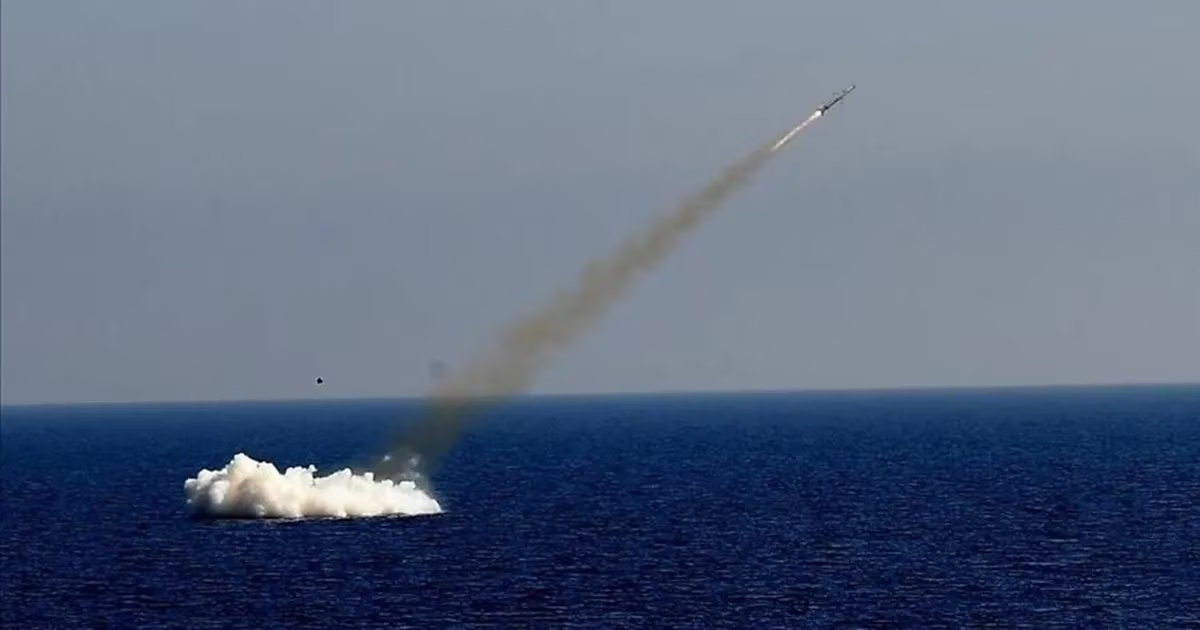
Although the tone of the speech was less harsh compared to Trump's previous statements, it was not without sharp criticism of European liberal policies. Rubio indicated that excessive reliance on globalization led to the decline of manufacturing sectors in the West and opened the door to waves of migration that threatened the cultural identity of Western nations.

The US Secretary also directed explicit criticism at the current international system, questioning the usefulness of the United Nations and institutions that he believes no longer offer effective solutions to current crises. He considered that adherence to abstract liberal values sometimes takes precedence over the true interests of Western peoples, which the Trump administration seeks to fundamentally change.

Regarding the North Atlantic Treaty Organization (NATO), Rubio's speech carried clear reassuring messages aimed at dispelling doubts about Washington's intention to withdraw from the alliance. He clarified that the US administration does not seek to divide NATO but aims to 'stimulate' it to be capable of defending civilization and common interests across the Atlantic.

These statements received a positive response from some European leaders, most notably European Commission President Ursula von der Leyen. Von der Leyen considered Rubio's speech to be an important basis for restoring trust between Washington and Brussels after periods of diplomatic and political tension.

For his part, German Foreign Minister Johann Wadephul described the speech as laying the groundwork for the strategic partnership that must be built upon in the future. The foreign ministers of France and Finland agreed with this approach, seeing Rubio's words as an opportunity to strengthen joint defense cooperation in light of accelerating geopolitical changes.

However, caution was not absent from the conference halls, as some European observers expressed concern about Washington's attempts to impose a new 'ideological dependency' on the continent. They believe that focusing on identity and civilization may be a means to attract Europe away from its political independence, which it has tried to strengthen in recent years.

Rubio deliberately played on the chord of shared history and defensive moments that brought the two sides together, in an attempt to stir the instinct of collective unity among Europeans. The strategic goal appears to be to prevent the old continent from escaping towards other international alliances that might change the global balance of power in a way that does not serve American interests.

The vision put forward by Rubio reflects the methodology of the Trump administration, which is effectively led by the duo Rubio and Kushner, who possess strong leverage to push through their agenda. This agenda relies on transforming the positions of allied countries to align with the American vision, even if it conflicts with some national interests of those countries.

Analyzes indicate that the Munich speech is just the beginning of a series of diplomatic moves aimed at reshaping the global order from an 'America First' perspective. Washington seeks to ensure Europe remains in its ideological and security orbit, while imposing new conditions related to defense contributions and economic policies.

In conclusion, Marco Rubio's speech remains an important political document that requires careful study of its vocabulary and deep implications, as it outlines the foreign policy of the world's greatest power. European reactions, whether welcoming or apprehensive, will play a crucial role in determining the shape of the transatlantic relationship over the next four years.

Under Trump, the United States wants to lead the rebuilding of the world, and the alliance with Europe must defend our common civilization.

ISRAELI AFFAIRS

Mon 16 Feb 2026 5:41 am - Jerusalem Time

Israeli concern over Turkish expansion in the energy sector and military deployment in Somalia

Israeli circles have expressed increasing concern over rapid Turkish movements in the energy sector, with Hebrew reports considering Ankara's expansion of its naval and military presence to have strategic dimensions that go beyond immediate economic interests. Sources indicated that the announcement by Turkish Energy Minister, Alparslan Bayraktar, about the exploration vessel 'Çagri Bey' beginning its operations in Somalia, represents a turning point in Turkish foreign influence.

The Turkish exploration vessel is scheduled to take a long route starting from Mersin port, passing through the Strait of Gibraltar and circumnavigating the African continent to reach Somali territorial waters. This step comes within a Turkish vision aimed at making 2026 a year full of major oil and gas discoveries, which will enhance Ankara's position as a regional player in the global energy market.

To secure these sensitive operations, the Turkish command has assigned advanced naval units, including the ships (TCG Sancaktar, TCG Gokova, and TCG Bafra), to escort the drilling vessel and provide the necessary logistical support. These forces will be deployed in strategic areas including the Gulf of Aden and the Arabian Sea until the end of February, to ensure the protection of seismic surveys and drilling operations from any potential threats.

In a related context, Minister Bayraktar affirmed that his country's top priority remains achieving complete energy self-sufficiency to end dependence on foreign sources. Turkey plans to double its natural gas production in the Black Sea fields this year, while expanding exploration to include the Rize, Giresun, Ordu, and Samsun regions, in search of new energy reserves.

Regarding nuclear energy, sources revealed that the 'Akkuyu' power plant project has reached its final stages, with the first reactor's completion rate reaching 99 percent. Electricity generation from this reactor is expected to begin this year, with the other three reactors gradually coming online to cover about 10 percent of Turkey's total electricity needs.

Turkey currently possesses the fourth-largest deep-water drilling fleet globally, after the addition of the seventh-generation vessels 'Çagri Bey' and 'Yildirim'. Current activity in Somalia relies on accurate data collected by the research vessel 'Oruç Reis' last year, which covered vast areas of Somali territorial waters through 3D surveys.

Turkish ambition is not limited to Somalia but extends to participating in international tenders in Libya and planning to start seismic surveys in Pakistan. Ankara has also strengthened its international partnerships by signing agreements with major global companies such as Exxon and Chevron, reflecting its desire to diversify its sources and expand its investment footprint in the global hydrocarbon sector.

On the military front, informed sources reported Turkey's deployment of three fighter jets in the Somali capital Mogadishu, following extensive logistical preparations including the construction of advanced aircraft hangars. This aerial presence aims to protect offshore drilling platforms and secure future plans for establishing a spaceport, in addition to supporting counter-terrorism efforts in the region.

Observers believe that the Turkish escalation in the Horn of Africa comes in response to regional and international moves, including Israel's recognition of the 'Somaliland' republic and Emirati activity in the Puntland and Jubaland regions. Ankara considers Somalia an indispensable strategic asset, having invested billions of dollars in infrastructure and training security forces to consolidate its influence in this vital region.

The goal set by President Recep Tayyip Erdoğan is to achieve complete energy self-sufficiency for Turkey to boost the national economy.

PALESTINE

Mon 16 Feb 2026 5:41 am - Jerusalem Time

Knesset Member and Settlers Storm Al-Aqsa, Occupation Expels 8 Jerusalemites and Demolishes Homes in Jerusalem

Dozens of Israeli settlers, led by Knesset member 'Amit Halevi', stormed the courtyards of the blessed Al-Aqsa Mosque in occupied Jerusalem today, Sunday, under heavy guard from the occupation police. These provocative actions come at a time when the holy city is witnessing an escalation in policies of restricting worshippers and expelling those stationed at the mosque.

Human rights sources from Wadi Hilweh Information Center reported that the number of settlers who stormed the mosque during the morning and evening periods reached 204 settlers. Knesset member Halevi used his presence inside the courtyards to attack the occupation police's decision to suspend evening incursions during the holy month of Ramadan, demanding their uninterrupted continuation.

In a related context, the occupation authorities issued administrative decisions to expel 8 Jerusalemite citizens from Al-Aqsa Mosque for varying periods, up to six months. The list included employees of the Al-Aqsa Reconstruction Committee and mosque guards, among them Hussam Sider, Ahmed Abu Aliya, and Fadi Aliyan, in a move aimed at emptying the mosque of its protectors.

Data issued by the International Jerusalem Foundation indicated that the systematic expulsion policy has affected more than a thousand Palestinians recently, with most of these decisions focusing on preventing entry to the mosque for half a year. These measures are part of the occupation's attempts to change the historical and legal status quo in the Noble Sanctuary.

For its part, Jordan strongly condemned the continuation of these violations, affirming through its Ministry of Foreign Affairs that Al-Aqsa Mosque, in its entirety, is a pure place of worship for Muslims. Amman stressed its absolute rejection of the actions of extremist Knesset members and ministers who seek to ignite conflict by desecrating Islamic and Christian holy sites in Jerusalem.

Regarding field demolitions, the occupation municipality forced two Jerusalemite families to self-demolish their homes in Silwan and the Old City on the pretext of building without a license. Citizen Moatasem Abu Tayeh was forced to dismantle his home with his own hands, displacing his family of five, to avoid paying the exorbitant demolition costs imposed by the occupation mechanisms.

Citizen Rami Al-Bakri also demolished his small home, which he built eight years ago, despite his commitment to paying exorbitant financial fines exceeding $13,000 over the past years. These cases reflect the tragedy of Jerusalemites who face continuous refusal to grant them building permits, leaving them with harsh choices between self-demolition or astronomical fines.

In another development, the Jerusalem Governorate distributed a statement confirming that citizens in the town of Anata, east of the city, received more than 20 eviction and demolition notices. These notices targeted residential, agricultural, and commercial structures, threatening to displace dozens of Palestinian families and cut off their only sources of livelihood in that vital area.

Field sources explained that the so-called 'Civil Administration' of the occupation army stormed the Bedouin communities of Wadi Al-Awaj and Wadi Sa'ab and delivered new demolition notices. These actions come within broader plans aimed at reducing the Palestinian presence in the eastern areas of the holy city in favor of settlement expansion.

Human rights organizations warned that these notices fall within the first phase of implementing the settlement plan known as 'E1'. This project aims to completely isolate Jerusalem from its surroundings in the West Bank and force Bedouin communities to forcibly relocate by tightening the noose on their livelihoods and legal status.

These measures coincide with the approaching holy month of Ramadan, during which the occupation usually intensifies pressure on Jerusalem residents to reduce the Palestinian presence in the Old City. Observers believe that the statements of Knesset members inside Al-Aqsa represent a green light for settlers to increase the pace of attacks in the coming weeks.

It is worth noting that Jordan retains the right to supervise religious affairs in Jerusalem under international agreements and the Hashemite custodianship recognized by Palestinians and internationally. Warnings continue that tampering with the status quo in Al-Aqsa could lead to an explosion of field conditions amid the occupation government's insistence on supporting extremist groups.

Israel has no sovereignty over occupied Jerusalem and its Islamic and Christian holy sites, and the incursions are a blatant desecration of the Noble Sanctuary.

PALESTINE

Mon 16 Feb 2026 5:41 am - Jerusalem Time

Shocking Confessions: Israeli Soldier Admits to Raping Women and Children in Gaza During Live Broadcast

Social media platforms were engulfed in a wave of outrage following the circulation of a live broadcast video on TikTok, in which an Israeli occupation soldier appeared, admitting to committing horrific atrocities in the Gaza Strip. The soldier, speaking arrogantly, explicitly confessed to committing rape and murder against Palestinian women and children during ongoing military operations in the Strip.

During a conversation with an American young man, the soldier did not hesitate to assert that killing is not the only crime committed by occupation soldiers. He added, in shocking terms: 'We also raped them.' These statements astonished the American interlocutor, who warned the soldier that such confessions would lead to a radical shift in American public opinion against Israel and its army.

The American young man warned the soldier about the international repercussions of these crimes, indicating that the United States might be forced to stop its military and political support for Israel if these violations continue. The young man clearly stated that the situation would worsen for Israelis once American support ceased, which was met with sarcasm from the soldier, who attacked the American administration and described President Trump as foolish.

In a desperate attempt to justify the crimes committed, the Israeli soldier displayed a picture of a Palestinian child holding a weapon, claiming it was found inside a house in Gaza. However, the American young man refuted this justification, asserting that children carrying weapons to confront an invading army is a natural reaction to the atrocities committed by the occupation, reminding the soldier of the extent of the destruction they had inflicted on the Strip.

The Israeli soldier admitted during the broadcast that he is currently inside the Gaza Strip, and when asked to show his surroundings, he acknowledged that the area no longer contained any residential landmarks. The soldier explained that the houses had been completely razed to the ground, describing the scene as everything being 'flat,' in a clear admission of the scorched-earth policy pursued by the occupation army.

When confronted with direct questions about the fate of the women and children who lived in those destroyed homes, the soldier initially tried to evade answering by asking the interlocutor to stop following the news. With the American young man's insistence on knowing the whereabouts of the civilians, the soldier reiterated his confession of murder and rape as a systematic act practiced by soldiers in the field.

The conversation concluded with a heated confrontation, where the American young man expressed his contempt for the actions admitted by the soldier and for the official Israeli stance, directing harsh criticism at the American government for continuing to support such violations. These confessions come at a time when international and human rights reports accusing the occupation army of committing genocide and grave human rights violations in Gaza are escalating.

Yes, don't worry, we also raped them, we don't just kill, we also rape.