






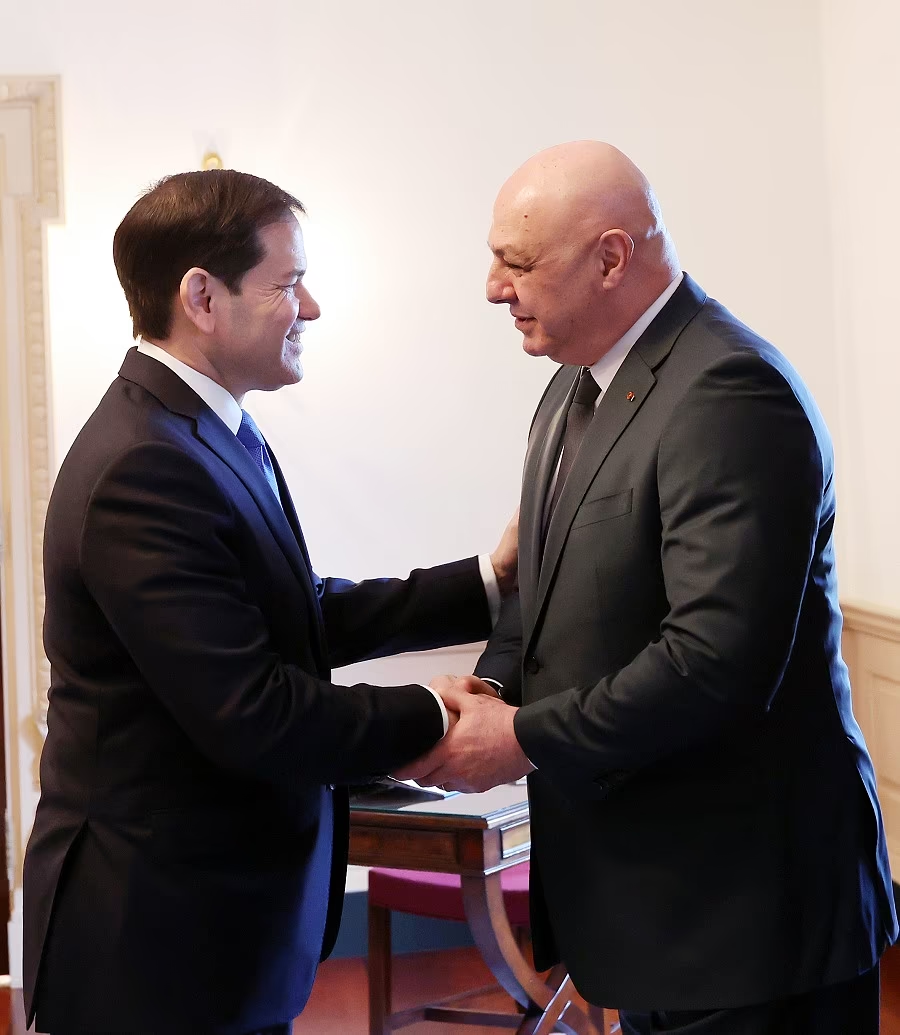
US Secretary of State Marco Rubio affirmed that the meeting he held with Lebanese President Joseph Aoun in Washington was extremely positive, noting that the US administration is closely following Lebanese steps towards achieving peace. These statements come after an intensive round of talks held in Rome, where the concerned parties are seeking to activate border security agreements.
During his meeting with the Lebanese President, Rubio praised what he described as the 'courage' shown by the Lebanese government in restoring the state's full sovereignty over its territories. The US Secretary stressed the need to move forward with dismantling Hezbollah's military infrastructure, considering it a fundamental pillar to ensure regional stability and secure the future of the Lebanese people.
President Joseph Aoun's current visit to the US capital, Washington, is a prominent diplomatic event, being the first visit by a Lebanese president since 2009. This visit is expected to culminate in a summit meeting between Aoun and US President Donald Trump at the White House on Tuesday, to discuss thorny issues related to security and borders.
In a related context, the US State Department clarified in a statement that Washington is committed to supporting the successful implementation of the recently concluded tripartite framework agreement. This support aims to assist Lebanese state institutions in their economic recovery efforts and establish lasting peace, away from the influence of illegal armed forces.
For his part, Lebanese President Joseph Aoun stressed during the discussions the need for alignment between Beirut and Washington regarding the mechanisms for implementing the tripartite framework. Aoun affirmed that the Lebanese priority lies in achieving the first tangible Israeli withdrawal from the 'first model area' defined by previous understandings.
The Lebanese President called on the American side to enhance military and logistical support for the Lebanese army and official security institutions, to enable them to carry out their sovereign duties. Aoun considered that dedicating American attention to Lebanon at this stage is a safety valve to prevent the country from sliding into further military escalation or institutional collapse.
On the ground, the parties agreed during the recent Rome talks to complete the structure of the experimental areas and begin their implementation within a few days. This plan aims to test the Lebanese army's ability to deploy in the southern regions and take over security tasks instead of armed factions.
Despite this optimistic atmosphere in Washington, the framework agreement still faces serious challenges, as it lacks a specific timetable for the withdrawal of Israeli forces. Tel Aviv insists, through its officials, that it will not withdraw from the 'security zone' which is ten kilometers deep, until Hezbollah is completely disarmed.
In contrast, Hezbollah announced its categorical rejection of surrendering its weapons or engaging in direct negotiations with the Israeli side, considering the outcomes of these meetings non-binding for it. The party relies in its rigid stance on continuous Iranian support, amid escalating regional tensions between Tehran and Washington over the past week.
Observers believe that the Lebanese state's ability to implement disarmament provisions remains highly questionable given the internal political division and field complexities. Nevertheless, the US administration is betting that diplomatic pressure and military support for the army may lead to a gradual change in the balance of power on the ground.
These diplomatic moves come amidst negotiations that began last April under US patronage, the first of their kind in decades between Lebanon and Israel. This negotiating path aims to end the official state of war and reach a comprehensive peace agreement that guarantees the security of shared borders.
On the Arab level, Saudi Crown Prince Mohammed bin Salman received a phone call from President Aoun to review the latest developments in the Lebanese arena. During the call, Aoun expressed his appreciation for Saudi Arabia's supportive stances for Lebanon's stability, emphasizing the importance of the Arab role in supporting international efforts to establish peace.
Sources reported that the call between the Saudi Crown Prince and the Lebanese President also discussed efforts to enhance regional security and spare the region the scourges of armed conflicts. Riyadh consistently emphasizes the need to confine weapons to the Lebanese state and its legitimate institutions to ensure the country's sovereignty and stability.
In conclusion, political circles are awaiting the outcome of tomorrow's White House meeting, where Lebanon is expected to request clear American guarantees regarding the Israeli withdrawal. At the same time, security circles are awaiting the start of the implementation of the 'experimental areas' in the south as a real test of the seriousness of the parties in implementing the framework agreement.
I commend the courage of the Lebanese government for its resolute efforts to restore its sovereignty and disarm Hezbollah and dismantle its infrastructure.
Share your opinion
Rubio praises Lebanon's efforts to disarm 'Hezbollah' and Aoun prepares to meet Trump