






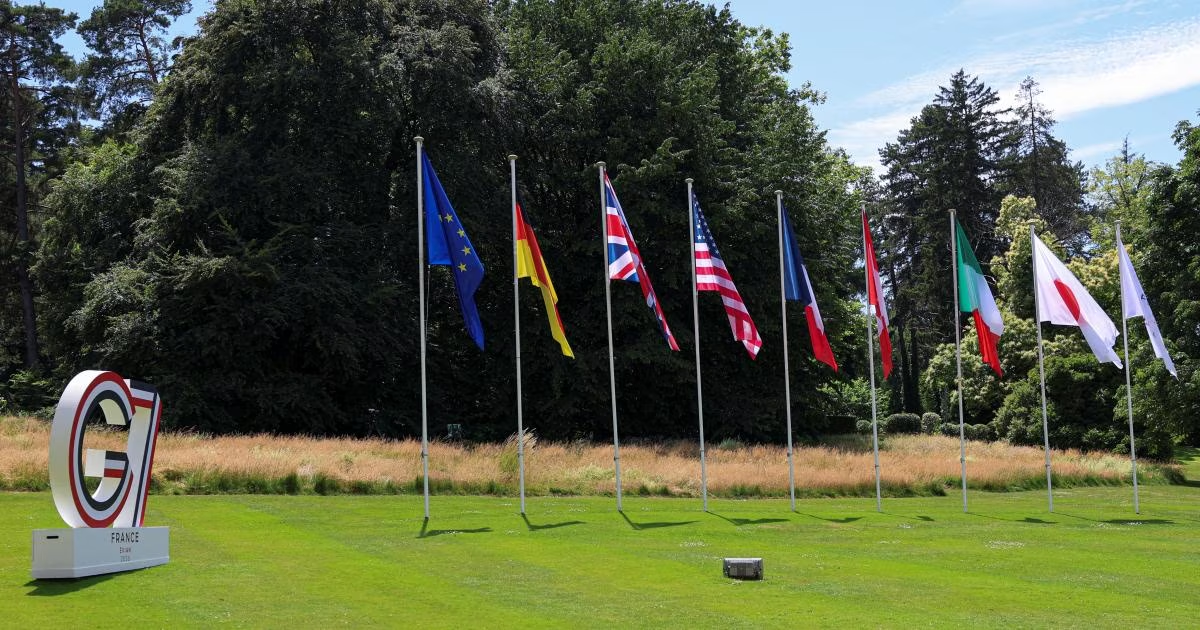
French President Emmanuel Macron, at the conclusion of the G7 summit in Evian, emphasized the necessity of enabling the Lebanese state to fully extend its sovereignty over its territories. Macron clarified that the Lebanese army must be the sole authority responsible for managing security, stressing that the complexity of the situation on the ground urgently requires an end to military operations between Hezbollah and Israel.
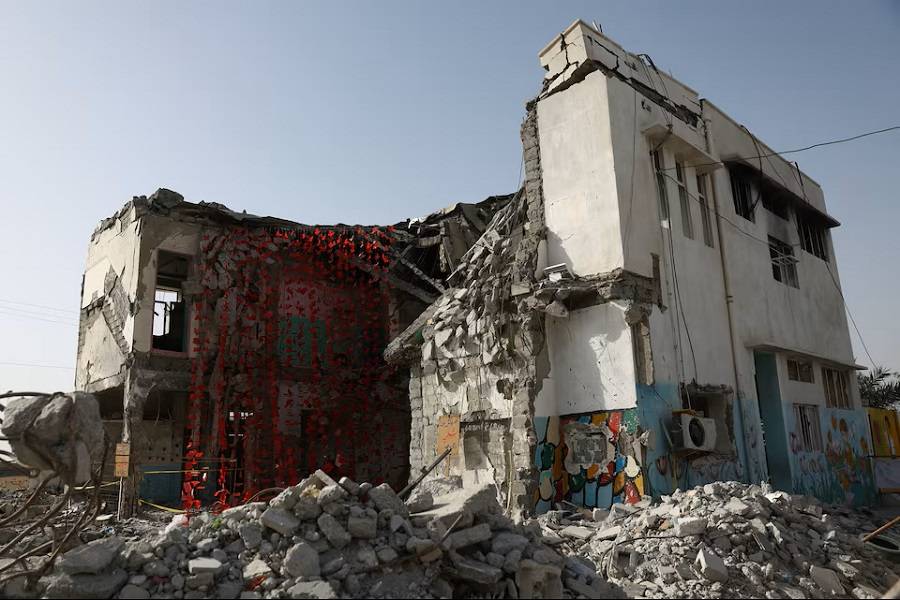
Regarding the Palestinian issue, the French President announced that the leaders of the seven nations agreed on the need to intensify efforts to deliver humanitarian aid to the Gaza Strip without obstacles. The summit's final statement also called for an immediate end to the escalating violence in the West Bank, warning of the repercussions of continued tension on the stability of the region as a whole.
On the Iranian file, the group expressed its support for the existing understandings between Washington and Tehran, considering that the stability of this path positively reflects on navigation security and the global economy. Macron indicated that addressing the enriched uranium file is a top priority that cannot be postponed, as the summit set a two-month deadline to reach final solutions for this complex issue.
In the context of protecting international waterways, Macron revealed the involvement of about twenty countries in an international initiative aimed at securing navigation in the Strait of Hormuz. The leaders emphasized their categorical rejection of imposing any illegal fees or restrictions that hinder the flow of global trade through this vital passage, affirming their commitment to freedom of international navigation.
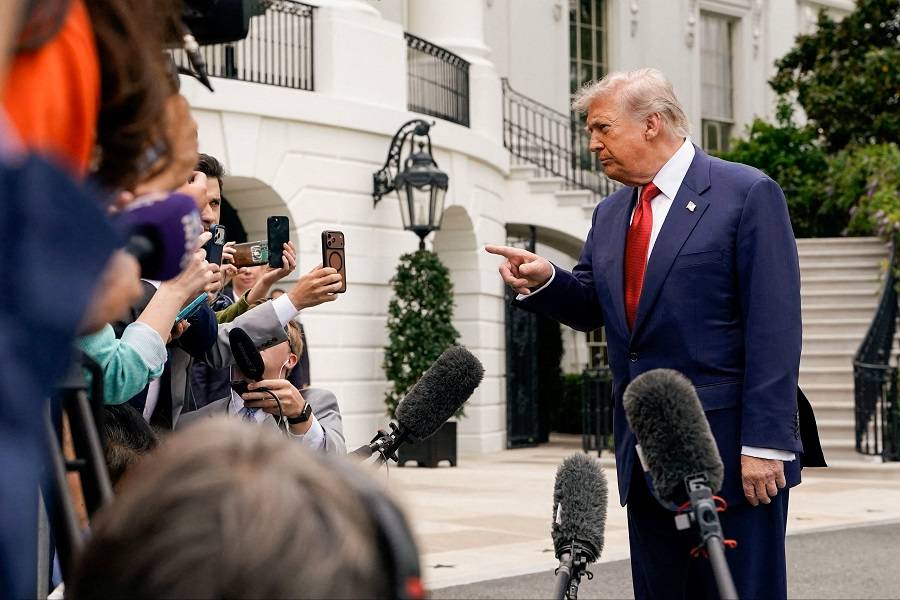
The French President touched upon recent American statements regarding Iran, describing former President Trump's talk of military options as falling within a deterrence strategy. He clarified that these statements should not be interpreted as imminent threats, but rather as a tool for political pressure to ensure Tehran's commitment to its international obligations in the nuclear field.
Macron described the summit as a moment of true unity among leaders, where they succeeded in overcoming the differences that prevailed in recent months. He praised the high level of close coordination that took place in Evian, considering that the discussions were fruitful and laid the foundation for genuine cooperation to face the major challenges confronting the international community at present.
In the Ukrainian file, the summit witnessed a qualitative shift with the announcement by the United States and European countries of the start of production of long-range missiles and air defense systems within Ukrainian territory. These operations will be carried out under official licenses, in a step aimed at strengthening Kyiv's defensive capabilities in a sustainable and direct manner in the face of Russian military pressure.
The French President considered that the balance of power on the Ukrainian battlefield has begun to shift in favor of Ukrainian forces, which are making tangible progress. He indicated that Russia is now experiencing a difficult situation in light of the European and international consensus on tightening sanctions and political and economic pressure to force Moscow to end the war and respect Ukraine's territorial integrity.
Beyond political issues, the summit discussed modern technology issues, with the regulation of artificial intelligence and the protection of minors in the digital space topping the agenda of the final day. Leaders sought to establish regulatory frameworks that ensure the benefits of technological innovation while minimizing the risks associated with privacy and digital security for emerging generations.
Considering the economic weight of the group after five decades of its establishment, the final report indicated a decline in the share of G7 countries in the global GDP. After the group controlled about 70% of the global economy in the 1970s, this percentage decreased to only 44% at present, reflecting the rise of new economic powers.
This relative decline is attributed to the rapid growth of emerging markets, led by the BRICS group of countries, with China at its forefront. Figures show that G7 countries represent only 10% of the world's population, while BRICS countries account for more than half of the planet's population, which changes the map of demographic and economic influence.
At the level of international trade, the G7 group has lost a large part of its historical dominance to emerging economies over the past two decades. While the group's share currently does not exceed one-third of global trade, the BRICS group continues to strengthen its position to reach a share of about 28%, narrowing the gap between traditional and emerging powers.
Despite these transformations, the G7 group still retains widespread influence in the financial services and advanced technological innovation sectors. The true power of the group remains inherent in its control over the export of high value-added goods, while the weight of the rest of the world's countries is concentrated in raw materials and traditional manufacturing sectors.
Lebanon has the right to regain control over all its territories under the administration of the Lebanese army, and the situation there is extremely complex and requires an immediate cessation of mutual strikes.
Share your opinion
Macron from the G7 Summit: Priority for Lebanon's Sovereignty and Halting Violence in Gaza and the West Bank